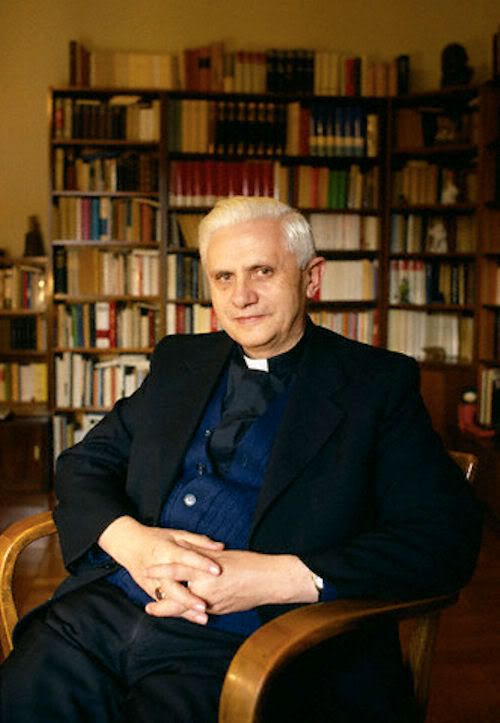
"Let books be your dining table, / And you shall be full of delights. / Let them be your
mattress,/
And you shall sleep restful nights" (St. Ephraim the Syrian).


Showing posts with label iconoclasm. Show all posts

Wednesday, March 30, 2022

The Hermeneutics of Iconoclasts

This book came out some months back, but I missed it until Paulist sent me their most recent catalogue. It treats of a very important issue that is often overlooked in the more popular treatments of iconography and iconoclasm: Hermeneutics of the Ban on Images, The: Exegetical and Systematic Theological Approaches by Friedhelm Hartenstein and Michael Moxter (Paulist Press, 2021), 232pp.

About this book the publisher tells us this:

In the history of Judaism and Christianity the biblical ban against images has been a decisive factor in shaping collective identity around opposition to the veneration of images. The biblical ban inspired the iconoclastic controversy in Byzantium as well as iconoclasm during the Protestant Reformation. Even in the present, biblical texts prohibiting images may be easily misunderstood in ways that can lead to religious conflicts and even violence. At the same time, the humanities are experiencing an “iconic turn,” a marked attention to the role of images. Recognizing both the potential for misunderstanding the biblical texts and the promise of a more nuanced appreciation of the role of images in human experience, this book constructs a framework for understanding the place of images, and their prohibition, within the biblical text and Christian religious practice. In the form of a dialogue between an Old Testament scholar and a Protestant systematic theologian, the volume explores potential lines of convergence between the rationale behind rejecting visual representations of God and that behind regarding the icon of Christ as a representation of the invisible God. Consideration of Old Testament texts in their cultural context clarifies key distinctions underlying the prohibition of material representations of God, while explaining the central importance of the biblical texts for creating “mental iconography” of God. †

Monday, August 10, 2020

Roman and Papal Iconophilia

Twenty years ago now, in his The Spirit of the Liturgy, then-Cardinal Ratzinger opined that Nicaea II's teachings against iconoclasm and in favour of a moderate icon veneration had never been received in either aspect in the Western Church to a satisfactory degree.

Then several years after that, Thomas Noble rather complicated this picture in his Images, Iconoclasm, and the Carolingians.

I wonder if we won't have to continue revising our views of what the West did and did not receive, and did and did not do, in the ante- and post-Nicaean eras after reading a new book by Francesca Dell'Acqua, Iconophilia: Politics, Religion, Preaching, and the Use of Images in Rome, c.680 - 880 (Routledge, 2020), 444pp.

About this book the publisher tells us this:
Between the late seventh and the mid-ninth centuries, a debate about sacred images – conventionally addressed as ‘Byzantine iconoclasm’ – engaged monks, emperors, and popes in the Mediterranean area and on the European continent. The importance of this debate cannot be overstated; it challenged the relation between image, text, and belief. A series of popes staunchly in favour of sacred images acted consistently during this period in displaying a remarkable iconophilia or ‘love for images’. Their multifaceted reaction involved not only council resolutions and diplomatic exchanges, but also public religious festivals, liturgy, preaching, and visual arts – the mass-media of the time. Embracing these tools, the popes especially promoted themes related to the Incarnation of God – which justified the production and veneration of sacred images – and extolled the role and the figure of the Virgin Mary.
Despite their profound influence over Byzantine and western cultures of later centuries, the political, theological, and artistic interactions between the East and the West during this period have not yet been investigated in studies combining textual and material evidence. By drawing evidence from texts and material culture – some of which have yet to be discussed against the background of the iconoclastic controversy – and by considering the role of oral exchange, Iconophilia assesses the impact of the debate on sacred images and of coeval theological controversies in Rome and central Italy.
By looking at intersecting textual, liturgical, and pictorial images which had at their core the Incarnate God and his human mother Mary, the book demonstrates that between c.680–880, by unremittingly maintaining the importance of the visual for nurturing beliefs and mediating personal and communal salvation, the popes ensured that the status of sacred images would remain unchallenged, at least until the Protestant Reformation in the sixteenth century.

Friday, March 27, 2020

The Acts of Nicaea II

Hard to believe just a couple short weeks ago Byzantine Christians were celebrating the Sunday of Orthodoxy with its thunderous commemoration of the triumph of icons and defeat of iconoclasts. That seems another lifetime now, or perhaps several.

What exactly was this "triumph?" What was iconoclasm, and its response at the seventh ecumenical council of Nicaea in 787? A new paperback edition of a book first published in 2018 will remind us of what was decided and dogmatized: The Acts of the Second Council of Nicaea (787), trans. with commentary by Richard Price (Liverpool University Press, 2020), 752pp.

I've heard of some academic presses in England suspending publication pending the conclusion of this pandemic, but I don't know if Liverpool University Press is one of them. They list a release date of next week for this book, part of their ongoing and valuable series, Translated Texts for Historians.

About this book the publisher tells us this:
The Second Council of Nicaea (787) decreed that religious images were to set up in churches and venerated. It thereby established the cult of icons as a central element in the piety of the Orthodox churches, as it has remained ever since. In the West its decrees received a new emphasis in the Counter-Reformation, in the defence of the role of art in religion. It is a text of prime importance for the iconoclast controversy of eighth-century Byzantium, one of the most explored and contested topics in Byzantine history. But it has also a more general significance - in the history of culture and the history of art. This edition offers the first translation that is based on the new critical edition of this text in the Acta Conciliorum Oecumenicorum series, and the first full commentary of this work that has ever been written. It will be of interest to a wide range of readers from a variety of disciplines.

Tuesday, July 2, 2019

Iconoclasm is Always a Prelude to a New Politics

In a time when Confederate monuments are being torn down, other colonial and imperial figures erased from university campuses, and now a mural in San Francisco being covered up, I pause only to note an invaluable book by James Noyes that many years ago laid out with pellucid cogency this rule: whenever iconoclasm breaks out, it is always a prelude to a new politics. 

Unlike many books treating iconoclasm, which often confine themselves to the so-called Byzantine outbreaks of the eighth-ninth centuries, Noyes' book, The Politics of Iconoclasm: Religion, Violence, and the Culture of Image Breaking in Christianity and Islam, takes a wide and fascinating approach, showing the outbreak of image smashing in a variety of Christian and Muslim contexts ancient and modern, and also in 20th-century politics in Germany and Russia, inter alia. These latter outbreaks were tied directly to the rise of revolutionary politics in and after 1917 in Russia, and the rise of Nazism after 1933 in Germany. Both destroyed old images and art and replaced it with that of their own devising for obviously political purposes.

The same is no less true today whenever the demand is made for historical memorials or other art forms to be effaced, erased, removed, or destroyed. For some people perhaps more than others, "we suffer from our reminiscences," as Freud famously said.

Monday, September 17, 2018

The Presence and Absence of Images

I am regularly asked to give presentations on the history and theology of images, especially to Roman Catholic crowds desirous of learning more about this much-neglected part of the tradition. Usually these are very general introductions in which I point out, inter alia, that the permission given by Nicaea II for the use of icons is a very conservative one. As Bulgakov asked, where is an actual theology of images in the council? He concluded that there isn't one, and it remains to be developed. Some recent studies previously noted on here have gone some way to aid that development.

Now a new book looks like it will raise some deep and fascinating questions in grappling with a theology of images and all that it entails: Natalie Carnes, Image and Presence: a Christological Reflection on Iconoclasm and Iconophilia (Stanford UP, 2018), 256pp.

About this book the publisher tells us:
Images increasingly saturate our world, making present to us what is distant or obscure. Yet the power of images also arises from what they do not make present—from a type of absence they do not dispel. Joining a growing multidisciplinary conversation that rejects an understanding of images as lifeless objects, this book offers a theological meditation on the ways images convey presence into our world. Just as Christ negates himself in order to manifest the invisible God, images, Natalie Carnes contends, negate themselves to give more than they literally or materially are. Her Christological reflections bring iconoclasm and iconophilia into productive relation, suggesting that they need not oppose one another. Investigating such images as the biblical golden calf and paintings of the Virgin Mary, Carnes explores how to distinguish between iconoclasms that maintain fidelity to their theological intentions and those that lead to visual temptation. Offering ecumenical reflections on issues that have long divided Protestant, Catholic, and Orthodox traditions, Image and Presence provokes a fundamental reconsideration of images and of the global image crises of our time.

Wednesday, August 15, 2018

The Acts of Nicaea II

I have for years quoted Joseph Ratzinger's demonstrable claim, in The Spirit of the Liturgy, that part of the explanation for periodic outbreaks of iconoclasm in the West, including after Vatican II, stems from the fact that the West never adequately received the acts of Nicaea II, and has therefore never seriously integrated its insights into the life of the Western Church. This rather messy history of reception is told in Alain Besançon's invaluable The Forbidden Image: An Intellectual History of Iconoclasm; and more recently in T.F.X. Noble's book Images, Iconoclasm, and the Carolingians.

But whatever excuses about inadequate, incomplete, or inaccessible texts the West may have had in the past are gone in the face of a newly published book, translated by Richard Price, who also supplies a commentary to The Acts of the Second Council of Nicaea (787) (Liverpool University Press, 2018), 688pp.

Part of Liverpool's ongoing and very important series, Translated Texts for Historians LUP, this hefty book, the publisher tells us, treats
The Second Council of Nicaea (787), which decreed that religious images were to set up in churches and venerated. It thereby established the cult of icons as a central element in the piety of the Orthodox churches, as it has remained ever since. In the West its decrees received a new emphasis in the Counter-Reformation, in the defence of the role of art in religion. It is a text of prime importance for the iconoclast controversy of eighth-century Byzantium, one of the most explored and contested topics in Byzantine history. But it has also a more general significance - in the history of culture and the history of art. This edition offers the first translation that is based on the new critical edition of this text in the Acta Conciliorum Oecumenicorum series, and the first full commentary of this work that has ever been written. It will be of interest to a wide range of readers from a variety of disciplines.

Monday, April 30, 2018

Theodore the Studite on Icons

It's been almost 40 years since St. Vladimir's Seminary Press published a translation of St. Theodore the Studite's On the Holy Icons. Apart from that, the only other work came out in 2015: another translation of his Writings on Iconoclasm.

But what we have not had until now has been a wide-ranging historical context in which to consider him and this work of his. That lacuna will be remedied in July with the publication of St Theodore the Studite's Defence of the Icons:Theology and Philosophy in Ninth-Century Byzantium by Torstein Theodor Tollefsen (Oxford UP, 2018), 208pp.

About this book the publisher tells us the following:

St Theodore the Studite's Defence of the Icons provides an investigation of the icon-theology of St Theodore the Studite, mainly as it is presented in his three refutations of the iconoclasts, the Antirrhetici tres adversus iconomachos. Torstein Theodor Tollefsen explores Theodore's 'philosophy of images', namely his doctrine of images and his arguments that justify the legitimacy of images in general and of Christ in particular. Tollefsen offers a historical, theological, and philosophical exploration of Theodore's doctrine of images and his arguments justifying the legitimacy of images and of Christ. In addition to the main elements of Theodore's defence of the icon, like the Christological issue, the relation between image and prototype, the question of veneration, his explanation of why we may say of an image that 'this is Christ', and his innovative thinking on the representative character of the icon, the book has an introduction that places Theodore in the history of Byzantine philosophy: He has some knowledge of traditional logical topics and is able to utilize argumentative forms in countering his iconoclast opponents. The volume also provides an appendix which shows that the making of images is somehow natural given the character of Christianity as a religion.

Friday, March 16, 2018

Pre-Historic Iconoclasms

One of the things that recent research into iconoclasm, broadly understood, has been revealing is the fact that images have power, and are feared and subject to destruction for that very reason. This is by no means a phenomenon limited to Christian images in the East-Roman Empire in the seventh to ninth centuries. Iconoclasm both antedates its Byzantine outbreaks, and has long surpassed them, as we have seen in this country recently in debates about Confederate monuments, and as we have seen in post-Saddam Iraq, post-Soviet Ukraine, and elsewhere. It has, then, become something of a law that the outbreak of iconoclasm--that is, the destruction of images--is always politically motivated, and is always felt to be a necessary prelude to a new form of politics--something James Noyes argued several years ago in his very useful and insightful book.

Now a new book by Henry Chapman, Iconoclasm and Later Pre-History (Routledge, 2018), 246pp. comes along to demonstrate that humans were smashing images even before recorded history.

About this book we are told:
Iconoclasm, or the destruction of images and other symbols, is a subject that has significant resonance today. Traditionally focusing on examples such as those from late Antiquity, Byzantium, the Protestant Reformation and the French Revolution, iconoclasm implies intentioned attacks that reflect religious or political motivations. However, the evidence highlights considerable variation in intentionality, the types and levels of destruction and the targets attacked. Such variation has been highlighted in recent iconoclasm scholarship and this has resulted in new theoretical frameworks for its study.
This book presents the first analysis of iconoclasm for prehistoric periods. Through an examination of the themes of objects, the human body, monuments and landscapes, the book demonstrates how the application of the approaches developed within iconoclasm studies can enrich our understanding of earlier periods in addition to identifying specific events that may be categorised as iconoclastic.
Iconoclasm and Later Prehistory combines approaches from two distinct disciplinary perspectives. It presents a new interpretative framework for prehistorians and archaeologists, whilst also providing new case studies and significantly extending the period of interest for readers interested in iconoclasm.

Tuesday, November 28, 2017

The Book You Must Order for Every Western Christian this Christmas

Over at Catholic World Report, you can read my review of Sr. Jeana Visel's splendid new book, which I have noted on here in the past: Icons in the Western Church: Toward a More Sacramental Encounter (Liturgical Press, 2016).

As I note, it's a short, accessible book, steeped in the best contemporary scholarship, and dealing, in a discerning and pastorally sensitive way, with the challenges facing the Western Church as she tries to overcome decades upon decades of iconoclasm.

It is the book you should buy for every Roman Catholic and even many Protestant Christians you know to have an interest in icons. And then buy copies for your pastor, bishop, and chancery.

Friday, August 25, 2017

Iconoclasm Then and Now

What ought we to do about statues--whether in the American South or elsewhere--we do not like, or with whose politics we disagree? I do not have any definite answers to these questions, but I would note that those demanding the removal of the statues have given little evidence of  having carefully and calmly considered just a few of the necessary and important questions, not least among which is the demand for moral perfection in those commemorated. All great men and women who change history in dramatic ways are flawed, as indeed are all human beings. Who may be found worthy and on the basis of what criteria? Who has the power to decide?

Who, moreover--and, again, on what basis--may decide when remembering must give way to forgetting? As I noted on here last summer in several installments, recent works of David Rieff and Manuel Cruz on the importance of forgetting may have things to tell us in these debates today.

Another necessary set of questions concerns the politics of the future. For one thing that has become clear in the study of iconoclasm, which has really taken off in the academic world as dozens of new books on the topic have appeared in the last decade or so (see, e.g., here, here, here [treating iconoclasm in the Latin Church after Vatican II], and especially here) is that iconoclasm is always the prelude to a new politics. So let us say we pull down every statue we object to. What comes next? Once again mobs braying and rampaging seem scarcely to recognize these as questions, never mind to have coherent and satisfactory answers to them.

The politics of iconoclasm has been well treated in a book I have mentioned and discussed on here before: James Noyes, The Politics of Iconoclasm: Religion, Violence and the Culture of Image-Breaking in Christianity and Islam, which was released last year in a paperback edition.

Other recent studies are also very useful. Routledge, just last month, released Kindle editions of books first published several years ago, including Jeffrey Johnson and Anne McClanan, eds., Negating the Image: Case Studies in Iconoclasm.

Stacy Boldrick's fascinating and useful book, Striking Images, Iconoclasms Past and Present, was also just released in a Kindle edition.

What is clear in these and other works is that "iconoclasm" has moved well beyond its Byzantine provenance, where it has been extremely well covered by such as Leslie Brubaker in Inventing Byzantine Iconoclasm (a good basic introductory text for those with no background) and then at lavish length, with John Haldon, in Byzantium in the Iconoclast Era, c. 680-850: A History.

Finally, one of the best general works that begins in Byzantium but works its way outward, treating ancient Greek philosophy, Jewish and Muslim arguments, and much else besides in the ancient and modern worlds, remains Alain Besançon, The Forbidden Image: An Intellectual History of Iconoclasm.

Wednesday, August 2, 2017

Searching for the Beauty of Holiness in Western Culture

A quarter-century ago now (!), I had what was easily one of the most intellectually engaging courses of my freshman and indeed entire undergraduate career: The Bible in English Literature, taught by a man then-unknown to me, but whom I later came to know as one of the great scholars of our time, viz., David Lyle Jeffrey. A giant of a man--he is in fact very tall--in every sense, he has been a prolific scholar. In 1992 when I took that course from him, he had just put the finishing touches on a monumental project, the Dictionary of Biblical Tradition in English Literature

Since then, he has published a large number of studies, especially in the area of English literature and Christian tradition, as you may see here.

Not long after I took that course from him, Jeffrey was lured down to Baylor University, and thus some of his more recent works reflect that perspective of chief academic officer in the contemporary academy. Thus, e.g., The Bible and the University.

Five years ago I heard him on NPR discussing his fascinating study, The King James Bible and the World It Made.

I had dinner with him in early 2015 when I was invited to be a lecturer at the Robert Louis Wilken colloquium hosted by Baylor. It was great to see him and he flattered me by saying he remembered me in that class from 1992. I don't know if I could say that of students I had taught two decades earlier!

And now he has a new study coming out from Eerdmans in September of this year that looks to be of great and timely interest: In the Beauty of Holiness: Art and the Bible in Western Culture.

About this book the publisher tells us:
Beauty is a highly significant subject in the Bible. So is holiness. In this study of Christian fine art David Lyle Jeffrey explores the relationship between beauty and holiness as he integrates aesthetic perspectives from the ancient Hebrew Scriptures through Augustine, Aquinas, and Kant down to contemporary philosophers of art.
Incorporating sample artworks ranging from the Roman catacombs to Marc Chagall, Jeffrey demonstrates that the Bible has consistently been the most profound and productive resource for the visual arts in the West. He contextualizes Western European art from the second century through the twenty-first in relation not only to the biblical narrative but also to liturgy and historical theology.
Lavishly illustrated with more than one hundred masterworks, In the Beauty of Holiness is ideally suited to students of Christian fine art and to general readers wanting to better understand the story of Christian art through the centuries.

Wednesday, February 22, 2017

Iconoclasms Past and Present

Though Byzantine Christians may be forgiven for thinking they have a monopoly on the concept of iconoclasm, in fact the destruction of images is ecumenical in the worst sort of way: it may be found throughout the whole inhabited world, almost invariably connected to a major political change, as James Noyes has convincingly argued. We have, accordingly, been seeing a number of books over the last several years devoted to exploring iconoclasm more widely, within and beyond its Byzantine expressions.

Another such book--first published in 2014--has recently been released in a Kindle version: Iconoclasm from Antiquity to Modernity, eds. Kristine Kolrud and Marina Prusac (Routledge, 2016).

About this book we are told:
The phenomenon of iconoclasm, expressed through hostile actions towards images, has occurred in many different cultures throughout history. The destruction and mutilation of images is often motivated by a blend of political and religious ideas and beliefs, and the distinction between various kinds of ’iconoclasms’ is not absolute. In order to explore further the long and varied history of iconoclasm the contributors to this volume consider iconoclastic reactions to various types of objects, both in the very recent and distant past. The majority focus on historical periods but also on history as a backdrop for image troubles of our own day. Development over time is a central question in the volume, and cross-cultural influences are also taken into consideration. This broad approach provides a useful comparative perspective both on earlier controversies over images and relevant issues today. In the multimedia era increased awareness of the possible consequences of the use of images is of utmost importance. ’Iconoclasm from Antiquity to Modernity’ approaches some of the problems related to the display of particular kinds of images in conflicted societies and the power to decide on the use of visual means of expression. It provides a deeper understanding of the mechanisms of the phenomenon of iconoclasm. Of interest to a wide group of scholars the contributors draw upon various sources and disciplines, including art history, cultural history, religion and archaeology, as well as making use of recent research from within social and political sciences and contemporary events. Whilst the texts are addressed primarily to those researching the Western world, the volume contains material which will also be of interest to students of the Middle East.

Monday, August 8, 2016

In the Beginning Was the Image

As I have often noted over the years, interest in icons is at perhaps an all-time high as Protestants, Roman Catholics, and others have "discovered" icons in the last two decades, with many books written by authors from these traditions about icons, and many classes in icon painting being taken by them in parish workshops across the country. To the extent that this helps the West over come its ongoing difficulty with Nicaea II's theology of images, and thus its iconoclasm (an ongoing problem even today), these must be counted encouraging developments.

Along comes another development in Western uses of iconography. Released this year in paperback is a book first published two years ago in hardback: Sigurd Bergmann, In the Beginning is the Icon (Routledge, 2016), 320pp.

About this book we are told:
Icons provide depictions of God or encounters with the divine that enable reflection and prayer. 'In the Beginning is the Icon' explores the value of these images for a theology of liberation. Iconology, art theory, philosophical aesthetics, art history and anthropology are integrated with rigorous theological reflection to argue that the creation and observation of pictures can have a liberating effect on humanity. In presenting art from across the world, 'In the Beginning is the Icon' reflects the ethnocentricity of both art and religious studies and offers a new cross-cultural approach to the theology of art.


Friday, April 1, 2016

Joseph Ratzinger and the Christian East

There is news emerging that the life of the emeritus bishop of Rome, Joseph Ratzinger, is moving peacefully towards its close. For someone who is almost 90, and who resigned three years ago because of increasing frailty, this story comes as no real surprise. Two years ago, on the anniversary of his resignation, I offered some thoughts here towards a preliminary assessment of his legacy as Roman pontiff. I abide by my judgment then that the most significant thing he did as pope was to issue Summorum Pontificum

However near or yet far off his death may be, it is clear that his written corpus will see no new additions, and so now is as good a time as any for a look back at just some of his books and their impact on Catholic-Orthodox relations and on issues of especial concern to Eastern Christians.

I think my first two introductions to his writings were of a personal nature. There was, first, his moving and deeply human homily (which I have often quoted on here) at the funeral Mass of his friend Hans Urs von Balthasar, reprinted in the collection edited by David Schindler, Hans Urs Von Balthasar: His Life and Work. This collection I read from my hospital bed in 1996 where I was immobilized for three months after being hit by a bus while riding my bike. It was, perhaps, my first introduction to a thinker who was not only subtle and scholarly, but also gracious, warm, and human--not at all the Panzerkardinal of the lurid and gratuitously unjust grotesques constructed by the mass media with the encouragement of not a few jejune Catholics who get their theology from the New York Times.

The next year, Ratzinger published the first (and, alas, the only) volume of his memoirs, Milestones, which rather hinted at being the first of at least two volumes. It stopped in 1977, the year Ratzinger was quickly vaulted into both the episcopacy and the college of cardinals--the last such appointment Pope Paul VI would make before his death the next year. (Had a second volume appeared, covering his Rome years as prefect of the CDF.....oh how the mind reels with thwarted excitement at the tales he could have told! Of course, some of his views from that time were candidly shared in his several book-length interviews, starting with the first and greatest bombshell given after a scant three years in the Roman snake pit Curia.)


After a brief stint as archbishop of München und Freising in his native Bavaria, Ratzinger would be lured to Rome by his friend Pope John Paul II in 1982....and never be able to leave, though his desire to do so, especially as the 1990s ground on, was well known.


The year after Milestones appeared, 1998, I was in Rome at a conference at which Ratzinger was the keynote lecturer talking about his favored topic, the liturgy. In English his first treatment of this vital area came about in the 1981 translation, The Feast of Faith, a short little book more than worth its price for its preface and introduction alone, where he deals, as succinctly as anyone ever has, with the "relevance" of studying liturgy in a world full of political conflicts and social problems. It was the first of several studies about liturgy that would make their way into English and enrich my thinking on this most vital of topics.

In addition to liturgy (about which more presently), Ratzinger offered important clarifications and corrections as to how theology should be done in such books as The Nature and Mission of Theology. He was of course often not just criticized but attacked, often in the most adolescent way, not least by not a few of the preening members of the Catholic Theological Society of America who thought that Ratzinger's ideas of theology--unofficially expressed in this book, and more officially in CDF pronouncements such as Donum Veritatis, about which I have written here--were intolerable impositions  and odious expressions of a libido dominandi when, of course, they were simply invitations to return to doing theology as it must always be done, viz., on its knees, as he was wont to say--as "praying theology." This, as Eastern Christians will at once recognize, is simply how the holy Fathers did theology, and to the extent that Ratzinger helped to re-orient theology, he performed a service at once theological and ecumenical. I found nothing whatsoever objectionable in such invitations as his, and indeed much that was inspirational.

Ratzinger has also, of course, been influential in shaping Catholic ecclesiology from Vatican II onward, as encapsulated in his little book Called to Communion, which is a helpful summary of the so-called eucharistic or communio ecclesiology whose recovery in both East and West in the last half-century has been the single greatest such development and has served to bring each closer to the other.

More than that, however, Ratzinger, more than any other figure in 20th-century Roman Catholicism, was the first and most sustained thinker--starting in a series of scholarly articles from the late 1960s--to focus on the importance of papal decentralization as seen through a recovery of the institution of the patriarchate within the otherwise bipartite structures of the Latin Church. He returned to these thoughts somewhat in at least one of his later book-length interviews, both of which were conducted by Peter Seewald.

And then.....and then there was of course his election in 2005 as bishop of Rome, and almost immediately (as in the insignia at his inauguration in April of that year) he gave signs of a return to an earlier, and more commonly recognized, tradition. He had written and spoken frankly during John Paul II's pontificate of his pronounced dis-ease with the cult of celebrity that had grown up around the papal office, and gave every sign of wanting this pared back. (He also gave clear evidence, I thought, of his own discomfort with the office, and I felt acutely sympathetic towards him as a fellow introverted academic happiest in his library. How often did I look at him and think of the Petrine conclusion to John's gospel when Christ says "when you are old, you will stretch out your hands, and another will gird you and carry you where you do not wish to go.")

A year later, he announced, rather abruptly and indirectly, that the title "Patriarch of the West" was being deleted from the list of titles in the Annuario Pontificio. There was much shock at this, and I spent considerable effort writing articles in a variety of places trying to reassure Orthodox Christians that this was a good thing--that it was the start of the re-structuring of the Latin Church, and the creation of regional patriarchates, that Ratzinger single-handedly had talked about creating for 40 years. Readers of my Orthodoxy and the Roman Papacy will be familiar with all these arguments in detail.

And then? Nothing. No further developments beyond a hastily cobbled together and badly translated statement from Cardinal Kasper trying to defuse the situation. There were no further developments--no new titles, no new offices, no newly created patriarchates of, say, North America, or francophone Africa, or Latin America. What seemed by every indication to be the beginning of a significant ecclesiastical re-structuring came to nothing, which I confess was an enormous disappointment at the loss of an opportunity to make arguably the most ecumenically significant changes the East could ask for.

Ratzinger did, however, go some distance towards the East in his earlier book, The Spirit of the Liturgy. There he also tried, however inadequately, to address one of the most acute crises in the Latin Church at and following Vatican II: its rampant and flagrant iconoclasm.

The book is not only a much-needed critical treatment of just some of the many disastrous developments in Latin liturgy over the last 50 years. It is also a frank acknowledgement that neither in the 20th century, nor really for any of the twelve centuries before that, has the Church in the West adequately or fully received the teaching of the seventh Ecumenical Council of Nicaea in 787, the one devoted to the defeat of Christian iconoclasm. Ratzinger rightly called for Nicaea II to be newly appropriated in the West--a development which, sadly, few seem inclined to undertake.

If his book continues to serve as a thorn in the side of Western Christians, prompting them to re-evaluate their iconoclasm, as Jeana Visel (almost alone) seems to be doing, then it will remain in my estimation the most lasting contribution of a most estimable scholar and gracious gentleman now in the sunset of his richly productive and long life. When that sad day comes and Joseph Ratzinger leaves the Church militant for, one hopes, the Church triumphant in heaven, may the Lord's judgment be swift and merciful: "Well done, good and faithful servant! Enter into the joy of your master."

Monday, February 22, 2016

Who Has Authority Over Christian Art?

I was discussing iconoclasm in the West, especially in the Latin Church following Vatican II, with some of my students this week, noting with them that iconoclasm is always a prelude to a new politics, and is always bound up with questions of power. That latter question comes in for new examination in a collection just released, with chapters on evangelicalism, Catholicism, and Orthodoxy: L.F. Gearon, Religious Authority and the Arts: Conversations in Political Theology (Peter Lang, 2015), 286pp.

About this book we are told:
The transcripted conversations that represent the substance of this volume are the result of a research project funded by the United Kingdom’s Arts and Humanities Research Council. The product of nearly three years of interviews conducted with senior religious figures from a diversity of religious traditions, this book represents a physical and political-theological journey around England – from metropolitan capital through provincial cities and rural hinterlands, from rural episcopal palaces to industrial estates, from London mansion houses to remote mountain monastery – and provides a snapshot of how religious leaders and authority figures respond to contemporary issues of freedom of expression. Religious Authority and the Arts has a substantial introduction that situates the conversations within a theological, political, and cultural framework.

Monday, December 21, 2015

Pushing Back Against Roman Catholic Iconoclasm

I have too often had recourse to quoting Joseph Ratzinger's observation in The Spirit of the Liturgy that there is a pronounced spirit of iconoclasm in the Western Church going back to its lack of adequate reception of Nicaea II's teaching on icons. (On the problematic non-reception of Nicaea II in the West, see T.F.X. Noble's invaluable study, Images, Iconoclasm, and the Carolingians.)

That iconoclasm emerged with renewed vengeance after Vatican II as Ratzinger noted (and many others have also). If anyone doubts that such a spirit of destructiveness is still at work in the Latin Church today, then one need look no further than to the literal and utterly infuriating iconoclasm at the Roman Catholic Church of Our Saviour in New York only this year--in 2015! That "pastor" should have been run out of town or hauled up for ecclesiastical trial in any self-respecting church but has not been. Shame on him and shame on his bishop.

As an antidote to this Western iconoclasm, at least in part, a book published this year promises to be healing medicine: Jeana Visel, Icons in the Western Church: Toward a More Sacramental Encounter (Liturgical Press, June 2015), 144pp.

About this wholly welcome, long overdue, and sadly all-to-necessary book the publisher tells us:
Within the Eastern tradition of Christianity, the eikon, or religious image, has long held a place of honor. In the greater part of Western Christianity, however, discomfort with images in worship, both statues and panel icons, has been a relatively common current, particularly since the Reformation. In the Roman Catholic Church, after years of using religious statues, the Second Vatican Council’s call for “noble simplicity” in many cases led to a stripping of images that in some ways helped refocus attention on the eucharistic celebration itself but also led to a starkness that has left many Roman Catholics unsure of how to interact with the saints or with religious images at all.
Today, Western interest in panel icons has been rising, yet we lack standards of quality or catechesis on what to do with them. This book makes the case that icons should have a role to play in the Western Church that goes beyond mere decoration. Citing theological and ecumenical reasons, Visel argues that, in regard to use of icons, the post–Vatican II Roman Catholic Church needs to give greater respect to the Eastern tradition. While Roman Catholics may never interact with icons in quite the same way that Eastern Christians do, we do need to come to terms with what icons are and how we should encounter them.

Monday, December 14, 2015

The Politics of Iconoclasm

I discussed the hardback version on here in some detail when it appeared a few years ago now, but a very affordable paperback version of James Noyes, The Politics of Iconoclasm: Religion, Violence and the Culture of Image-Breaking in Christianity and Islam (I.B. Tauris, 2016), 256pp. will appear at the end of January. So now there is no excuse not to own this book, an important and well-argued contribution to the expanding field of iconoclasm studies.

About this book the publisher tells us:
From false idols and graven images to the tombs of kings and the shrines of capitalism, the targeted destruction of cities, sacred sites and artefacts for religious, political or nationalistic reasons is central to our cultural legacy. This book examines the different traditions of image-breaking in Christianity and Islam as well as their development into nominally secular movements and paints a vivid, scholarly picture of a culture of destruction encompassing Protestantism, Wahhabism, and Nationalism. Beginning with a comparative account of Calvinist Geneva and Wahhabi Mecca, The Politics of Iconoclasm explores the religious and political agendas behind acts of image-breaking and their relation to nationhood and state-building. From sixteenth-century Geneva to urban developments in Mecca today, The Politics of Iconoclasm explores the history of image-breaking, the culture of violence and its paradoxical roots in the desire for renewal. Examining these dynamics of nationhood, technology, destruction and memory, a historical journey is described in which the temple is razed and replaced by the machine.

Wednesday, September 30, 2015

The Cross Before Constantine

You sometimes hear it put about, especially by those wishing to accuse Christians of being inconsistent on the question of the legitimacy of images, that early Christianity was largely iconoclastic before smuggling in various images and then trying to justify them. But a newly published revisionist history is forcing a re-think of some of these and related allegations: Bruce Longenecker, The Cross Before Constantine: The Early Life of a Christian Symbol (Fortress, 2015), 244pp.

About this book we are told:
This book brings together, for the first time, the relevant material evidence demonstrating Christian use of the cross prior to Constantine. Bruce W. Longenecker upends a longstanding consensus that the cross was not a Christian symbol until Constantine appropriated it to consolidate his power in the fourth century. Longenecker presents a wide variety of artifacts from across the Mediterranean basin that testify to the use of the cross as a visual symbol by some pre-Constantinian Christians. Those artifacts interlock with literary witnesses from the same period to provide a consistent and robust portrait of the cross as a pre-Constantinian symbol of Christian devotion. The material record of the pre-Constantinian period illustrates that Constantine did not invent the cross as a symbol of Christian faith; for an impressive number of Christians before Constantine's reign, the cross served as a visual symbol of commitment to a living deity in a dangerous world.

Tuesday, August 4, 2015

Divinization through Icons and Liturgy

The literal and utterly infuriating iconoclasm recently going on in a Roman Catholic church in New York at the behest of its "pastor" and seemingly with the approval of its bishop is a vile and wicked act of anti-incarnational (and therefore at least quasi-heretical) philistines. It is also as perfect an illustration as one could hope for of the fact, as Joseph Ratzinger argued fifteen years ago, that Nicaea II's teaching on iconography has never been received at all adequately in the Latin Church, and in Western Christianity more generally. (I analyzed Ratzinger's thought on this issue here.)

This puts me in mind of a book just released two weeks ago by a young Dominican theologian whom I briefly met at a conference four years ago. Here he introduces to a Roman Catholic audience the central notion of divinization understood in terms of what could be called a "liturgical iconology":  Andrew Hofer OP, ed., Divinization: Becoming Icons of Christ through the Liturgy (Hillenbrand, 2015), 164pp.


About this book we are told:
Written as an accessible introduction to the Catholic teaching of divinization, Divinization: Becoming Icons of Christ through the Liturgy explains the startling claim, so often overlooked, that God transforms the Christian people through the Church’s liturgy to share in his divine nature. Divinization: Becoming Icons of Christ through the Liturgy is a short collection of essays that serves as an excellent introduction to the Catholic theology of divinization, which means that human beings are raised to be “partakers in the divine nature” (cf. 2 Pet 1:4) through the work of the Liturgy. Although different in authorship and in focus, the essays in this work form a coherent introduction to how God makes the faithful in the pews partakers in his divine nature through the action of the liturgy.

This remarkable book offers an accessible and systematic organization of essays on different aspects of divinization—liturgical theology, scripture, pastoral teaching, liturgical renewal and evangelization—contributed by theologians with much experience in teaching in the classroom and parish settings.
The book also bears the blurbs of two people whose views I respect enormously, one Catholic:
“Our life in Christ, according to Blessed Columba Marmion, is ‘constituted by the fact of being sons of God—a participation, through sanctifying grace, in the eternal filiation of the Incarnate Word….The whole of Christian life, holiness itself, consists in being, by grace, that which Jesus is by nature: Son of God.’  This splendid collection of essays unfolds the many facets of the profound mystery of divinization at the core of the Christian life, according to which our transformation in Christ is nothing less than a conformation to him.”--Archbishop J. Augustine Di Noia, OP, Vice-President of the Pontifical Commission Ecclesia Dei; Adjunct Secretary of the Congregation for the Doctrine of the Faith,Vatican City.
And the other Orthodox:
“Eastern Christian theology celebrates divinization as the divine telos for all human beings, that we might become God’s fellows and partakers. Now we have a much-needed book that celebrates divinization in the Roman Catholic tradition! Andrew Hofer’s team of theologians presents an intriguing explanation of divinization by drawing from the treasury of Catholic tradition. In a writing style accessible to the Catholic in the pew, the authors establish the biblical roots of divinization, show how people and communities receive the gift of divinization in liturgy, and connect divinization to the urgency of the new evangelization. I highly recommend this sophisticated and theologically-rich book for clergy, theologians, students, and general readers.”--Nicholas Denysenko, PhD, Assistant Professor of Theological Studies and Director, Huffington Ecumenical Institute, Loyola Marymount University.

Wednesday, March 4, 2015

Theophilos and Iconoclasm

As I have noted on here repeatedly in the past few years, iconoclasm has become a topic of great interest to many scholars if the number of recent and wide-ranging studies of it is anything to go by. Much of this is driven by research at Birmingham University in England and from other English scholars.

Another hefty study was recently released: Juan Signes Codoñer, The Emperor Theophilos and the East, 829-842: Court and Frontier in Byzantium During the Last Phase of Iconoclasm (Birmingham Byzantine and Ottoman Studies) (Ashgate, 2014), 518pp.

About this book we are told:
 Modern historiography has become accustomed to portraying the emperor Theophilos of Byzantium (829-842) in a favourable light, taking at face value the legendary account that makes of him a righteous and learned ruler, and excusing as ill fortune his apparent military failures against the Muslims. The present book considers events of the period that are crucial to our understanding of the reign and argues for a more balanced assessment of it.The focus lies on the impact of Oriental politics on the reign of Theophilos, the last iconoclast emperor. After introductory chapters, setting out the context in which he came to power, separate sections are devoted to the influence of Armenians at the court, the enrolment of Persian rebels against the caliphate in the Byzantine army, the continuous warfare with the Arabs and the cultural exchange with Baghdad, the Khazar problem, and the attitude of the Christian Melkites towards the iconoclast emperor. The final chapter reassesses the image of the emperor as a good ruler, building on the conclusions of the previous sections. The book reinterprets major events of the period and their chronology, and sets in a new light the role played by figures like Thomas the Slav, Manuel the Armenian or the Persian Theophobos, whose identity is established from a better understanding of the sources.
Related Posts Plugin for WordPress, Blogger...