"Let books be your dining table, / And you shall be full of delights. / Let them be your
mattress,/
And you shall sleep restful nights" (St. Ephraim the Syrian).


Showing posts with label Relics. Show all posts

Monday, January 14, 2019

The Beginning of Relics

Christians from the very beginning, being celebrants of an incarnate God, treasured (sometimes controversially) material embodiments of God's salvific activity in the world, including relics of their beloved dead. As one later commentator, St John Damascene, would famously put it,
I do not worship matter. I worship the Creator of matter who became matter for my sake, who willed to take His abode in matter, who worked out my salvation through matter. Never will I cease honoring the matter which wrought my salvation! I honor it, but not as God…. Because of this I salute all remaining matter with reverence, because God has filled it with his grace and power. Through it my salvation has come to me.
How did the cults around various sets of relics begin? Of what practices did they consist? Were they everywhere practiced? These and other questions will find some answer in a forthcoming book, The Beginnings of the Cult of Relics by Robert Wiśniewski (Oxford University Press, 2019), 272pp.

About this book the publisher tells us this:
Christians have often admired and venerated martyrs who died for their faith, but for long time thought that the bodies of martyrs should remain undisturbed in their graves. Initially, Christian attitude toward the bones of the dead, saint or not, was that of respectful distance. The Beginnings of the Cult of Relics examines how this changed in the mid-fourth century. Robert Wiśniewski investigates how Christians began to believe in power of relics, first, over demons, then over physical diseases and enemies. He considers how they sought to reveal hidden knowledge at the tombs of saints and why they buried the death close to them. An essential element of this new belief was a string conviction that the power of relics was transferred in a physical way and so the following chapters study relics as material objects. Wiśniewski analyses what the contact with relics looked like and how close it was. Did people touch, kiss, or look at the very bones, or just at reliquaries which contained them? When did the custom of dividing relics appear? Finally, the book the book deals with discussions and polemics concerning relics and tries to find out how strong was the opposition which this new phenomenon had to face, both within and outside Christianity on its way relics to become an essential element of the medieval religiosity.

Tuesday, January 23, 2018

Jesus' Granny and Friend Jimmy Go AWOL

There are many hilarious tales of the plight of relics in the early Church, revealing that even in regards to holy things human beings can be just as grasping and venal as we are with regard to more traditional objects of avaricious desire. Thus one hears of  relics stolen by monks in their mouths while pretending to kiss them; heads of saints or Baptizers forever disappearing and re-appearing; bits of bones being snatched away from one monastery to draw pilgrim traffic and money to another. In more anal-retentive hands, these might be occasions of outrage or scandal, but I find these tales at once funny and re-assuring.

Some of those tales are coming in for recent scholarly scrutiny in two books, beginning with Eirini Panou, The Cult of St Anne in Byzantium, which is set for release in May from Routledge (250pp.).

About this book the publisher tells us:
This is the first undertaking in Byzantine scholarship to focus on St Anna, the mother of the Virgin Mary. St Anna is a completely underexposed figure in Byzantine studies, and the examination of the formation, establishment, and promotion of her veneration offers a fresh insights to the way saints were manipulated in Byzantium. By studying various aspects of Byzantine culture such as topography, visual evidence and material culture, social history, theology and a variety of texts such as homilies, hagiography and histories, this work highlights the importance of examining and using different types of material for the study of the cult of Byzantine saints from the sixth century through to the fifteenth. The scholarship presented here enriches our knowledge of otherwise unknown aspects of the Byzantine culture. The variety of topics discussed makes the book an essential tool for literature and art historians, students of social, liturgical and theological studies, of early Christian and Byzantine topography, of homiletics, relics, early Christian texts and Medieval Christianity.
A second book, also from Routledge, traces one of the best-known pilgrimages in Western Europe and the saint associated with it: Translating the Relics of St James: From Jerusalem to Compostela, edited by Antón M. Pazos (2016, 252pp.).

About this collection the publisher tells us:
Analysing the narration of the translation of the body of Saint James from Palestine to Santiago de Compostela and its impact on the historical and biblical construction of Jacobean pilgrimages, this book presents an interdisciplinary approach to the two cities at the centre of the legend: Jerusalem and Compostela. Using a range of political, anthropological, historical and sociological approaches, the contributors consider archaeological research into Palestine in the early centuries and explore the traditions, iconography, and literary and social impact of the translatio on the current reality of pilgrimages to Compostela.

Saturday, January 6, 2018

Veneration of the Cross in the Medieval Islamic World

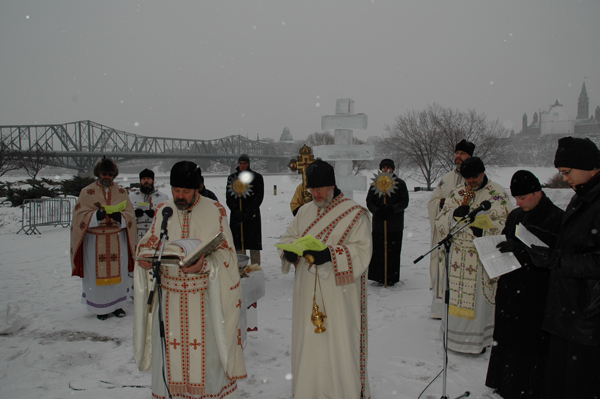
Today, the ancient and wonderful feast of the Theophany (about which see Nick Denysenko's book here), will often see many Eastern Christians carving crosses out of ice near newly blessed bodies of water, and then hurling wooden hand crosses into those waters to make of them an offering back to their Creator. This seems a quintessentially Christian ritual, but how was it handled in the Muslim world, where so many Eastern Christians lived and live?

I count it a success in my courses on Eastern Christian encounters with Islam when my students come to appreciate how often the boundaries were more blurred than they realize, or are often thought to be today. I tell them that they should leave the course recognizing that questions of identity, historically situated, are far messier than many thought, and that borrowings of, or at least attendance at, ritual practices of the "other's" community, happened more than we might realize.

Examples of this include some Muslims venerating Christian relics and praying in Christian shrines, and Christians attending Muslim village festivals, some evidence of which is to be found in such fascinating works as I noted here.

Now a new book further complicates and expounds the picture for us: Cross Veneration in the Medieval Islamic World: Christian Identity and Practice Under Muslim Rule by Charles Tieszen (I.B. Tauris, 2017), 244pp.

About this book the publisher tells us:
One of the most common religious practices among medieval Eastern Christian communities was their devotion to venerating crosses and crucifixes. Yet many of these communities existed in predominantly Islamic contexts, where the practice was subject to much criticism and often resulted in accusations of idolatry. How did Christians respond to these allegations? Why did they advocate the preservation of a practice that was often met with confusion or even contempt? To shed light onto these questions, Charles Tieszen looks at every known apologetic or polemical text written between the eighth and fourteenth centuries to include a relevant discussion. With sources taken from across the Mediterranean basin, Egypt, Syria and Palestine, the result is the first in-depth look at a key theological debate which lay at the heart of these communities' religious identities. By considering the perspectives of both Muslim and Christian authors, Cross Veneration in the Medieval Islamic World also raises important questions concerning cross-cultural debate and exchange, and the development of Christianity and Islam in the medieval period. This is an important book that will shine much needed light onto Christian-Muslim relations, the nature of inter-faith debates and the wider issues facing the communities living across the Middle East during the medieval period

Friday, November 13, 2015

Those Tricky Corpses

A graduate student of mine working on the great St. Irenaeus of Lyons has been researching the persecution of Christians in southern Gaul in the late second century when Irenaeus was briefly--Providentially?--out of town and thus escaped being killed. He returned to find much of the Christian community devastated and the persecutors disposing of the bodies in such a way that the relics could never be found and used to pray over.

Closer to our own day, Scott Kenworthy's magnificent study The Heart of Russia: Trinity-Sergius, Monasticism, and Society after 1825 revealed, inter alia, that the Bolshevik destruction of the Trinity-Sergius Lavra also entailed the destruction of relics and saints' bodies there in the hateful but mistaken belief that in destroying the relics of their faith, the supposedly superstitious and stupid peasants would in fact have that faith itself destroyed.

Christianity's despisers thus often know of the power of the dead even if Christians themselves have forgotten or refuse to acknowledge that power. A new book brings this phenomenon squarely into focus: Robert Bartlett, Why Can the Dead Do Such Great Things?: Saints and Worshippers from the Martyrs to the Reformation (Princeton UP, 2015),

The publisher gives a detailed table of contents here, where you will note ample attention paid to the Christian East.

About this book the publisher tells us:
From its earliest centuries, one of the most notable features of Christianity has been the veneration of the saints—the holy dead. This ambitious history tells the fascinating story of the cult of the saints from its origins in the second-century days of the Christian martyrs to the Protestant Reformation. Robert Bartlett examines all of the most important aspects of the saints—including miracles, relics, pilgrimages, shrines, and the saints’ role in the calendar, literature, and art.
The book explores the central role played by the bodies and body parts of saints, and the special treatment these relics received. From the routes, dangers, and rewards of pilgrimage, to the saints’ impact on everyday life, Bartlett’s account is an unmatched examination of an important and intriguing part of the religious life of the past—as well as the present.

Tuesday, November 29, 2011

On Holy Relics

Shortly after reading further stories on the astonishing news that more than three million Russians have come to venerate the sash/belt/cincture of the Theotokos--a relic whose veneration is already being said to have worked dozens of miracles--I received in the mail a book I briefly mentioned a while back: Sergius Bulgakov, Relics and Miracles: Two Theological Essays, trans. Boris Jakim (Eerdmans, 2011), xii+116pp.

This slender volume contains two essays by Bulgakov, who died in 1944. The first is on relics, the second on miracles. "On Holy Relics" was, Jakim tells us, written in 1918 just as the Bolshevik campaign of destruction of relics and icons was heating up. Bulgakov is neither shy nor retiring in blasting the Bolshevik barbarians whose "God-hating cynicism and blasphemy...does not have any precedents in the history of Christianity. The fury of the God-haters and the spirit of the Antichrist are fully evident in their savage profanation." Lest we miss his fury after this opening, he goes on to refer to the "satanical gangsters in the Kremlin" who seek to destroy not merely relics but, of course, the faith of believers, especially simple but pious peasants.

But before going any further in mounting a defense of relics--and their often attendant miracles--Bulgakov notes that "believers must pose anew the following questions: what exactly are holy relics, and what are the content and meaning of the dogma of the veneration of holy relics?" This is an important question because as he says next, belief in relics has never been defined "at any of the ecumenical councils. It has not been the object of any special deliberation." So Bulgakov sets out to answer just these questions, along the way realizing that part of his task will be to come up with what, at the other end of his century and in a Western context will be called, by another Slav, a "theology of the body." For relics, of course, are often bodily remnants of a Christian who gave up his life in martyrdom or heroic sanctity, and so relics are a reminder of the central truth of Christianity: the resurrection of Christ in the flesh. As Bulgakov shows, the "cultured despisers" (or in the Bolshevik case, the uncouth and uncultured despisers) of Christianity disdain relics because ultimately they disdain such a messily embodied faith in which the body dies but ultimately will be resurrected.

Disdain of, or at the very least acute discomfort around, the body has a long history, and today we are by no means exempt from it. Nearly fifty year ago, Jessica Mitford published her scathing exposé, The American Way of Death Revisited, mounting in prose a critique that the great Evelyn Waugh had two years earlier done in a fictional satire in The Loved One. She acutely observed North American squeamishness about acknowledging death. The clearest evidence of this is in the language: one does not die but “passes away”; the dead person is “the loved one”; the funeral is a “celebration of life.” And corpses (“the remains”) are plied with makeup and all sorts of horrid chemicals—carcinogenic chemicals, no less—in order to look “life-like.”

How much healthier, I think, is the custom of the Greek Orthodox villagers whom Juliet du Boulay describes in her haunting and lovely book, which I mentioned earlier. In Cosmos, Life, and Liturgy in a Greek Orthodox Village, based on anthropological research in which she lived for several years in Greece, du Boulay describes how the dead are tended at home: the body is prepared and clothed, often in an indigenous white garment understood to have baptismal and nuptial overtones, by family at home, where it remains until time for the funeral and
burial. Family and friends keep vigil, carry the body to the funeral, and then to be buried following what (as I have argued elsewhere) I regard as one of the most healthful and spiritually-psychologically helpful rites, that of the Last Kiss (seen here, starting at the 1:25 minute mark from the funeral of the late Russian Patriarch Alexy II).

After two or three years, in keeping with fairly widespread Greek practice even today, the bones are removed by the family from the grave, washed, and placed in an ossuary. This tending to the bones, as well as the whole process of grieving and burial, never allows the villagers to forget the central place of death, and the fate which awaits us all. There is nothing squeamish or disdainful here, and we could learn a great deal from that.

Saturday, September 10, 2011

Relics and Miracles

When I was a student, I remember a professor telling me a story, likely apocryphal and doubtless embellished, of why there are, in the Byzantine sanctoral, so many days (four, at least) devoted to finding various bits of John the Baptist--chiefly his chronically lost or "misplaced" head. The answer, it was said, lies in the rivalry of ancient monasteries to have relics of the Forerunner, and one way, apparently, for this to happen was for monks to visit a rival monastery with some or better relics and then to pilfer them away, often under a performance of piety: e.g., when going to kiss his finger-bone or some other appendage, certain monks would often not merely kiss but in fact suck up part or all of the bone in their mouth and thus smuggle it out of the monastery and back to their own place.

Relics are the focus of the latest translation of a book by Sergius Bulgakov. As I have noted before, we are seeing a revival in Bulgakov studies as the number of translations into English of his works continues apace, mostly from the hand of Boris Jakim (though T.A. Smith has also translated Bulgakov's book on angels) and the efforts of Eerdmans. Now another one has been set for release in October:  Relics and Miracles: Two Theological Essays (Eerdmans, 2011), 128pp.


About this book, the publisher tells us:
Esteemed translator Boris Jakim here presents for the first time in English two major theological essays by Sergius Bulgakov. In “Relics,” a 1918 response to Bolshevik desecration of the relics of Russian saints, Bulgakov develops a comprehensive theology of holy relics, connecting them with the Incarnation and showing their place in sacramental theology. In “Miracles” (1932) Bulgakov presents a Christological doctrine of the Gospel miracles, focusing on the question of how human activity relates to the works of Christ. Both works are suffused with Bulgakov’s faith in Christian resurrection — and with his signature “religious materialism,” in which the corporeal is illuminated by the spiritual and the earthly is transfigured into the heavenly.
Related Posts Plugin for WordPress, Blogger...