"Let books be your dining table, / And you shall be full of delights. / Let them be your
mattress,/
And you shall sleep restful nights" (St. Ephraim the Syrian).


Showing posts with label lived religion. Show all posts

Tuesday, June 30, 2020

Hearing Voices or Hearing God?

Historically of course when psychology, psychiatry, or psychoanalysis has turned to something called "religion" (a definition of which is not at all an agreed-upon thing), it is very often done so in reductionist and simplistic ways at best; at worst it has pathologized "religion" as the province of neurotic people.

More recently, however, some clinicians and others have attempted to move beyond such an approach, trying to understand "religious" practices and beliefs on their own terms, and even realizing that some of them are practiced by perfectly healthy people. I have shown some examples of this on this blog and elsewhere.

Now we have a new book that will add to and enrich this discussion. I'm looking forward to reading Hearing Voices and Other Matters of the Mind: What Mental Abnormalities Can Teach Us About Religions by Robert N. McCauley and George Graham (Oxford University Press, 2020), 280pp.

About this book the publisher tells us this:
A man with schizophrenia believes that God is instructing him through the public address system in a bus station. A nun falls into a decades-long depression because she believes that God refuses to answer her prayers. A neighborhood parishioner is bedeviled with anxiety because he believes that a certain religious ritual must be repeated, repeated, and repeated lest God punish him. To what extent are such manifestations of religious thinking analogous to mental disorder? Does mental dysfunction bring an individual closer to religious experience or thought? Hearing Voices and Other Unusual Experiences explores these questions using the tools of the cognitive science of religion and the philosophy of psychopathology.
Robert McCauley and George Graham emphasize underlying cognitive continuities between familiar features of religiosity, of mental disorders, and of everyday thinking and action. They contend that much religious thought and behavior can be explained as the cultural activation of our natural cognitive systems, which address matters that are essential to human survival: hazard precautions, agency detection, language processing, and theory of mind. Those systems produce responses to cultural stimuli that may mimic features of cognition and conduct associated with mental disorders, but which are sometimes coded as "religious" depending on the context.
The authors examine hallucinations of the voice of God and of other supernatural agents, spiritual depression often described as a "dark night of the soul," religious scrupulosity and compulsiveness, and challenges to theistic cognition that Autistic Spectrum Disorder poses. Their approach promises to shed light on both mental abnormalities and religiosity.

Monday, December 23, 2019

Religious, Ritual, and Spiritual Responses to Trauma

This is a new international collection of scholarly articles that is rich on promise and offers encouraging evidence of theology moving into new areas: Trauma and Lived Religion: Transcending the Ordinary, eds., R.R. Ganzevoort and s. Sremac (Palgrave Macmillan, 2019), 258pp.

About this book the publisher tells us this:
This book focuses on the power of the ‘ordinary’, ‘everydayness’ and ‘embodiment’ as keys to exploring the intersection of trauma and the everyday reality of religion. It critically investigates traumatic experiences from a perspective of lived religion, and therefore, examines how trauma is articulated and lived in the foreground of people’s concrete, material actualities. 
Trauma and Lived Religion seeks to demonstrate the vital relevance between the concept of lived religion and the study of trauma, and the reciprocal relationship between the two. A central question in this volume therefore focuses on the key dimensions of body, language, memory, testimony, and ritual. It will be of interest to academics in the fields of sociology, psychology, and religious studies with a focus on lived religion and trauma studies, across various religions and cultural contexts. 
The execution of the book, however, rather falls down in several places. Collections have inherent weaknesses, but this one really could have done with editors tightening the focus of the articles somewhat, or in lieu of that providing some sort of epilogue or conclusion that drew out some common themes, which are present but under-developed and undertheorized in the chapters.

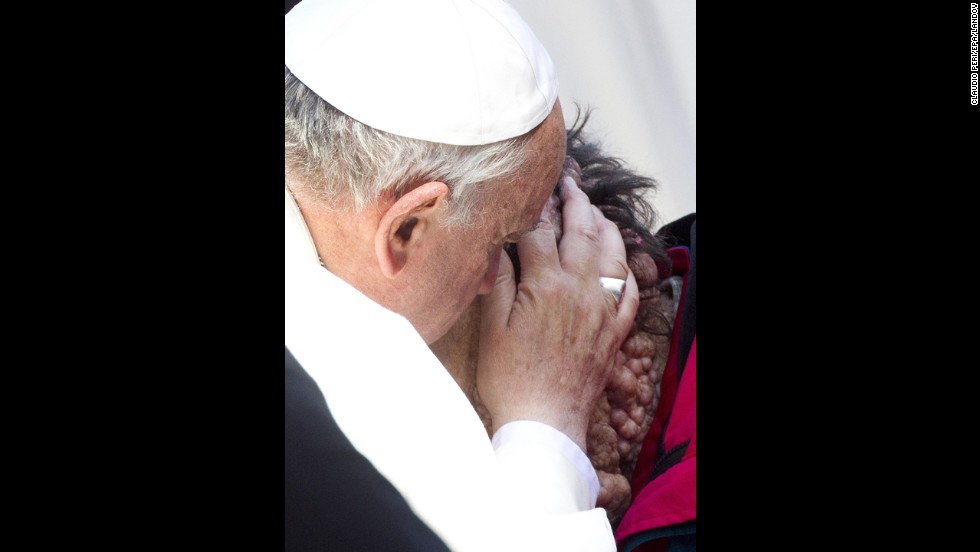
Chapters that stand out include Stephanie Arel's work on the role of pastoral (and especially papal) touch in overcoming shame, stigma, and their traumatic effects. She focuses on the number of people Pope Francis has touched and draws out some powerful lessons. Arel has herself contributed to an earlier collection, Post-Traumatic Public Theology.

The last section is especially useful, focusing on the ways in which Christian rituals can both help and harm those trying to overcome trauma.

The last chapter, by Hillary Jerome Scarsella, raises important but distressing questions from a Mennonite context: what message are victims of violence and abuse hearing when they come to church only to be told by Christians to imitate Christ, who stood silent before his accusers and abusers and protested nothing? Such a counsel can be retraumatizing for people who have suffered in silence and isolation for too long, powerless and voiceless. Such a counsel can leave powerful abusers in place, which is a gross injustice and potential danger to new victims.

Equally, what message are people hearing when told to forgive their abusers without any attempt at acknowledgement, let alone healing and reconciliation? Liturgies that too glibly promote these ideas and apparent virtues can do more damage than good. How can victims and victimizers equally partake from the same table and drink from the one chalice in the absence of any kind of reconciliation?

Finally I would note that the chapter on sexual abuse in the Catholic Church in Peru is very powerful, and Mariéle Wulf's chapter on trauma and healing is worthwhile. She draws on the insights of Margaret Crastnopol's recent book Micro-Trauma: A Psychoanalytic Understanding of Cumulative Psychic Injury (Routledge, 2015). 
Related Posts Plugin for WordPress, Blogger...