"Let books be your dining table, / And you shall be full of delights. / Let them be your
mattress,/
And you shall sleep restful nights" (St. Ephraim the Syrian).


Showing posts with label psychoanalytic thought. Show all posts

Friday, September 24, 2021

Eastern Orthodox Theology and Lacanian Psychoanalysis

I was of course very excited upon espying notice of the impending publication of this new book, which unites two of my most closely held intellectual and clinical interests. So I shall be glad when my review copy shows up and I have a chance to read Lacanian Psychoanalysis and Eastern Orthodox Christian Anthropology in Dialogue by Carl Waitz  and Theresa Tisdale (Routledge, October 2021), 172pp. 

About this new book the publisher tells us this: 

This book vigorously engages Lacan with a spiritual tradition that has yet to be thoroughly addressed within psychoanalytic literature―the Eastern Orthodox Christian tradition.

The book offers a unique engagement with a faith system that highlights and extends analytic thinking. For those in formation within the Orthodox tradition, this book brings psychoanalytic insights to bear on matters of faith that may at times seem opaque or difficult to understand. Ultimately, the authors seek to elicit in the reader the reflective and contemplative posture of Orthodoxy, as well as the listening ear of analysis, while considering the human subject.

This work is relevant and important for those training in psychoanalysis and Orthodox theology or ministry, as well as for those interested in the intersection between psychoanalysis and religion.

Wednesday, February 10, 2021

The Jesuits and the Psychoanalysts

I've been neglectful in not pointing out to you a book and author interview I did at the other blog I maintain. It is a book that overlaps with the focus of this blog, focusing as much of it does on Jesuit theology and psychology in Latin America in the postwar period, which is then so wonderfully linked back to the first generation of psychoanalysts around Freud. 

That book is Daniel José Gaztambide's A People's History of Psychoanalysis: from Freud to Liberation Psychology, and it is really superb. 

Wednesday, October 21, 2020

The Deceptions of Desire

Regular readers of this blog, and especially my book Everything Hidden Shall Be Revealed: Ridding the Church of Abuses of Sex and Power, will be aware of how indebted I am to the Spanish Jesuit priest, theologian, and psychoanalyst Carlos Dominguez-Morano and his landmark and brilliant book Belief After Freud. That book remains, far and away, the most theologically sophisticated, compelling, and important engagement of Freud for decades. 

Well, to my enormous excitement, I see that Lexington Books is bringing out another of his books in translation next month: The Myth of Desire: Sexuality, Love, and the Self, trans. Veronica Polo Torok (Lexington, November 2020), 254pp.

About this book the publisher tells us this:

In The Myth of Desire: Sexuality, Love, and the Self, Carlos Domínguez-Morano draws on psychoanalysis to explore the broad and complex reality of the affective-sexual realm encompassed by the term desire, a concept that propels individual aspirations, pursuits, and life endeavors. Domínguez-Morano takes a global perspective in order to introduce a methodology, examine the present sociocultural determinations affecting desire, review the main stages in the evolution of desire, and reflect on affective maturity. Domínguez-Morano further explores the five basic expressions of desire: falling in love and being a couple, homosexuality, narcissism and self-esteem, friendship, and the derivative of desire by way of sublimation. Scholars of psychology, philosophy, and sociology will find this book particularly useful.

Saturday, October 17, 2020

Sadomasochism and Pseudo-Christian Culture

At the Other Place, you will find some thoughts on sadomasochism and its dynamics in a Christian context. 

Wednesday, October 14, 2020

Ministry After Freud

One of Freud's longest and closest friendships was with Oskar Pfister, a Swiss Reformed pastor (discussed briefly here) who immediately saw the pastoral applicability of psychoanalytic techniques. Pfister visited Freud and befriended his entire family in Vienna over many years. It was perhaps with him in mind that Freud spoke of the ideal psychoanalyst as being neither a priest nor a physician, but instead a "secular pastoral worker." (That did not stop numerous Catholic--mainly Jesuit--priests from becoming analysts, as I documented in part here.)

But then Freud published Future of an Illusion, and inadvertently alienated most Jews and Christians--needlessly, as I have argued in a variety of places (including on here) over the years, and will argue at much greater length and detail in a book I'm working on, "Theology After Freud," which will doubtless get finished in fifty years or after my death, whichever comes first. For Freud is in fact the most useful adjunct theology could have for his clear-eyed efforts to diagnose and destroy illusions and idolatry which afflict us all, and often are bound up together in most ideologies, including those afflicting Catholic Christianity today. 

Pfister, as it turns out, was not alone in finding Freud useful for pastoral ministry. Along comes a new edition of a book which documents how Protestant pastors in this country found him helpful: Allison Stokes, Ministry After Freud (Wipf and Stock, 2020), 264pp. 

About this new book (originally published by Abingdon in 1985, apparently) the publisher tells us this:

Ministry After Freud tells the fascinating story of the impact of Freud's depth psychological discoveries on the practice of American Protestant ministry. It focuses on the lives and work of leaders such as Elwood Worcester, Anton Boisen, Flanders Dunhar, Smiley Blanton, Norman Vincent Peale, Seward Hiltner, and Paul Tillich, who were pioneers in the Religion and Health Movement, which brought together religion and psychology in healing ministry, and greatly influenced the practice of pastoral care and counseling. Never before chronicled and described, this Movement paralleled the Social Gospel Movement.

The book also tells the story for the first time of the New York Psychology Group, which met on Manhattan in the early 1940s. Members of this exclusive group—including Paul Tillich, Seward Hiltner, Erich Fromm, Rollo May, David Roberts, Gotthard Booth, Violet De Laszlo—shared ideas about the bearing of psychology on religion, ideas that later deeply influenced American intellectual and religious life through the articles and books these people wrote. The author identifies religion and health as a movement in theological liberalism, which historically seeks to interpret the gospel for each generation.

I have read and benefited from the book, and all who are interested in this history will not want to be without it. It is very cogently written, with a keen eye for telling detail and judicious assessments at every turn. It documents the Emmanuel Movement out of Boston in 1906 and other early movements that led to burgeoning interest in psychology and especially psychoanalysis, leading up to and developing yet further after the 1909 visit of Freud et al to this country.

It is hard to read the book now without at least a touch of wistfulness for a bygone era in which pastors and theologians sought out serious methods of pastoral counselling  and tried to learn as much as they could from Freud and related traditions of aptly named depth psychology. Who has that depth today in an era of monetized "mindfulness" apps on a phone and similar trifles? 

Friday, July 31, 2020

Theology and Psychology

Princeton University Press recently put into my hands a collection I am looking forward to reading: On Theology and Psychology: The Correspondence of C.G. Jung and Adolf Keller, ed. Marianne Jehle-Wildberger (PUP, 2020), 336pp.

Before I get around to reading and reflecting on this new book, let me point out to those who didn't see it my interview late last year with Pia Sophia Chaudhari about her wonderful, insightful book on Jung and Orthodox patristic theology.

This new collection of correspondence, the publisher says, offers us
Jung's correspondence with one of the twentieth century's leading theologians and ecumenicists.
On Theology and Psychology brings together C. G. Jung's correspondence with Adolf Keller, a celebrated Protestant theologian who was one of the pioneers of the modern ecumenical movement and one of the first religious leaders to become interested in analytical psychology. Their relationship spanned half a century, and for many years Keller was the only major religious leader to align himself with Jung and his ideas. Both men shared a lifelong engagement with questions of faith, and each grappled with God in his own distinctive way.
Presented here in English for the first time are letters that provide a rare look at Jung in dialogue with a theologian. Spanning some fifty years, these letters reveal an extended intellectual and spiritual discourse between two very different men as they exchange views on the nature of the divine, the compatibility of Jungian psychology and Christianity, the interpretation of the Bible and figures such as Jesus and Job, and the phenomenon of National Socialism. Although Keller was powerfully attracted to Jung's ideas, his correspondence with the famed psychiatrist demonstrates that he avoided discipleship. Both men struggled with essential questions about human existence, spirituality, and well-being, and both sought common ground where the concerns of psychologists and theologians converge.
Featuring an illuminating introduction by Marianne Jehle-Wildberger, On Theology and Psychology offers incomparable insights into the development of Jung's views on theology and religion, and a unique window into a spiritual and intellectual friendship unlike any other.

Tuesday, June 30, 2020

Hearing Voices or Hearing God?

Historically of course when psychology, psychiatry, or psychoanalysis has turned to something called "religion" (a definition of which is not at all an agreed-upon thing), it is very often done so in reductionist and simplistic ways at best; at worst it has pathologized "religion" as the province of neurotic people.

More recently, however, some clinicians and others have attempted to move beyond such an approach, trying to understand "religious" practices and beliefs on their own terms, and even realizing that some of them are practiced by perfectly healthy people. I have shown some examples of this on this blog and elsewhere.

Now we have a new book that will add to and enrich this discussion. I'm looking forward to reading Hearing Voices and Other Matters of the Mind: What Mental Abnormalities Can Teach Us About Religions by Robert N. McCauley and George Graham (Oxford University Press, 2020), 280pp.

About this book the publisher tells us this:
A man with schizophrenia believes that God is instructing him through the public address system in a bus station. A nun falls into a decades-long depression because she believes that God refuses to answer her prayers. A neighborhood parishioner is bedeviled with anxiety because he believes that a certain religious ritual must be repeated, repeated, and repeated lest God punish him. To what extent are such manifestations of religious thinking analogous to mental disorder? Does mental dysfunction bring an individual closer to religious experience or thought? Hearing Voices and Other Unusual Experiences explores these questions using the tools of the cognitive science of religion and the philosophy of psychopathology.
Robert McCauley and George Graham emphasize underlying cognitive continuities between familiar features of religiosity, of mental disorders, and of everyday thinking and action. They contend that much religious thought and behavior can be explained as the cultural activation of our natural cognitive systems, which address matters that are essential to human survival: hazard precautions, agency detection, language processing, and theory of mind. Those systems produce responses to cultural stimuli that may mimic features of cognition and conduct associated with mental disorders, but which are sometimes coded as "religious" depending on the context.
The authors examine hallucinations of the voice of God and of other supernatural agents, spiritual depression often described as a "dark night of the soul," religious scrupulosity and compulsiveness, and challenges to theistic cognition that Autistic Spectrum Disorder poses. Their approach promises to shed light on both mental abnormalities and religiosity.

Friday, April 3, 2020

The Crucifixion of Eros: An Interview with Matthew Clemente

Now more than ever the rashness of predicting the future is revealed in all its futility, but nonetheless I will make bold to say that the future of the philosophy of religion is in very good hands indeed with the young and newly minted scholar Matthew Clemente coming on board and making a splash with his new book, the fruit of his doctoral dissertation, which was just recently published: Eros Crucified: Death, Desire, and the Divine in Psychoanalysis and Philosophy of Religion  (Routledge, 2019), 202pp.

It is such a deeply fascinating book that I find myself almost ineluctably picking it up again and again to re-read parts of it, all the while plotting to find ways to use it in my courses.

Now, you might expect that with such a title and focus, this book would be catnip to me, a psychoanalyst manqué, and you would be right.

But in addition to the book's engagement with our father among the saints, Sigmund of Vienna, there are many other wide-ranging and often astonishing insights and claims, and then there is still more: the book's method, which is my second principal reason for delighting in it, recommending it, and wanting my students to read it. Here Clemente embodies, with almost effortless grace, the method of "despoiling the Egyptians," of discerning the spirits, of finding good wherever it may be found and engaging it directly.

This is a method I have had to spend no little time and energy trying to inculcate in my students in the past two years, many of whom seem increasingly to be not just uninterested in but hostile to learning from such as Nietzsche, Freud, Kierkegaard, Plato, Kristeva, Lacan, Levinas, and Žižek, inter alia, all of whom (and others) feature prominently as interlocutors in this book. Rather than retreat into some enclave of Catholic identity from which to hold oneself aloof from figures such as these (one of my students said to me this year that he refused to learn from "anybody who doesn't have 'St.' in front of their name"!), Clemente finds what is good, notes what is not, and moves on without rancor or defensiveness. It is very refreshing and encouraging to behold.

Following my usual practice, I e-mailed him some questions about the book, and here are his thoughts:

AD: Tell us about your background

MC: My friend and mentor, the philosopher Richard Kearney, is known for asking his students Paul Ricoeur’s famous introductory question: d'où parlez-vous? Where do you speak from? And of course, the answer always comes in the form of a story. Where do you speak from means tell us your story, tell us the story of your life. Well, my life as a philosopher began by mistake. I was not called to philosophy by an oracle. I fell into it like Adam into sin.

I am notoriously bad at keeping a schedule and have been my entire life. (I often joke that my wife is the single mother of four children, our three kids and me. I wouldn’t know where I was going or what day it was if not for her). The summer before my freshman year of college, I was scheduled to register for classes on a certain day at a certain time. Naturally, I forgot. And by the time I realized my mistake, all of the classes I had planned on taking were filled. Left with few options and feeling more than a little desperate, I decided to fulfill as many core requirements as I could. I ended up taking the last available seat in the last available Intro to Philosophy class. (I had never read a word of philosophy before then and didn’t expect to read much after the semester ended).

That class happened to be taught by a professor named John Manoussakis. I was there for his very first lecture at Holy Cross and his was the first college class I took. 12 years later, I completed my doctorate in philosophy and published my first book which focuses mainly on Manoussakis’s work.

I currently teach at Boston College and at Suffolk University, am the Associate Editor of the Journal of Continental Philosophy and Religion (Brill), and have been fortunate enough to study with and work alongside some of the best living Continental philosophers, Kearney and Manoussakis in particular.

AD: What led to the writing of Eros Crucified?

MC: The things that interest me are the things I don’t understand and will never understand. What to make of death. What to make of sex. What to make of great suffering and great beauty. How to reconcile these brute facts of human existence—my existence—with my own struggles over and longing for faith.

I think it would be a fair criticism of me and my work to say that I try to say too many things. When I was writing Eros Crucified, I was nagged by this persistent feeling, this little inner-voice that kept telling me “you’re doing too much.” But I’ve always been that way. I’ve always wanted to say everything, everything I ever thought, everything I ever felt, all I had to say. Eros Crucified is a first attempt at that. (God willing, there will be many more). It represents, for better or worse, the ideas and obsessions that have boggled my mind for the past half-decade and probably much, much longer.

AD: Your disclaimer at the outset outlines a bit of an analogy between a philosopher and a detective like Sherlock Holmes. Later on you quote Ricoeur ("controlled schizophrenia") on the problems of effecting too sharp a separation between philosophy and theology. Tell us a bit more about your own understanding of the relationship between philosophy and theology, and how you see a philosophical mind working.

MC: My book was born out of my dissertation. After my defense, the big take away I got from my readers was that at times it was unclear what position I was defending, which side of a question I was trying to argue for and which I was trying to upend. This, I realized, amounted to a difference in methodology.

For me, writing philosophy is not like writing a logical proof. A proof begins with a conclusion and builds an argument from which that conclusion necessarily follows. My writing was much more organic. At different points during the writing process I agreed with, or at least honestly entertained, every idea put forth. By the end, I don’t think I agreed with any of them. That is because philosophy begins with questions—or at least it ought to—and pursues answers, answers it will never find, only approach. The search is the thing. And who knows where the search will lead?

I love detective fiction and have been reading a lot of it lately. The detective is for me the ideal thinker. He is a questioner, a believer, an artist. In him, philosophy, theology, and poetry meet. As a philosopher, he knows that he knows not. He is late on the scene and so must question his way toward probable answers. He deals in probability, not certainty. Even when he solves a case, he never knows exactly what happened or why it happened. He was not there. He will never know. But he hopes to get nearer to the truth, closer to understanding, and he finds satisfaction in simply knowing what the truth is like—what might have happened, what probably happened, what is most likely to have happened.

Now although he is a skeptic and a questioner, the detective is not a doubter. Every detective is a theologian and indeed must be. By that I mean the detective is committed. He has his dogmas, his fundamental principles, which ground and orient his search. If he didn’t believe—believe to the core of him, in his very bones—he would never begin. There is such a thing as crime. There is such a thing as truth. The detective stands against one and on the side of the other. And while he may never know, still he believes there is something to know. He believes his search for truth will not be in vain. These are the premises from which his investigation begins, the foundation on which every investigation is built.

Yet in order to solve the case, the detective must do more than question and believe. He must create. He must paint a picture. Provide an image where no image exists.

Holmes and his descendants emphasize the role that reason plays in uncovering the truth. But the truth is that truth is never uncovered. It is recreated, reinvented, birthed into existence by the artists of existence, those who take the raw material of existence and make of it something that enables us to see and hear the world around us. Without inventiveness, without poetic imagination, no question would ever be answered, no problem ever solved. Experience is interpretation. Interpretation is construction. Construction is art. This fact goes unacknowledged by philosophers and detectives alike, but it is an essential aspect of how they—and we, all of us, who must create the world in order to live in it—engage with existence.

AD: Your Preface immediately takes us to the problem at hand: the poisoning of eros by Christianity (at least according to Nietzsche). For many Catholics today, bombarded with banal slogans about a "theology of the body" for 30 years now, this might come as a startling claim. Tell us a bit more about what you mean, including your claim of "the grave danger of a spiritualized sexuality" (p.80).

One of the great things about teaching philosophy is being reminded every semester of where our ideas come from, where our understandings of ourselves, our world, our relation to the divine originate. So much of what we call “Christianity” predates Christ—or at least Christ as incarnated in Jesus, the man who drank wine and went to weddings, wore clothes and did all of the unnatural and ridiculous things we human beings do.

The notion of spiritual purity, for instance, is thoroughly Platonic. The idea of the immortal soul is not a Christian one. (Why care about the resurrection of the body if there is an immortal soul that goes to heaven or hell the moment one dies?). Nietzsche is not wrong to call Christianity “Platonism for the masses.” By and large, what we think of when we think of Christianity is merely a less sophisticated form of Platonic philosophy. But this is a great danger. Because if the incarnation stands in opposition to anything, it is the spiritualized view of the human person offered by Platonic philosophy.

Sex is one of the strange and unsettling things about human existence that gets reduced by philosophy. Plato, of course, diminishes it. How often does he put into the mouth of Socrates the notion that sex (and bodily pleasure of any kind) is beneath the philosopher, the spiritualist par excellence who strives only for “higher” intellectual pleasures?

But the same is true in reverse. To idealize sex, to see it as some pure and sacred event rather than recognizing it for what it is—both beautiful and disgusting, at once the pinnacle of our existence and the epitome of our degradation—is to deny the scandalous truth of the incarnation. It is to reject the belief that God became man. Fully man, utterly man, with all of the parts of a man—even the most intimate and the most profane. Christ was—to borrow another phrase from Nietzsche—human, all too human. We, unfortunately, are not.

AD: "Eros has become an idol." There are many ways that crucial claim of your book can be hijacked, it seems to me, but you're not interested in simplistic one-sided ranting against "too much sex on TV today" or anything like that. Rather, part of your project, it seems to me, is to maintain the tension Freud saw: "The highest and the lowest are always closest to each other in the sphere of sexuality," a claim you immediately set alongside St. Paul's letters and, later, Kearney's recognition that "pornography...is a twin of Puritanism." Unpack all of this and tell us about the tension you maintain in the grandeur and griminess of human sexual desire, the "baseness and beatitude" you speak of later (p.125).

One of the things that Christians, myself included, don’t spend enough time reflecting upon and thus fail to take as seriously as we should is that religion itself is the greatest form of idolatry, that belief is a temptation, that Christ reserves his harshest rebukes for those who believe most ardently. To believe in God is an easy thing. It costs little and provides a good deal of comfort. What could be better than believing that everything happens for a reason, that there is someone looking down on us from on high, some utterly perfect, utterly beneficent, utterly distant being who guarantees our security and yet remains immune to the illness of the world?

Human life, we all know but rarely admit, is messy and complicated and the best aspects of our existence are also the worst. Our cities are built on top of sewers. Our advances are bought with war and destruction. Art is born of suffering. Life springs forth from the bowels. Being honest about our situation is hard enough. We prefer to flatter ourselves with thoughts of the “inherent dignity” of man. Or, if we’re being reactionary, we take pleasure in emphasizing the ills of human existence to the exclusion of its beauty. Sometimes we even deny that beauty exists. This is our lot. These are the ways in which we conceive of ourselves. And then along comes this strange and startling god—a god who is fully human, more human than any of us—and he alone is honest. He alone shows us—not with words or dictates, but with his life, with how he lives and, even more so, how he dies—that each of us is infinitely beautiful, infinitely perverse.

If Eros has become for us an idol that is because we refuse to see our sexuality (and thus our humanity) as it is revealed to us in the person of Jesus Christ. We refuse to look at the one who has been humbled and exalted, humiliated and, in his very humiliation, lifted up. In denying him, we deny ourselves. We prefer the counterfeit to the real thing, the lie to the truth of who and what we are.

AD: As one who has recently written a lot about Freud, and is working on a book ("Theology After Freud") I was fascinated by your treatment of him, which seems to me so skillful and deft in many ways--finding what is good and useful, but not being afraid to criticize or go beyond him. You also note--as did Lacan and Manoussakis--that there is significant overlap between Freud and Augustine. Tell us a bit more about that.

Thank you for your kind words. One of the goals of my writing is to test everything and retain what’s good, as St. Paul put it. A close friend, William Hendel, recently suggested to me that this single line of Scripture sums up St. Thomas’s entire project. Thomas is motivated by a desire to see how many disparate things he can incorporate into a deeper, richer, more philosophically complex understanding of Catholicism. I don’t know that anyone would call me a Thomist, but in this sense at least I view myself as very much indebted to the Thomist tradition.

Chesterton once observed, “The strongest saints and the strongest sceptics alike take positive evil as the starting-point of their argument.” I would say that this is what any honest man must do. That the human heart is more perverse than anything—“beyond remedy,” the prophet Jeremiah insists—is one of the first discoveries made by any man who looks into himself. It should come as no surprise then to find so much overlap between Freud and Augustine, the psychoanalyst and the orthodox Christian. After all, both attempt to offer an image of the phenomena of life by plumbing the depths of the human soul, and their own individual souls most of all.

I have never really understood why so many Christians are reluctant to accept and adopt the best arguments from the best thinkers. Heinrich Heine—an underappreciated philosopher and great wit (his work is really just a pleasure to read)—notes that so-called pessimistic philosophers, those seen by many to be the enemies of faith, actually provide the faithful with a good deal of ammunition. Their bleak (and honest) assessments of the human condition, far from refuting the tenants of faith, lend support to dogmas like original sin. Heine, of course, was bemoaning this fact. But I accept his observation and will adopt it for my own purposes. Nietzsche, Freud, Sartre, Lacan—these are not our enemies. They are our great thinkers, our great sufferers. Their insights have been purchased at a price. The price of honesty, an honest assessment of themselves. I am ready to listen to anyone willing to look into the depths of his own heart. And I’m not surprised when he reports having seen nothing there but dark.

AD: In a time when--if they know anything--most people assume that Catholic Christianity is conservative, if not reactionary, when it comes to questions of sex, sexuality, and gender, you speak of "the radical reevaluation of gender relations introduced by the Christian understanding of sacramental sexuality" (p.118). Tell us a bit more of what you mean here.

Freud, in classifying libido as masculine, identifies the desire to use and objectify others for our own selfish purposes—sadism in his terminology, will to power in Nietzsche’s—as the defining characteristic of human sexuality and thus the defining characteristic of human beings. The violently obsessive nature of male desire seeks the subjugation and ultimately the destruction of that which it loves; “male love is murder,” to quote Žižek. That we desire, in a very literal sense, a love object and not another human being seems to me not only experientially verifiable, but also irrefutable.

To return to a point touched upon above: isn’t desire understood as such the glue that binds together the apparent opposition between pornography and puritanism? What is the attraction of the pornographic if not that it gives the viewer an object to vent his sexual desires upon in the place of a real human being? What does puritanism offer if not an idealized (that is, inhuman) image of purity that only an object could attain?. Interestingly, Freud posits that women too are defined by this destructive desire and that sadistic sexuality, far from being an exclusively male problem, is the rule. Yet how do we account for the existence of a love beyond exploitation, one that forgoes power, refuses to objectify, loosens its grasp? (Obviously, for Freud no such love exists).

It is no secret that Christianity has throughout its history neglected the feminine, feared it, suppressed it, relegated it to the realm of the irrational and untrue. But if we’re being honest, we must admit that the Christ we meet in the Gospels is not a particularly masculine figure. A savior who comes not in power but in weakness, who preaches mercy instead of justice, forgiveness in place of revenge, who measures his wealth not by how much he can possess but how much he can give away, who shows us how to inhabit our vulnerability and be honest about our frailty, whose love is abandonment—that is not a very manly savior.

What is fascinating is that thinkers such as Nietzsche and Lacan appreciate this “revaluation of values” while many of their Christian counterparts—who focus with an almost fetishistic fervor on the perfection, omnipotence, justice, and transcendence of the divine—fail to even recognize it. In Beyond Good and Evil, for instance, Nietzsche speaks of woman as “clairvoyant in the world of suffering” and then immediately links female love with the love of Christ. Lacan, writing in Seminar XX on the “something more” (en plus) of female jouissance, says that male mystics such as John of the Cross embody feminine desire and he links that mysterious jouissance with l’amour de Dieu.

There is no question, I think, that if human sexuality is to be saved—and by that I mean, if human beings are to be saved—it can only be by means of the crucifixion of Eros, the nailing to the cross of our lust for power and might.

AD: Your quoting Mannoussakis, "There is no other" (p.123) puts me immediately in mind of Winnicott's equally blunt aphorism, "there's no such thing as a baby." Unpack this a bit for us.

Your pairing of these assertions is, I think, instructive. The first gestures at what I was just saying in response to your last question. There is no other means that the other is for me merely an object, a tool that I use and abuse for my pleasure. There is no baby means that for the infant, there is no self or rather that the self is all other, lost in the oblivion of fusion (“oceanic oneness” in Freud’s language) with the mother. Both capture something true about the human condition which strives at all costs to eliminate otherness, either by reducing it to the subhuman (sadism) or subsuming it into the indifferentiation that makes one from two (fusion). Both, of course, are different instantiations of Thanatos, the death drive, the desire our own unmaking. Both refuse the salvation that comes from without, the grace that comes from the other.

AD: Sum up your hopes for the book, and who especially should read it.

Whenever I write, I write with a reader in mind. That reader is the person I am trying to persuade, the one for whom all of my arguments and hesitations, illustrations and tangents are intended. The worst writing is written for an audience that already agrees. I assume a suspicious reader. My reader is hostile.

My goal is not to win a convert but simply to get the reader to acknowledge that a person as reasonable as him or herself could hold the positions I put forward. My ideal reader for this book would be someone skeptical of faith—Catholic Christianity in particular—someone with an affinity for existential philosophy and Freudian psychoanalytic thought.

But books are made to be read and ideal readers—like all ideals—simply do not exist. As I have worked through your questions, I have been touched time and again by your charitable and attentive reading of my work. That there is someone willing to show my book such good will tells me that my highest hopes for this project have already been reached. An author cannot ask for more.

AD: Having finished this book, what projects are you at work on now?

My latest obsession has been Socrates’s assertion at the end of the Symposium that authors should be able to write both tragedies and comedies, the true tragic dramatist is also a comic poet. I see the seeds of work of literary theory developing along these lines but God only knows if and when it will be finished.

Monday, March 16, 2020

Eleven Aphorisms On "Over-Reacting" and Fetishizing "Balance"

Is there anything lazier than accusing someone of "over-reacting?" That is a failure of imagination at the best of times, but now during this pandemic even more problematic. Or is it?

Herewith are eleven "aphorisms" on the ideas of "balance" and "over-reacting" from the sometime child therapist and psychoanalyst Adam Phillips, easily the most prolific, provocative, and interesting psychoanalyst writing today. All his books are worth your time.

(For some other aphorisms from Phillips that I put together, see here. For notes on Phillips' biography of Freud, see here. On the problem of distinguishing between terrorists and experts, see here. On his excellent book Unforbidden Pleasures, see here. For extended thoughts on Missing Out, see here.)

Here are some aphorisms I put together from On Balance:

Phillips begins by noting that (1)"When we talk about many of the things that matter most to us...we soon lose our so-called balanced views....Indeed, the sign that something does matter to us is that we lose our steadiness."

He rightly cautions--and this pandemic is surely the clearest example of this we are ever likely to see--that (2)"There are situations in which it is more dangerous to keep your balance than to lose it." 

For the toilet-paper collectors and other hoarders: (3) "Consumer capitalism has taught us to be phobic of frustration."

And yet: (4) "Our reaction to other people's excesses is an important clue to something vital about ourselves." 

And perhaps hoarders can be understood after all: (5) "Excesses of appetite are self-cures for feelings of helplessness." 

These "excesses" are also highly valuable for they offer us clues, pathways into our unconscious mind: (6) "Our excesses are the best clues we have to our own poverty; and our best way of concealing it from ourselves."

From what perspective dare we judge others as excessive? Do we really have the capacity for such vision, Phillips asks: (7) "There is something God-like about describing someone's behaviour as excessive."

God, in fact, as Freud famously showed in Future of an Illusion, is one onto whom we endlessly project all sorts of desires, not least to be rescued from a capricious world of "nature" that seems sometimes (as now) to want to kill us: (8) "We have delegated to a figure called God all the excesses we find most troubling in ourselves, which broadly speaking are our excessive love for ourselves and others, and our excessive punitiveness." 

Is it our sense of helplessness that leads us to blame others rather than questioning ourselves? Phillips thinks so: (9) "We are more inclined to blame the world for letting us down than to notice just how unrealistic our desires are." 

A common theme across many of Phillips' books (10): "We can't bear the complexity of our own minds, with their competing needs and desires and beliefs and feelings." Instead, we would rather be "'the emperor of one idea'" (Wallace Stevens).

God forbid that we should see this pandemic require armed force to restrain us and maintain social order, but that is far from outside the realm of the possible, including in people who might regard themselves as entirely rational, modern, scientific, secular, and not at all "religious" (11) "People become violent, lose their civility, when something that is fundamental to them is felt to be under threat....We are all fundamentalists about something."

Theology, Politics, Psychoanalysis, and the Post-Modern University (I)

Daniel Burston is a scholar at Duquesne whose fascinating work lies at the intersection of psychology and other disciplines.

Several years ago I had the pleasure of reading and reviewing his excellent biography A Forgotten Freudian: the Passion of Karl Stern. Stern, as I said in my review, was a fascinating figure whose eclipse seems to have come about in part by going in the opposite direction of all the major trends of the 20th century. A Jewish convert to Catholicism in increasingly secular Quebec, he was also a clinician formed in part by Freudian ideas as North American psychiatry was moving away from the great Viennese master.

Now Stern has a new book out, and it deserves attention for many reasons I shall discuss: Psychoanalysis, Politics and the Postmodern University (Palgrave Macmillan, 2020), 184pp.

About this book the publisher tells us this:
Critical theory draws on Marxism, psychoanalysis, postmodern and poststructuralist theorists. Marxism and psychoanalysis are rooted in the Enlightenment project, while postmodernism and poststructuralism are more indebted to Nietzsche, whose philosophy is rooted in anti-Enlightenment ideas and ideals. Marxism and psychoanalysis contributed mightily to our understanding of fascism and authoritarianism, but were distorted and disfigured by authoritarian tendencies and practices in turn. This book, written for clinicians and social scientists, explores these overarching themes, focusing on the reception of Freud in America, the authoritarian personality and American politics, Lacan’s “return to Freud,” Jordan Peterson and the Crisis of the Liberal Arts, and the anti-psychiatry movement. 
I've started it, and the first chapter on authority is especially what caught my attention when I learned of the book's forthcoming publication last fall. I'll say more about it on here in the coming days.

Friday, March 13, 2020

On "Socialism," Christian and Otherwise

I'm working on a paper on sadomasochism and the abuses of power in the Church in light of the sex abuse crisis to be published in England. That has given me an opportunity to go back and re-read Erich Fromm, the 40th anniversary of whose death we are marking this very month in fact.

I drew on Fromm to a limited degree in my Everything Hidden Shall Be Revealed: Ridding the Church of Abuses of Sex and Power. But since publishing that book almost exactly a year ago now, I have read more of Fromm and thought more about the problems of obedience and disobedience in the Church.

One book in particular, a short little book published in 1981 after Fromm's death, is useful not only for these themes but for other reasons. That book is On Disobedience: Why Freedom Means Saying "No" to Power.

I commend it to your attention for all of the above, but also because the last chapter contains some welcome clarifications on what is and is not meant by what Fromm calls "humanistic socialism." The very mention of such phrases and their cognates functions talismanically for too many so-called American Christians, from whom reliably and inexorably one can expect a very great lot of incorrigible stupidity, irrelevant and adolescent deflection, and general fatuousness in discussing these matters.

Fromm cuts through all that nonsense as when he says, e.g.,the aim of socialism "is...the full development of each [as] the condition for the full development of all." Socialism refuses to allow people to be seen or treated as means: "from this it follows that nobody must personally be subject to anyone because he owns capital." Moreover "the supreme principle of socialism is that man takes precedence over things, life over property, and hence work over capital; that power follows creation, and not possession."

Importantly, socialism is against idolatry: "it fights every kind of worship of State, nation, or class."

Perhaps the most important part to stress right now to overcome American fatuities and self-congratulatory nonsense about how "free" this country is and how "socialism" is supposedly the antithesis of such freedom is the following: "Humanistic socialism stands for freedom. It stands for freedom from fear, want, oppression, and violence. But freedom is not only *from* but also freedom *to*; freedom to participate actively and responsibly in all decisions concerning the citizen, freedom to develop the individual's human potential to the fullest possible degree."

There is nothing here in Fromm--nothing--that Catholic Christians, of whom I am one, could disagree with. What this looks like when translated into policy prescriptions remains, of course, to be established. But the unthinking "Christian" opposition to socialism so-called in this country is unsustainable and absurd.

Friday, February 21, 2020

On Pining for Past Slavery and Servitude

I've been at several academic conferences over the last decade in which I keep hearing lectures from researchers deep inside Russia repeatedly discovering potent pockets of nostalgia for the Stalinist era--sometimes even replete with pseudo-icons of Uncle Joe inside Orthodox churches! We might think this very strange, but for those of us who have read Erich Fromm's 1941 international best-seller, Escape from Freedom, this makes a great deal of sense. As he demonstrated there (in what his biographer Lawrence Friedman calls his most important and profound book), most of us, at least some of the time, rather prefer slavery to freedom, and rather like having strongmen of various sorts tell us what to do.

It is not a shock, therefore, to hear of such stories elsewhere across the formerly communist states of Eastern Europe. Some of them are captured in a recent book I just came across: Witold Szablowski, Dancing Bears: True Stories of People Nostalgic for Life Under Tyrannytrans. Antonia Lloyd-Jones (Penguin, 2018), 256pp.

About this book the publisher tells us this:
For hundreds of years, Bulgarian Gypsies trained bears to dance, welcoming them into their families and taking them on the road to perform. In the early 2000s, with the fall of Communism, they were forced to release the bears into a wildlife refuge. But even today, whenever the bears see a human, they still get up on their hind legs to dance.
In the tradition of Ryszard Kapuściński, award-winning Polish journalist Witold Szabłowski uncovers remarkable stories of people throughout Eastern Europe and in Cuba who, like Bulgaria’s dancing bears, are now free but who seem nostalgic for the time when they were not. His on-the-ground reporting—of smuggling a car into Ukraine, hitchhiking through Kosovo as it declares independence, arguing with Stalin-adoring tour guides at the Stalin Museum, sleeping in London’s Victoria Station alongside a homeless woman from Poland, and giving taxi rides to Cubans fearing for the life of Fidel Castro—provides a fascinating portrait of social and economic upheaval and a lesson in the challenges of freedom and the seductions of authoritarian rule.

Friday, January 31, 2020

On the God Concepts Even Atheists Have

It's been a lot of fun this semester to explore with my students something of the relationship between psychoanalysis and Christian faith.

We began with a brief exploration of Future of an Illusion, where all modern psychological and psychiatric suspicion of faith and belief seems to find its origins. This book marked Freud out as one of the three “masters of suspicion,” so called by the philosopher Paul Ricoeur: the other two being Marx and Nietzsche. All of them are thought to be enemies of something called “religion,” even though nobody can agree on what “religion” is.

But it falls to Freud to launch the modern suspicion of prayer, faith, and belief in God. For Freud the idea that you can pray to some being called God and get him to change the weather, or help you pass an exam, or heal Uncle Joe from cancer, or spring Grandma from purgatory, is what he called an illusion, that is a fantasy you entertain that may or may not be true or come true. But what an illusion really seeks to do is to give you a sense that your wishes, your hopes, your dreams, may well come true thanks to the great Father Protector in the Sky you feel you need based on your experience as a helpless infant in a chaotic and destructive world.

We know some of the problems with this claim--it's highly philosophically flabby and lazy, for one thing, and makes generalizations so sweeping that their refutation is child's play.

But there is another set of problems, perhaps the most fatal, with Freud's claim: its lack of clinical and empirical grounding. Freud, especially in his writings from 1920 to the end of his life in 1939, often blurred the boundaries between his work as an individual clinician, seeing individuals in his consulting room at Bergasse 19 in Vienna, and making universal generalizations about all of humanity at all times and in every place and culture. As a clinician he treated perhaps a couple hundred people over his lifetime of practicing psychoanalysis. As a theoretician and cultural critic, he claimed to speak for billions past and present. This is a major weakness in his writings.

But his criticism of “religion” as an infantile illusion was widely accepted by the mainstream of psychiatry, psychology, and psychoanalysis until very recently. It was never a serious, much less substantiated, criticism, but simply a professional prejudice. Clinicians have their prejudices and blind spots, their ideological hobby horses and fetishes, just like the rest of us. After 1927 began a widespread period of perceived opposition between psychology and theology.

Christians reciprocated by often dismissing Freud and psychology as a whole, disdaining their efforts as godless and dangerous nonsense and denying the need for any sort of therapy, sometimes saying that going to confession and praying more were all that was needed—a dangerous species of magical thinking which fails to help, and often actively harms, those who are suffering. I criticized that here.

But shortly after Freud’s death, a pediatrician and psychoanalyst in England, D.W. Winnicott, begins treating mothers and children suffering from effects of WWII. Many parents in and around London and the bigger cities made the decision to send their children to boarding schools or to live with others in the countryside (or overseas to Canada), to save them from being bombed in the cities. Mothers were often wracked with guilt over this, fearing they had done great harm to their children.

In response, when reunited after the war, some mothers went overboard, overcompensating for their absence out of a sense of guilt. Winnicott discovered, working with such kids and their mothers, that the ideal balance was between total neglect and an overzealous mother seeking to be perfect, to leave no need unmet, no desire unfulfilled on the part of her child. Such perfectionism, Winnicott realized, is actually quite harmful. The child needs the experience of feeling frustrated sometimes, of not always having every need/desire met immediately. Such experiences help the child with his/her reality-testing.

To mothers, Winnicott offered the famous counsel of being “good enough”—not neglecting the needs of their children, but not seeking to fulfill all of them every time. The best mother is the good enough mother—not neglectful, certainly, but not over-anxious to be and do every single thing, either. Frustration, after all, has its purposes, some of them positive.

In the child’s reality testing, Winnicott also famously realized, s/he makes use of objects to negotiate exploration of self and other. Some objects help the child understand him/herself and others around him. Some frustrate this purpose and end up as bad objects. But whether good or bad, these Winnicott called “transitional objects.” They facilitate the transition from the enclosed world of the infantile self to the outer world where others exist independent of the self.

These are transitional objects, and they are often very simple but very powerful. How many of you had—or still have!—a favored blanket or teddy bear or something similar? In Winnicott’s experience this was almost universal.

Winnicott, unlike Freud and a lot of early analysts, was neither Jewish nor atheist. He grew up Methodist and then became Anglican. For him belief in God posed no problem at all. (In turn, Winnicott's thought is a useful adjunct for Catholic theology, as I tried to show a little bit here.) In fact, his extensive clinical research led him to realize that Freud was wrong in seeing religious faith as an illusion or pathology. For Winnicott healthy development of infants included the development of illusions, which were then tested against reality to see which were true, which false.

Winnicott's use of object-relations and illusions, including those surrounding God, opened the door for Ana-Maria Rizzuto (some of whose thought was discussed previously in more details here). She was born and raised Catholic in Argentina, where she was a catechist in her early years, and taught a course on psychology and theology to seminarians before moving to Boston in 1965 and completing medical school and then psychoanalytic training.

That training and her early research led her to begin asking: so even if we accept Freud’s thesis that faith in and prayer to God is an infantile illusion, shouldn’t we as clinicians still investigate our patients’ beliefs about, and hopes and desires directed at, God? Aren’t we supposed to be interested in everything our patients hope for, desire, fear, love, are curious or anxious about? Why rule God out from the start—except out of professional prejudice? How helpful are we to be to people we are charged with helping if we tell almost all of them that any notion they have of God is off the table from the beginning? If you are supposed to be free to talk safely and openly to your therapist about anything, why are we saying you can talk about anything but if you talk about God we will call you crazy and clap you in a straight-jacket?

Her worldview, shaped by Catholic theology and Freudian as well as object-relations psychology, has five key components:

i) Object-related world in which we are never alone
ii) Symbolic understanding of reality
iii) Self-examination of hidden motives and agendas
iv) Transformational power of confessing my sins/struggles
v) Need to confront oneself and reality honestly: nothing can escape the ‘reality principle’ as Freud called it, or ‘God’ as Christians call Him.

She begins research projects (turning them into her first book) at Boston hospitals with patients, including psychotic and neurotic patients, to just listen to their God objects and ideas, tape-recording and then analyzing these discussions later. What she finds is that everybody has some kind of God object in mind, some kind of concept, some ideas about who or what God is or is not. These have developed very early on, and in ways that are often little understood and very undertheorized. As she puts it, “no child arrives at the ‘house of God’ without his pet God under his arm.”

And as she further showed, almost nobody develops without a God image, a God object, in mind. Even those who later as adults come to claim for themselves the status of “atheist” always have a particular God image or God object in mind that they hate or reject. Freud is the most famous example of this: he was a Jewish atheist. There are Catholic atheists, Protestant atheists, Orthodox atheists, Muslim atheists. As she puts it categorically, “there is no such thing as a person without a God representation.”

Everyone “believes” in a God object to a greater or lesser degree. This is not just a matter of intellectual reason but also of the heart, involving love and hate. But it is erroneous to think that these God representations are singularly paternal or maternal. They can and do vary from person to person.

The challenge for religious traditions then becomes: to put an “official” theology face-to-face with the child’s theology and work from there.

Both children and adult patients, in her experience, were divided into four types:

1) Believers: Those who believed in God without much problem
2) Agnostics: those wondering whether God exists, and whether to believe in Him
3) Those angry/dismayed that others believe in a God who does not interest them
4) Those struggling to get rid of objects and images of a harsh, demanding God of wrath and judgment

For Rizzuto, in sum, Freud is valuable in challenging us to examine what false illusions we might have about God while seeking to understand ourselves more deeply so that we may know whether the images, ideas, illusions, objects, representations we have about God are true and helpful, healthful, useful, or destructive and idolatrous.

Finally, and more recently, her work has been confirmed by the Catholic psychiatrist Robert Coles in The Spiritual Life of Children, about whom and whose work more another time. Suffice it to say that is an invaluable book of deep and fascinating insights.

Monday, January 13, 2020

Ivan Illich and Erich Fromm on the Corrupt Church

I've started working on a long essay on what we still have not learned from Erich Fromm, the 40th anniversary of whose death we will shortly mark. I think, and hope to show, that he has much to teach Catholics in particular in the sex abuse crisis, about which I published my new book several months ago now. In that book, Everything Hidden Shall be Revealed: Ridding the Church of Abuses of Sex and Power, I drew on Fromm a little bit (and other psychoanalytic critics), but I want to expand that focus in this new essay.

Part of what has motivated me is finally being able to do a serious reading of Lawrence Friedman's magisterial biography, The Lives of Erich Fromm: Love's Prophet, where he notes that while Fromm wrote many books that sold millions of copies, and are still in print today, he has nonetheless been largely ignored by North American academics (those in other parts of the world are a different story).

As I've been discovering this is true, a fortiori, of academic theologians, especially Catholics and Orthodox theologians. (Fromm got some attention in the post-war period from Protestants, but most of that dried up long before he died.) This is all the stranger given how many books Fromm wrote on topics so obviously and overwhelmingly amenable to theology: love, hope, sin, freedom, illusion, idolatry, and much else.

His 1941 book Escape from Freedom is one I am also re-reading, and it has key insights also unassimilated by Catholics, but very much in need of being considered today as I shall show.

In going back to Fromm as I am doing, I realized I also have to go back to Ivan Illich, sometime Catholic priest and powerful critic of many social institutions, including churches and schools. I read his Deschooling Society in the 90s, and it has remained with me as a singular challenge.

I also spy a new collection of his writings that I'm looking forward to reading: The Powerless Church, just republished late last year. About this book the publisher tells us this:
Dalmatian-Austrian philosopher, Roman Catholic priest, and radical cultural critic Ivan Illich is best known for polemical writings such as Deschooling Society and Tools for Conviviality, which decried Western institutions of the 1970s. This collection brings together Illich’s shorter writings from his early publications through the rise of his remarkable intellectual career, making available works that had fallen into undue obscurity.
A fervent critic of Western Catholicism, Illich also addressed contemporary practices in fields from education and medicine to labor and socioeconomic development. At the heart of his work is his opposition to the imperialistic nature of state- and Church-sponsored missionary activities. His deep understanding of Church history, particularly the institutions of the thirteenth century, lent a historian’s perspective to his critique of the Church and other twentieth-century institutions.
The Powerless Church and Other Selected Writings, 1955–1985 comprises some of Illich’s most salient and influential short works as well as a foreword by philosopher Giorgio Agamben. Featuring writings that had previously appeared in now-defunct publications, this volume is an indispensable resource for readers of Illich’s longer works and for scholars of philosophy, religion, and cultural critique.

Wednesday, January 8, 2020

Prayerful Distractions as Psychological Free-Associations

Almost two years ago I was speculating rather cautiously on the possibility of a kind of "psychoanalytic" reading of Herbert McCabe's ideas around prayer, drawing on his helpful notion about "distractions" which come from his short chapter in God, Christ, and Us.

Well last night I had a chance to read another of his works, God Still Matters, with additional chapters on prayer and the Trinity. It was in this work that he acknowledges that his thoughts on distractions--which he says reveal to us what we really want, and instead of fighting them we should encourage their surfacing, the more easily to pray about and for them--were not his own, but came from a fellow Dominican, Victor White.

Now it all makes sense and I feel vindicated in my speculation. For White was a long-time dialogue partner with Carl Jung, and in fact wrote works about Jungian psychoanalysis, including God and the Unconscious.

All this, of course, takes us back to the great Viennese master himself, whose reflections on free association were and are so profoundly revealing and revolutionary. (At Strands in New York over Christmas, I picked up a short book by Anton Kris, Free Association: Method and Practice, which you may find interesting. Christopher Bollas also has interesting things to say about this in a variety of places, including here.)

We think that freely associating on the analyst's couch is a spectacular waste of time. And, wouldn't you know it, that's precisely the argument most of us use against prayer. McCabe again:
For a real absolute waste of time you have to go to prayer. I reckon that more than 80% of our reluctance to pray consists precisely in our dim recognition of this and our neurotic fear of wasting time, of spending part of our life in something that in the end gets you nowhere, something that is not merely non-productive, non-money making, but is even non-creative. it doesn't even have the justification of art and poetry. It is an absolute waste of time, it is a sharing into the waste of time which is the interior life of the Godhead. 
Finally for my students this semester in addition to reading McCabe, Plekon, and others, we will be reading Romano Guardini's lovely little classic, The Spirit of the Liturgy, where he also winsomely writes about liturgy being utterly wasteful of time for it is simply children at play in the Father's playground.

Monday, December 23, 2019

Religious, Ritual, and Spiritual Responses to Trauma

This is a new international collection of scholarly articles that is rich on promise and offers encouraging evidence of theology moving into new areas: Trauma and Lived Religion: Transcending the Ordinary, eds., R.R. Ganzevoort and s. Sremac (Palgrave Macmillan, 2019), 258pp.

About this book the publisher tells us this:
This book focuses on the power of the ‘ordinary’, ‘everydayness’ and ‘embodiment’ as keys to exploring the intersection of trauma and the everyday reality of religion. It critically investigates traumatic experiences from a perspective of lived religion, and therefore, examines how trauma is articulated and lived in the foreground of people’s concrete, material actualities. 
Trauma and Lived Religion seeks to demonstrate the vital relevance between the concept of lived religion and the study of trauma, and the reciprocal relationship between the two. A central question in this volume therefore focuses on the key dimensions of body, language, memory, testimony, and ritual. It will be of interest to academics in the fields of sociology, psychology, and religious studies with a focus on lived religion and trauma studies, across various religions and cultural contexts. 
The execution of the book, however, rather falls down in several places. Collections have inherent weaknesses, but this one really could have done with editors tightening the focus of the articles somewhat, or in lieu of that providing some sort of epilogue or conclusion that drew out some common themes, which are present but under-developed and undertheorized in the chapters.

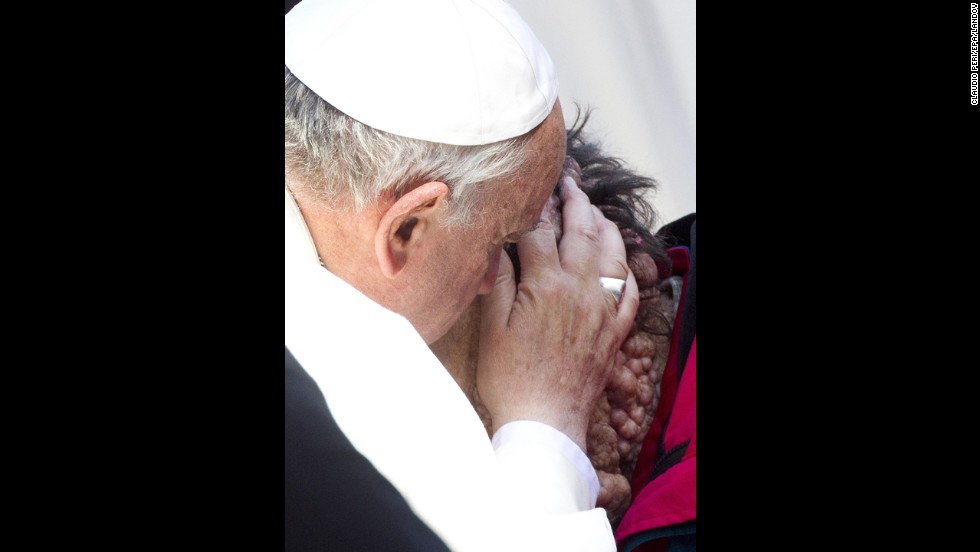
Chapters that stand out include Stephanie Arel's work on the role of pastoral (and especially papal) touch in overcoming shame, stigma, and their traumatic effects. She focuses on the number of people Pope Francis has touched and draws out some powerful lessons. Arel has herself contributed to an earlier collection, Post-Traumatic Public Theology.

The last section is especially useful, focusing on the ways in which Christian rituals can both help and harm those trying to overcome trauma.

The last chapter, by Hillary Jerome Scarsella, raises important but distressing questions from a Mennonite context: what message are victims of violence and abuse hearing when they come to church only to be told by Christians to imitate Christ, who stood silent before his accusers and abusers and protested nothing? Such a counsel can be retraumatizing for people who have suffered in silence and isolation for too long, powerless and voiceless. Such a counsel can leave powerful abusers in place, which is a gross injustice and potential danger to new victims.

Equally, what message are people hearing when told to forgive their abusers without any attempt at acknowledgement, let alone healing and reconciliation? Liturgies that too glibly promote these ideas and apparent virtues can do more damage than good. How can victims and victimizers equally partake from the same table and drink from the one chalice in the absence of any kind of reconciliation?

Finally I would note that the chapter on sexual abuse in the Catholic Church in Peru is very powerful, and Mariéle Wulf's chapter on trauma and healing is worthwhile. She draws on the insights of Margaret Crastnopol's recent book Micro-Trauma: A Psychoanalytic Understanding of Cumulative Psychic Injury (Routledge, 2015). 
Related Posts Plugin for WordPress, Blogger...