"Let books be your dining table, / And you shall be full of delights. / Let them be your
mattress,/
And you shall sleep restful nights" (St. Ephraim the Syrian).


Showing posts with label Armenia. Show all posts

Monday, January 31, 2022

The Western Armenian Diaspora

My two books in ecclesiology both gave pride of place to the Armenian Church, so I always keep an eye out for new scholarship on Armenia and Armenian Christianity. In March of this year we shall have published The Rise of the Western Armenian Diaspora in the Early Modern Ottoman Empire: From Refugee Crisis to Renaissance by Henry R. Shapiro (Edinburgh University Press, March 2022), 336pp. 

About this book the publisher tells us this:

This book traces how Armenian migrants changed the demographic and cultural landscape of Istanbul and Western Anatolia in the course of the seventeenth century. During the centuries that followed, Ottoman Armenian merchants, financiers (sarrafs), authors, musicians, translators, printers and bureaucrats would play key roles in Ottoman trade, cultural life and even governance, that is, in most spheres of the empire's economic and cultural life. This book shows how that cosmopolitan world came into being.

Using both Ottoman Turkish and little-known Armenian sources, Henry Shapiro provides the first systematic study of Armenian population movements that resulted in the cosmopolitan remaking of Istanbul. In the first part of the book he documents the Great Armenian Flight, showing how the global crisis of the seventeenth century (war, climate change, famine) impacted the historical Armenian population centres of the Caucasus and Eastern Anatolia and led to mass migrations and resettlement in Western Anatolia, Istanbul and Thrace. In the second part of the book Shapiro links this history of migration and the refugee crisis with the development of intellectual and cultural life in Istanbul and Western Anatolia – the rise of the Western Armenian Diaspora.

Wednesday, November 25, 2020

Christianity in Soviet Armenia

Readers of my two books will be aware of how deeply I esteem the Armenian Church for many reasons, and how fascinated I remain by her history. A new book gives us glimpses into one particularly difficult period of that history: Soviet captivity. I look forward to reading Jakub Osiecki, The Armenian Church in Soviet Armenia: The Policies of the Armenian Bolsheviks and the Armenian Church, 1920-1932, trans. Artur Zwolski (Peter Lang, 2020), 272pp.

About this book the publisher tells us this:

This book presents the results of comprehensive study on the history of Soviet Armenia and the Armenian Church in the years 1920-32. Through documents uncovered in the Communist Party Archive in Yerevan and the Georgian Historical Archive, press antireligious propaganda, oral testimonies, and biographical interviews conducted by the author, The Armenian Church in Soviet Armenia expands the discussion on the history of the Armenian Church in the 20th century, especially regarding the relations between the spiritual leaders of the Armenian Church and the Bolsheviks. In accordance with stipulations laid out by the Central Committee in consultation with the GPU, Khoren Muradbekian was elected as the Catholicos of All Armenians. His election was the principal reason behind the schism inside the Church– which, especially in the Armenian diaspora, divided not only clergy, but laymen themselves. These divisions, even after hundred years, are still vivid in Armenian society.

Monday, May 18, 2020

Catching up with the Armenians

If you read my first book on the papacy, or my book last year on the sex abuse crisis in the Catholic Church, then you will know (with more detail than you could possibly want!) just how deep my admiration and love for the Armenian Church is. I focus primarily on their utterly unique ecclesial structures, but there is so much to admire in their forbearance in the face of a singular history of suffering and genocide, in their liturgical and theological traditions and, perhaps mundanely, in their hospitality and food which I have been very graced to receive on several occasions.

2020 is promising to be a banner year for further scholarly studies about the Armenian Church. We started off in January with Monastic Life in the Armenian Church: Glorious Past - Ecumenical Reconsideration edited by Jasmine Dum-Tragut and Dietmar W. Winkler (Lit Verlag, 2020), 224pp.

About this book the publisher tells us the following:

Monasticism is a vital feature of Christian spiritual life and has its origins in the Oriens Christianus. The present volume contains studies on Armenian Monasticism from various perspectives. The task is not only to produce historical studies. The aim is also to contribute to and reflect on monasticism today. Authors come from the Armenian Apostolic Catholicosate of Ejmiacin, the Holy See of Cilicia, the Armenian Patriarchate of Jerusalem, and the  Armenian-Catholic Church, as well as from the Benedictine and  Franciscan Orders of the Catholic Church. The experts reflected on the glorious past of Armenian monasticism and agreed to evaluate future challenges ecumenically to give more insight into both past and present Armenian monasticism.

In early June, Stanford University Press is bringing out Brokers of Faith, Brokers of Empire: Armenians and the Politics of Reform in the Ottoman Empire by Richard E. Antaramian (SUP, 2020), 224pp.

About this book the publisher offers us this précis:
The Ottoman Empire enforced imperial rule through its management of diversity. For centuries, non-Muslim religious institutions, such as the Armenian Church, were charged with guaranteeing their flocks' loyalty to the sultan. Rather than being passive subjects, Armenian elites, both the clergy and laity, strategically wove the institutions of the Armenian Church, and thus the Armenian community itself, into the fabric of imperial society. In so doing, Armenian elites became powerful brokers between factions in Ottoman politics—until the politics of nineteenth-century reform changed these relationships. In Brokers of Faith, Brokers of Empire, Richard E. Antaramian presents a revisionist account of Ottoman reform, relating the contention within the Armenian community to broader imperial politics. Reform afforded Armenians the opportunity to recast themselves as partners of the state, rather than as brokers among factions. And in the course of pursuing such programs, they transformed the community's role in imperial society. As the Ottoman reform program changed how religious difference could be employed in a Muslim empire, Armenian clergymen found themselves enmeshed in high-stakes political and social contests that would have deadly consequences.
Finally in mid-July we will have the publication of Russia's Entangled Embrace: The Tsarist Empire and the Armenians, 1801-1914 by Stephen Badalyan Riegg (Cornell University Press, 2020), 328pp.

About this book the publisher provides this blurb:
Russia's Entangled Embrace traces the relationship between the Romanov state and the Armenian diaspora that populated Russia's territorial fringes and navigated the tsarist empire's metropolitan centers.
By engaging the ongoing debates about imperial structures that were simultaneously symbiotic and hierarchically ordered, Stephen Badalyan Riegg helps us to understand how, for Armenians and some other subjects, imperial rule represented not hypothetical, clear-cut alternatives but simultaneous, messy realities. He examines why, and how, Russian architects of empire imagined Armenians as being politically desirable. These circumstances included the familiarity of their faith, perceived degree of social, political, or cultural integration, and their actual or potential contributions to the state's varied priorities.
Based on extensive research in the archives of St. Petersburg, Moscow, and Yerevan, Russia's Entangled Embrace reveals that the Russian government relied on Armenians to build its empire in the Caucasus and beyond. Analyzing the complexities of this imperial relationship―beyond the reductive question of whether Russia was a friend or foe to Armenians―allows us to study the methods of tsarist imperialism in the context of diasporic distribution, interimperial conflict and alliance, nationalism, and religious and economic identity.

Wednesday, February 26, 2020

Armenian Genocide and the Global Order

One of the things research into trauma has uncovered is the multi-generational nature of the suffering, and the fact that at least to the third generation after the original event one can find major post-traumatic disorders afflicting a wide number of people. This has been shown to be the case with the Holocaust and with the first massive genocide of the last century, the slaughter of the Armenians in 1915. A new book situates that genocide in a particular context--that of American foreign policy--with obvious implications even down to our own day: Charlie Laderman, Sharing the Burden: The Armenian Question, Humanitarian Intervention, and Anglo-American Visions of Global Order (Oxford University Press, 2019), 300pp.

About this book the publisher tells us this:
The destruction of the Armenian community in the Ottoman Empire was an unprecedented tragedy. Even amidst the horrors of the First World War, Theodore Roosevelt insisted that it was the greatest crime of the conflict. The wartime mass killing of approximately one million Armenian Christians was the culmination of a series of massacres that Winston Churchill would later recall had roused publics on both sides of the Atlantic and inspired fervent appeals to save the Armenians.
Sharing the Burden explains how the Armenian struggle for survival became so entangled with the debate over the international role of the United States as it rose to world power status in the early twentieth century. In doing so, Charlie Laderman provides a fresh perspective on the role of humanitarian intervention in US foreign policy, Anglo-American relations, and the emergence of a new world order after World War I. The United States' responsibility to protect the Armenians was a central preoccupation of Presidents Theodore Roosevelt and Woodrow Wilson. Both American and British leaders proposed an Anglo-American alliance to take joint responsibilities for the Middle East and envisioned a US intervention to secure an independent Armenia as key to the new League of Nations. The Armenian question illustrates how policymakers, missionaries, and the public grappled for the first time with atrocities on this scale. It also reveals the values that animated American society during this pivotal period in the nation's foreign relations.
Deepening understanding of the Anglo-American special relationship and its role in reforming global order, Sharing the Burden illuminates the possibilities, limitations, and continued dilemmas of humanitarian intervention in international politics.

Wednesday, April 3, 2019

Armenians and Turks in the Aftermath of Genocide

Every semester when we talk about the Armenian (and Assyrian and Greek) genocide of 1915, my students are first fascinated and then appalled by the politics of its historiography, especially since 2007 and the murder of Hrant Dink. A newly published paperback edition of a book that first appeared in 2015 helps us appreciate the never-ending nature of this complex controversy: Thomas de Waal, Great Catastrophe: Armenians and Turks in the Shadow of Genocide (Oxford UP, 2018), 328pp.| 2 maps; 22 photographs.

About this book the publisher tells us this:
The destruction of the Armenians of the Ottoman Empire in 1915-16 was the greatest atrocity of World War I. Around one million Armenians were killed, and the survivors were scattered across the world. Although it is now a century old, the issue of what most of the world calls the Armenian Genocide of 1915 is still a live and divisive issue that mobilizes Armenians across the world, shapes the identity and politics of modern Turkey, and has consumed the attention of U.S. politicians for years.
In Great Catastrophe, the eminent scholar and reporter Thomas de Waal looks at the aftermath and politics of the Armenian Genocide and tells the story of recent efforts by courageous Armenians, Kurds, and Turks to come to terms with the disaster as Turkey enters a new post-Kemalist era. The story of what happened to the Armenians in 1915-16 is well-known. Here we are told the "history of the history" and the lesser-known story of what happened to Armenians, Kurds, and Turks in the century that followed. De Waal relates how different generations tackled the issue of the "Great Catastrophe" from the 1920s until the failure of the Protocols signed by independent Armenia and Turkey in 2010. Quarrels between diaspora Armenians supporting and opposing the Soviet Union broke into violence and culminated with the murder of an archbishop in 1933. The devising of the word "genocide," the growth of modern identity politics, and the 50th anniversary of the massacres re-energized a new generation of Armenians. In Turkey the issue was initially forgotten, only to return to the political agenda in the context of the Cold War and an outbreak of Armenian terrorism. More recently, Turkey has started to confront its taboos. In an astonishing revival of oral history, the descendants of tens of thousands of "Islamized Armenians," who have been in the shadows since 1915, have begun to reemerge and reclaim their identities.
Drawing on archival sources, reportage and moving personal stories, de Waal tells the full story of Armenian-Turkish relations since the Genocide in all its extraordinary twists and turns. He looks behind the propaganda to examine the realities of a terrible historical crime and the divisive "politics of genocide" it produced. The book throws light not only on our understanding of Armenian-Turkish relations but also of how mass atrocities and historical tragedies shape contemporary politics.

Friday, November 2, 2018

The Art of Armenia

If you read my Orthodoxy and the Roman Papacy, you will know that I have a special affection for the Armenian Church, whose structures are utterly singular in the Christian world for reasons I go into great detail about.

So Armenia continues to fascinate, and some day I should be delighted to visit that small country that has suffered so much slaughter of the last 1400 years and more.

Oxford University Press has recently published a book by Christine Maranci, The Art of Armenia: An Introduction (OUP, 2018), 272pp.

About this book the publisher tells us this:
Though immediately recognizable in public discourse as a modern state in a political "hot zone," Armenia has a material history and visual culture that reaches back to the Paleolithic era. This book presents a timely and much-needed survey of the arts of Armenia from antiquity to the early eighteenth century C.E. Divided chronologically, it brings into discussion a wide range of media, including architecture, stone sculpture, works in metal, wood, and cloth, manuscript illumination, and ceramic arts. Critically, The Art of Armenia presents this material within historical and archaeological contexts, incorporating the results of specialist literature in various languages. It also positions Armenian art within a range of broader comparative contexts including, but not limited to, the ancient Mediterranean and Near East, Byzantium, the Islamic world, Yuan-dynasty China, and seventeenth-century Europe. The Art of Armenia offers students, scholars, and heritage readers of the Armenian community something long desired but never before available: a complete and authoritative introduction to three thousand years of Armenian art, archaeology, architecture, and design.

Friday, October 19, 2018

Georgian and Armenian Memories of the Caucasian Schism

Stuck as they are by a behemoth to the north, and by the turmoil of the Middle East to the south of them, the Orthodox Christians of Georgia and Armenia are sometimes overlooked, and their history not well known by outsiders. For those who do know something, they might be able to tell you that the Georgian Church is Eastern Orthodox while the Armenian Church is part of the so-called Non-Chalcedonian family.

But what of their earlier history and unity--and later still schism? A new scholarly study sheds light on these events: Nikoloz Aleksidze, The Narrative of the Caucasian Schism: Memory and Forgetting in Medieval Caucasia (Peeters, 2018), 228pp.


About this book the publisher tells us this:
In the early seventh century, the Georgian and the Armenian Churches separated. Since then, the two nations formed their distinct Christian cultures and national Churches. This also resulted in mutual antagonism, the repercussions of which are still observable in modern Caucasia - This is the prevalent narrative that one encounters in modern histories of medieval Caucasia. In the centre of this narrative lies the Schism - a watershed that divides the history of Caucasia into two chronological constituents, the era before and after. Indeed, the Schism is allegedly one of the most well documented events in Caucasian history, infinitely evoked and referred to in medieval Armenian historical accounts. The present study is an attempt to deconstruct this grand narrative by focusing on the formation of the narrative of the Schism, its central element. It argues that the narrative of the Schism was perpetually reconstructed and reinvented by medieval historians for the purpose of sustaining teleological continuity in their perception of the region's history. In the historical imaginaries of different medieval writers in different times and places, the Schism served as an interpretive tool in attempts to create a sound connection between the present and the forgotten past. The Schism was once again reinvented in contemporary Armenian and Georgia national discourses, and thence has made its way into scholarly studies.

Friday, July 13, 2018

Sins of the Turkish Fathers

I recently noted yet another publication devoted to the long-term psychological effects of the Armenian Genocide. And then Herder and Herder, now published by Crossroad, sent me their newest catalogue in which we find a book released this year: The Sins of the Fathers: Turkish Denialism and the Armenian Genocide by Siobhan Nash-Marshall  (Crossroad, 2018), 256pp.

About this book the publisher tells us the following:
We hear much talk today about post-truth. Journalists and intellectuals describe it as a shocking new phenomenon caused by recent electoral campaigns. They point to contemporary political statements as horrendous post-truths. Nothing is more misleading. ‘Historical engineering’ is not a new phenomenon. Nor are the events to which journalists point as exemplary instances of ‘post-truth’ particularly poignant. ‘Historical engineering’ is the intellectual twin of ‘social engineering’ and has been taking place on increasingly large scales since the dawn of the modern world. It is a consequence of the premises, methods, and ambitions of modern philosophy. This book is the first part of a trilogy – The Betrayal of Philosophy – that concerns the roots of the post-truth phenomenon. Its intent is to provide the philosophical world with a phantasm in which it can see not just the what of ‘historical engineering,’ but the why: to show the flaws of modern philosophy itself. The phantasm regards the most successful modern project of historical and social engineering: the Armenian Genocide. It includes both Turkey’s ‘historical engineering’ – its official policy of genocide negation – and the massive late Ottoman project of social and territorial engineering which led to the murder of the first Christian nation: Armenia.

Wednesday, June 13, 2018

Armenia Christiana: Between Old Rome and New

I have long been fascinated by the Armenian Church. In my Orthodoxy and the Roman Papacy, I spent no little time on her because her structures are utterly unique amongst all the apostolic churches of East and West. There is much else that is unique and admirable in her liturgical traditions--and food! The best vegetarian meal I ever had was at an Armenian parish in Cleveland last fall when I was giving a lecture there.

Armenia has often been a point of contact between old and new Romes. Its history is a complex one, as a new book will allow us to see more fully: Krzysztof Stopka, Armenia Christiana: Armenian Religious Identity and the Churches of Constantinople and Rome (4th – 15th century) (Jagiellonian University Press, 2018), 400pp.

About this book the publisher tells us the following:
This book presents the dramatic and complex story of Armenia's ecclesiastical relations with Byzantine and subsequently Roman Christendom in the Middle Ages. It is built on a broad foundation of sources – Armenian, Greek, Latin, and Syrian chronicles and documents, especially the abundant correspondence between the Holy See and the Armenian Church. Krzysztof Stopka examines problems straddling the disciplines of history and theology and pertinent to a critical, though not widely known, episode in the story of the struggle for Christian unity.

Monday, July 25, 2016

Eastern Christian Suffering in the Violent Decline of the Ottoman Empire

I've just had a chance to finish Eugene Rogan's splendid study, The Fall of the Ottomans: The Great War in the Middle East (Basic Books, 2015), 512pp.

It is a very cogently written study that begins in the late 19th century, but is of course largely concentrated on the First World War, though with considerable attention paid to the Balkan Wars of 1912-13.

Parts of the book revisit well-trod territory for those who have some background in the history of the Great War--e.g., the chapter on the Allied attempt to invade by the Dardanelles and the related Gallipoli campaigns in 1915.

Parts of the book also show the great (and relatively underwhelming and only partially successful) attempts made by the Young Turks and their German patrons to arouse Muslim hatred against the Entente Powers by repeated calls for jihad, a term with which, alas, we have only become ever more familiar in the last hundred years. In the case of British India, this campaign produced almost no uprisings, so loyal were Indian subjects to the king-emperor George V. In most other places, it aroused only minimal attention for a variety of reasons. In all places, it seems, it was recognized by Arabs, Turks, Germans, and Brits alike as a political tool to be trotted out when convenient and retired when necessary. It does not seem to have had quite the same purchase as it does today in the hands of some (e.g., ISIS). Once again one sees the ease with which all parties--Muslim and non-Muslim alike--are able to use Islamic terminology, concepts, and practices as ideological tools in the service of empires and would-be nation-states.

The chapters on the Arab Revolt, which began 100 years ago this past June, are very interesting to watch the intrigue between Britain and the Hashemite tribes of Arabia. This gives rise to plots between Arabs and Brits against the Ottoman Turks; between Arabs and the Turks against the British; between the British and the French (e.g., the infamous Sykes-Picot agreement) against the Arabs; and then between the British, French, and Russians against the Turks and possibly with the Arabs onside, but clearly in a dependent role. Fascinating too is the sudden creation of a "king" in the Arab world in the person of Sharif Hussein ibn Ali, who gave himself the regal title and status. Most monarchies tend to be shabby (if disguised) ramshackle affairs of sordid origins, but this one is especially déshabillé.

There is also a very well done chapter on the Armenian Genocide which also gives considerable attention to the slaughter of the Assyrian Christians at the same time--to say nothing of the campaign to drive the Greeks out of western Anatolia. For those who want to understand the genocide in its wider context, this book does a very good job. But for those who want the genocide summed up without reading any number of the many lengthy studies of it, this book's chapter does a good job in conveying the details succinctly without sparing the reader some of the details of the horrors faced--horrors that stagger one to this very day.

Rogan's treatment of the slaughter of Armenian Christians draws considerably on a first-hand eye-witness report, Armenian Golgotha, one of the first ever written, by Grigoris Balakian, an Armenian priest who barely survived, and who was forced to witness the genocide in all its manifold horrors

Wednesday, June 29, 2016

Recovering Post-War Armenia

Pope Francis was recently in Armenia, and as John Allen's article argues, the "politics of memory," on which I have been commenting rather a lot around here lately, was a significant part of the visit. Memory shapes identity, which in turn shapes present politics, albeit often in an unstable way as memory is itself not stable but subject to all kinds of uses and abuses.

What happened to Armenian memory and identity, and so to its politics, as it struggled to recover from the genocide of 1915? Such is the question at the heart of a new book: Lerna Ekmekcioglu, Recovering Armenia: The Limits of Belonging in Post-Genocide Turkey (Stamford UP, 2016), 240pp.

About this book we are told:
Recovering Armenia offers the first in-depth study of the aftermath of the 1915 Armenian Genocide and the Armenians who remained in Turkey. Following World War I, as the victorious Allied powers occupied Ottoman territories, Armenian survivors returned to their hometowns optimistic that they might establish an independent Armenia. But Turkish resistance prevailed, and by 1923 the Allies withdrew, the Turkish Republic was established, and Armenians were left again to reconstruct their communities within a country that still considered them traitors. Lerna Ekmekcioglu investigates how Armenians recovered their identity within these drastically changing political conditions.
Reading Armenian texts and images produced in Istanbul from the close of WWI through the early 1930s, Ekmekcioglu gives voice to the community's most prominent public figures, notably Hayganush Mark, a renowned activist, feminist, and editor of the influential journal Hay Gin. These public figures articulated an Armenianess sustained through gendered differences, and women came to play a central role preserving traditions, memory, and the mother tongue within the home. But even as women were being celebrated for their traditional roles, a strong feminist movement found opportunity for leadership within the community. Ultimately, the book explores this paradox: how someone could be an Armenian and a feminist in post-genocide Turkey when, through its various laws and regulations, the key path for Armenians to maintain their identity was through traditionally gendered roles.

Friday, November 20, 2015

Western Christians Rescuing Eastern Christians

We live, as oft noted recently, in the centenary year of the Armenian Genocide. Many books have appeared in English over the last two decades about this dolorous and destructive event. Earlier this year another such book, with a unique angle, was published: Lou Ureneck, The Great Fire: One American's Mission to Rescue Victims of the 20th Century's First Genocide (Ecco, 2015), 512pp.

About this book we are told by the publisher:
The harrowing story of a Methodist Minister and a principled American naval officer who helped rescue more than 250,000 refugees during the genocide of Armenian and Greek Christians—a tale of bravery, morality, and politics, published to coincide with the genocide’s centennial.
The year was 1922: World War I had just come to a close, the Ottoman Empire was in decline, and Asa Jennings, a YMCA worker from upstate New York, had just arrived in the quiet coastal city of Smyrna to teach sports to boys. Several hundred miles to the east in Turkey’s interior, tensions between Greeks and Turks had boiled over into deadly violence. Mustapha Kemal, now known as Ataturk, and his Muslim army soon advanced into Smyrna, a Christian city, where a half a million terrified Greek and Armenian refugees had fled in a desperate attempt to escape his troops. Turkish soldiers proceeded to burn the city and rape and kill countless Christian refugees. Unwilling to leave with the other American civilians and determined to get Armenians and Greeks out of the doomed city, Jennings worked tirelessly to feed and transport the thousands of people gathered at the city’s Quay.
With the help of the brilliant naval officer and Kentucky gentleman Halsey Powell, and a handful of others, Jennings commandeered a fleet of unoccupied Greek ships and was able to evacuate a quarter million innocent people—an amazing humanitarian act that has been lost to history, until now. Before the horrible events in Turkey were complete, Jennings had helped rescue a million people.
By turns harrowing and inspiring, The Great Fire uses eyewitness accounts, documents, and survivor narratives to bring this episode—extraordinary for its brutality as well as its heroism—to life.

Tuesday, January 20, 2015

Religion and Democracy in the South Caucasus

Living as so many countries in the region do in the shadow of the Russian behemoth, smaller countries in Eastern Europe as well as the Caucasus do not often garner nearly the same attention as Russia. In the quarter-century since the collapse of the evil empire, former Soviet states have developed in a variety of ways--as have, not incidentally, their Christian, especially Orthodox, populations. A recent collection examines three Caucasian countries: Alexander Agadjanian, Anscar, Jödicke and Evert van der Zweerde, eds., Religion, Nation and Democracy in the South Caucasus (Routledge, 2014), 296pp.

About this book we are told:
This book explores developments in the three major societies of the South Caucasus – Armenia, Azerbaijan and Georgia – focusing especially on religion, historical traditions, national consciousness, and political culture, and on how these factors interact. It outlines how, despite close geographical interlacement, common historical memories and inherited structures, the three countries have deep differences; and it discusses how development in all three nations has differed significantly from the countries’ declared commitments to democratic orientation and European norms and values. The book also considers how external factors and international relations continue to impact on the three countries.

Monday, September 15, 2014

Armenian Christianity Today

In this centenary year of the outbreak of the Great War, I'm giving a lecture on Remembrance Day in November on massacres of Eastern Christians during that war, beginning with the best known, viz., the Armenian Genocide, but covering also the attacks on Assyrian and Greek Christians, inter alia--to say nothing of what transpired in Russia thanks to the war and the Bolshevik revolution.

From last century to this, much has changed in Armenia and in her national church. A forthcoming book brings us up to date: Alexander Agadjanian, Armenian Christianity Today: Identity Politics and Popular Practice (Ashgate, 2014), 240pp.

About this book we are told: 
Armenian Christianity Today examines contemporary religious life and the social, political, and cultural functions of religion in the post-Soviet Republic of Armenia and in the Armenian Diaspora worldwide. Scholars from a range of countries and disciplines explore current trends and everyday religiosity, particularly within the Armenian Apostolic Church (AAC), and amongst Armenian Catholics, Protestants and vernacular religions. Themes examined include: Armenian grass-roots religiosity; the changing forms of regular worship and devotion; various types of congregational life; and the dynamics of social composition of both the clergy and lay believers. Exploring through the lens of Armenia, this book considers wider implications of "postsecular" trends in the role of global religion.


Monday, November 11, 2013

95 Years Ago Today....

Ninety-five years ago today the armistice that brought an end (of sorts) to the Great War took effect. That war, whose consequences can still be felt in many parts of the world, is increasingly with us in memory as the slow trickle of new books in anticipation of next year's centenary of its outbreak has picked up to a steady stream, and in the coming weeks and months will become a full flood. Already several have been released this year, and I commented on some of them here.

But November 11, 1918 did not in fact end all the conflicts that were caused by the war--several raged on directly afterwards, while others simmered at a slow burn until they erupted again in the Second World War. In the former category, of conflicts continuing on through 1918 and into the early 1920s, we have several that would profoundly change the lives of Eastern Christians and many others. Some of these are analyzed in a book coming out in a few weeks: Robert Gewarth and John Horne, eds., War in Peace: Paramilitary Violence in Europe after the Great War (Oxford UP, 2013), 256pp.

About this book we are told:
The First World War did not end in November 1918. In Russia and Eastern Europe it finished up to a year earlier, and both there and elsewhere in the world it triggered conflicts that lasted down to 1923. Paramilitary formations were prominent in this continuation of the war. Paramilitary violence was an important ingredient in the clashes unleashed by class revolution in Russia. It structured the counter-revolution in central and Eastern Europe, including Finland and Italy, which in the name of order and authority reacted against a mythic version of Bolshevik class violence. It also shaped the struggles over borders and ethnicity in the new states that replaced the multi-national empires of Russia, Austria-Hungary, and Ottoman Turkey. It was prominent on all sides in the wars for Irish independence. Paramilitary violence was charged with political significance and acquired a long-lasting symbolism and influence. War in Peace explores the differences and similarities between these various kinds of paramilitary violence within one volume for the first time. It contributes to our understanding of the difficult transitions from war to peace, re-situates the Great War in a longer-term context, and explains its enduring impact.
Among the many horrors of the war was something quite new in the "dark and lamentable catalogue of human crime" (to use Churchill's phrase from 1940), viz., the Armenian genocide. Already this month alone several books are set for release just on the question of genocide--beginning, of course, with the Armenian Christians slaughtered in 1915. Here's just a sample that have been brought to my attention: Wolfgang Gust, The Armenian Genocide: Evidence from the German Foreign Office Archives, 1915-1916 (Berghahn Books, 2013), 820pp.

About this book we are told:
In 1915, the Armenians were exiled from their land, and in the process of deportation 1.5 million of them were killed. The 1915-1916 annihilation of the Armenians was the archetype of modern genocide, in which a state adopts a specific scheme geared to the destruction of an identifiable group of its own citizens. Official German diplomatic documents are of great importance in understanding the genocide, as only Germany had the right to report day-by-day in secret code about the ongoing genocide. The motives, methods, and after-effects of the Armenian Genocide echoed strongly in subsequent cases of state-sponsored genocide. Studying the factors that went into the Armenian Genocide not only gives us an understanding of historical genocide, but also provides us with crucial information for the anticipation and possible prevention of future genocides.
Set for release on Christmas Eve is a second edition of a book published by Samantha Power that looks at the wider problem of genocide, and attempts to prick the commonplace assumption that had we but been there, we would have prevented the problem, and that we will never allow it to happen again--even as genocides piled up one atop another just as these promises against them also piled up ineffectively:  A Problem From Hell: America and the Age of Genocide (Basic Books, 2013), 656pp.

About this book we are told:
From the Armenian Genocide to the ethnic cleansings of Kosovo and Darfur, modern history is haunted by acts of brutal violence. Yet American leaders who vow “never again” repeatedly fail to stop genocide. Winner of the Pulitzer Prize and the National Book Critics Circle Award, A Problem From Hell draws upon exclusive interviews with Washington’s top policymakers, thousands of once classified documents, and accounts of reporting from the killing fields to show how decent Americans inside and outside government looked away from mass murder. Combining spellbinding history and seasoned political analysis, A Problem from Hell allows readers to hear directly from American decision-makers and dissenters, as well as from victims of genocide, and reveals just what was known and what might have been done while millions perished.
As I noted, we will be seeing many more books on this and related topics as we get closer to the summer of 1914, so stay tuned. 

Thursday, May 30, 2013

Armenians in the Medieval Islamic World

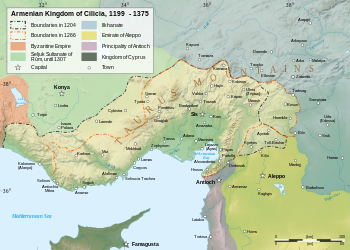
Seta Dadoyan continues her trilogy, with the second volume just published, and the third due out later this year, on Armenian-Muslim relations. Volume II, published in January, is The Armenians in the Medieval Islamic World: Armenian Realpolitik in the Islamic World and Diverging ParadigmsCase of Cilicia Eleventh to Fourteenth Centuries (Transaction, 2013), 347pp.

About this book we are told:
In the second of a three-volume work, Seta B. Dadoyan explores the Armenian condition from the 970s to the end of the fourteenth century. This period marked the gradual loss of semi-autonomy on the traditional mainland and the rise of Armenian power of diverging patterns in southeastern Asia Minor, north Syria, Cilicia, and Egypt. Dadoyan’s premise is that if Armenians and Armenia have always been located in the Middle East and the Islamic world, then their history is also a natural part of that region and its peoples. She observes that the Armenian experience has been too complicated to be defined by simplistic constructs centered on the idea of a heroic, yet victimized nation. She notes that a certain politics of historical writing, supported by a culture of authority, has focused sharply on episodes and, in particular, on the genocide. For her sources, Dadoyan has used all available and relevant (primary and secondary) Armenian sources, as well as primary Arab texts and sources. This book will stimulate re-evaluation of the period, and re-conceptualizing Armenian and Middle Eastern histories.
The third volume is: The Armenians in the Medieval Islamic World: Medieval Cosmopolitanism and Images of IslamThirteenth to Fourteenth Centuries (Transaction, Sept. 2013), 344pp.

The publisher tells us this about the final volume in the trilogy:
In the third volume of the trilogy, Seta B. Dadoyan focuses on social and cultural aspects, rather than the core political focus exhibited in her first two volumes. Her objective is to suggest political readings of these themes and related texts by revealing hitherto unstudied and novel interactions in the cities of Asia Minor during the Mongol Period. Dadoyan focuses on the Armenian condition and role in the medieval Islamic world. She argues that if the entire region was the habitat of most of the Armenians, their history too is part of these locations and peoples. Dadoyan draws the outlines of a new philosophy of Armenian history based on hitherto obscured patterns of interaction. The first three chapters of this volume are dedicated to the images of Prophet Muhammad in Armenian literature. Dadoyan shows that direct interactions and borrowings happened regularly from Islamic sciences, reform projects, poetry, and arts. Dadoyan argues that the cosmopolitan urban environments were radically different from rural areas and close interactions took different and unexpected patterns. In the last part of the volume, she presents the first and only polemical-apologetic Armenian texts addressed to Islam at the end of the fourteenth century. This book is essential for all historians and Middle East scholars and is the latest volume in Transaction’s Armenian Studies series.

Thursday, August 30, 2012

Visions of Community

Ashgate has just put into my hands a very hefty tome, a collection of articles--most in English but a few in German--edited by Walter Pohl, Clemens Gantner, and Richard Payne: Visions of Community in the Post-Roman World: The West, Byzantium and the Islamic World, 300-1100 (Ashgate, 2012), 575pp. 

About this book the publisher tells us:
This volume looks at 'visions of community' in a comparative perspective, from Late Antiquity to the dawning of the age of crusades. It addresses the question of why and how distinctive new political cultures developed after the disintegration of the Roman World, and to what degree their differences had already emerged in the first post-Roman centuries. The Latin West, Orthodox Byzantium and its Slavic periphery, and the Islamic world each retained different parts of the Graeco-Roman heritage, while introducing new elements. For instance, ethnicity became a legitimizing element of rulership in the West, remained a structural element of the imperial periphery in Byzantium, and contributed to the inner dynamic of Islamic states without becoming a resource of political integration. Similarly, the political role of religion also differed between the emerging post-Roman worlds. It is surprising that little systematic research has been done in these fields so far. The 32 contributions of the volume explore this new line of research and look at different aspects of the process, with leading western Medievalists, Byzantinists and Islamicists covering a wide range of pertinent topics. At a closer look, some of the apparent differences between the West and the Islamic world seem less distinctive, and the inner variety of all post-Roman societies becomes more marked. At the same time, new variations in the discourse of community and the practice of power emerge. Anybody interested in the development of the post-Roman Mediterranean, but also in the relationship between the Islamic World and the West, will gain new insights from these studies on the political role of ethnicity and religion in the post-Roman Mediterranean.
In perusing the table of contents, I see numerous articles that will be of interest to scholars interested in Eastern Christian realities and the often vexatious questions of "ethnicity" that dog many Eastern Churches:
  • Bernhard Palme, "Political Identity versus Religious Distinction? The Case of Egypt in the Later Roman Empire," which begins post-Chalcedon
  • Bas ter Haar Romeny, "Ethnicity, Ethnogenesis, and the Identity of Syriac Orthodox Christians"
  • Lynn Jones, "Truth and Lies, Ceremonial and Art: Issues of Nationality in Medieval Armenia"
  • Hartmut Leppin, "Roman Identity in a Border Region: Evagrius and the Defense of the Roman Empire"
  • George Hatke, "Holy Land and Sacred History: a View from early Ethiopia"
  • Ralph-Johannes Lilie, "Zur Stellung von ethnischen und religiösen Minderheiten in Byzanz: Armenier, Muslime und Paulikianer"
  • John Haldon and Hugh Kennedy, "Regional Identities and Military Power: Byzantium and Islam ca. 600-750. 
  • Alexander Beihammer, "Strategies of Identification and Distinction in the Byzantine Discourse on the Seljuk Turks"

Friday, May 25, 2012

New Books about Armenian Cilicia and Genocide

The Armenian Catholicosate of Cilicia has announced a forthcoming series of books in anticipation of the 100th anniversary of the Armenian Genocide of 1915. We shall pay attention to them as they appear.
 
They have also recently published a number of books of interest, which may be viewed here.

Their Catholicos has announced 2012 as the Year of the Armenian Book in commemoration of the 500th anniversary of the Armenian printing press.

In related matters, we have several new books about the dolorous events of 1915, the first being released last month: Taner Akçam, The Young Turks' Crime Against Humanity: The Armenian Genocide and Ethnic Cleansing in the Ottoman Empire (Princeton U Press, 2012), 528pp.


The author, we are told, is actually Turkish, and one of the first and few Turkish academics to tackle this topic openly. About this book the publisher tells us:
Introducing new evidence from more than 600 secret Ottoman documents, this book demonstrates in unprecedented detail that the Armenian Genocide and the expulsion of Greeks from the late Ottoman Empire resulted from an official effort to rid the empire of its Christian subjects. Presenting these previously inaccessible documents along with expert context and analysis, Taner Akam's most authoritative work to date goes deep inside the bureaucratic machinery of Ottoman Turkey to show how a dying empire embraced genocide and ethnic cleansing. 
Although the deportation and killing of Armenians was internationally condemned in 1915 as a "crime against humanity and civilization," the Ottoman government initiated a policy of denial that is still maintained by the Turkish Republic. The case for Turkey's "official history" rests on documents from the Ottoman imperial archives, to which access has been heavily restricted until recently. It is this very source that Akam now uses to overturn the official narrative.
The documents presented here attest to a late-Ottoman policy of Turkification, the goal of which was no less than the radical demographic transformation of Anatolia. To that end, about one-third of Anatolia's 15 million people were displaced, deported, expelled, or massacred, destroying the ethno-religious diversity of an ancient cultural crossroads of East and West, and paving the way for the Turkish Republic.By uncovering the central roles played by demographic engineering and assimilation in the Armenian Genocide, this book will fundamentally change how this crime is understood and show that physical destruction is not the only aspect of the genocidal process.
A second book, a collection of essays, furthers our exploration of the events of 1915: Ronald Grigor Suny et al, eds., A Question of Genocide: Armenians and Turks at the End of the Ottoman Empire (Oxford U Press, 2011), 464pp.

About this book the publisher tells us:
One hundred years after the deportations and mass murder of Armenians, Greeks, Assyrians, and other peoples in the final years of the Ottoman Empire, the history of the Armenian genocide is a victim of historical distortion, state-sponsored falsification, and deep divisions between Armenians and Turks. Working together for the first time, Turkish, Armenian, and other scholars present here a compelling reconstruction of what happened and why. 
This volume gathers the most up-to-date scholarship on Armenian genocide, looking at how the event has been written about in Western and Turkish historiographies; what was happening on the eve of the catastrophe; portraits of the perpetrators; detailed accounts of the massacres; how the event has been perceived in both local and international contexts, including World War I; and reflections on the broader implications of what happened then. The result is a comprehensive work that moves beyond nationalist master narratives and offers a more complete understanding of this tragic event.
A third recent book also treats the genocide: Raymond Kevorkian, The Armenian Genocide: A Complete History (I.B. Tauris, 2011), 1008pp. 

About this book we are told:
The Armenian Genocide was one of the greatest atrocities of the twentieth century, an episode in which up to 1.5 million Armenians lost their lives. In this major new history, the renowned historian Raymond Kévorkian provides an authoritative account of the origins, events and consequences of the years 1915 and 1916. He considers the role that the Armenian Genocide played in the construction of the Turkish nation state and Turkish identity, as well as exploring the ideologies of power, rule and state violence. Crucially, he examines the consequences of the violence against the Armenians, the implications of deportations and attempts to bring those who committed the atrocities to justice.Kévorkian offers a detailed and meticulous record, providing an authoritative analysis of the events and their impact upon the Armenian community itself, as well as the development of the Turkish state.  This important book will serve as an indispensable resource to historians of the period, as well as those wishing to understand the history of genocidal violence more generally.
And finally, set for release in November, is a second volume in a trilogy by Seta B. Dadoyan, The Armenians in the Medieval Islamic World: Armenian Realpolitik in the Islamic World and Diverging ParadigmsCase of Cilicia Eleventh to Fourteenth Centuries (Transaction Publishers, 2012), 310pp.

About this book the publisher tells us:
In the second of a three-volume work, Seta B. Dadoyan explores the Armenian condition from the 970s to the end of the fourteenth century. This period marked the gradual loss of semi-autonomy on the traditional mainland and the rise of Armenian power of diverging patterns in southeastern Asia Minor, north Syria, Cilicia, and Egypt.
Dadoyan’s premise is that if Armenians and Armenia have always been located in the Middle East and the Islamic world, then their history is also a natural part of that region and its peoples. She observes that the Armenian experience has been too complicated to be defined by simplistic constructs centered on the idea of a heroic, yet victimized nation. She notes that a certain politics of historical writing, supported by a culture of authority, has focused sharply on episodes and, in particular, on the genocide.
For her sources, Dadoyan has used all available and relevant (primary and secondary) Armenian sources, as well as primary Arab texts and sources. This book will stimulate re-evaluation of the period, and re-conceptualizing Armenian and Middle Eastern histories.

Thursday, December 1, 2011

The Armenian Catholicos

Those who read my Orthodoxy and the Roman Papacy: Ut Unum Sint and the Prospects of East-West Unity will know the great esteem in which I hold the Armenian Apostolic Church, whose structures, which I analyze in great detail, are completely singular.

Now one of their two catholicoi, His Holiness Catholicos Aram of Cilicia, has recently published a book entitled Taking the Church to the People. The press release from his publisher tells us the following about this book:

The book consists of three parts. In the first part, Catholicos Aram I describes the nature of the church, its mission and its institutional expressions, including the parish, the dioceses and the wider Armenian community in Armenia and the Diaspora. While describing the organization of each, His Holiness suggests ways in which they should be renewed. In the second part our Pontiff identifies the core issues that the Armenian Church is currently facing. He starts with the Bible as the foundation of Christian faith and its interpretation; he then discusses the family, the school and Christian education. At the end of this section, His Holiness Aram I explains the meaning of the term "people of God" and explains why Armenian women, youth and children, who have been marginalized in the Church and all community organizations, should participate in building their communities.

In the final part of the book, His Holiness includes certain pastoral letters and messages that he has previously addressed to youth in order to prompt a meaningful dialogue with them. The book is a basic reader for all Armenians who want to learn about the Armenian Church and its faith, mission and organization. It is an invitation to the people in Armenia and the Diaspora to equip themselves with the legacy of the past and build Armenian communities responsive to the challenges of globalization. Finally, it is a guide to being the Church as the people of God both in Armenia and Diaspora.

Friday, September 9, 2011

Turkey, Armenia, and Genocide

The question of the Armenian genocide continues to haunt not merely historians and other scholars, but also the politics of Europe. The genocide remains a hugely controversial notion in Turkey, where the very discussion of it is actually a criminal offense. Turkey continues to deny responsibility for any wrong-doing. And yet Turkey is also interested in joining the European Union: the prospects of the latter happening are diminished while the former denial remains in place. This November sees another book set to review all these issues: Vahakn N. Dadrian and Taner Akçam, Judgment at Istanbul: The American Genocide Trials (Berghahn, 2011), 372pp. 

About this book the publisher tells us:
Turkey’s bid to join the European Union has lent new urgency to the issue of the Armenian Genocide as differing interpretations of the genocide are proving to be a major reason for the delay of the ratification. This book provides vital background information and is a prime source of legal evidence and eye-witness testimony of the intent and the crime of genocide against the Armenians. After a long and painstaking effort, the authors, one an Armenian, the other a Turk, generally recognized as the foremost experts on the Armenian Genocide, have prepared a new, authoritative translation and detailed analysis of the Takvim-i Vekâyi, the official Ottoman Government record of the Turkish Military Tribunals concerning the crimes committed against the Armenians during World War I. The authors have compiled the first-known English-language documentation of the trial proceedings and situated them within their historical and legal context. These documents show that Wartime Cabinet ministers, Young Turk party leaders, and a number of other parties inculpated in these crimes were court-martialed by the Turkish Military Tribunals in the years immediately following World War I. Most were found guilty and received sentences ranging from prison with hard labor to death. In remarkable contrast to Nuremberg, the Turkish Military Tribunals prosecuted solely on the basis of existing Ottoman domestic penal codes. This substitution of a national for an international criminal court stands in history as a unique initiative of national self-condemnation. This compilation is significantly enhanced by an extensive analysis of the historical origins, political nature and legal implications of the criminal prosecution of the twentieth century’s first state-sponsored crime of genocide. For a better understanding of one of key controversies in Genocide Studies, this book is essential for historians, political scientists, sociologists, legal scholars, and policy makers. 
Related Posts Plugin for WordPress, Blogger...