"Let books be your dining table, / And you shall be full of delights. / Let them be your
mattress,/
And you shall sleep restful nights" (St. Ephraim the Syrian).


Monday, January 1, 2018

Remembering, Repeating, and Working Through: From MacIntyre to Freud and Marx Again

In looking back, as Catholic World Report asked me to do, over some of the significant books I read in 2017, at the top of the list has to stand Alasdair MacIntyre's Ethics in the Conflicts of Modernity: An Essay on Desire, Practical Reasoning, and Narrative. I've discussed parts of it on here previously, but here are some longer thoughts.

It is this book of MacIntyre's more than anything else that has forced me to start thinking about Marx seriously for the first time, and to return to Freud and engage him anew as well. When someone as vastly learned as MacIntyre says what he does in this book, those of us who are not as learned and have much to learn from and through him pay attention and follow suit. Thus one finds oneself in some fashion pulled into the unfolding of tradition-as-sustained-argument and of teaching as mentorship to an apprentice, both of which MacIntyre discussed in Three Rival Versions of Moral Enquiry

I do not for a moment pretend that this is an exhaustive review; nor do I pretend to have understood some of its more "technical" philosophical arguments. Almost all of MacIntyre's books never cease to pay rereading over many years to continue to unpack so much of his densely argued prose, and that is certainly the case with this perhaps ironically named "essay" which, he says in the preface, is deliberately written for the non-specialist academic philosopher! MacIntyre expects a lot of his readers and refuses to assume that non-philosophers (his "plain persons") are incapable of following complex philosophical arguments.

Until 2017 a lot of those so-called plain persons had probably not heard of MacIntyre until some blogger came along hawking his tract about the “Benedict option” (does one opt for the bourbon cocktail of that name to go with the oysters, and which of those does one opt for--North Atlantic or south?).  MacIntyre, now closing in on 90, does not deserve, in the sunset of his variegated and vastly influential work as the greatest moral philosopher of the postwar period, to be remembered solely or even primarily for one paragraph (which he says he regrets more than anything he wrote) at the conclusion of just one book, After Virtuewhich was so transparently traduced by the blogger in question.

In Ethics in the Conflicts of Modernity he has now come full circle in reminding us of the remaining potency and relevance of two figures most often thought to be at odds with Catholicism: Marx and Freud, both of whom were treated in MacIntyre’s first two books from the early 1950s. Freud still has much to teach us about the nature of our desires, and how we fail to be good reasoners when our desires go astray; and Marx still offers us a very powerful critique of how capitalism subtly exploits and fuels those desires, even to the point of invading and eroding Christianity from within.

Over the last six decades, as he went from Protestantism and Marxism to a phase where he was estranged by and from both, and had not yet seen his way back to Aristotle via Aquinas and thus into the Catholic Church, there is one constant in all of MacIntyre’s writings:  his desire to unmask the liberalism of modernity and its many disguises. In this he joins with his fellow British convert Cardinal Newman, as readers of the latter’s celebrated Apologia Pro Vita Sua, and perhaps even more his biglietto speech, will know.

Given his anti-liberalism, too many people reduce MacIntyre to a reactionary or else a communitarian, when he has repeatedly denounced both as being but the false choice proffered by the dominant liberalism of modern politics, where, as he put it, there are conservative liberals, liberal liberals, and radical liberals—but we are all liberals condemned to think and act in terms of the modern nation-state and its various forms of disguised capitalism.

Have we any genuine and available alternatives? MacIntyre does not answer that question directly, instead suggesting—as he has for most of his life—further lines of thought where we might yet find some possible answers. The most promising place for answers, he reminds us in Ethics in the Conflicts of Modernity, is one that most people will not care to visit, having decided in advance it is irredeemably unprofitable and hopelessly out of date. But the place—or, rather, person—MacIntyre says we must engage anew, after two centuries of misunderstanding, misrepresenting, or misapplying him, is Karl Marx. Too many of us are not willing even to hear that, let alone undertake such a process of learning because of a false assumption that the relationship between Christianity and Marxism is, MacIntyre says, one of “straightforward antagonism.” We have assumed such antagonism and in so doing have never yet, after nearly two centuries, actually had the necessary dialogue between Christianity and the critique posed by the Marx of the 1840s in, e.g., his Theses on Feuerbach. The early Marx was, MacIntyre contends, very much an Aristotelian long before he was an Hegalian, and in his Aristotelianism is thus amenable to Christianity (as Aquinas also also found the Greek philosopher to be).

While aware of the dangers of deformed Marxism, and while agreeing that the Catholic Church was right to condemn persecution of Christians in, e.g., China and the Soviet Union, MacIntyre would insist that Catholic (and other) criticism of Marxism often conveniently masks “obfuscating and reactionary social attitudes” designed to do little more than protect people in their “economic and moral complacency.” So it’s not that Marx has been tried and found wanting so much that he has been left untried because he has been rendered invisible, MacIntyre says, by the modern academic discipline of economics. I confirmed this claim by talking to a Catholic economist, colleague, and friend of mine, Doug Meador, who, well aware of currents in his field, and the types of topics discussed at big conferences of economists, very strongly agreed with MacIntyre here when I asked him, saying that most economists today under the age of 40 have probably never even heard of Marx!

Curiously, the same thing could be said—the same dynamic discerned—in an unthinking rejection of Catholicism which seeks to protect people in their spiritual complacency. Marxism has suffered the same fate as Catholicism in some ways—rejected by seemingly intelligent people who have almost no first-hand knowledge of it but nonetheless scorn it because of the mistakes made by some, or the abuses committed by institutionalized forms and authorities.

But MacIntyre is too careful a thinker, too fair a man, to allow uses and abuses of Marx even by self-proclaimed Marxists (in, e.g., the USSR, which in one place he calls a “deformed workers’ state ruled by a bureaucratic elite” and in another acidly dismisses as “Kruschev Enterprises Inc.”) to prevent him from seeing what is of lasting value. MacIntyre is the consummate Catholic thinker and thus a model for us all insofar as he reflects the ancient patristic practice of  “despoiling the Egyptians,” finding good whatever its provenance. This is clear not just in MacIntyre’s judicious thinking about Marx, but also and equally true in his work on Freud.

For MacIntyre, the same explanatory power he found in Marxism  he later found in Catholicism. What unites both, at least conceptually, is their ability to analyze the powers and principalities of the world and to sniff out their hidden mechanisms of control, violence, and greed—what St. Augustine famously called libido dominandi. When both function well, they are not merely metaphysical systems for understanding the world: they are also, and especially, embodied moral practices that seek to change the world. (The same could be said about psychoanalysis, albeit it on a more individual scale.)

Thus both Marxism and Christianity have the conceptual resources to advance a potent critique of our world today. As he bluntly put it in Marxism: An Interpretation (which was later revised and republished as Marxism and Christianity), “the two most relevant books in the modern world are St. Mark’s Gospel and Marx’s National Economy and Philosophy; but they must be read together.” Thus Marxism and Christianity are at their best, or least in danger of corruption, when they remain on the fringes of empire and economy, offering a critique of both.

When either Christianity or Marxism are not on the “peripheries” (to use a favorite word of Pope Francis), they both run the risk, almost invariably realized, of being captured, usually invisibly, within the confines and categories of capitalism, which, MacIntyre now says in 2017, “is not only a set of economic relationships. It is also a mode of presentation of those relationships that disguises and deceives.” To unmask those relationships, we must, MacIntyre says, learn “from Marx just what it was about capitalism—that appropriation of surplus value—that transformed the relationship of the cultural and social order so radically. “ While recognizing the prosperity capitalism has brought some, MacIntyre also insists in his latest book on recognizing that it has also “destroyed…traditional ways of life, created gross and sometimes grotesque inequalities of income and wealth, lurched through crisis after crisis, creating recurrent mass unemployment and left those areas and those communities that it was not profitable to develop permanently impoverished and deprived.” All this Marx had clearly foreseen two centuries ago.

The deceptive power of capitalism today is such that we often fail—at least, ironically, until Donald Trump came along—to take seriously those inequalities and those deprived and destroyed areas that have been increasing in the last several decades. And it is not just politicians who fail to own up to this: many churchmen have also often gone along with, or at least failed to criticize, these developments, which MacIntyre, in an updated 1995 preface to his Marxism and Christianity, sees as a dereliction of ecclesial duty: “Capitalism is bad for those who succeed by its standards as well as for those who fail by them, something that many preachers and theologians have failed to recognize. And those Christians who have recognized it have often enough been at odds with ecclesiastical as well as political and economic authorities” (here one thinks immediately of Dorothy Day).

MacIntyre’s earliest published writings on Marx were from the 1950s and 1960s. Those writings were reprinted in 2008 in the collection, Alasdair MacIntyre's Engagement with Marxism: Selected Writings 1953-1974, edited by Paul Blackledge and Neil Davidson. This book has received almost no attention, but for those hoping to understand his newest book, Ethics in the Conflicts of Modernity, these Marxist writings, some of which I have quoted above, are necessary reading.

If in Ethics in the Conflicts of Modernity he has returned to renewed engagement with Marxism, he has also done so with psychoanalytic thought, which MacIntyre also critically appreciated in his very early book, The Unconscious: A Conceptual Analysis, and then later in essays reprinted in Against the Self-Images of the Age, where he argued that "psychoanalysis need not become the self-enclosed system which it so often is" (37). The tragedy of its becoming a closed system and ideology (as with communism) means for MacIntyre, as he wrote in 1958, that it obscures “Freud’s essential and unassailable greatness.”

In seeing what value psychoanalysis has when it is not self-enclosed, MacIntyre in 2017 shares much in common with the man I regard as the most interesting and unconventional psychoanalyst writing today (who also comes out of a British Marxist background along with MacIntyre), viz., Adam Phillips, whose biography of the celebrated psychoanalyst , D.W. Winnicott, MacIntyre cites approvingly. I have discussed Phillips on here extensively over the past two years.

Ethics in the Conflicts of Modernity is an astonishing book for a man who turns 89 this year. It shows no loss or diminution of his enormous powers of reason, his astonishingly wide-ranging reading, and his synthesis of that reading. It also shows once more his genuine modesty at admitting what he does not know sufficiently, or has not thought about rigorously enough. Again and again he admits, with disarming directness, where he got something wrong, or needed to add to, subtract from, or otherwise revise what he earlier thought and wrote. There is something enormously admirable about this, perhaps because it seems so rare today. It is a feature of nearly every book, including the most recent, but it is perhaps most clearly stated at the end of his updated (2003) edition of The Unconscious: A Conceptual Analysis, where he says that “I owe at least as much and probably a good deal more to those with whom I disagree as to those with whom I agree….One’s severest critics are often those to whom one is most in debt.”

Critics help us to see things differently, and even to help us live differently. In Ethics in the Conflicts of Modernity, MacIntyre looks at the lives of four critical figures who offer us help in order to “live against the cultural grain…as economic, political, and moral antagonists of the dominant order.”

MacIntyre, in typical narrative style, focuses on Vasily Grossman (a Ukrainian Jewish writer in Stalinist Russia), Sandra Day O’Connor (an American jurist), C.L.R. James (a Trinidadian writer, activist, and cricketer), and Denis Faul (an Irish Catholic priest involved in the political troubles there). This prosopological method is similar to one he first used in his 2006 book Edith Stein: A Philosophical Prologue 1913-1922.

With the four lives in the present volume, MacIntyre seeks to ask about how each was both helped and hindered in reasoning about desires and in rank ordering of the goods of one’s life by both theoretical and practical considerations, starting with their families and schooling, which he takes to be utterly critical to the formation of virtuous character and thus sound reasoning. Families and schools are crucial insofar as they seek to inculcate in children three essential qualities: reliability, truthfulness, and imagination. Here especially one sees the influence of Winnicott's well-known ideas about the "good enough mother."

The result of narrating these four very different stories is to show that “human lives do have a teleological structure” but that the telos towards which each life aims will always and everywhere be incomplete until and unless it finds its fulfillment in “an object of desire beyond all particular and finite goods.” MacIntyre does not give a name to that “object,” for he is—as I suggested more than a decade ago in reviewing his book on Stein—the most apophatic of Christian philosophers—but he ends his book, and so perhaps the last major work of his own extraordinarily fecund life, by saying simply: “Here the enquiries of politics and ethics end. Here natural theology begins”—a suitably Thomistic ending if ever there were one.

Friday, December 29, 2017

Basil of Caesarea

Next year will be a good one for all those interested in St. Basil the Great. In April, Routledge is publishing Nicu Dumitrascu's Basil the Great: Faith, Mission and Diplomacy in the Shaping of Christian Doctrine (2018), 272pp.

About this forthcoming book the publisher tells us:
Regarded as one of the three hierarchs or pillars of orthodoxy along with Gregory of Nazianzus and John Chrysostom, Basil is a key figure in the formative process of Christianity in the fourth century. While his role in establishing Trinitarian terminology, as well as his function in shaping monasticism, his social thought and even his contribution to the evolution of liturgical forms have been the focus of research for many years, there are few studies which centre on his political thought. Basil played a major role in the political and religious life between Cappadocia and Armenia and was a key figure in the tumultuous relationship between Church and State in Late Antiquity. He was a great religious leader and a gifted diplomat, and developed a ’special relationship’ with Emperor Valens and other high imperial officials.
And a few weeks before that, with an official mid-March release date, Routledge is also publishing Basil of Caesarea (2018), 238pp, written by Stephen Hildebrand, who has authored and translated other works by and about Basil. In the latter category, we have On the Holy Spirit: St. Basil the Great, in the Popular Patristics series from St. Vladimir's Seminary Press. In the former category, Hildebrand first emerged with his 2009 book The Trinitarian Theology of Basil of Caesarea: A Synthesis of Greek Thought and Biblical Truth. More recently he has authored Basil of Caesarea in the series Foundations of Theological Exegesis and Christian Spirituality published by Baker Academic.

This new book, then, comes from the hand of a respected scholar of Basil. As the publisher tells us, the book

examines the life and thought of Basil of Caesarea. This unique volume brings together a lengthy introduction to his life and thought with a selection of extracts from his diverse works in new translations, with each extract accompanied by an introduction and notes. This format allows students to better understand this significant figure in the Early Church by providing an accessible representative selection of his works in one concise volume, making this an invaluable resource for students of early Christianity.

Thursday, December 28, 2017

A Note on Episcopal Elections

Whenever I argue, as I did here today, about episcopal elections in the Catholic Church, invariably someone reacts with horror at the prospect of sinful lay people participating. To which my response is always the same: find me an election, to any office however lowly, at any point anywhere in history in any ecclesial body on the planet that was not composed of and conducted by sinners.

Catholics are unused to the idea of episcopal election, but those in the Christian East (including Eastern Catholics) are not. I documented the different synodal-electoral structures and practices across the East in my Orthodoxy and the Roman Papacy, reviewing more than a dozen different models for the selection of bishops--some very centralized on the modern Roman model, and others very much involving lay people and parish clergy at the local level.

Is any one model perfect? Of course not. Has any one model a monopoly on producing saints for candidates? Don't be silly. I am well aware that local election by no means guarantees--as I said in the final paragraph of my essay--that we will not have "lunatics" (Adrian Fortescue's phrase). No system is perfect. The idea that papal appointment will always produce competent non-criminals, much less saints, is obviously false to anyone who has been paying attention. Each system has flaws, which is to be expected since they are all composed by and of human beings.

My overall point was a simple one: local election is the minimum necessary to convince the Orthodox of Catholic good faith and desire for full communion. I am, in other words, arguing this out on ecumenical-ecclesiological grounds, not because I'm a romantic populist of some sort.

For those who want to get into some of the historical details about episcopal elections, then let me recommend several works. Joseph O'Callaghan's book, Electing Our Bishops: How the Catholic Church Should Choose Its Leaders, is perhaps a good place to begin for the non-specialist. It is, as the title suggests, more of a plaidoyer than an historical monograph strictly recounting details.

For that, one must turn to Peter Norton's fascinating and invaluable Episcopal Elections 250-600: Hierarchy and Popular Will in Late Antiquity. He shows, inter alia, that "election" sometimes meant ham-fisted imperial appointment, sometimes meant little more than mobs dragging candidates to the altar, and sometimes meant something closer to the popular selection we moderns imagine by that term of  "election."

Norton's study is now just over a decade old. More recent works include the wide-ranging collection Episcopal Elections in Late Antiquity, eds. Johan Leemans,‎ Peter Van Nuffelen, and‎ Shawn W. J. Keough.

Finally, and more widely for those who want to consider the larger issue of synodality, in addition to my book noted above, I also commend to you the wide-ranging, multi-lingual collection Synod and Synodality: Theology, History, Canon Law and Ecumenism in New Contact, edited by Alberto Melloni and‎ Silvia Scatena.

Honouring the Canonist Thomas Green

More than a decade ago now, when I was finishing my doctorate in Ottawa, I was invited to give a paper to the Peter and Paul Seminar, and I used the occasion to speak about the structural similarities and differences in the patriarchal churches of the Orthodox East. Thomas Green, the canonist and scholar from Catholic University of America, was present, and I enjoyed dinner with him and our conversation during and after the conference as I drove him about town.

He was then editor of The Jurist and oversaw the publication of my paper (“A Diversity of Polities: Patriarchal Leadership in the Orthodox Churches,” The Jurist 68 [2008]: 460-496). He was extremely gracious in his comments about it, and I was always very grateful for his kindnesses to me. It is, then, a happy occasion to direct attention to a forthcoming Festschrift which is to be published early in the new year: A Service Beyond All Recompense: Studies Offered in Honor of Msgr. Thomas J. Green, ed. Kurt Martens The Catholic University of America Press (2018), 420pp.

The publisher tells us the following about this collection:
When Monsignor Thomas J. Green, professor at the School of Canon Law at The Catholic University of America, approached his seventy-fifth birthday and the fiftieth anniversary of his priestly ordination, his colleagues planned on offering him a fitting tribute in the form of a festschrift. Six people with different backgrounds, but all related to Msgr. Green on one way or another, have written a laudatio – a short congratulatory letter – in honor of Monsignor Green. No less than fifteen contributions on various topics by colleagues, canon law scholars, clearly relate and reflect upon the honoree's scholarly contributions to canon law. The topics are extremely varied, and illustrate how Monsignor Green has been or is active in nearly every area of canon law. Virtually every book of the Code of Canon Law is covered, if not directly, at least indirectly. While the book is a tribute to an eminent professor, the various scholarly contributions are unique pieces of scholarship.
Further details are available here.

Ad multos gloriosque annos!

Wednesday, December 27, 2017

In the Image of Origen

Given his prominence and the controversy surrounding him, it should come as no surprise that interest in Origen has remained consistently high, as I have often noted on here over the years. Set for release next spring is a book that looks to cover a number of angles in academic scholarship on the great Alexandrian theologian: In the Image of Origen Eros, Virtue, and Constraint in the Early Christian Academy by David Satran (University of California Press, 2018), 270pp.

About this book the publisher tells us:
The most prominent Christian theologian and exegete of the third century, Origen was also an influential teacher. In the famed Thanksgiving Address, one of his students—often thought to be Gregory Thaumaturgus, later bishop of Cappadocia—delivered an emotionally charged account of his tutelage in Roman Palestine. Although it is one of the few “personal” accounts by a Christian author to have survived from the period, the Address is more often cited than read closely. But as David Satran demonstrates, this short work has much to teach us today. At its center stands the question of moral character, anchored by the image of Origen himself, and David Satran's careful analysis of the text sheds new light on higher education in the early Church as well as the intimate relationship between master and disciple.

Tuesday, December 26, 2017

Arab Nationalism and Political Islam

For complicated but often quite defensible reasons, some Eastern Christians in Syria, Egypt, and elsewhere have sometimes been strong proponents of Arab nationalism in the hopes that it might in fact be a pan-nationalism, that is, a political ideology qua political in the modern "secular" sense, making room for Christian and other minorities in the face of an otherwise sometimes hostile Islam.

A new study by Lahouari Addi looks more deeply into Radical Arab Nationalism and Political Islam (Georgetown UP, 2017), 288pp.

About this book the publisher tells us:
In Radical Arab Nationalism and Political Islam, Lahouari Addi attempts to assess the history and political legacy of radical Arab nationalism to show that it contained the seeds of its own destruction. While the revolutionary regimes promised economic and social development and sought the unity of Arab nations, they did not account for social transformations, such as freedom of speech, that would eventually lead to their decline. But while radical Arab nationalism fell apart, authoritarian populism did not disappear. Today it is expressed by political Islam that aims to achieve the kind of social justice radical Arab nationalism once promised.
Addi creatively links the past and present while also raising questions about the future of Arab countries. Is political Islam the heir of radical Arab nationalism? If political Islam succeeds, will it face the same challenges faced by radical Arab nationalism? Will it be able to implement modernity? The future of Arab countries, Addi writes, depends on this crucial issue.

Saturday, December 23, 2017

Social Media, Donald Trump, and "Normotic Illness": Notes on Christopher Bollas

Apparently in the 1990s I read at least one book by Christopher Bollas, but I have no recollection of it other than not finding it terribly interesting at the time. But what does one know, let alone understand, in one's early 20s as a callow undergraduate? Not much.

Now, however--in another interesting example of books that find one, or re-find one, when they are apparently needed, thus confirming, in an uncanny way, Bollas's perhaps most famous idea of the "unthought known"--I have returned to him and found many very valuable insights, some of which, described below, seem to fit only too well some of the people of our time, not excluding certain students I have known in this age of Trump and social media.

How and why have I rediscovered psychoanalysis, as it were? To avoid an over-long and tedious genealogy let me say that I fell into this quite unexpectedly three years ago when I began reading ISIS propaganda and lecturing about it. I read it, of course, because it has made an absolutely revealing fetish (especially as Lacan understood it of a tableau vivant) of Eastern Christian history in general, and the Crusades in particular. Struggling to figure out the purpose of what was plainly propaganda, I had a barely conscious sense (the unthought known indeed!) that Freud might be useful here. So I fell backwards into Freud again, starting with his "Remembering, Repeating, and Working Through" and "Mourning and Melancholia."

From there I discovered a vast body of contemporary analytic literature on mourning, trauma, and historiography, with Jeffrey Prager, Charles Strozier, and Vamik Volkan leading the way. All three, and several others, have been absolutely invaluable. From them and there I went back another generation, to those analysts between Freud and now, and thus have had occasion to read, inter alia, Fromm, Erikson, Kohut, Winnicott, and especially Adam Phillips, on whom I have several times written on here. Phillips, in turn, led me back to Bollas.

I begin at the beginning with Bollas, whose 1987 book The Shadow of the Object: Psychoanalysis of the Unthought Known has just been republished in a 30th-anniversary edition. It reads, as many of his books do, like collections of essays only loosely stitched together usually around one theme. He begins with a chapter on the "transformational object," and those who know psychoanalytic history will at once recognize that Bollas, born and educated in the US but practicing as an analyst in England for many years, is here indebted to the British independent school, especially D.W. Winnicott and his equally famous idea of the "transitional object."

For Bollas, the "object" is not singular. Our life is a collection, largely unconscious, of memories of interactions with myriads and myriads of "objects," most of them human, including, most powerfully, our parents and families. "There is no one unified mental phenomenon that we can term self," Bollas argues, because "the person's self is the history of many internal relations," and those relations to various objects cast a shadow over the rest of our life. Many of those object relations will remain unconscious to us, but nonetheless powerful and directive of other relations. One way, Bollas says, we may discover some of these earlier object relations is by listening to "our own idiom of thinking about and talking to ourselves."

But how many of us do that today? How can we do that today when we drown out the capacity for such thoughts, filling our days with electronic stimuli so much that we cannot part with our phones even at night when sleeping, as a huge majority of us now do? If the cell phone today is not a "transformational object" in every sense then nothing is. So too are social media in their various forms, which at least sometimes seem to collude, as it were, to keep us from deeper, more wide-ranging reflection and insight. Surely one of the main goals of these media is not to encourage genuine criticism of some depth in which the very systems of our time (political and economic) are put to the question, for, as MacIntyre has said (see ch. 9, here), we are all condemned to think and act in the terms of the modern nation-state and its capitalist handmaid. Thus social media largely seek homogenization in the service of advanced capitalism, which requires the production of standardized consumers deemed to be normal, a process of definition, Bollas says, that "is typified by the numbing and eventual erasure of subjectivity in favor of a self that is conceived as a material object among other man-made products in the object world."

Such a self what Bollas calls "normotic," that is,
someone who is abnormally normal. He is too stable, secure, comfortable, and socially extrovert. He is fundamentally disinterested in subjective life and he is inclined to reflect on the thingness of objects, on their material reality, or on 'data' that relates to material phenomena.....Such an individual is alive in a world of meaningless plenty.
(Erich Fromm argued something loosely similar many years ago in his The Pathology of Normalcy.)

The normotic individual "is interested in facts" but not to link them together, still less to see any kind of overarching pattern or to subject them to critical analysis: "facts are collected and stored because this activity is reassuring." (That, alas, describes too many students today, and usually only around exam time.) This person loves being part of a team, thrives in institutions and corporations, enjoys committee work, and is frequently a workaholic who sees no utility at all in having a subjective interior life. This person, who sounds frightfully like Donald Trump--who is, as Jung might say, an archetype of many people today, not least political and business leaders--has managed to convince himself that the "mind itself, in particular the unconscious, is an archaism, a thing to be abandoned in the interests of human progress."

And yet it is my unwavering conviction that the unconscious does exist and does shape all of us, and is therefore a worthy subject of our investigation, not least so that we can be free of at least some of its darker aspects. The unthought known, then, must become at least a little bit more thoughtfully known for our liberation and for the liberation of the world.

Going beyond that, however, I would say that in trying to think the unthought known, we find our liberation in it because ultimately the "unthought known" is a not bad description of God. Here I would speculate a bit on the conclusion to Bollas's book when he says that, in trying to develop a "limited relation to the unthought known in ourselves we can then address the mysteries of our existence, such as the curious fact of existence itself." In thinking the "unthought known," he says, we ponder not simply the kernel of our true self, but elements of our forebears." Translated theologicaly, could one say here that in thinking the unthought known we are trying to think God, and that in thinking God, that is thinking theologically, we do so by drawing on the "elements of our forebears" which we label sacred tradition?

Perhaps speculating a little bit farther, this process of thinking God requires prayer; and thus the question did occur to me, in reading his chapter on the expressive uses of the counter-transference, whether we can conceive of prayer along the lines of the transference-countertranference relationship as Bollas describes it: "I am gradually putting out into that potential space between us those associations that are moving freely within me but are occasioned by the patient, and I am making it possible for the patient to engage meaningfully in this struggle....Part of the analysand's total recognition of this process is his being found through the analyst's registration of him, which the patient gradually values as another feature of the psychoanalytic process." That, it seems to me, is not at all a bad way to think of the changes wrought by the difficult process we call "prayer."

Fearful of My Food

As the pre-Christmas fast begins to wind down, and we prepare for the feast, I've just come across a new book that raises interesting questions, some of which I examined here before. The relationship between food and feasting today has become a fraught one, alas--even for Christians. Parish potlucks used to be a lot of fun, but now for many they are occasions for anxiety--will there be gluten? what about Joey's peanut allergy? is there high fructose corn syrup in that? Too many of us are "fearful of my joy" based on the constant bombardment about fads, diets, health crazes, and the results of science which change at a pace and in a manner many find bewildering and thus fit to be dismissed. Certainly our over-investment in and credulity in the face of claims that "a study found" X, Y, or Z about coffee or red meat deserves all the mocking Neil Postman can bring in his Technopoly

Concerns about food and its potential to form us for good or ill are not new ones, as anyone with passing familiarity with the New Testament can tell you--or, now with early Christian history, as well, so well told in John Penniman's Raised on Christian Milk: Food and Formation of the Soul in Early Christianity (Yale UP, 2017), 352pp.

About this book the publisher tells us:
A fascinating new study of the symbolic power of food and its role in forming kinship bonds and religious identity in early Christianity
Scholar of religion John Penniman considers the symbolic importance of food in the early Roman world in an engaging and original new study that demonstrates how “eating well” was a pervasive idea that served diverse theories of growth, education, and religious identity. Penniman places early Christian discussion of food in its moral, medical, legal, and social contexts, revealing how nourishment, especially breast milk, was invested with the power to transfer characteristics, improve intellect, and strengthen kinship bonds.

Friday, December 22, 2017

Freud and Marx Against Psychology

This is a very welcome, very timely, and deeply fascinating book for reasons I shall describe after I've finished reading it: Marxism and Psychoanalysis: In or against Psychology? by David Pavon-Cuellar (Routledge, 2017), 242pp.

Here is the blurb from the publisher:

The methods developed by Freud and Marx have enabled a range of scholars to critically reflect upon the ideological underpinnings of modern and now postmodern or hypermodern western societies. In this intriguing book, the discipline of psychology itself is screened through the twin dynamics of Marxism and psychoanalysis. David Pavón-Cuéllar asks to what extent the terms, concerns and goals of psychology reflect, in fact, the dominant bourgeois ideology that has allowed it to flourish.
The book charts a gradual psychologization within society and culture dating from the nineteenth century, and examines how the tacit ideals within mainstream psychology – creating good citizens or productive workers – sit uneasily against Marx and Freud’s ambitions of revealing fault-lines and contradictions within individualist and consumer-oriented structures.
The positivist aspiration of psychology to become a natural science has been the source of extensive debate, critical voices asserting the social and cultural contexts through which the human mind and behaviour should be understood. This challenging new book provides another voice that, in addressing two of the most influential intellectual traditions of the past 150 years, widens the debate still further to examine the foundations of psychology.

Wednesday, December 20, 2017

On the Assyrian Genocide of 1915

2017 has been a banner year for publications on some of the lesser known genocides of the last century. (We saw one significant publication in 2016, as I noted here.) The events of 1915 have very largely focused on the largest mass slaughter, that of the Armenians; but the genocides of Assyrian Christians and of Greek Orthodox Christians, in the same part of eastern Anatolia in the same year and for the same reasons as the Armenian genocide, have been rather obscured until now.

When I gave a lecture two years ago on the centenary of the Armenian Genocide, I drew attention to the Assyrian and Greek slaughters as well, drawing on several scholarly articles published by Hannibal Travis, editor of a new collection, The Assyrian Genocide: Cultural and Political Legacies 
(Routledge, 2017), 340pp.

About this collection the publisher tells us:
For a brief period, the attention of the international community has focused once again on the plight of religious minorities in Iraq, Syria, and Turkey. In particular, the abductions and massacres of Yezidis and Assyrians in the Sinjar, Mosul, Nineveh Plains, Baghdad, and Hasakah regions in 2007–2015 raised questions about the prevention of genocide. This book, while principally analyzing the Assyrian genocide of 1914–1925 and its implications for the culture and politics of the region, also raises broader questions concerning the future of religious diversity in the Middle East. It gathers and analyzes the findings of a broad spectrum of historical and scholarly works on Christian identities in the Middle East, genocide studies, international law, and the politics of the late Ottoman Empire, as well as the politics of the Ottomans' British and Russian rivals for power in western Asia and the eastern Mediterranean basin.
A key question the book raises is whether the fate of the Assyrians maps onto any of the concepts used within international law and diplomatic history to study genocide and group violence. In this light, the Assyrian genocide stands out as being several times larger, in both absolute terms and relative to the size of the affected group, than the Srebrenica genocide, which is recognized by Turkey as well as by international tribunals and organizations. Including its Armenian and Greek victims, the Ottoman Christian Genocide rivals the Rwandan, Bengali, and Biafran genocides. The book also aims to explore the impact of the genocide period of 1914–1925 on the development or partial unraveling of Assyrian group cohesion, including aspirations to autonomy in the Assyrian areas of northern Iraq, northwestern Iran, and southeastern Turkey. Scholars from around the world have collaborated to approach these research questions by reference to diplomatic and political archives, international legal materials, memoirs, and literary works.
Two other collections continue to deepen our knowledge of this genocide: Let Them Not Return: The Genocide Against the Assyrian, Syriac, and Chaldean Christians in the Ottoman Empire, edited by David Gaunt,‎ Naures Atto, and‎ Soner O. Barthoma (Berghahn Books, 2017), 274pp.

About this collection we are told:
The mass killing of Ottoman Armenians is today widely recognized, both within and outside scholarly circles, as an act of genocide. What is less well known, however, is that it took place within a broader context of Ottoman violence against minority groups during and after the First World War. Among those populations decimated were the indigenous Christian Assyrians (also known as Syriacs or Chaldeans) who lived in the borderlands of present-day Turkey, Iran, and Iraq. This volume is the first scholarly edited collection focused on the Assyrian genocide, or "Sayfo" (literally, "sword" in Aramaic), presenting historical, psychological, anthropological, and political perspectives that shed much-needed light on a neglected historical atrocity.
Third and finally is this collection: Readings in the 20th Century Genocide of the Syriac Orthodox Church of Antioch (SAYFO) by Boutros Touma Issa et al (Nova Science Publishers, 2017), 210pp.
This book, authored by family members who were originated in Mesopotamia, and are members of the Syriac Orthodox Church of Antioch, strives to provide a brief historical background on the Syriac Orthodox Church of Antioch, her dogma, her ancient sacred language (Syriac/Aramaic), and persecution including 1915 Genocide (Sayfo) which might also be referred to as (SAYFO/SEPA/SWORD ܣܝܦܐ).
This book endeavours to bring to light a historical account of the inhabitants of the ancient land of Mesopotamia, leading to the events that resulted in several persecutions of these original people of the land, specifically during the “Syriac Genocide” (Sayfo) of 1915 (SAYFO/SEPA/SWORD ܣܝܦܐ). The authors derive from diverse sources, including some ancient rare manuscripts that have not been, to date, translated into English from Syriac/Aramaic; supported by evidence derived from some of what has been translated into English, including personal accounts. In this book, the authors highlight the number of people who were massacred and those who were forced to leave their Christian faith and convert, including members of the Syriac Orthodox Church of Antioch, showing the unpleasant face of persecution and Genocide against people who are accredited of their huge positive impact on the World’s Civilization.
This book commences with a brief historical background on the origin of Christianity in the East, and the historical background of the Syriac Orthodox Church of Antioch, leading to an explanation of the atrocities at the hands of the Ottoman Empire, providing a backdrop to allow an understanding of the context at the time, concluding with some insights of the atrocities in the 21st century against the same people in parts of the Middle East and around the world. The book provides a brief account of the courageous actions taken by patriarchs, other clergy, and lay people to face such atrocities. The authors briefly examine some of the events that took place leading to the main Genocide of 1915, the “Syriac Genocide” (Sayfo) (SAYFO/SEPA/SWORD ܣܝܦܐ), or what has been dubbed as “The Forgotten Genocide”. The book concludes with some events that took place in the 21st century which were mainly derived from the ongoing incidents that affected the Syriac Orthodox Church of Antioch and her community in the Middle East and around the world.

Monday, December 18, 2017

After Dying in Byzantium, Where Does Your Soul Go?

If you hang around any Orthodox blogs or apologetics sites, you'll soon come across heated discussion about "toll-houses" and related matters trying to figure out the soul's fate post-mortem. The scholar Stephen Shoemaker, whom I have interviewed on here in the past in connection with his other works, has an excellent essay here.

Shoemaker's essay references, inter alia, recent works on the topic, including a book released just this spring:  Death and the Afterlife in Byzantium: The Fate of the Soul in Theology, Literature, and Art 
by Vasileios Marinis (Cambridge UP, 2017), 214pp.

About this book the publisher tells us:
For all their reputed and professed preoccupation with the afterlife, the Byzantines had no systematic conception of the fate of the soul between death and the Last Judgement. Death and the Afterlife in Byzantium marries for the first time liturgical, theological, literary, and material evidence to investigate a fundamental question: what did the Byzantines believe happened after death? This interdisciplinary study provides an in-depth analysis and synthesis of hagiography, theological treatises, apocryphal texts, liturgical services, as well as images of the fate of the soul in manuscript and monumental decoration. It also places the imagery of the afterlife, both literary and artistic, within the context of Byzantine culture, spirituality, and soteriology. The book intends to be the definitive study on concepts of the afterlife in Byzantium, and its interdisciplinary structure will appeal to students and specialists from a variety of areas in medieval studies.

Friday, December 15, 2017

Robert Slesinski on Sergius Bulgakov

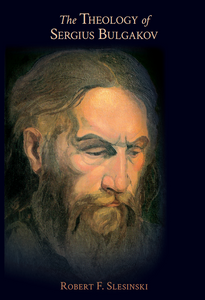
Robert Slesinski is always worth reading, and has established himself as a leading and wide-ranging scholar of several of the noteworthy figures of the Russian Silver Age and of her theological renaissance from the end of the 19th through the middle of the 20th centuries. He has published a number of articles and reviews in Logos: A Journal of Eastern Christian Studies over the years. And now, I'm delighted to tell you, St. Vladimir's Seminary Press has just published his newest study, The Theology of Sergius Bulgakov (2017), 280pp

Following my usual practice, I e-mailed some questions to Fr. Bob about the book, and here are his thoughts.

AD: Tell us about your background

RS: I am a Ruthenian Byzantine Catholic priest (Eparchy of Passaic, NJ) of over 40 years, but my surname gives me away as something else.  On my paternal side, I am Polish, but not insignificantly on my maternal side I am German-French-English.  In sum, I'm a hybrid.  But growing up in Worcester, Massachusetts, there was never a time when I did not have to pronounce and spell my last name!

Going on to college I would have liked to have taken Polish as a "foreign language" requirement course, but few colleges offer Polish as a subject of study.  But Russian was offered--and that was the beginning of my interest in all things "Russian."

Having discerned a possible vocation to the priesthood, I was accepted as a candidate by the RC Diocese of Worcester--my pastor at the time, by the way, was a Melkite turned RC and I was his first vocation to the priesthood. I was sent to the North American College in Rome with the understanding I could frequent the Russian College. Well, after a year at NAC I transferred to the Russicum and subsequently was accepted by the Eparchy of Passaic...the beginning of a life's journey.

AD: Your 1984 book was a real scholarly landmark, devoted to Pavel Florensky. Are there connections you see from him to Bulgakov?

RS: My first book, Pavel Florensky: A Metaphysics of Love, my doctoral dissertation was, indeed, published by SVS Press, and now they are publishing my fourteenth book, The Theology of Sergius Bulgakov.  The two figures are intimately connected, the former serving as a "spiritual father" to his "spiritual son."


There is a famous painting of the two, "The Philosophers," by M. Nestervov in the Saint Petersburg, Russia, Art Museum of the two walking in Florensky's garden at Sergiev Posad.  The whole composition has Florensky as a "Plato," as it were, and Bulgakov as an Aristotle. (AD: the photo is on the cover of the book at left.)

AD: There's been a huge upswing in studies devoted to Bulgakov over the last couple of decades. Why do you think he continues to command such a wide interest?

RS: Bulgakov has surprisingly been neglected in Orthodox circles--after all, he was "convicted" of "heresy."  Westerners--like Hans Urs von Balthasar--who were interested in possible insights from the Christian East rediscovered him.

AD: Your introduction seems to suggest that Orthodoxy did not pay much attention to Bulgakov until and after Western Christians began doing so. What led the West--among whom you single out such luminaries as Rowan Williams, Aidan Nichols, and John Milbank inter alia--to Bulgakov? Was it a perceived gap in the Western tradition that he somehow filled, or was it something else?

RS: This continues your next question: people like myself--Westerners--are, indeed, interested in gaining insights into our common Christian tradition from the East.

AD: Your first chapter notes "some truly eye-opening statements" about Bulgakov's openness to the Catholic Church, not least about the papacy and the filioque, about which he said "I am a 'filioquist'." What do you think he meant by that?

RS: Bulgakov as a person was deeply, indelibly, steeped in Orthodox tradition, but was devastated by the Bolshevik Revolution. Just as at the time of the Council of Florence as the Turks were overwhelming Constantinople, Bulgakov flirted with a possible help from Rome.  Now he remained a confirmed Orthodox, but still affirmed certain "Catholic" beliefs like the filioque, embracing Augustine's paradigm of love to explain the Holy Trinity.

AD: My perception of Bulgakov (admittedly it's been a few years since I read T.A. Smith's translation of The Burning Bush) is that he often finds a way to accept or even agree, broadly speaking, with the substance of Catholic doctrine, but finds ways to disagree methodologically--either the categories of definition, or the papal mechanisms of definition of the modern Marian dogmas. Is that a fair distinction?

RS: To continue the discussion...the esteemed late Alexander Schmemann, an actual student of Bulgakov, made the observation that however "Orthodox" Bulgakov was, he always wanted to put his original stamp of "things"--novelty being his mode of action.  Catholic doctrine/dogma he was wont to characterize in his own terms--not necessarily of those of Catholics themselves.  Curiously, as "opposed" as he was to the dogma of the Immaculate Conception (he was a partisan of Aquinas in this matter), he fervidly argued in favor of the Theotokos being a "Co-Redemptrix."

AD: You note at the beginning of ch.7 that Bulgakov's understanding of the Catholic dogma of the Immaculate Conception "is found to be wanting" but the rest of his Mariology is not. Tell us more about that.

RS: My answer to this question is to repeat what I say in response to the last question--only to add that Bulgakov was utterly convinced in his sophiological understanding of May, she truly was the Pneumatophore--the Bearer of the Holy Spirit!


AD: In ch.8 you note Florovsky's influence on modern Orthodoxy's turn to history and patrology at the expense of more systematic theology such as Bulgakov's. Why is that? What is behind the focus on history and the fathers--and also behind the fear of Bulgakov's more speculative and systematic work?

RS: Florovsky's influence, to my mind, became paramount after the indictment of heresy.  He was an historian--hence patristics.  And we all know of the centrality of the Divine Liturgy for the Christian experience of God, hence liturgical theology.  Speculative theology/philosophy of the likes of Bulgakov did not, alas--to my mind--find a resonant ear in the Orthodox.

AD: Having done some work in both Orthodox and Catholic ecclesiology, I naturally read your 14th chapter, "Ecclesiological Musings in Bulgakov," with great interest. The word 'musings' is especially noteworthy, as you go on to suggest that Bulgakov may have been a bit sloppy with the scriptural texts, claiming they give no "'indications concerning the Church as an organization'" (p.209).  Later on you speak of his rather 'cloudy' approach to the Church's sacramental character. And once again his love-hate relationship to Catholicism returns in his discussion of papal infallibility. What lies behind these rather conflicted views?

RS: There is no doubt in my mind that the weakest theology of Bulgakov is in the area of ecclesiology.  I would surmise he was reading too much of German Protestant theology.  Catholics and Orthodox are truly one in this area.

AD: Tell us what your hopes were for this book, The Theology of Sergius Bulgakovand who should read it.

RS: Well, my book is intended to inspire any philosopher-theologian to consider Bulgakov as an area for insight in coming to terms with understanding God and the cosmos.  Now that ALL the major works of Bulgakov are in English translation, I would hope that my "modest" monograph may assist in appreciating the theological genius of Bulgakov.

AD: Having finished this, what projects are you at work on now?

RS: Over the ten years I worked on my Bulgakov book I have written seven other books in "mystagogical catechesis;" I am now working on another one The Holy Mysteries: Celebrating Christ's Sacramental Presence.

Thursday, December 14, 2017

Deaconesses in Orthodoxy

As the discussion about women in diaconal ministries (broadly defined) in both Orthodoxy and Catholicism continues, a new publication could not be more timely: Deaconesses, the Ordination of Women and Orthodox Theology, eds. Niki Papageorgiou, Eleni Kasselouri-Hatzivassiliadi, and Petros Vassiliadis (Cambridge Scholars Press, 2017), 585pp.

About this book we are told:
This collection of essays highlights the thorny and divisive issue of the admission of women into the sacramental diaconal priesthood of the Christian Church from the Orthodox theological perspective. The contributions here stem from scientific papers presented at an international conference titled Deaconesses, Ordination of Women and Orthodox Theology, organized in Thessaloniki, Greece, in 2015 by the Center of Ecumenical, Missiological and Environmental Studies (CEMES). They cover almost all the fields of biblical, liturgical, patristic, systematic, canonical, and historical theology. The volumes main focus is the ancient order of deaconesses, in connection with the overall issue of the ordination of women. Although most papers address the issues from an Orthodox perspective, their sober analysis can provide theological argumentation for the wider Christian community, both the Churches and Christian denominations that exclude women from the sacramental priesthood, and those that have already adopted their ordination.

Wednesday, December 13, 2017

Greek Monasticism in Southern Italy

I'm always excited to see a new book from Ines Angeli Murzaku, whom I have interviewed in the past about earlier publications. She alerted me to this forthcoming collection, co-edited with Barbara Crostini: Greek Monasticism in Southern Italy: The Life of Neilos in Context (Routledge, 2017), 396pp.

I've asked her for an interview about this book, and she's consented. I'll post that as soon as we are both able.

In the meantime, here is the publisher's blurb:
This volume was conceived with the double aim of providing a background and a further context for the new Dumbarton Oaks English translation of the Life of St Neilos of Rossano, founder of the monastery of Grottaferrata near Rome in 1004. Reflecting this double aim, the volume is divided into two parts. Part I, entitled “Italo-Greek Monasticism,” builds the background to the Life of Neilos by taking several multi-disciplinary approaches to the geographical area, history and literature of the region denoted as Southern Italy. Part II, entitled “The Life of St Neilos,” offers close analyses of the text of Neilos’s hagiography from socio-historical, textual, and contextual perspectives. Together, the two parts provide a solid introduction and offer in-depth studies with original outcomes and wide-ranging bibliographies. Using monasticism as a connecting thread between the various zones and St Neilos as the figure who walked over mountains and across many cultural divides, the essays in this volume span all regions and localities and try to trace thematic arcs between individual testimonies. They highlight the multicultural context in which Southern Italian Christians lived and their way of negotiating differences with Arab and Jewish neighbors through a variety of sources, and especially in saints’ lives.

Monday, December 11, 2017

The Life of René Girard

Growing up as I did in Her Britannic Majesty's senior dominion, I listened religiously to CBC radio, especially its wonderfully edifying evening program "Ideas," which I found on a pocket radio in the summer of my 12th year and listened to secretly when I was supposed to be asleep.

It was on one episode of that program, later in my life--I think in the late 1990s--that I first came across the work of René Girard, who has done so much to help us understand the role of the "scapegoat" and to see how violence and sacrifice work, but are also overturned by the advent of Christ.

Author of such landmark works as Violence and the Sacred and Things Hidden Since the Foundation of the World, Girard, who died in 2015, was and is a hugely important scholar whose influence continues to grow. He will soon be the subject of a welcome biography I am greatly looking forward to reading: Evolution of Desire: A Life of René Girard by Cynthia L Haven  (Michigan State University Press, 2018), 346pp.


About this book (a chapter of which is excerpted for separate publication) the publisher tells us:
René Girard (1923–2015) was one of the leading thinkers of our era—a provocative sage who bypassed prevailing orthodoxies to offer a bold, sweeping vision of human nature, human history, and human destiny. His oeuvre, offering a “mimetic theory” of cultural origins and human behavior, inspired such writers as Milan Kundera and J. M. Coetzee, and earned him a place among the forty “immortals” of the Académie Française. Too often, however, his work is considered only within various academic specializations. This first-ever biographical study takes a wider view. Cynthia L. Haven traces the evolution of Girard’s thought in parallel with his life and times. She recounts his formative years in France and his arrival in a country torn by racial division, and reveals his insights into the collective delusions of our technological world and the changing nature of warfare. Drawing on interviews with Girard and his colleagues, Evolution of Desire: A Life of René Girard provides an essential introduction to one of the twentieth century’s most controversial and original minds.

Friday, December 8, 2017

C.S. Lewis and Orthodoxy

My friend, the always delightful Edith Humphrey, has a new book out: Further Up and Further In: Orthodox Conversations with C. S. Lewis on Scripture and Theology (SVS Press, 2017), 301pp.

I have interviewed her on here before about previous books, and hope to arrange an interiew about this newest study of hers, about which the publisher tells us the following:

Drawing on Lewis's broad corpus, both his beloved classics and his less well-known writings, Humphrey brings Lewis into conversation with Orthodox thinkers from the ancient past down to the present day, on subjects as diverse and challenging as the nature of reality, miracles, the ascetic life, the atonement, the last things, and the mystery of male and female.

Thursday, December 7, 2017

Is Islam a Christian Heresy?

Next month, in their hugely important History of Christian-Muslim Relations series, Brill is bringing out a book that will revisit a long-standing debate going back almost to the beginnings of Christian encounters with, and analysis of, Islam:  John of Damascus and Islam: Christian Heresiology and the Intellectual Background to Earliest Christian-Muslim Relations (English and Greek Edition) by Peter Schadler (Brill, 2017).

The publisher supplies the following blurb about the book and then a detailed table of contents:
How did Islam come to be considered a Christian heresy? In this book, Peter Schadler outlines the intellectual background of the Christian Near East that led John, a Christian serving in the court of the caliph in Damascus, to categorize Islam as a heresy. Schadler shows that different uses of the term heresy persisted among Christians, and then demonstrates that John’s assessment of the beliefs and practices of Muslims has been mistakenly dismissed on assumptions he was highly biased. The practices and beliefs John ascribes to Islam have analogues in the Islamic tradition, proving that John may well represent an accurate picture of Islam as he knew it in the seventh and eighth centuries in Syria and Palestine.

Acknowledgments
Abbreviations

Introduction

1 Heresy and Heresiology in Late Antiquity
 Problems in Associating Islam with Heresy
 Manichaeism: The Exception that Proves the Rule
 Heresy as Opposition to the Church
 Other Understandings of Heresy in Late Antiquity
 Early Christian Use of Heresiology
 The Demonic Nature of Heresy
 Heresy as the Result of Philosophical Speculation
 Other Typical Traits of Heresiology

2 Aspects of the Intellectual Background
 The Encyclopedism of Christian Palestine
 Heresiology as History?
 The Sociological Imperative to Institution Building as a Force for Islam’s Inclusion
 From Heresiology to Panarion and from Panarion to Anacephalaeosis: The Shifting Nature of Heresiology
 John of Damascus and non-Christian Philosophy
 The Definition of Heresy in John’s Works
 Demons and the Heresiology of John

3 The Life of John of Damascus, His Use of the Qurʾan, and the Quality of His Knowledge of Islam
 The Life of John of Damascus
 John of Damascus and Arabic
 The Qurʾan and its Apparent Use Among Christians
 John of Damascus and the Qurʾan
 Anastasius of Sinai and the Qurʾan
 The Alleged Leo-Umar Correspondence
 Lives of the Prophets and Other Sources

4 Islamic and Para-Islamic Traditions
 Scholarly Accounts of Early Islam
 Revisionist Islamic Studies and its Antecedents
 Contemporary Islamic Studies
 John of Damascus, the Black Stone, and the Ka’ba
 The Ka’ba, the Black Stone, and the Maqām Ibrāhīm in the Islamic Tradition
 An Untraditional Perspective
 The Damascene’s Observations Given the Untraditional Perspective
 Rivers in Paradise
 The Monk and an-Nasara
 Female Circumcision
 Pillars of Faith

5 John of Damascus and Theodore Abu Qurrah on Islam
 Problems Authenticating Abu Qurrah’s Greek Corpus
 Theodore Abu Qurrah on Islam
 Theodore, the Qurʾan, and Muhammad
 The Arian Monk
 Theodore and Heresy
 Theodore and John: Some Differences and Conclusions

Conclusion
Appendix 1: Greek Text and English Translation of ‘On Heresies 100’
Appendix 2: Potential Qurʾanic References in ‘On Heresies 100’
Bibliography
Index

Tuesday, December 5, 2017

The Russian Orthodox Church and the United Nations

In grade 7, I won the school debating championship and went on to the regional finals. Again in gr. 9 I lead the team; and on both occasions we were pretending to be members of the UN Security Council debating the merits, first, of the US bombings of Libya in 1985; and then whatever was in the news two years later. As children of late modernity, we thought we were just debating international politics and doing so with a kind of strategic ruthlessness; but what became obvious to me was that each position also made certain moral claims as to what was the best thing to do in circumstances of international terrorism. It would, however, take me many more years to be able to see--thanks to both Alasdair MacIntyre's After Virtue and John Milbank's Theology and Social Theory--how successfully and how often modernity's moral judgments are disguised, and how artificial its distinctions between the undefined "religious" vis-a-vis the political and the moral.

These thoughts came to mind in coming across a recent book by Ann Stensvold, Religion, State and the United Nations: Value Politics (Routledge, 2016), 200pp.

About this book the publisher tells us:
This volume approaches the UN as a laboratory of religio-political value politics. Over the last two decades religion has acquired increasing influence in international politics, and religious violence and terrorism has attracted much scholarly attention. But there is another parallel development which has gone largely unnoticed, namely the increasing political impact of peaceful religious actors.
With several religious actors in one place and interacting under the same conditions, the UN is as a multi-religious society writ small. The contributors to this book analyse the most influential religious actors at the UN (including The Roman Catholic Church; The Organisation of Islamic Countries; the Russian Orthodox Church). Mapping the peaceful political engagements of religious actors; who they are and how they collaborate with each other - whether on an ad hoc basis or by forming more permanent networks - throwing light at the modus operandi of religious actors at the UN; their strategies and motivations. The chapters are closely interrelated through the shared focus on the UN and common theoretical perspectives, and pursue two intertwined aspects of religious value politics, namely the whys and hows of cross-religious cooperation on the one hand, and the interaction between religious actors and states on the other.
Drawing together a broad range of experts on religious actors, this work will be of great interest to students and scholars of Religion and Politics, International Relations and the UN.

Monday, December 4, 2017

Transgenerational Trauma in Armenia

Over the last three years, as I have been reading (and re-reading) in a lot of the literature around historical memory, and the psychoanalysis of trauma, it has become clear that an emerging theme in both bodies of literature is an awareness of how trauma does not die when those who endured it do. It can often live on unconsciously in subsequent generations. Several of the articles of scholarly clinicians such as Jeffrey Prager have been helpful to me here; and so too several articles and books of Vamik Volkan have also been very illuminating.

In this light, then, it should not surprise us that while all those who would have experienced the Armenian Genocide first-hand are now dead, that event lives on in the descendants of those who survived the horrors of 1915. A new book takes us into this world: The Transgenerational Consequences of the Armenian Genocide: Near the Foot of Mount Ararat by Anthonie Holslag (Palgrave Macmillan, 2018), 287pp.

About this book the publisher tells us:
This book brings together the Armenian Genocide process and its transgenerational outcome, which are often juxtaposed in existing scholarship, to ask how the Armenian Genocide is conceptualized and placed within diasporic communities. Taking a dual approach to answer this question, Anthonie Holslag studies the cultural expression of violence during the genocidal process itself, and in the aftermath for the victims. By using this approach, this book allows us to see comparatively how genocide in diasporic communities in the Netherlands, London and the US is encapsulated in an historic narrative. It paints a picture of the complexity of genocidal violence itself, but also in its transgenerational and non-spatial consequences, raising new questions of how violence can be perpetuated or interlocked with the discourse and narratives of the victims, and how the violence can be relived.
Related Posts Plugin for WordPress, Blogger...