"Let books be your dining table, / And you shall be full of delights. / Let them be your
mattress,/
And you shall sleep restful nights" (St. Ephraim the Syrian).


Showing posts with label Liturgics. Show all posts

Monday, March 7, 2022

Bright Sadness

Slowly, reluctantly, in a world where there is already so much suffering and sacrifice, especially in Ukraine at the moment, the fast of Great Lent this year has approached not without some dread perhaps. But in dread of what we shall give up we must not overlook what we gain: Lent is a time of such splendid and diverse liturgical riches--the Canon of St. Andrew, the Akathist hymn, the life of St. Mary of Egypt, the prayer of St. Ephraim the Syrian, and crowning it all the Pre-Sanctified Liturgy.

As we begin to think on our forty days in the desert, I draw your attention to something I wrote three years ago about making fasting perhaps a bit more practicable in our own day. 

I also reprint something I wrote on here more than five years ago now, offering some very rich readings as we prepare for, and then enter into, the mystery of the Lord's passover. 

Perhaps my favourite of his Alexander Schmemann's books, which every year I re-read at this time, is Great Lent: Journey to Pascha (SVS Press, 1974), 140pp.

This book, I think, is Schmemann at his best: serious but light, indeed lyrical; never letting the season of penitence and the tears of sorrow overwhelm the joy of knowing that Christ's Pascha has already happened, that death has been defeated, and that life will be given to those in the tombs.

One year I read the above work with his then just-released Journals of Father Alexander Schmemann, 1973-1983, and you can see in these latter reflections how much he loved the Lenten season and how he could, in spite of it all, never fail to see that Pascha really does stand at the heart of everything.

There are other books that come to mind here as well: Frederica Mathewes-Greene, First Fruits of Prayer: A Forty Day Journey Through the Canon of St. Andrew (Paraclete Press, 2006, 195pp.).

If you are not celebrating the Penitential Canon of St. Andrew of Crete in your parish, or cannot attend, then her little book is a good way of reading a short passage from the canon for each of the forty days. 

Lev Gillet's book The Year of Grace of the Lord: A Scriptural and Liturgical Commentary on the Calendar of the Orthodox Church also has much good food for thought in meditating on the liturgical cycle of Lent, and in offering practical recommendations for askesis in addition to the customary fasting.

Equally edifying is the little book by the prolific pastoral theologian and Orthodox priest William Mills: The Prayer of St. Ephrem: A Biblical Commentary, on which I commented previously, and whose author I have interviewed several times about his other books.

Similarly, this splendid CD is a wonderful resource if you are on the road a lot or sitting at your desk: Have Mercy on Me, O God: The Great Canon of St. Andrew of Crete (Schola Cantorum of St. Peter the Apostle). Under the expert direction of J. Michael Thompson, this schola's rendering of the canon is sublime. I received from Thompson a version of the Liturgy of the Pre-Sanctified gifts performed by the Schola under his direction. I have to confess that its lovely prostopinije setting has forced me to reconsider a chant system I had previously considered a poor cousin to the Galician and Kyivan. (This latter CD is available from the Sisters of St. Basil in Uniontown, PA.)

For those who want a serious scholarly understanding of the liturgical heart of Lent as it were, the Pre-Sanctified Liturgy, see Stefanos Alexoupolos, The Pre-Sanctified Liturgy in the Byzantine Rite: a Comparative Analysis of its Origins, Evolution, and Structural Components (Peeters, 2009), xvi+355pp. 

In his expert review of Alexoupolos in Logos: A Journal of Eastern Christian Studies, the Byzantine liturgical scholar Peter Galadza lauded his book and said that his work is sure to become the scholarly standard for years to come.

Friday, February 11, 2022

Medieval Arabic Commentaries on the Coptic Liturgy

I am very glad to see that the Coptic tradition continues steadily to garner more and more scholarly attention. Our knowledge will only increase with the publication next week of Guides to the Eucharist in Medieval Egypt: Three Arabic Commentaries on the Coptic Liturgy (Fordham University Press, 15 February 2022), 240pp.

Part of Fordham UP's Christian Arabic Texts in Translation series, this book is authored by Yūḥannā ibn Sabbā‘, Abū al-Barakāt ibn Kabar, and Pope Gabriel V of Alexandria and translated by Arsenius Mikhail. About the book the publisher tells us this:
The fourteenth and fifteenth centuries witnessed a rising interest in Arabic texts describing and explaining the rituals of the Coptic Church of Egypt. This book provides readers with an English translation of excerpts from three key texts on the Coptic liturgy by Abū al-Barakāt ibn Kabar, Yūh.annā ibn Sabbā‘, and Pope Gabriel V. With a scholarly introduction to the works, their authors, and the Coptic liturgy, as well as a detailed explanatory apparatus, this volume provides a useful and needed introduction to the worship tradition of Egypt’s Coptic Christians. Presented for the first time in English, these texts provide valuable points of comparison to other liturgical commentaries produced elsewhere in the medieval Christian world.

Wednesday, January 26, 2022

Performing the Gospels in Byzantium

There are certain verbs and nouns which become trendy and suddenly one sees their proliferation in book and article titles for a decade or so. "Performing" is one such, and is seen in this recent publication of a book that sheds light on Middle Byzantine liturgics and art: Performing the Gospels in Byzantium: Sight, Sound, and Space in the Divine Liturgy  by Roland Betancourt  (Cambridge University Press, 2021), 320pp. About this book the publisher tells us this: 

Tracing the Gospel text from script to illustration to recitation, this study looks at how illuminated manuscripts operated within ritual and architecture. Focusing on a group of richly illuminated lectionaries from the late eleventh century, the book articulates how the process of textual recitation produced marginalia and miniatures that reflected and subverted the manner in which the Gospel was read and simultaneously imagined by readers and listeners alike. This unique approach to manuscript illumination points to images that slowly unfolded in the mind of its listeners as they imagined the text being recited, as meaning carefully changed and built as the text proceeded. By examining this process within specific acoustic architectural spaces and the sonic conditions of medieval chant, the volume brings together the concerns of sound studies, liturgical studies, and art history to demonstrate how images, texts, and recitations played with the environment of the Middle Byzantine church.

Monday, January 17, 2022

The Euchologion Unveiled

Have you been reading Job Getcha's books? He had two come out in the last 12 months on liturgy. The most recent of these is The Euchologion Unveiled:An Explanation of Byzantine Liturgical Practice (St. Vladimir's Seminary Press, 2021). 

This book, the publisher tells us, 

describes and explains the sacramental services of the Orthodox Church. The Euchologion is the liturgical book that priests use to serve all the mysteries, or sacraments, of the Church. Archbishop Job “unveils” the history, meaning, and structure of these services, and the Orthodox understanding of the sacraments, through which believers receive grace and become partakers of the divine life.

Though most people have heard of “the seven sacraments” –baptism, chrismation, the Eucharist, confession, marriage, ordination, and unction—this is a later western schema, and the Orthodox Church performs several other sacramental rites, which are also explained here: monastic tonsure, the funeral, the sanctification of chrism, the consecration of a church, and the blessing of water.

This is a companion volume to The Typikon Decoded, and the second volume of An Explanation of Byzantine Liturgical Practice.

Thursday, January 6, 2022

On the Lord's Appearing in the Jordan

If you go here, you will learn a little bit about Nicholas Denysenko's superb book on the Theophany. And if you go here you will wonder, as I just did, "Can it be a full decade now since I interviewed him about this book? Where does the time go?" I cannot answer that question, but I can tell you that there is, even a decade later, still no finer book than his to fete this lovely feast.

Thursday, October 7, 2021

Eastern Christian Liturgies Re-Introduced

Liturgical Press just sent me their most recent catalogue, and in it I spy a compendium by two leading liturgical scholars that looks like it will be very valuable to many upon its publication at year's end: Introduction to Eastern Christian Liturgies by Maxwell E. Johnson and Stefanos Alexopoulos (Liturgical Press, December 2021), 480pp. About this book the publisher tells us this:

In Introduction to Eastern Christian Liturgies, renowned liturgical scholars Stefanos Alexopoulos and Maxwell E. Johnson fulfill the need for a new, comprehensive, and straightforward survey of the liturgical life of the Eastern Christian Churches within the seven distinct liturgical Eastern rites still in existence today: Armenian, Byzantine, Coptic, Ethiopic, East Syrian, West Syrian, and Maronite. This topical overview covers baptism, chrismation, Eucharist, reconciliation, anointing, marriage, holy orders, burial, Liturgy of the Hours, the liturgical year, liturgical ethos and spirituality, and offers a brief yet comprehensive bibliography for further study. This book will be of special interest to masters-level students in liturgy and theology, pastoral ministers seeking an introduction to the liturgies of the Christian East, and all who seek to increase their knowledge of the liturgical riches of the Christian East.

Wednesday, September 29, 2021

In Praise of Robert Slesinski (II): The Liturgical Feasts

Continuing on in our series, begun Monday of this week, with the focus on the many books of Robert Slesinski published by Eastern Christian Publications, let us turn next to his liturgical and festal commentaries. I count at least three.

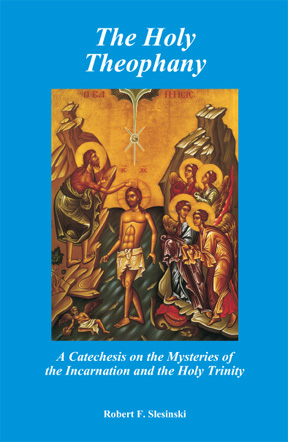
In the first place, if we start at the beginning of the civil calendar, we have The Holy Theophany: A Catechesis on the Mysteries of the Incarnation and the Holy Trinity (ECP, 2011). The publisher's description of this is brief:

This book continues the series of adult education on the feast days of the Byzantine Churches, their theology and liturgical texts. 200 pages with icons. 

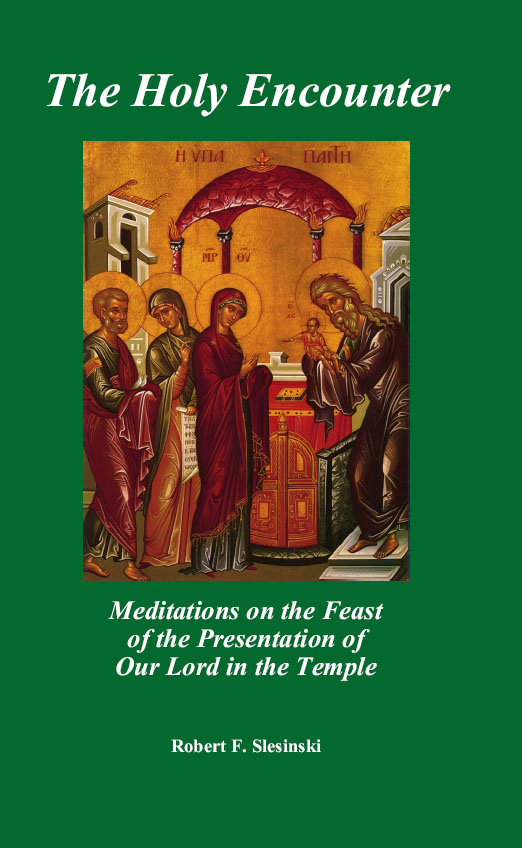
Next up is the feast that all right-thinking people know closes out the Christmas season: the Encounter/Purification/Candlemas. Fr Robert has turned his hand to this great feast in The Holy Encounter: Meditations on the Feast of the Presentation of the Lord in the Temple (ECP, 2008), 116pp. About this book we are told this:


This book of reflections investigates the feast of the Encounter of Christ with Simeon in the Temple, celebrated on February 2nd, from several theological perspectives.

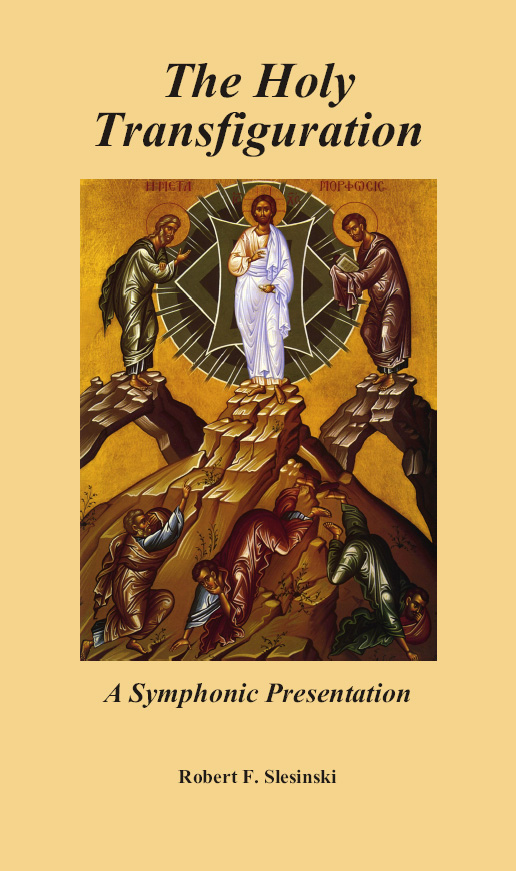
Finally we come to my favourite feast of the year: The Holy Transfiguration: A Symphonic Presentation (ECP, 2009). 120pp. About this book the publisher tells us this:

The in-depth educational book reflects on the feast of the Transfiguration of Our Lord from a scriptural perspective, comparing the Gospel accounts and writings of Luke, Matthew, Mark, John, Peter and Paul. 


Tuesday, September 14, 2021

Medieval Egyptian Euchology

As part of their new series Christian Arabic Texts in Translation, Fordham University Press, early next year, is bringing out Guides to the Eucharist in Medieval Egypt: Three Arabic Commentaries on the Coptic Liturgy by Yūḥannā ibn Sabbā‘, Abū al-Barakāt ibn Kabar, and Pope Gabriel V of Alexandria, trans. Deacon Arsenius Mikhail (FUP, February 2021), 240pp. 

About this book the publisher tells us this:

The fourteenth and fifteenth centuries witnessed a rising interest in Arabic texts describing and explaining the rituals of the Coptic Church of Egypt. This book provides readers with an English translation of excerpts from three key texts on the Coptic liturgy by Abū al-Barakāt ibn Kabar, Yūh.annā ibn Sabbā‘, and Pope Gabriel V. With a scholarly introduction to the works, their authors, and the Coptic liturgy, as well as a detailed explanatory apparatus, this volume provides a useful and needed introduction to the worship tradition of Egypt’s Coptic Christians. Presented for the first time in English, these texts provide valuable points of comparison to other liturgical commentaries produced elsewhere in the medieval Christian world.

Monday, July 12, 2021

On Liturgical Dogmatics: David Fagerberg Interviewed

If you read past entries on here, you will know that I am an undisguised admirer of the work of David Fagerberg, whom I have interviewed previously about his many excellent books, all of which are worth your time. I have used his first book, Theologia Prima, in courses for some fifteen years now. 

More recently I have been recommending his On Liturgical Asceticism to students.

Now there is a new must-read book from him, and it really does belong on every RCIA reading list, and on the syllabus of introductory courses in Christianity, whether in a parish or undergraduate classroom. For Liturgical Dogmatics is, quite simply, that good. It has achieved the rare feat of being a book written by a top-drawer academic who eschews complicated jargon and an academic apparatus to write an accessible, cogent book that is not at all dumbed down but remains meaty and substantial from your first bite to the last morsel. 

As is my custom, I sent David some questions about his background, the book, and future plans. Here are his thoughts. 

AD: Tell us a bit about your background

DF: I am nearing retirement (another year) so I find myself retrospecting quite a lot. In 1988 I submitted a dissertation proposal titled “What Is Liturgical Theology” and I have been adding to my answer since, as though the dissertation was a small sculpture and I’ve been adding clay to the bust. The pathway to Liturgical Dogmatics was direct thematically, even if meandering biographically.

AD: What led to the writing of Liturgical Dogmatics?

DF: The books on the wall in front of me are about liturgy and Byzantine theology. The books on the wall behind me are about philosophy and systematic theology. They are from two different phases of my life, and perhaps this volume is their reconnection. I began with systematics, and was drawn into liturgical studies. It is nice to think that instead of those initial years being wasted, they have hung around to be put to use now.

I also answer this question with a short and true anecdote. I wrote the book in a second and a half in my mind; putting it on paper naturally took longer. 

I was asked once if I could teach the course in liturgical history one summer. I thought, “Yes I could. I would start with Adam and Eve as cosmic priests, talk about their forfeiture of a liturgical career, cover salvation history from Abraham to Moses to the prophets, arrive at Jesus as the High Liturgist, and consider the baptized Christian as his liturgical apprentice.” 

Then I realized I was only being asked to teach a course on the history of the liturgy. All that got me thinking that we might also do a liturgical triadology, liturgical cosmology, liturgical anthropology, liturgical hamartiology (sin), liturgical soteriology, liturgical Christology/Pneumatology, liturgical ecclesiology, and liturgical eschatology. These are the sections of the book.

AD: Your first book, Theologia Prima, has been out for many years now, and I've used it for over a decade in classes before also using On Liturgical Asceticism  and Liturgical Mysticism. How does Liturgical Dogmatics stand in relation to those other three? What is its unique contribution?

DF: There was no grand plan. I marvel at authors who have some multi volume project in mind from the start, but such was not the case for me. I was carried along the current of liturgical theology. The first task was to understand what Kavanagh and Schmemann meant when they said, respectively, that liturgy is primary theology and the ontological condition for theology. The first book was linking liturgy + theology as two words naming one reality. 

But I found that students and colleagues misunderstood, and I concluded it must be due to operating with a different grammar, so I wanted to thicken both terms: treat liturgy as leitourgia, theology as theologia. The Orthodox theologians of asceticism helped me with that. 

The ascetical dimension opens another door. Not only is it what capacitates us for committing liturgy, it also is a connection between the sacred and the profane. Robert Taft wrote, “the purpose of all Christian liturgy is to express in a ritual moment that which should be the basic stance of every moment of our lives.” So my previous two books (Consecrating the World and Liturgical Mysticism) looked at daily life through the lens of liturgy. And since dogma concerns the whole of Christian thought and life, it was time to look at dogma through the lens of liturgy.

Kavanagh referred to his fictitious Mrs. Murphy as someone who does primary theology. If I may say so, then, my books have been describing Mrs. Murphy as a liturgical theologian (though not of the academic variety), a liturgical ascetic (though not of the monastic variety), a liturgical mystic (though not of the extraordinary variety), and now I am considering her as a liturgical dogmatician. The dogmas that scholars talk about, she experiences.

AD:Already in your introduction you unapologetically introduce a term that, in the Latin Catholic world at least, is still being "recovered" as it were: theosis. Tell us a bit about the connection between liturgy and theosis.

It is like flower and fruit, pathway and home, tasting and seeing, work and beatitude, dawn and noontime, tabernacle tent and Solomon’s Temple. There is a foretaste of theosis in liturgy, but the discipline and rhythm of liturgy leads to the throne of God. That we drink from the river of liturgy (the reference to Jean Corbon is intentional) means we acquire a taste for deification. It brings us home. One of the sentences that fell off my keyboard said what I mean: “the liturgy is not the performance of a human religion; liturgy is the religion of Christ perpetuated in Christians.” Theosis is Christ taking up his occupancy in us. 

AD: The great liturgical historian Robert Taft of blessed memory often analogized liturgy to what happens between the outstretched fingers of Adam and God in Michelangelo's famous Sistine fresco. Is that analogy useful in illustrating your opening emphasis on liturgy as synergistic co-operation with God?

I found Lev Gillet’s definition of synergy to be perfect: “two unequal, but equally necessary, forces.” Both fingers must stretch out, but God’s power of grace is stronger than man’s power of ritual. So it is in sacraments: the human minister applies water and grace regenerates. So it is in liturgy: liturgy is a work of God, though it is an activity of man. (This is also expressed in scholastic categories of causation. Garrigou-Lagrange wrote, “one part does not come from us in the other from God. The act is entirely from God as from its first cause, and it is entirely from us as from its neck and cause. The first cause does not render secondary causes superfluous.”)

AD: I'm wondering if the use of "dogma" and cognates in your work won't stick in a few throats given common misconceptions of dogma as stifling, cramped, restrictive. Here is where I'm wondering if your work on Chesterton might be helpful. I often paraphrase him (accurately, I hope, for it's been a while since I went back and read him!) that we should see "dogma" as a bounded playground, as a free space where we can play at leisure within certain boundaries beyond which the Church simply says "Here be mines!" or "There be dragons!" Is that apt?

You have helped me fulfill my vow to quote Chesterton to somebody, somewhere, once a week. That is exactly his point, yes. “Nine out of ten of what we call new ideas are simply old mistakes. The Catholic Church has for one of her chief duties that of preventing people from making these old mistakes.” So he calls doctrine or dogma a sort of map of the mind; a guide to the maze; the key that fits the lock. Dogmatic teaching takes “the responsibility of marking certain roads as leading nowhere or leading to destruction, to a blank wall, or a sheer precipice.” It allows for freedom.

AD: Perhaps more seriously, tell us a bit about the relationship between dogma and liturgy. The old tags about "lex orandi" and "lex credendi" have sometimes carelessly been used to suggest a monocausal and unidirectional relationship between the two, but it's more complicated than that, surely?

DF: I do propose a unidirectional relationship, but that’s because it’s a category mistake to treat them on the same level. Kavanagh thought we are misled by having ignored the verb statuat. “So long, I think, as the verb stays in the sentence it is not possible to reverse subject and predicate any more than one can reverse the members of the statement: the foundation supports the house.” Of course the house exerts weight upon the foundation, but the unidirectionality is expressed by Schmemann calling liturgy the ontological condition for theology.

AD: I'm struck by the care you pay to the great Orthodox Met. John Zizioulas in your book (as well as Florensky and others), and this, together with your long interest in and writing about Schmemann and others from the East, makes me think that while our liturgical practices differ very considerably, our liturgical theology, as Catholics and Orthodox, is very closely intertwined indeed. Is that a fair assessment?

DF: I would like to think so – agreed. I sometimes say that I can catch the scent of something in Eastern liturgy, Eastern spirituality, Eastern theology that I might not otherwise single out, but once I am aware of it I can detect it also in the West. 

Bowing down in docility to both the letter and spirit of the Second Vatican Council (from docilis, meaning “easily taught”), I have sought to obey the magisterium’s command in paragraph 15 of Unitatis Redintegratio:

Catholics therefore are earnestly recommended to avail themselves of the spiritual riches of the Eastern Fathers which lift up the whole man to the contemplation of the divine. The very rich liturgical and spiritual heritage of the Eastern Churches should be known, venerated, preserved and cherished by all. They must recognize that this is of supreme importance for the faithful preservation of the fullness of Christian tradition, and for bringing about reconciliation between Eastern and Western Christians. 

I want to avail myself of spiritual riches. I want to be lifted to the contemplation of the divine. I want to know, venerate, preserve, and cherish the heritage of liturgy and spirituality as it appears in the fullness of Christian tradition, and therefore I will look over the fence to pastures of the East. (I borrowed that from the opening of an essay I wrote for a forthcoming collection titled Mapping the Una Sancta, ed. Sotiris Mitralexis and Andrew Kaethler.)

AD: I'm struck by the creedal structure of your book: you start by reflecting on the conditions necessary for the "I believe" or "I know," move next to God, the fall and redemption, the Holy Spirit, the Church, and then eschatology. In addition, we get sections on angels and demons, on seven deadly sins, and much else, making the book seem in some ways ideally suited for, say, an RCIA program? Was that structure deliberate?

I looked at the table of contents of some manuals on dogmatics on the shelves behind me and noticed that’s the way they divide things up. If I’m going to look at traditional dogmatics through a liturgical eye, I might as well use their organizational scheme. It would please me very much to think I have made things more intelligible to someone in RCIA. They will have to send an email to Ignatius Press. 

AD: Naturally, while enjoying the whole book, I paid special attention to your section on ecclesiology, an area I have written about in my own books. Oddly enough I confess to relief at what is not here: any notion that offices and structures are worth your time! You say nothing about them and I'm assuming--correct me if I'm wrong--that this reflects the truth that offices and structures will pass away and exist no more in heaven, but that there we will always and forever liturgize?

Though I cannot find the quote in all the Schmemann material at my fingertips, I swear he is the one who said: “the Church is not an institution with sacraments, she is a sacrament with institutions.” That seems to speak to your point. I did not intentionally skip offices and structures: they simply were not the main characteristics of the Church to parade before my eyes.

AD: You open by explicitly eschewing footnotes, leading me to assume you are hoping for a readership beyond the AAR or the Society of Oriental Liturgy. Then your very clear style, and concrete metaphors and illustrations, make this an accessible book for a lot of people I suspect. Who was your imagined audience, and who especially would benefit from reading the book?

DF: What do academics do with dogmas? Talk about them, organize them, prioritize them, footnote them, write about them, systematize them, shelve them and take them back down again. But I suppose the thesis of the book is that Mrs. Murphy can experience dogmas. I’m not expecting Mrs. Murphy to read this book, then, but I do hope it defends her to the academic guild. 

AD: Having finished this book, what are you at work on next?

A couple times I have quipped that it would be possible to write a second volume of Liturgical Asceticism by using only Western authors this time. I’m going to give it a try under the title Liturgical Abnegation. There are Catholic spiritual authors that use terms troubling to our modern ears, terms like “abnegation, annihilation, indifference, resignation, mortification, nothingness, self-denial,” etc. The terminology sounds harsh because we hear it within a limited horizon, but it might be better understood if we could place the language against a more transcendent horizon. 

That transcendent horizon, I hypothesize, is the act of liturgizing God. Liturgical asceticism is a capacitation for liturgy; liturgical abnegation is a consequence of liturgy. Asceticism and abnegation are akin, but I look forward through the former at liturgy and am now looking backward through liturgy upon the latter. I do not gather my authors under any hard and fast temporal or geographical line grouping the authors, they are simply ones who have spoken about abnegation in a way revealing and provocative to me: Olier, Grou, Boudon, Rodriguez, de Caussade, Fenelon, de Sales, Libermann, Saint-Jure, Eudes, Scaramelli, de Granada, Ravignan, for example. 

Wednesday, July 7, 2021

David Fagerberg on his New Book

In February I noted the forthcoming publication of David Fagerberg's next book, Liturgical Dogmatics

I was sent a review copy by Ignatius Press, and have now read it with the same profit and delight as I find in all of David's books. If you go here you will find interviews I have done with him on here over the years about those other books. 

I write today simply to say that I have sent him questions about Liturgical Dogmatics, and hope to have those posted when he responds. Watch this space for that.

In the meantime, let me say this would be an outstanding book for any introductory class on Christianity, whether at a parish or in an undergraduate classroom. The richness of its content is made more accessible still by the eschewing of references (which is a hard sentence for an academic to type!). 

Monday, February 22, 2021

Liturgical Dogmatics

A new book by David Fagerberg will always rocket to the top of one's must-read lists for he is one of the outstanding commentators on the great Alexander Schmemann, and also himself one of the great liturgical theologians in the Catholic world today, where he has done much to bring Eastern understandings to Western awareness. 

I have used his book, especially Theologia Prima for more than 15 years in classes, and more recently his Liturgical Asceticism as well. So I shall read his newest one with an eye to enjoyment and edification for me and my students alike when it appears in a few weeks: Liturgical Dogmatics: How Catholic Beliefs Flow from Liturgical Prayer (Ignatius Press, April 2021), 260pp. 

About this book the publisher tells us this:

God is incomprehensible, but he is not unapproachable. What cannot be fully comprehended by dogma can be approached when we liturgize God.

What knowledge cannot fasten together, love can unite. There is a movement occurring between God and his children, and this divine economy is the subject matter of dogmatics. It is also exactly the definition of liturgy that this work assumes. Liturgy is the perichoresis of the Holy Trinity kenotically extended to invite our synergistic ascent into deification.

The Trinity's circulation of love turns itself outward, and in humility the Son and Spirit work the Father&;s good pleasure for all creation, which is to invite our ascent into participation in the very life of God, which consists of glory, love, beatitude.

All chapter topics in this volume are subdivisions of this single story stretching from alpha to omega, and they all turn out to be liturgical verities. What dogma stammers to state, liturgy celebrates in mystical participation. Liturgical Dogmatics therefore examines dogma in light of liturgy. The whole sweeping, saving activity of God, as described by dogma, is the subject of this book.

I'll see if I can arrange an interview with David, as I have done on here in the past.  

Friday, June 19, 2020

The Liturgical Past in Byzantium and Early Rus

Forthcoming in August is a paperback edition of a book first published in September 2019: Sean Griffin, The Liturgical Past in Byzantium and Early Rus (Cambridge University Press, 2020), 285pp.

About this book the publisher tells us this:
The chroniclers of medieval Rus were monks, who celebrated the divine services of the Byzantine church throughout every day. This study is the first to analyze how these rituals shaped their writing of the Rus Primary Chronicle, the first written history of the East Slavs. During the eleventh century, chroniclers in Kiev learned about the conversion of the Roman Empire by celebrating a series of distinctively Byzantine liturgical feasts. When the services concluded, and the clerics sought to compose a native history for their own people, they instinctively drew on the sacred stories that they sang at church. The result was a myth of Christian origins for Rus - a myth promulgated even today by the Russian government - which reproduced the Christian origins myth of the Byzantine Empire. The book uncovers this ritual subtext and reconstructs the intricate web of liturgical narratives that underlie this foundational text of pre-modern Slavic civilization.

Friday, May 29, 2020

Liturgical Mysticism

I have used David Fagerberg's Theologia Prima in my classes for fifteen years now. And after reading that one book, students always very enthusiastically seek out his other writings, including, more recently, Liturgical Asceticism. But he has several others worth your time, including the one discussed here in my interview with him.

At the very end of last year, his latest book was published: Liturgical Mysticism (Emmaus Academic, 2019), 200pp.

About this book the publisher tells us this:
Some think that liturgy is formal, public, and for ordinary people, while mysticism is uncontrollable, private, and for extraordinary saints. Is there a connection between the two? In this volume, David Fagerberg proposes that mysticism is the normal crowning of the Christian life, and the Christian life is liturgical.
We intuitively sense that liturgy and theology and mysticism have an affinity. Liturgical theology should reveal liturgy’s mystical heart. Liturgical theology asks “What happens in liturgy?” and liturgical mysticism asks “What happens to us in liturgy?”, and perfects our interior liturgy. In Liturgical Mysticism, Fagerberg directs the reader to look fixedly at Christ, who is the Mystery present in liturgy, and who bestows his resurrection power upon his adopted children.

Friday, May 15, 2020

Byzantine Liturgical Emotions

It seems to me that it may have been Susan Ashbrook Harvey's 2006 book Scenting Salvation: Ancient Christianity and the Olfactory Imagination that started this century's ongoing interest in the role of the senses, the corporeal, and the emotional within Eastern Christian studies. Along comes a new book expanding this ever-growing picture for us of embodied life in the Christian, especially Byzantine, East: Andrew Mellas, Liturgy and the Emotions in Byzantium: Compunction and Hymnody (Cambridge University Press, Aug. 2020), 222pp.

About this book the publisher tells us this:
This book explores the liturgical experience of emotions in Byzantium through the hymns of Romanos the Melodist, Andrew of Crete and Kassia. It reimagines the performance of their hymns during Great Lent and Holy Week in Constantinople. In doing so, it understands compunction as a liturgical emotion, intertwined with paradisal nostalgia, a desire for repentance and a wellspring of tears. For the faithful, liturgical emotions were embodied experiences that were enacted through sacred song and mystagogy. The three hymnographers chosen for this study span a period of nearly four centuries and had an important connection to Constantinople, which forms the topographical and liturgical nexus of the study. Their work also covers three distinct genres of hymnography: kontakion, kanon and sticheron idiomelon. Through these lenses of period, place and genre this study examines the affective performativity hymns and the Byzantine experience of compunction.

Wednesday, April 8, 2020

Orthodox Liturgy Phenomenologically Understood

I wonder if the author this book, released late last year, has suddenly realized she may need to write a second volume, devoted to the phenomenology of Orthodox liturgy during a pandemic? I have been watching with great interest the diverse approaches taken to the question of whether to have liturgies in Orthodox temples with a "skeleton crew" as some have done; whether to cancel outright; whether to have everybody broadcast liturgy live on Facebook (etc.); or whether, as the Ecumenical Throne has recently decreed, to have only one broadcasted liturgy per diocese.

In any event, this looks to be an important new study by Christina M. Gschwandtner, Welcoming Finitude: Toward a Phenomenology of Orthodox Liturgy (Fordham UP, 2019), 352pp. 

About this book the publisher tells us this:
What does it mean to experience and engage in religious ritual? How does liturgy structure time and space? How do our bodies move within liturgy, and what impact does it have on our senses? How does the experience of ritual affect us and shape our emotions or dispositions? How is liturgy experienced as a communal event, and how does it form the identity of those who participate in it? Welcoming Finitude explores these broader questions about religious experience by focusing on the manifestation of liturgical experience in the Eastern Christian tradition. Drawing on the methodological tools of contemporary phenomenology and on insights from liturgical theology, the book constitutes a philosophical exploration of Orthodox liturgical experience.

Wednesday, January 8, 2020

Prayerful Distractions as Psychological Free-Associations

Almost two years ago I was speculating rather cautiously on the possibility of a kind of "psychoanalytic" reading of Herbert McCabe's ideas around prayer, drawing on his helpful notion about "distractions" which come from his short chapter in God, Christ, and Us.

Well last night I had a chance to read another of his works, God Still Matters, with additional chapters on prayer and the Trinity. It was in this work that he acknowledges that his thoughts on distractions--which he says reveal to us what we really want, and instead of fighting them we should encourage their surfacing, the more easily to pray about and for them--were not his own, but came from a fellow Dominican, Victor White.

Now it all makes sense and I feel vindicated in my speculation. For White was a long-time dialogue partner with Carl Jung, and in fact wrote works about Jungian psychoanalysis, including God and the Unconscious.

All this, of course, takes us back to the great Viennese master himself, whose reflections on free association were and are so profoundly revealing and revolutionary. (At Strands in New York over Christmas, I picked up a short book by Anton Kris, Free Association: Method and Practice, which you may find interesting. Christopher Bollas also has interesting things to say about this in a variety of places, including here.)

We think that freely associating on the analyst's couch is a spectacular waste of time. And, wouldn't you know it, that's precisely the argument most of us use against prayer. McCabe again:
For a real absolute waste of time you have to go to prayer. I reckon that more than 80% of our reluctance to pray consists precisely in our dim recognition of this and our neurotic fear of wasting time, of spending part of our life in something that in the end gets you nowhere, something that is not merely non-productive, non-money making, but is even non-creative. it doesn't even have the justification of art and poetry. It is an absolute waste of time, it is a sharing into the waste of time which is the interior life of the Godhead. 
Finally for my students this semester in addition to reading McCabe, Plekon, and others, we will be reading Romano Guardini's lovely little classic, The Spirit of the Liturgy, where he also winsomely writes about liturgy being utterly wasteful of time for it is simply children at play in the Father's playground.

Monday, December 30, 2019

Daniel Galadza Interviewed on Jerusalem's Liturgy: Byzance après Byzance

It is always a delight to interview scholars on here, but--in the interests of full disclosure--it is an especial delight with Daniel Galadza, whom I have known for the better part of two decades now. He is not just a friend, but also co-editor on a book we are finishing for Peeters about the pseudo-sobor of Lviv of 1946. (More on that soon.) In any event, he is the consummate gentleman and scholar who wears his vast learning very lightly on his diaconal riassa. Following my usual practice, I sent him some questions about his recent book, and here are his thoughts.

AD: Tell us about your background

DG: I am a deacon of the Ukrainian Greco-Catholic Church (UGCC), born in Chicago, raised in Toronto and Ottawa by my parents, Fr. Peter and Olenka Galadza. After studies at Trinity College in the University of Toronto and the Sheptytsky Institute, then at St. Paul University in Ottawa, I did a licentiate and a doctorate in Rome with Stefano Parenti, my doctoral supervisor, at the Oriental Institute, with a year as a junior fellow in Byzantine Studies at Dumbarton Oaks in 2011–2012.

In Rome, I paid close attention to how the coffee was made at my college, the Russicum, assuming that as a layman with a doctoral in Byzantine liturgy I might end up working at Starbucks--if I were lucky. But God had a different plan and I ended up as an assistant professor in the Catholic Theology Faculty at the University of Vienna in 2013, with Prof. Hans-Jürgen Feulner as my boss and Sr. Vassa Larin as a colleague.

Vienna is known as a “Byzantinists paradise” (well, perhaps not in the guidebooks) and I got to know the scholars in Byzantine Studies at the University of Vienna and the Austrian Academy of Sciences. For the last few years, Prof. Claudia Rapp had led the team of the “Vienna Euchologia Project,” of which I am honoured to be a member (officially as an “international research partner” since I no longer live in Vienna).

Since 2018, I have been in Kyiv as a deacon of the Kyiv Archeparchy, a lecturer at the seminary, and a member of the liturgical commission, at the same time trying to keep up with scholarly work in Europe and North America.

During the fall semester 2018 I was a visiting lecturer at the Sheptytsky Institute, now at University of St. Michael’s College in the University of Toronto, and from 2019 I am a fellow of the Centre for Advanced Studies at the University of Regensburg, splitting up semesters between Bavaria and Ukraine.

AD: What led you to write Liturgy and Byzantinization in Jerusalem?

In May 2008, I had finished my Bacherlor of Theology degree and had applied to study at the Pontifical Oriental Institute (PIO) in Rome. I wasn’t really sure about how things worked at the universities in Rome, so I made a trip to investigate and made an appointment with Fr. Robert Taft, SJ, whom I had known through my parents since childhood. He immediately sat me down and gave me a list of four different doctoral thesis topics. One of them was about the Basilians and the decline of the UGCC’s liturgical tradition, which is a fascinating topic, but I didn’t want to start my academic work immediately making enemies, so I chose the topic on the list about which I knew the least: the “liturgical Byzantinization” of the Orthodox Patriarchate of Jerusalem. That ended up being my thesis topic for the licentiate and doctorate.

Upon arrival in Rome in September 2008, I already knew my thesis topic and was fortunate enough to live in a college next door to the PIO library, so I was able to take advantage of the amazing resources there and read all about a whole other, fascinating world of Eastern Christianity I knew of only generally through my studies in Canada. The thesis then turned into the book, which was published in 2018 by Oxford University Press and came out as paperback in 2019.

AD: Among Eastern Catholics, the notion of “Latinization” is fairly common, and since at least Vatican II, almost always reprobated. Is “Byzantinization” a similar process, and if so, of what and of whom? Does it carry the same negative connotations today as “Latinization” does for many?

In a way, the two phenomena are similar. Byzantinization, like Latinization, is, generally speaking, the adoption of foreign customs and practices, potentially including also theology, culture, and even language, to the detriment of the local, “authentic” tradition. More specifically, the liturgical Byzantinization of Jerusalem involved the supplanting of liturgical tradition of Jerusalem by the rite of Constantinople. The process was complex, due to the natural evolution of the Byzantine liturgical tradition, which was a synthesis of elements from Constantinople, Jerusalem, and elsewhere.

Like Latinization, Byzantinization was never officially imposed on the other Eastern Patriarchates of Alexandria, Antioch, and Jerusalem, although due to the cultural climate of the post-Iconoclast Eastern Mediterranean, the factions within these Eastern Patriarchates that were faithful to the decisions of the Council of Chalcedon (451) willingly adopted most of the synthesized Byzantine practices. This was partly due to a desire to show unity with Constantinople and partly due to the declining material situation of each of the Eastern Patriarchates as a result of invasions and non-Byzantine rule from the seventh century onward. In such a context, the prestige of Constantinople was felt even more strongly among the Chalcedonians outside the constantly shrinking borders of the Byzantine Empire.

Latinization for the Eastern Catholics is similar. It was rarely imposed officially by the Holy See and usually adopted willingly by Eastern Catholics because of Rome’s prestige as a center of authority and education. (A notable exception might be the 1720 Synod of Zamosc, which officially imposed numerous Latin practices based on Tridentine scholastic theology, in an attempt to bring order to the chaos of the Uniate Church in the century following the Union of Brest. Because Rome has since the Second Vatican Council officially encouraged the Eastern Catholic Churches to return to their ancestral traditions, it will be interesting to see how the UGCC will commemorate the 300th anniversary of the Synod of Zamosc in 2020.)

Around the time of the Second Vatican Council, the Melkite Greco-Catholic Church was also eager to rediscover its ancestral traditions and a group of scholars and clergy, known as the Cairo Circle, began discussing ideas about the restoration of an authentic Melkite liturgy, since for them Byzantinization was their version of Latinization. However, as far as I am aware, not much came of it, because the authentic practices from Jerusalem had not yet been sufficiently researched and there was no continuity with the liturgical tradition of Jerusalem because it had been completely lost. Thus, it was almost impossible to restore and implement in a practical manner.

Although they are similar as phenomena, the histories of Latinization and Byzantinization are, however, quite different, of course, but so are the histories of the Byzantinization of each of the three Eastern Patriarchates, due to their specific linguistic and political contexts.

AD: In an era when much of the academy has been drawing critical attention to the phenomena of colonialism and imperialism, you seem to suggest that the Byzantinization of Jerusalem does not constitute a straightforward case of imperial subjugation and transformation at the hands of Constantinople—that, as your introduction nicely puts it, “the periphery of one centre can become the centre of yet another periphery.” Tell us a bit more about these dynamics.

The phenomenon in question here is certainly not straightforward. Liturgical Byzantinization in Jerusalem—which is not the same as political, literary, cultural, etc. forms of Byzantinization—began only after Jerusalem was no longer under Byzantine imperial and political control. The same is the case for Alexandria, although Antioch’s history is somewhat different, due to the Byzantine reconquest of Syria in the tenth century.

Previous theories about Byzantinization in Jerusalem suggested it was imposed and happened suddenly. A common narrative used to go like this: after the destruction of the Holy Sepulcher, also known as the Anastasis Church, in 1009, the rite of Jerusalem was lost and its patriarchs were exiled to Constantinople in the eleventh and twelfth centuries, where they learned the Byzantine Rite and brought it back with them to Jerusalem along with ready-made books.

However, the sources suggest otherwise, painting a picture of a gradual change to the liturgical tradition that was carried out locally, often times by scribes copying liturgical books and attempting to reconcile differences in liturgical practice.

AD: Part of your argument seems to be that Byzantinization was less about imperial imposition of liturgical trends and traditions, and more about local alterations, based partly on the changing geopolitical and topographical realities of the city. Give us, if you would, an example or two of these changes.

If I haven’t mentioned it already, perhaps this is the time to do so: there are no historical or legal documents from Constantinople, Jerusalem, or elsewhere that explicitly prescribe how liturgical Byzantinization was to be carried out, such as a conciliar document or the decree of a patriarch or emperor, nor do any sources, such as chronicles or other historical accounts, describe exactly how it happened.

The main sources for information are liturgical manuscripts, the books used for prayer during the liturgy, dating from the eighth century onwards. The most important collection for the study of the Byzantinization of Jerusalem is the library of the Monastery of St. Catherine on Mount Sinai, which houses hundreds of manuscripts in a variety of ancient languages and is also the place some of these manuscripts were copied and used.

At Mount Sinai, the Georgian collection of manuscripts is of particular importance, not just because of the local Georgian monastic community there in the Byzantine period, but also because of the migration of the Georgian monks of the Lavra of St. Sabas in Palestine near Jerusalem to Sinai in the tenth century. Among them was Iovane Zosime, a Georgian monk and scribe who copied numerous and diverse manuscripts, many of them liturgical. What is significant about Iovane Zosime is that he is aware of his sources and gives information about them. What is more, he often dates and signs his work, which isn’t always the case with scribes.

The calendar he copied in codex Sinai Georgian Old Collection 34—one needs to distinguish between the old and new collection, because a whole trove of manuscripts was rediscovered at the monastery in 1975—presents a liturgical calendar for the whole year based on several sources, including ones from Constantinople, Jerusalem, and the Lavra of St. Sabas. Thus, Iovane Zosime was, in a way, one of the first scholars of “comparative liturgy” and his work confirms that already in the tenth century, monks and scribes at the Sabas Lavra and Mount Sinai knew of multiple liturgical traditions, these traditions were in contact with one another in Jerusalem, and they were also changing. Specifically in the calendar, the feast of St. James the Brother of the Lord is mentioned on multiple days—both on the days his feast was celebrated in Jerusalem (December 1, December 26, May 25) and in Constantinople (October 23)—showing the gradual nature of the change.

Two centuries later, we know of the work of another scribe, Basil the Hagiopolite, a reader and scribe at the Church of the Anastasis in Jerusalem, from an important manuscript copied in 1122 and known in liturgical scholarship as the “Typikon of the Anastasis.” The manuscript contains all the hymns, readings, and prayers necessary for Holy Week and Easter at the Anastasis, mentioning local practices native to Jerusalem, like the Liturgy of St. James, but also a loss of other local elements and revealing an influx of general Byzantine practices. Basil the Hagiopolite himself shows an awareness of two different traditions and tries to make sense of them in his manuscript. Most notably, the processions on Palm Sunday that Basil describes have been lost and the gospel readings for Holy Week have changed.

AD: You note that much of the Byzantinization comes after the three conquests—the Persian, the Arab, and the Crusaders, in a period leading up to the thirteenth century. A contemporary reader might wonder if there is any kind of causal link between events here? In other words, is it conceivable to think that Jerusalem Christians, feeling under siege and perhaps worried about loss of their “identity” (as we might call it today), would seek to buttress and solidify that identity by conforming their external appearances and practices to be more like other Christians, including those in the still unconquered imperial capital?

Most certainly! I would argue that there is very little change in theological content when examining Byzantinization and that it has much more to do with religious identity and affiliation. Once the Greek-praying Christians become the minority in Jerusalem and are no longer under Byzantine rule, they look to their coreligionists for moral—and sometimes financial—support. Although the Chalcedonian Christians of Jerusalem were unique because they had no homegrown non-Chalcedonian Church in Jerusalem and Palestine, unlike the case in with numerous non-Chalcedonians in Syria and Egypt, nevertheless they seemed eager to maintain strong links with Constantinople. It appears that the strong Greek monastic presence in the Holy Land also played a role in buttressing the Greek, Chalcedonian identity in Jerusalem.

AD: For those unfamiliar with Jerusalem’s liturgical calendar (ch.4), and lectionary (ch.5), what are some of the most notable and distinctive features in your eyes?

In a nutshell, here are some of the most noteworthy elements:

The calendar, from the sixth century onward at least, begins with Christmas rather than September 1, suggesting a theological emphasis on the Incarnation that is understood in the liturgical year as well. The day on which a saint is commemorated depends on the local tradition of Jerusalem. If we take the example of St. James again, December 26 was an ancient day of commemorating James in Jerusalem connected, at least according to Anton Baumstark, with the Jewish celebration of the dedication of the Temple. The October 23 commemoration depended on the transfer of the relics of James to Constantinople. The calendar of Jerusalem also had multiple days of certain saints and sometimes celebrated groups of saints together, often dependent upon the dedication of a church in Jerusalem where their relics were deposed. Octaves, or eight day celebrations of major feasts, were also a significant feature and the most important ones involved stational liturgy during the eight days at some of the more important churches of Jerusalem.

The lectionary is intimately related to the calendar and in some cases lectionary manuscripts give us the most information about the calendar. Unlike the Byzantine lectionary—where the order of the Gospels from Easter to Lent is John, Matthew, Luke, and Mark—the Jerusalem lectionary reads them in the following order: John, Matthew, Mark, and Luke. Even when the same Gospel is read during the same liturgical season, the pericopes (or individual excerpts) for a given commemoration are not necessarily the same. For example, the readings from the Gospel of John on the Sundays after Easter have completely different episodes when comparing the Jerusalem and Constantinople lectionaries.

Perhaps the most important and interesting aspect of the Jerusalem lectionary for Orthodox liturgy is that it has an Old Testament reading at the Divine Liturgy. The ancient Armenian and Georgian translations of the Jerusalem lectionary have quite an extensive series of Old Testament readings, but Greek manuscripts with Old Testament readings for the Divine Liturgy are quite rare.

AD: If, in a sense, Jerusalem is the “mother-city” for all Christians, do we find elements of her lectionary and calendar anywhere today in other traditions—a kind of “Jerusalemization” of, say, Coptic or Syriac or Latin or Byzantine traditions? Is her tradition of “stational” liturgies borrowed or copied by other traditions?

The Liturgy of St. James—the local Divine Liturgy of Jerusalem—does in fact refer to Jerusalem, or rather to Sion, as the “Mother of all the Church.” With regard to liturgical practice, Jerusalem certainly did function as a centre of influence over all of Christendom, in effect the “Jerusalemization” of many other Christian traditions. This was particularly felt in Constantinople, where there really wasn’t a sacred topography and much of its liturgy was imported from elsewhere. In Constantinople, one can see strong the influence of Jerusalem during Holy Week, with its structure based on biblical narratives imported from Jerusalem. Constantinople also adopted Jerusalem’s Bright Week Gospel readings, but with a twist: instead of reading them on every day of Bright Week at Divine Liturgy, as was done in Jerusalem, Constantinople took them and turned them into the eleven resurrectional Gospels read at Orthros, or Matins, every Sunday morning.

With regard to “stational” liturgies, processions led by the bishop that went through the city with hymns and stopped at various points, these were imitated in Constantinople, Rome, and elsewhere.

But these aren’t discoveries that are new to my book or research. Many of these insights into “Jerusalemization” and “stational” liturgies come from the works of Janeras, Taft, Baldovin, and several Russian scholars writing before the October Revolution. My goal in the book was to present a summary of this scholarship, often times scattered in diverse studies in various languages, and to bring it into dialogue with information found in additional manuscripts, many of them among the “new finds” of Sinai from 1975 in order to examine the interaction of the liturgical traditions of Jerusalem and Constantinople, and the question of Byzantinization in Jerusalem.

AD: Much of your work proceeds comparatively, and by drawing on the methods of Baumstark and Taft. But you also note the limitations of this method. Tell us about some of those limitations and then tell us more generally about your methods of research for this book, including especially looking at liturgy “from the bottom up.” Why is that important and what are its benefits?

In this study, I did indeed rely on comparative methods, primarily due to the comparative nature of examining the liturgies of Jerusalem and Constantinople and seeing the influence of one on the other and vice versa. From a purely technical point of view, the comparative method, with its emphasis on a textual and philological approach that respects the importance of the historical context, fit best to begin this investigation. Because the topic of Byzantinization is precisely a question of top-down, “official” liturgy, liturgical books are the main source for study.

Comparative liturgy is often criticized because it can at times overemphasize liturgical structures over the meaning of texts and does not say much about the experience of the people during the liturgical services. The problem of the authority, use, and reliability of texts is also one that must be grappled with, especially if adopting the “splitter” approach (in the dichotomy of Paul Bradshaw).

The “from the bottom up” approach is something that I am attempting to read about more and integrate into my work, but in other areas, for example in work dealing with the Vienna Euchologia Project.

AD: I recall meeting you for lunch in Washington DC some years back, when you were a fellow at Dumbarton Oaks, and you casually told me, as we stood waiting for the traffic light to change, that you were studying Georgian. Why are Georgian sources important to your study?

I don’t think it could have been casually, Adam, since ancient Georgian is far from “casual”: they say you can learn the Georgian noun in a day and spent the rest of your life learning the Georgian verb. Studying Georgian in Rome was quite the experience!

The importance of Georgian sources in Jerusalem is primarily due to the presence of Georgian pilgrims and monks who stayed in Jerusalem, made translations and copies of its liturgical manuscripts, and then either used them in Jerusalem and its environs in their own Georgian-praying communities or brought them back to Georgia. Because many of the Greek originals were lost, Georgian manuscripts are sometimes the only surviving witnesses to this ancient and lost liturgical tradition.

AD: You note that in some ways even today the periphery-centre tension still holds, but with different focus today: must the Jerusalem patriarchate remain, as it were, an outpost of the Greek Orthodox Church, resisting any attempts at change in, say, a more “Arabized” direction? But you also note that in the early 20th century there was less defensiveness and more openness to studying the authentic tradition and perhaps removing non-native elements. How far did such a movement get, and is there anything comparable today?

The current state of the affairs in the Church of Jerusalem is not an easy one and balancing internal and external ecclesiastical relations are in addition to some of the difficulties of daily life in Israel and Palestine today. Christians find it difficult to stay and without a local population, the Church depends on pilgrims and non-Palestinian Christians to keep life going.

Some of the activity of the Greek Orthodox Patriarchate of Jerusalem, such as the retention of the Julian calendar, seems to depend on the status quo agreement from previous centuries that codified liturgical life at the Church of the Holy Sepulcher. Today, one can observe frequent use of Arabic, and sometimes other languages, at the Divine Liturgy, for example the Gospel reading. However, this multilingualism in the liturgy is nothing new, since Egeria describes it in the fourth century and Basil the Hagiopolite mentions it in the twelfth.

Any tendency to differentiate the Jerusalem Patriarchate too much from other Orthodox would isolate it from the rest of the Church—which is precisely one of the reasons why Byzantinization occurred, to strengthen ties and establish a common identity with Christians beyond Jerusalem.

Nevertheless, the late nineteenth and early twentieth century did witness a great interest in the local liturgical tradition of Jerusalem from scholars who were also ecclesiastical authorities. This meant the Liturgy of St. James was revived, although not always with the right motives. Because the manuscripts of the Liturgy of St. James are often missing rubrics and the tradition ceased to be celebrated, Archbishop Dionysios Latas of Zakynthos supplied his own rubrics based on his studies of biblical archaeology. His Greek edition was then adapted to Church Slavonic by Ivan Gardner (at that time Hieromonk Philip). The resulting liturgy that is often celebrated today is effectively a nineteenth-century scholarly invention. Prof. Heinzgerd Brakmann has written several articles about this.

It is curious that in some circles where any change or reform in the Liturgies of St. John Chrysostom or St. Basil the Great would be frowned upon, the nineteenth-century revived version of the Liturgy of St. James is welcomed and celebrated frequently. Prof. Vitaly Permiakov, who has studied these questions for some years, has recently published a Church Slavonic-English edition where he attempts to address some of these problems.

AD: Sum up your hopes for the book, and who in particular would benefit from reading it?

My main hope is that it will inspire other scholars to look more closely at the question of Byzantinization, whether in Jerusalem or one of the other Eastern Patriarchates, and provide more definitive answers than I have. The history of the Byzantinization of Antioch and Alexandria remains to be written. I believe Antioch holds the answers to many of the remaining questions about Byzantinization, precisely because it was reconquered by the Byzantines in the tenth century and because it is geographically between Constantinople and Jerusalem.

I also hope that Syriac scholars will find the book to be a useful reference in their examination of the abundance of Syriac Melkite manuscripts, most of them in the library of the Monastery of St. Catherine on Sinai and lamentably ignored in Byzantine liturgical studies. The importance of Georgian for Byzantine and theological studies is now being appreciated in Western academia (I should mention here the work of Stephen Shoemaker and his English translation of the Georgian Iadgari hymnal from Jerusalem, which I was not able to mention in my book because they appeared at around the same time), but I hope that better resources for studying ancient Georgian will be made available in the West.

Having expressed all these wishes, I do not want to give the impression that the book is intended only for specialists. (Certainly, certain sections will be too technical for some readers. For others, the book might be effective against insomnia.) I hope that anyone familiar with the Byzantine liturgical tradition, particularly its faithful practitioners, might find something of interest in the book—whether in the general introduction to Jerusalem’s liturgy before its Byzantinization or the discussion of the Liturgy of St. James, the calendar, or the lectionary.

AD: Having finished the book, what projects are you at work on now?

Perhaps too many to keep track of myself... At the moment, I am a fellow at the Centre for Advanced Studies of the University of Regensburg, where there are quite a few conferences and workshops on liturgical topics, organized by Prof. Harald Buchinger, an expert on the early liturgy of Jerusalem. My own work at the Centre involves a translation and commentary of the twelfth-century Greek manuscript from Jerusalem I mentioned earlier: Hagios Stavros gr. 43, known as the “Typikon of the Anastasis,” a hymnal for Holy Week and Easter whose services, readings, and hymns would be recognizable to any Byzantine Rite Christian, whether Orthodox or Greco-Catholic, who has attended their local parish during that most solemn time of the year. My goal with this project is to investigate the question of liturgical theology through the prism of hymnography in order to understand how the hymns serve as scriptural exegesis and also liturgical hermeneutic.

Last year, Prof. Jos Verheyden and I organized a conference on liturgy and literature in the various multilingual communities of the Lavra of St. Sabas at Catholic University of Leuven, so I am now slowly working on publishing the proceedings, which I hope will appear in the not too distant future.

Apart from those main projects, I am also interested in early printed Church Slavonic liturgical books from Ukraine. Some are housed in various libraries in Kyiv, Lviv, and elsewhere (while some can still be purchased online for very reasonable prices!). In the coming years I hope to more beyond Jerusalem and the first Christian millennium and delve deeper into the Slavonic and Kyivan liturgical tradition. Perhaps after Byzantinization, I’ll move on to Latinization. We’ll see.
Related Posts Plugin for WordPress, Blogger...