It is always a pleasure to be able to interview Ines Murzaku, as I have a few times now, most recently here. Today we are joined by her co-editor, Barbara Crostini, as both of them talk about their recent publication, Greek Monasticism in Southern Italy: the Life of Neilos in Context (Routledge, 2017).
AD: Tell us about your background
Barbara Crostini: As an Italian, I have always been interested in the intersection of Greek and Latin cultures on the peninsula. This combination was ongoing in Southern Italy, and it was also reflected in the Abbey of Grottaferrata near Rome, that celebrated 1000 years from its foundation in 2004. It is important for me to keep such memories alive both from a religious point of view and from a secular one. In both cases, the Greek presence underscores variety and openness to other ways of doing things, such as the liturgy, or simply offers more through its language and literature. We need to keep such openness in today's world.
Ines Murzaku: I am a professor of ecclesiastical history and Director of Catholic Studies Program at Seton Hall University in New Jersey. I guess this is a fancier way of saying that I am a Church historian, focusing on Church history and theology—especially Byzantine and Catholic Church history—and how this history has impacted and still impacts modern Church history and the Church’s thinking and theology. I earned a doctorate in Eastern Ecclesiastical History from the Pontifical Oriental Institute in Rome and have held visiting positions at the Universities of Bologna and Calabria in Italy and University of Münster in Germany.
I have investigated Church history as this has unfolded on the borders and frontiers of empires, including the Byzantine, Roman, and Ottoman empires; in places where the Byzantine East and the Latin West have met but also collided; how the West has reacted; and how the East has influenced Western thinking, including Western theology and ecclesiology. I am fascinated with borders and peripheries, with saints of the peripheries like Italo-Greek saints of southern Italy and with Church history as it has developed in the peripheries. I have done and am still doing a lot of archival work in Italy, Germany, and other countries. Writing Church history from the archives is difficult as many colleagues in the guild will admit, but also rewarding--in hearing the voice of those who in a sense have lost their voice. As Chesterton famously wrote in Orthodoxy, “Tradition is the democracy of the dead. It means giving a vote to the most obscure of all classes: our ancestors.”
I am a practicing Byzantine-Greek Catholic with deep reverence for my tradition and think that Byzantine Catholics of Italy and elsewhere are a bridge between East and West and the medieval and premodern Byzantine-Catholic Church in southern Italy can provide some models of dialogue and co-existence for contemporary ecclesiology, theology, and ecumenism. St. Neilos and the Greek Monastery of the Mother of God of Grottaferrata, the Italo-Greeks-Albanians or Arbëresh of Southern Italy and their particular and unique histories of Easterners in the West are very rich and resourceful. A critical and dispassionate exploration of the history, ecclesiology, and theology of these Byzantine realities can be helpful in contemporary ecumenical dialogue between East and West, especially in understanding synodality and how this played out in a local Byzantine Church which was transplanted into a Latin context, as was the case of the Arbëresh or Italo-Albanian Church of Southern Italy – Calabria and Sicily.
AD: When we spoke last August, it was about your newly co-edited and co-translated Life of St Neilos of Rossano. His life is also the focus of this new collection, Greek Monasticism in Southern Italy: the Life of Neilos in Context. What has led to such riches pouring forth now on Neilos, as it were? In other words, give us a sense of how your own scholarly labors and that of the fourteen others in this book converged.
Ines Murzaku: I think common scholarly interest and passion for monasticism and the monastic ideal brought us together. Moreover, our work was also a work of “recovery” bringing attention to an almost forgotten monasticism i.e. Italo-Greek monasticism of Southern Italy. These are good enough reasons to bring scholars together, no? Those holy monks must have been praying really hard for this volume to happen!
The broader argument is that monasticism and the ascetic ideal unite. The monk is one who is separated from all and united harmoniously to all. This might appear contradictory at first sight, but what monasticism repudiates is not the world and its citizens, but the mundane, temporary and selfish love which stands in the way of the monk’s spiritual ascent. “In gradual detachment from those worldly things which stand in the way of communion with the Lord, the monk finds the world a place where the beauty of the Creator and the love of the Redeemer are reflected” (John Paul II 1995).
Almost all my book projects began in a monastic setting: at the Greek Monastery of the Mother of God at Grottaferrata. I have been very fortunate to have had the opportunity to research within the monastery’s walls, constantly illumined by the wisdom of the monks. Long, insightful conversations and exchanges with Abbot Emiliano Fabbricatore (who returned to the Lord on the day of the Theophany 2019) to better understand the text in action — as lived by the monks of Grottaferrata — were very frequent. Padre Emiliano’s knowledge of Greek, which he had learned in Greece — a country he loved very deeply until his death — was superb. He understood the nuances of the Greek text, and pointed our attention to minuscule details, something only monks who live the monastic life in community would understand and appreciate. Fr. Emiliano wanted the Life of St. Neilos, Italo-Greek saint of the periphery, and the history of Italo-Greek monasticism, to be read in English, as he once told me when he was accompanying a group of Seton Hall students in a visit to the monastery: “these young people are curious how we monks live, work, study. I guess monasticism has a message to offer. The Life of St. Neilos would probably be a good read for them in things our society has forgotten.”
AD: In your introduction, Barbara, you note that this present volume was explicitly conceived as a companion to the Life. What does this collection offer to those wanting to understand Neilos more deeply?
Barbara Crostini: Undoubtedly, the essays in the volume provide the broader context in which to understand the phenomenon of the Southern Italian saints. The first part of the volume offers essays on the text of the Life that provide insights into specific passages or readings, or even words, in this rich text. The second part opens more broadly to the historic-cultural phenomenon of monasticism in Southern Italy.
AD: The theme of this book is also, of course, monasticism, on which you have published other studies. What are some of the outstanding features of Greek monasticism in southern Italy in this period?
Barbara Crostini: I would say resistance and austerity. Resistance to the ongoing Latinization of their region, through the cultivation of the Greek liturgy and contact with the East. This was always appreciated as a source of complementary wisdom. Austerity was the hallmark of this ascetic streak of monks, often hermits or solitaries, or living in cave-like dwellings in small groups. Their closeness to the natural world and the simple environment of the country was always admired and provides an edge of authenticity to their spiritual outlook.
AD: Some people sometimes assume that monasticism is an irrelevant pursuit of a tiny elite, and monastics of nearly a thousand years ago can have nothing to teach us today. But what lessons do you see in the life of Neilos and those of his brethren more generally?
Ines Murzaku: Probably an innovative and emerging monasticism is in the making in the 21st century, which will meet the spiritual demands of our modern time: a new monk prototype who works in the world and is not of the world; one who does not renounce the secular world but instead sanctifies it; a monk who will persevere and be greater and accomplish greater things than his forefathers. In the age of computers, I-phones, Twitter, Facebook and constant bombardment with information there is a deep need of spirituality, longing, and reflective silence. There is truthfulness and credibility in the monastic message that is attractive to the person who might not have a desire to join the monastery but is in search of authentic spirituality and simplicity. Through silence and prayer, the millennials will be able to control noise and distraction, and establish an intimate relation with God.
AD: Your own chapter in this volume talked about the long-lasting effects of Neilos on Grottaferrata and its identity. Tell us a bit more about those effects and about Grottaferrata’s unique place in the Church today.
Ines Murzaku: Neilos’s desire for Grottaferrata was that it be a meeting place of encounter and preservation i.e., continue in Neilos’s encountering enterprise and preserve and transmit what was left of the Italo-Greek monasticism. Thus, Grottaferrata, following in the founder’s footsteps, re-created her identity, showing a high level of originality and adaptability while building its stabilitas for the monastic community at the gates of the urbe--Rome. Neilos’s pilgrimage and later Grottaferrata’s pilgrimage made the monastic community reach new levels of self-understanding and self-knowledge while showing a high level of adaptability to new conditions.
AD: Having now published two books in one year on Neilos, what will 2019 bring? What projects are you at work on now?
Ines Murzaku: I am taking a little break from Neilos but not from the monastic ideal and asceticism. I am currently writing a book focusing on St. Mother Teresa entitled: Mother Teresa: The Saint of the Peripheries Who Became Catholicism’s Center Piece which will be published by Paulist Press in 2019. However, I find much of St. Neilos in St. Mother Teresa, their monastic ideal and love of Christ and the neighbor is the same. I am always impressed how relevant monasticism is for us moderns and millennials: for we who are thirsty for authenticity – well, monasticism has it.
Showing posts with label Ines Angeli Murzaku. Show all posts
Showing posts with label Ines Angeli Murzaku. Show all posts
Thursday, January 31, 2019

Friday, August 10, 2018
Neilos of Rossano: Betwixt East and West
If the name Neilos of Rossano does not immediately ring a bell, then a new book will remedy that most splendidly: The Life of Saint Neilos of Rossano, ed. and trans. by Raymond L. Capra, Ines A. Murzaku, and Douglas J. Milewski (Dumbarton Oaks/Harvard University Press, 2018), 388pp.
 In the past, I've interviewed one of the editors and translators, Ines Murzaku, here. She graciously agreed to an interview about this new book, and also brought in one of her colleagues, Douglas Milewski, to answer a few of the questions, as you'll see below. I began with Ines.
AD: Tell us a bit about your background, including your recent work in Europe and your most recent Fulbright award.
I am a professor of ecclesiastical history and Director of Catholic Studies Program at Seton Hall University in New Jersey. I guess this is a fancier way of saying that I am a Church historian, focusing on Church history and theology—especially Byzantine and Catholic Church history—and how this history has impacted and still impacts modern Church history and the Church’s thinking and theology. I earned a doctorate in Eastern Ecclesiastical History from the Pontifical Oriental Institute in Rome and have held visiting positions at the Universities of Bologna and Calabria in Italy and University of Münster in Germany.
I have investigated Church history as this has unfolded on the borders and frontiers of empires, including the Byzantine, Roman, and Ottoman empires; in places where the Byzantine East and the Latin West have met but also collided; how the West has reacted; and how the East has influenced Western thinking, including Western theology and ecclesiology. I am fascinated with borders and peripheries, with saints of the peripheries like Italo-Greek Saints of southern Italy and with Church history as it has developed in the peripheries. I have done and am still doing a lot of archival work in Italy, Germany, and other countries. Writing Church history from the archives is difficult as many colleagues in the guild will admit, but also rewarding--in hearing the voice of those who in a sense have lost their voice. As Chesterton famously wrote in Orthodoxy, “Tradition is the democracy of the dead. It means giving a vote to the most obscure of all classes: our ancestors.”
I am a practicing Byzantine-Greek Catholic with deep reverence for my tradition and think that Byzantine Catholics of Italy and elsewhere are a bridge between East and West and the medieval and premodern Byzantine-Catholic Church in southern Italy can provide some models of dialogue and co-existence for contemporary ecclesiology, theology, and ecumenism. St. Neilos and the Greek Monastery of the Mother of God of Grottaferrata, the Italo-Greeks-Albanians or Arbëresh of Southern Italy and their particular and unique histories of Easterners in the West are very rich and resourceful. A critical and dispassionate exploration of the history, ecclesiology, and theology of these Byzantine realities can be gems in contemporary ecumenical dialogue between East and West, especially in understanding synodality and how this played out in a local Byzantine Church which was transplanted into a Latin context, as was the case of the Arbëresh or Italo-Albanian Church of Southern Italy – Calabria and Sicily.
Yes, I spent a good part of this summer in Italy (Rome) on a Fulbright Specialist grant at Università degli studi Roma Tre in Rome, teaching and researching the religious history of the Italian periphery – Southern Italy and its extensions to Eastern Europe. What is the role religion can play in Eastern Europe? It was a fruitful exchange between political scientists—my colleagues of Università degli studi Roma Tre—and myself. The new areas of thinking and the new approaches other disciplines open up are incredible thinking exercises. I am grateful to Fulbright for grating me the opportunity to be in Rome. Some of my political science colleagues at Università degli studi Roma Tre often joked, saying “What does a Southern-Italian-Greek Saint of the early 11th century have to do with Rome and Western politics?” whenever I talked passionately about St. Neilos. Well, if one reads the life of the St. Neilos, it’s clear that the answer is: a great deal.
AD: Back in November 2014 we spoke about your then-new book, Monastic Tradition in Eastern Christianity and the Outside World: A Call for Dialogue. Are there any connections between that book and this new one, The Life of Saint Neilos of Rossano?
Yes, of course. The thread is monasticism, the monastic ideal, the cloister and its relevance in the 21st century. I have taught monastic theology and history during my entire academic career in the US and Europe. It has never let me down; it never becomes stale or old. The lives of the saints are fascinating to students. I find millennials to be thirsty for authenticity. I think, that our century might present an opportunity for monasticism to rebound. The thirst for authenticity, spirituality, cultivating the love of God and the love of neighbor, love of silence and meditation and the human longing for union with the divine: all these continue to be important to modern society, and retain their relevance.
Making predictions about the last generation of monks, the Desert Fathers reflected, “What have we ourselves done?” One of them, Abba Ischyrion replied, “We ourselves have fulfilled the commandments of God.” The others replied, “And those who come after us, what will they do?” Ischyrion responded, “They will struggle to achieve half our works.” Then the brothers asked again, “And to those that come after them, what will happen?” Ischyrion answered, “The men of that generation will not accomplish any works at all and temptation will come upon them; and those who will persevere in that day will be greater than either us or our fathers.” This is telling, especially in the very difficult situation the Catholic Church is currently facing with clergy abuse cases and cover up. Maybe monasticism is a cure to this cancer of the Church? I believe so.
AD: Tell us a bit about Saint Neilos. He strikes me—if I’m not wrong—as being a figure living very much on the threshold of major change—the Gregorian reforms to the papacy, the Crusades, the deepening break-down in East-West relations?
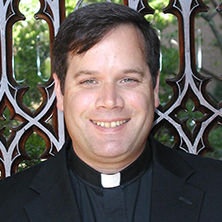 Fr. Douglas Milewski:
Within less than 100 years of Neilos’ death the Great Schism between Rome and Constantinople began, the Gregorian Reforms of the Western Church were initiated, and the First Crusade was launched. We still live with the enormous spiritual, theological, cultural, political and social transformations these events wrought. Neilos stands at the brink of those changes, unaware of what is coming even while it is obvious to us in hindsight where history was trending. So he is an important witness to the last generations of Mediterranean Christians conscious of being part of a single ekklesia, for all the strains that existed within it.
This is illustrated in numerous ways: by his ready acknowledgement of both Byzantine and Western imperial authority, his intellectual formation in Eastern patristic thought alongside a pious devotion to the Roman shrines of the Apostles, his capacity to interact with Eastern prelates and Roman pontiffs, his profound attachment to a distinct Calabrian/Byzantine expression of monasticism matched with a genuine veneration of Benedictine monasticism, his engagement in current affairs stretching from local Calabrian/Byzantine matters to the then-ongoing evangelization of Poland through his epistolary outreach to Saint Adalbert. Neilos’ Bios offers us a rare glimpse into a tragically lost Christian unity and into a man who stands at the crosscurrents of his times, and whose life’s lone desire was to follow God.
AD: One part of his vita made me wince: he married and fathered a daughter, but then around the age of 30, abandoned both to pursue monasticism. Was this commonly accepted practice in his day?
Ines Murzaku: Yes, St. Neilos, according to the Bios, was sacramentally married. He was not cohabitating, but legitimately married to one of the young girls from Rossano. This is how the hagiographer describes it in chapter 3.1: “Consequently, Neilos was not strong enough to escape their manifold snares, but just like a stag wounded in the heart, he was captured by one of them who surpassed the others in her comeliness and natural beauty, though she was born to a modest and ordinary family. He then entered the yoke of marriage with her, and their first-born child was a girl.”
How was that possible, legitimate, canonical? Neilos was not the first. The Byzantine civil and canonical laws of the empire and the Byzantine Church allowed the ending of marriage in order to enter monastic orders or to put on the angelic habit, as it is otherwise referred to. Was this the case for consummated and fruitful marriages, as was the case of St. Neilos? The answer is yes. Getting a consensual divorce from one’s spouse was common practice well before the time of St. Neilos.
Emperor Justinian’s (527-565) legislation prescribed specific causes for divorce and remarriage. Entering a monastery or religious life by reciprocal agreement between the spouses was considered a valid reason for dissolving the marriage, and this applied to men and women who, during marriage, chose a religious life and habitation in a monastery. Novella 117 of the year 542 prescribed “above all, when husbands and wives have, during marriage, chosen to adopt a holy life and reside in monasteries” the marriage could be dissolved. Additionally, husbands could divorce their wives in cases of treason against the emperor, committing adultery, plotting to kill their spouses, etc. Wives were also granted divorces if their husbands pressured them to commit adultery or if husbands accused them of adultery but failed to provide evidence.
Moreover, St. Basil the Great wrote that: “A woman is not allowed to dismiss her husband, even if he is a fornicator, unless perhaps, to enter a monastery.” “Divorce was considered legal as well in cases when the wife was willing to separate from her husband for the sake of his ordination as bishop, and for joint or separate entry of spouses into monastic life”: Canons 12 and 48 of Trullo.
One other fact to keep in mind, St. Neilos/Nilus of Rossano or St. Neilos/Nilus the Younger, took the name from St. Neilos/Nilus the Elder, or of Sinai who died c. 430 and was one of the disciples of St. John Chrysostom. According to tradition St. Neilos the Elder was a layman, married, with two sons. St. Neios the Younger took the monastic name from him and in a way followed his path to monastic life, dissolving the marriage.
In sum, if one of the spouses felt a calling tο monastic vocation, Byzantine law did not prevent him or her from carrying it out, given that monastic life was considered a superior calling and a superior way of living compared to married life. Entering into monastic life meant separation from the world and was recognized as a fact that dissolved a lawful-sacramental marriage, as a natural death would do. Church law followed Byzantine law here. St. Neilos’ Calabria was part of the Byzantine-Eastern Empire bordering the Western Empire so dissolution of marriage for a higher calling was legally and sociably acceptable.
AD: His geographical context also makes him a threshold figure: living in southern Italy under not Latin but Byzantine imperial jurisdiction. Tell us a bit about that Byzantine context.
The Byzantine civilization of pre-Norman southern Italy contained communities of Eastern Christians, Western Christians, Jews and Muslims, alongside pockets of Franks, Bulgars, Armenians, and people of other ethnicities. The Calabria of Neilos’ lifetime was a region caught between the competing ambitions, strategies, politics, and military adventures of its home Eastern Empire, the Western Empire to the north, and Saracen emirs in Sicily immediately to the west. It was an insecure territory that did not enjoy long periods of tranquility.
Moreover, the Life of Saint Neilos offers a snapshot of a cultural and ecclesial world that was soon to vanish on account of several decisive events: the schism between Rome and Constantinople in 1054, the start of the Gregorian Reforms in the latter half of the eleventh century which would transform the Western Church apart from the Eastern Church, and the beginning of the age of the Crusades in 1090. While clearly conscious of their distinctiveness, and at times quite contentiously so, the eastern and western halves of the Christian world in the tenth century still understood themselves as part of a single religious community. Statesmen from the respective realms at various times sought to extend that sense of spiritual commonality into political reality by linking the two empires through marriage. The youthful Otto III, son of the remarkable Princess Theophano, aspired to become more Greek than Saxon and understandably looked up to Neilos as a spiritual father (for more on this see chapters 92-93 of our book). The Western world at the close of the first millennium was widely open to the spiritual and cultural influences of the Byzantine tradition, as the emergence of a great and confidently Western and Christian civilization in the High Middle Ages was two centuries distant in the future.
Additionally, the papacy was not in this period the dynamic force it would shortly become. Indeed, Neilos’ lifespan overlaps with the nadir of papal history, the tenth century witnessing the See of Rome reduced to a political pawn with several truly notorious occupants. Italo-Greek monasticism, which originated in the Christian East, and its wide enculturation in southern Italy testify to monasticism’s adaptability. Additionally, Italo-Greek monasticism highlights southern Italian region and culture, which was a locus of communication and in constant connection and exchange with the surrounding cultures and a suitable habitat accommodative to different monastic lifestyles, including the hermit lifestyle and communal monasticism.
AD: Your introduction notes that southern Italy came to be called the Terra dei Monaci or Land of Monks. What made this part of the world so attractive to the widespread flourishing of monastic life?
Yes, indeed it became The Land of Monks. Why? I will put Greek culture and civilization still visible in Southern Italy in the first place. Greekness was present in Southern Italy when the Eastern monks from Egypt and Syria arrived. The Magna Graecia of the Occident was there to welcome the Easterners. Southern Italy and her Greekness attracted the monks as it attracted Byzantine Italo-Albanians or Arbëreshes who settled in southern Italy in the 15th century. Culture and tradition was also attractive. If there was one place where these monks would have felt at home, Southern Italy was the place. Geography, climate and natural caves provided an excellent environment for solitary hermits. It is this abundance of hospitality—both cultural and environmental—that made Southern Italy and its coasts washed by two seas very attractive and hospitable to the Easterners.
AD: He is also, of course, part of and contributes to a very unique Italo-Greek monastic tradition. Tell us about the origins and nature of that. There are, if I’m not mistaken, still one or two such communities left today—e.g., Grottaferrata?
Italo-Greek monasticism is a unique form of monasticism. I have a new book just published on this type of monasticism. The only remnant of Italo-Greek monasticism is the Monastery of the Mother of God of Grottaferrata.
AD: The introduction mentions that, thanks to raids into Calabria from Muslim Sicily, Neilos and others fled north to the great Benedictine foundation at Monte Cassino, living there “for fifteen years, following the Greek rite.” Was such “bi-ritualism,” as it were, common then in monastic houses? Did it provoke any questions—about, say, differing fasting practices or liturgical traditions—or was it generally tolerated?
Fr. Douglas Milewski: The remarkable Monte Cassino episodes do not suggest to me “bi-ritualism”, which would be odd in a single monastery, as Neilos and his monks were given a separate foundation a few short miles from the main abbey. Nevertheless, the hagiographer clearly depicts the two-fold awareness of differences between Greek and Latin practices along with the reception of Neilos as a spiritual master who straddles both traditions. Anyone familiar with the topography of Monte Cassino will readily appreciate it was no small honor paid Neilos to be greeted by the entire community at the foot of the mountain in full liturgical trappings “as they would be on a feast day”! Thus, the Benedictines are treated to the celebration of the office in Greek, which they had requested, and granted permission by their abbot to seek instruction from Neilos about monastic perfection, wisdom he imparts in Latin. In all, it shows Neilos as a teacher of the universal Church in a pattern reminiscent of Saint Basil the Great’s monastic rules.
AD: Our context, of course, is vastly different from that of Neilos, but yet this book was published in 2018 in one of the most prestigious translation series by one of the world’s most prominent academic publishers, so nobody can say he’s irrelevant. Tell us, if you can, what especial lessons he offers Catholic and Orthodox Christians—and others—today.
Fr. Douglas Milewski:
First, there is the enduring legacy of Neilos, a son of the Greek/Byzantine Christian world who saw no disconnection with the Latin/Western Christian world, a legacy which carried on in the life of the community he founded at Grottaferrata. This is perhaps the most immediate source of reflection for Catholics and Orthodox, a man who seems to have embodied ecumenism in the purest sense. However, the Bios wants the reader to enter much more deeply into the significance of his life which transcends its historical particulars. Neilos is presented as a Christian who achieved theosis, becoming alter Christus. The account of his life is carefully presented with this object in mind – not for the sake of a reader to imitate the specific forms of Neilos’ ascetical practices, which are often quite beyond imitation, but to cultivate a similar awareness of the presence and direction of God in all life’s moments and variables, no matter how seemingly insignificant or catastrophic.
AD: Having finished The Life of Saint Neilos of Rossano, what are you working on next?
Ines Murzaku: In 2019 it will be the 100th anniversary foundation of the Eparchy of Lungro in Calabria for the Italo-Albanian-Byzantine Catholic Church of Italy. The Italo-Albanian-Byzantine Catholic Church is one of the surviving ecclesiastical realities of Southern Italy. Byzantine Albanians settled in southern Italy (Sicily and Calabria) in the 15th century, after the Ottoman conquest of the Balkans. Rome accommodated the Byzantines by making specific jurisdictional arrangements with Constantinople, from the Council of Florence (1439) to the Council of Trent (1545–1563), when the Orthodox Bishop of Ohrid provided ecclesial jurisdiction which has no direct historical parallel in ecclesiastical history.
The history of a 1014-year-old-monastry of Grottaferrata and 556-year-old history of the Italo-Greek-Arbëresh church offer incredible insights into possible models for Church unity and contemporary East-West ecumenism. These small and authentic Byzantine communities offer a model of ecumenism of a monastic community and a church that managed to survive while preserving the inherited ritual, traditions, language and customs although they were in a unique ecclesial situation – under the Latin-local bishop and the jurisdiction of the Roman-Latin Church. The exploration of the Italo-Greek medieval model of enculturation and ecumenism presents a potential bridge to be used the current theological dialogue between East and West, which is exploring models of Church union in the first millennium, especially with regard to synodality and primacy.
What is the role of the bishop of Rome - his specific function as the bishop of the “first see” - in the Italo-Greek context, and how was this role lived in southern Italy? How is this role being played now? What can the Italo-Greek model of southern Italy offer to the revival of the consciousness of a united Christendom? How and why did this monasticism extend its influence in the West? Was it successful in implanting Eastern-Byzantine seeds in a Latin tapestry? What was left, and can monasticism continue to survive?
These are some of the key ecclesiological-theological-historical questions my book project on the Italo-Albanian-Byzantine Catholic Church of Italy will study and answer.
In the past, I've interviewed one of the editors and translators, Ines Murzaku, here. She graciously agreed to an interview about this new book, and also brought in one of her colleagues, Douglas Milewski, to answer a few of the questions, as you'll see below. I began with Ines.AD: Tell us a bit about your background, including your recent work in Europe and your most recent Fulbright award.
I am a professor of ecclesiastical history and Director of Catholic Studies Program at Seton Hall University in New Jersey. I guess this is a fancier way of saying that I am a Church historian, focusing on Church history and theology—especially Byzantine and Catholic Church history—and how this history has impacted and still impacts modern Church history and the Church’s thinking and theology. I earned a doctorate in Eastern Ecclesiastical History from the Pontifical Oriental Institute in Rome and have held visiting positions at the Universities of Bologna and Calabria in Italy and University of Münster in Germany.
I have investigated Church history as this has unfolded on the borders and frontiers of empires, including the Byzantine, Roman, and Ottoman empires; in places where the Byzantine East and the Latin West have met but also collided; how the West has reacted; and how the East has influenced Western thinking, including Western theology and ecclesiology. I am fascinated with borders and peripheries, with saints of the peripheries like Italo-Greek Saints of southern Italy and with Church history as it has developed in the peripheries. I have done and am still doing a lot of archival work in Italy, Germany, and other countries. Writing Church history from the archives is difficult as many colleagues in the guild will admit, but also rewarding--in hearing the voice of those who in a sense have lost their voice. As Chesterton famously wrote in Orthodoxy, “Tradition is the democracy of the dead. It means giving a vote to the most obscure of all classes: our ancestors.”
I am a practicing Byzantine-Greek Catholic with deep reverence for my tradition and think that Byzantine Catholics of Italy and elsewhere are a bridge between East and West and the medieval and premodern Byzantine-Catholic Church in southern Italy can provide some models of dialogue and co-existence for contemporary ecclesiology, theology, and ecumenism. St. Neilos and the Greek Monastery of the Mother of God of Grottaferrata, the Italo-Greeks-Albanians or Arbëresh of Southern Italy and their particular and unique histories of Easterners in the West are very rich and resourceful. A critical and dispassionate exploration of the history, ecclesiology, and theology of these Byzantine realities can be gems in contemporary ecumenical dialogue between East and West, especially in understanding synodality and how this played out in a local Byzantine Church which was transplanted into a Latin context, as was the case of the Arbëresh or Italo-Albanian Church of Southern Italy – Calabria and Sicily.
Yes, I spent a good part of this summer in Italy (Rome) on a Fulbright Specialist grant at Università degli studi Roma Tre in Rome, teaching and researching the religious history of the Italian periphery – Southern Italy and its extensions to Eastern Europe. What is the role religion can play in Eastern Europe? It was a fruitful exchange between political scientists—my colleagues of Università degli studi Roma Tre—and myself. The new areas of thinking and the new approaches other disciplines open up are incredible thinking exercises. I am grateful to Fulbright for grating me the opportunity to be in Rome. Some of my political science colleagues at Università degli studi Roma Tre often joked, saying “What does a Southern-Italian-Greek Saint of the early 11th century have to do with Rome and Western politics?” whenever I talked passionately about St. Neilos. Well, if one reads the life of the St. Neilos, it’s clear that the answer is: a great deal.
AD: Back in November 2014 we spoke about your then-new book, Monastic Tradition in Eastern Christianity and the Outside World: A Call for Dialogue. Are there any connections between that book and this new one, The Life of Saint Neilos of Rossano?
Yes, of course. The thread is monasticism, the monastic ideal, the cloister and its relevance in the 21st century. I have taught monastic theology and history during my entire academic career in the US and Europe. It has never let me down; it never becomes stale or old. The lives of the saints are fascinating to students. I find millennials to be thirsty for authenticity. I think, that our century might present an opportunity for monasticism to rebound. The thirst for authenticity, spirituality, cultivating the love of God and the love of neighbor, love of silence and meditation and the human longing for union with the divine: all these continue to be important to modern society, and retain their relevance.
Making predictions about the last generation of monks, the Desert Fathers reflected, “What have we ourselves done?” One of them, Abba Ischyrion replied, “We ourselves have fulfilled the commandments of God.” The others replied, “And those who come after us, what will they do?” Ischyrion responded, “They will struggle to achieve half our works.” Then the brothers asked again, “And to those that come after them, what will happen?” Ischyrion answered, “The men of that generation will not accomplish any works at all and temptation will come upon them; and those who will persevere in that day will be greater than either us or our fathers.” This is telling, especially in the very difficult situation the Catholic Church is currently facing with clergy abuse cases and cover up. Maybe monasticism is a cure to this cancer of the Church? I believe so.
AD: Tell us a bit about Saint Neilos. He strikes me—if I’m not wrong—as being a figure living very much on the threshold of major change—the Gregorian reforms to the papacy, the Crusades, the deepening break-down in East-West relations?
Within less than 100 years of Neilos’ death the Great Schism between Rome and Constantinople began, the Gregorian Reforms of the Western Church were initiated, and the First Crusade was launched. We still live with the enormous spiritual, theological, cultural, political and social transformations these events wrought. Neilos stands at the brink of those changes, unaware of what is coming even while it is obvious to us in hindsight where history was trending. So he is an important witness to the last generations of Mediterranean Christians conscious of being part of a single ekklesia, for all the strains that existed within it.
This is illustrated in numerous ways: by his ready acknowledgement of both Byzantine and Western imperial authority, his intellectual formation in Eastern patristic thought alongside a pious devotion to the Roman shrines of the Apostles, his capacity to interact with Eastern prelates and Roman pontiffs, his profound attachment to a distinct Calabrian/Byzantine expression of monasticism matched with a genuine veneration of Benedictine monasticism, his engagement in current affairs stretching from local Calabrian/Byzantine matters to the then-ongoing evangelization of Poland through his epistolary outreach to Saint Adalbert. Neilos’ Bios offers us a rare glimpse into a tragically lost Christian unity and into a man who stands at the crosscurrents of his times, and whose life’s lone desire was to follow God.
AD: One part of his vita made me wince: he married and fathered a daughter, but then around the age of 30, abandoned both to pursue monasticism. Was this commonly accepted practice in his day?
Ines Murzaku: Yes, St. Neilos, according to the Bios, was sacramentally married. He was not cohabitating, but legitimately married to one of the young girls from Rossano. This is how the hagiographer describes it in chapter 3.1: “Consequently, Neilos was not strong enough to escape their manifold snares, but just like a stag wounded in the heart, he was captured by one of them who surpassed the others in her comeliness and natural beauty, though she was born to a modest and ordinary family. He then entered the yoke of marriage with her, and their first-born child was a girl.”
How was that possible, legitimate, canonical? Neilos was not the first. The Byzantine civil and canonical laws of the empire and the Byzantine Church allowed the ending of marriage in order to enter monastic orders or to put on the angelic habit, as it is otherwise referred to. Was this the case for consummated and fruitful marriages, as was the case of St. Neilos? The answer is yes. Getting a consensual divorce from one’s spouse was common practice well before the time of St. Neilos.
Emperor Justinian’s (527-565) legislation prescribed specific causes for divorce and remarriage. Entering a monastery or religious life by reciprocal agreement between the spouses was considered a valid reason for dissolving the marriage, and this applied to men and women who, during marriage, chose a religious life and habitation in a monastery. Novella 117 of the year 542 prescribed “above all, when husbands and wives have, during marriage, chosen to adopt a holy life and reside in monasteries” the marriage could be dissolved. Additionally, husbands could divorce their wives in cases of treason against the emperor, committing adultery, plotting to kill their spouses, etc. Wives were also granted divorces if their husbands pressured them to commit adultery or if husbands accused them of adultery but failed to provide evidence.
Moreover, St. Basil the Great wrote that: “A woman is not allowed to dismiss her husband, even if he is a fornicator, unless perhaps, to enter a monastery.” “Divorce was considered legal as well in cases when the wife was willing to separate from her husband for the sake of his ordination as bishop, and for joint or separate entry of spouses into monastic life”: Canons 12 and 48 of Trullo.
One other fact to keep in mind, St. Neilos/Nilus of Rossano or St. Neilos/Nilus the Younger, took the name from St. Neilos/Nilus the Elder, or of Sinai who died c. 430 and was one of the disciples of St. John Chrysostom. According to tradition St. Neilos the Elder was a layman, married, with two sons. St. Neios the Younger took the monastic name from him and in a way followed his path to monastic life, dissolving the marriage.
In sum, if one of the spouses felt a calling tο monastic vocation, Byzantine law did not prevent him or her from carrying it out, given that monastic life was considered a superior calling and a superior way of living compared to married life. Entering into monastic life meant separation from the world and was recognized as a fact that dissolved a lawful-sacramental marriage, as a natural death would do. Church law followed Byzantine law here. St. Neilos’ Calabria was part of the Byzantine-Eastern Empire bordering the Western Empire so dissolution of marriage for a higher calling was legally and sociably acceptable.
AD: His geographical context also makes him a threshold figure: living in southern Italy under not Latin but Byzantine imperial jurisdiction. Tell us a bit about that Byzantine context.
The Byzantine civilization of pre-Norman southern Italy contained communities of Eastern Christians, Western Christians, Jews and Muslims, alongside pockets of Franks, Bulgars, Armenians, and people of other ethnicities. The Calabria of Neilos’ lifetime was a region caught between the competing ambitions, strategies, politics, and military adventures of its home Eastern Empire, the Western Empire to the north, and Saracen emirs in Sicily immediately to the west. It was an insecure territory that did not enjoy long periods of tranquility.
Moreover, the Life of Saint Neilos offers a snapshot of a cultural and ecclesial world that was soon to vanish on account of several decisive events: the schism between Rome and Constantinople in 1054, the start of the Gregorian Reforms in the latter half of the eleventh century which would transform the Western Church apart from the Eastern Church, and the beginning of the age of the Crusades in 1090. While clearly conscious of their distinctiveness, and at times quite contentiously so, the eastern and western halves of the Christian world in the tenth century still understood themselves as part of a single religious community. Statesmen from the respective realms at various times sought to extend that sense of spiritual commonality into political reality by linking the two empires through marriage. The youthful Otto III, son of the remarkable Princess Theophano, aspired to become more Greek than Saxon and understandably looked up to Neilos as a spiritual father (for more on this see chapters 92-93 of our book). The Western world at the close of the first millennium was widely open to the spiritual and cultural influences of the Byzantine tradition, as the emergence of a great and confidently Western and Christian civilization in the High Middle Ages was two centuries distant in the future.
Additionally, the papacy was not in this period the dynamic force it would shortly become. Indeed, Neilos’ lifespan overlaps with the nadir of papal history, the tenth century witnessing the See of Rome reduced to a political pawn with several truly notorious occupants. Italo-Greek monasticism, which originated in the Christian East, and its wide enculturation in southern Italy testify to monasticism’s adaptability. Additionally, Italo-Greek monasticism highlights southern Italian region and culture, which was a locus of communication and in constant connection and exchange with the surrounding cultures and a suitable habitat accommodative to different monastic lifestyles, including the hermit lifestyle and communal monasticism.
AD: Your introduction notes that southern Italy came to be called the Terra dei Monaci or Land of Monks. What made this part of the world so attractive to the widespread flourishing of monastic life?
Yes, indeed it became The Land of Monks. Why? I will put Greek culture and civilization still visible in Southern Italy in the first place. Greekness was present in Southern Italy when the Eastern monks from Egypt and Syria arrived. The Magna Graecia of the Occident was there to welcome the Easterners. Southern Italy and her Greekness attracted the monks as it attracted Byzantine Italo-Albanians or Arbëreshes who settled in southern Italy in the 15th century. Culture and tradition was also attractive. If there was one place where these monks would have felt at home, Southern Italy was the place. Geography, climate and natural caves provided an excellent environment for solitary hermits. It is this abundance of hospitality—both cultural and environmental—that made Southern Italy and its coasts washed by two seas very attractive and hospitable to the Easterners.
AD: He is also, of course, part of and contributes to a very unique Italo-Greek monastic tradition. Tell us about the origins and nature of that. There are, if I’m not mistaken, still one or two such communities left today—e.g., Grottaferrata?
Italo-Greek monasticism is a unique form of monasticism. I have a new book just published on this type of monasticism. The only remnant of Italo-Greek monasticism is the Monastery of the Mother of God of Grottaferrata.
AD: The introduction mentions that, thanks to raids into Calabria from Muslim Sicily, Neilos and others fled north to the great Benedictine foundation at Monte Cassino, living there “for fifteen years, following the Greek rite.” Was such “bi-ritualism,” as it were, common then in monastic houses? Did it provoke any questions—about, say, differing fasting practices or liturgical traditions—or was it generally tolerated?
Fr. Douglas Milewski: The remarkable Monte Cassino episodes do not suggest to me “bi-ritualism”, which would be odd in a single monastery, as Neilos and his monks were given a separate foundation a few short miles from the main abbey. Nevertheless, the hagiographer clearly depicts the two-fold awareness of differences between Greek and Latin practices along with the reception of Neilos as a spiritual master who straddles both traditions. Anyone familiar with the topography of Monte Cassino will readily appreciate it was no small honor paid Neilos to be greeted by the entire community at the foot of the mountain in full liturgical trappings “as they would be on a feast day”! Thus, the Benedictines are treated to the celebration of the office in Greek, which they had requested, and granted permission by their abbot to seek instruction from Neilos about monastic perfection, wisdom he imparts in Latin. In all, it shows Neilos as a teacher of the universal Church in a pattern reminiscent of Saint Basil the Great’s monastic rules.
AD: Our context, of course, is vastly different from that of Neilos, but yet this book was published in 2018 in one of the most prestigious translation series by one of the world’s most prominent academic publishers, so nobody can say he’s irrelevant. Tell us, if you can, what especial lessons he offers Catholic and Orthodox Christians—and others—today.
Fr. Douglas Milewski:
First, there is the enduring legacy of Neilos, a son of the Greek/Byzantine Christian world who saw no disconnection with the Latin/Western Christian world, a legacy which carried on in the life of the community he founded at Grottaferrata. This is perhaps the most immediate source of reflection for Catholics and Orthodox, a man who seems to have embodied ecumenism in the purest sense. However, the Bios wants the reader to enter much more deeply into the significance of his life which transcends its historical particulars. Neilos is presented as a Christian who achieved theosis, becoming alter Christus. The account of his life is carefully presented with this object in mind – not for the sake of a reader to imitate the specific forms of Neilos’ ascetical practices, which are often quite beyond imitation, but to cultivate a similar awareness of the presence and direction of God in all life’s moments and variables, no matter how seemingly insignificant or catastrophic.
AD: Having finished The Life of Saint Neilos of Rossano, what are you working on next?
Ines Murzaku: In 2019 it will be the 100th anniversary foundation of the Eparchy of Lungro in Calabria for the Italo-Albanian-Byzantine Catholic Church of Italy. The Italo-Albanian-Byzantine Catholic Church is one of the surviving ecclesiastical realities of Southern Italy. Byzantine Albanians settled in southern Italy (Sicily and Calabria) in the 15th century, after the Ottoman conquest of the Balkans. Rome accommodated the Byzantines by making specific jurisdictional arrangements with Constantinople, from the Council of Florence (1439) to the Council of Trent (1545–1563), when the Orthodox Bishop of Ohrid provided ecclesial jurisdiction which has no direct historical parallel in ecclesiastical history.
The history of a 1014-year-old-monastry of Grottaferrata and 556-year-old history of the Italo-Greek-Arbëresh church offer incredible insights into possible models for Church unity and contemporary East-West ecumenism. These small and authentic Byzantine communities offer a model of ecumenism of a monastic community and a church that managed to survive while preserving the inherited ritual, traditions, language and customs although they were in a unique ecclesial situation – under the Latin-local bishop and the jurisdiction of the Roman-Latin Church. The exploration of the Italo-Greek medieval model of enculturation and ecumenism presents a potential bridge to be used the current theological dialogue between East and West, which is exploring models of Church union in the first millennium, especially with regard to synodality and primacy.
What is the role of the bishop of Rome - his specific function as the bishop of the “first see” - in the Italo-Greek context, and how was this role lived in southern Italy? How is this role being played now? What can the Italo-Greek model of southern Italy offer to the revival of the consciousness of a united Christendom? How and why did this monasticism extend its influence in the West? Was it successful in implanting Eastern-Byzantine seeds in a Latin tapestry? What was left, and can monasticism continue to survive?
These are some of the key ecclesiological-theological-historical questions my book project on the Italo-Albanian-Byzantine Catholic Church of Italy will study and answer.
Monday, June 25, 2018
Neilos of Rossano and His Life
Ines Murzaku recently sent me a copy of her newest publication, which I very gladly draw to your attention. She has graciously agreed to an interview about it in the coming days. (For a previous interview I did with her, see here.)
The first is a translation she worked on along with Raymond Capra and Douglas Milewski and published by Harvard University Press under its prestigious Dumbarton Oaks Medieval Library imprint: The Life of Saint Neilos of Rossano (2018), 384pp.
The titular figure occupies a truly liminal place both geographically and historically in East-West relations. As the publisher tells us:
The first is a translation she worked on along with Raymond Capra and Douglas Milewski and published by Harvard University Press under its prestigious Dumbarton Oaks Medieval Library imprint: The Life of Saint Neilos of Rossano (2018), 384pp.
The titular figure occupies a truly liminal place both geographically and historically in East-West relations. As the publisher tells us:
The Life of Saint Neilos of Rossano is a masterpiece of historically accurate Italo-Greek monastic literature. Neilos, who died in 1004, vividly exemplifies the preoccupations of Greek monks in southern Italy under the Byzantine Empire. A restless search for a permanent residence, ascetic mortification of the body, and pursuit by enemies are among the concerns this text shares with biographies of other saints from the region. Like many of his peers, Neilos lived in both hermitages and monasteries, torn between the competing conventions of solitude and community. The Life of Neilos offers a snapshot of a distinctive time when Greek and Latin monasticism coexisted, a world that vanished after the schism between the churches of Rome and Constantinople in 1054. This is the first English translation, with a newly revised Greek text.The figure under examination here, and some of the themes, have been partly treated in some of her other recent publications as noted here.
Wednesday, December 13, 2017
Greek Monasticism in Southern Italy
I'm always excited to see a new book from Ines Angeli Murzaku, whom I have interviewed in the past about earlier publications. She alerted me to this forthcoming collection, co-edited with Barbara Crostini: Greek Monasticism in Southern Italy: The Life of Neilos in Context (Routledge, 2017), 396pp.
I've asked her for an interview about this book, and she's consented. I'll post that as soon as we are both able.
In the meantime, here is the publisher's blurb:
I've asked her for an interview about this book, and she's consented. I'll post that as soon as we are both able.
In the meantime, here is the publisher's blurb:
This volume was conceived with the double aim of providing a background and a further context for the new Dumbarton Oaks English translation of the Life of St Neilos of Rossano, founder of the monastery of Grottaferrata near Rome in 1004. Reflecting this double aim, the volume is divided into two parts. Part I, entitled “Italo-Greek Monasticism,” builds the background to the Life of Neilos by taking several multi-disciplinary approaches to the geographical area, history and literature of the region denoted as Southern Italy. Part II, entitled “The Life of St Neilos,” offers close analyses of the text of Neilos’s hagiography from socio-historical, textual, and contextual perspectives. Together, the two parts provide a solid introduction and offer in-depth studies with original outcomes and wide-ranging bibliographies. Using monasticism as a connecting thread between the various zones and St Neilos as the figure who walked over mountains and across many cultural divides, the essays in this volume span all regions and localities and try to trace thematic arcs between individual testimonies. They highlight the multicultural context in which Southern Italian Christians lived and their way of negotiating differences with Arab and Jewish neighbors through a variety of sources, and especially in saints’ lives.
Monday, August 10, 2015
Post-Soviet Monasticism
The whole reason for starting this blog nearly five years ago now was to showcase the endless and diverse flood of (often affordable!) books on Eastern Christianity, a dramatic change in the last two decades. Prior to that, one often searched in vain for a solitary chapter in the odd book surveying Eastern Christian realities. Entire monographs devoted to Eastern Christians were rare, had small print runs, and cost a small fortune.
On that latter point, alas, we are not entirely far removed yet. Thus a forthcoming book next month, edited by Ines Angeli Murzaku (whom I interviewed here about another collection on monasticism) is published by a major publisher, but still at a formidable cost: I.A. Murzaku, ed., Monasticism in Eastern Europe and the Former Soviet Republics (Routledge, 2015), 384pp.
About this book we are told:
On that latter point, alas, we are not entirely far removed yet. Thus a forthcoming book next month, edited by Ines Angeli Murzaku (whom I interviewed here about another collection on monasticism) is published by a major publisher, but still at a formidable cost: I.A. Murzaku, ed., Monasticism in Eastern Europe and the Former Soviet Republics (Routledge, 2015), 384pp.
About this book we are told:
This book looks at Eastern and Western monasticism’s continuous and intensive interactions with society in Eastern Europe, Russia and the Former Soviet Republics. It discusses the role monastic’s played in fostering national identities; and the potentiality of monasteries and religious orders to be vehicles of ecumenism and inter-religious dialogue within and beyond national boundaries. Using a country-specific analysis, the book highlights the monastic tradition and monastic establishments. It addresses gaps in the academic study of religion in Eastern European and Russian historiography, and looks at the role of monasticism as a cultural and national identity forming determinant in the region.
Tuesday, November 25, 2014
Ines Angeli Murzaku on Grottaferrata and East-West Monasticism
Quite unexpectedly within about a week of each other, two books, both devoted to the monastic community of Grottaferrata, showed up on my desk. The first was The Greek Abbey at Grottaferrata, published a number of years ago now (and seemingly out of print). It is a short book with plenty of pictures, giving a general overview of the community. Then a new scholarly collection showed up, and I was able to interview its editor, Ines Angeli Murzaku, about her recent collection, Monastic Tradition in Eastern Christianity and the Outside World: A Call for Dialogue (Peeters, 2013), 302pp. Here are her thoughts:
AD: Tell us about your background:
IAM: I am a professor of Ecclesiastical History and Chair of the Department of Catholic Studies, Institute for Interdisciplinary Studies at Seton Hall University in New Jersey. My research focuses on Ecclesiastical History, and particular, Byzantine and Catholic Church History. I have been awarded several grants for my work, including the Alexander von Humboldt Research Fellowship for Experienced Researchers - Germany, the Dumbarton Oaks Research Grant – Harvard University, the Social Sciences and Humanities Research Council of Canada Grant (SSHRC) - Canada, and have been awarded three times Fulbright Research Scholar Grants.
My other publications include Returning to Rome: The Basilian Monks of Grottaferrata in Albania, Quo Vadis Eastern Europe? Religion, State and Society after Communism (2009), and Catholicism, Culture and Conversion: The History of the Jesuits in Albania (1841-1946), published by Orientalia Christiana Analecta Series (2006). Currently, I am co-authoring a translation and critical edition of the Life of St. Neilos of Rossano (1004) for Dumbarton Oaks, Harvard University (2014). Also, I am working on two projects: Monasticism in Eastern Europe, Russia and the Former Soviet Republics for Routledge (2015) and Italo-Greek Monasticism, from St. Neilos to Bessarion for Ashgate (2015). I was the vice-president of the Association for the Study of Nationalities (ASN) (2007-2013) and a United Nations (NGO) Christians Associated for Relationships with Eastern Europe accredited representative.
AD: Tell us about your background:
IAM: I am a professor of Ecclesiastical History and Chair of the Department of Catholic Studies, Institute for Interdisciplinary Studies at Seton Hall University in New Jersey. My research focuses on Ecclesiastical History, and particular, Byzantine and Catholic Church History. I have been awarded several grants for my work, including the Alexander von Humboldt Research Fellowship for Experienced Researchers - Germany, the Dumbarton Oaks Research Grant – Harvard University, the Social Sciences and Humanities Research Council of Canada Grant (SSHRC) - Canada, and have been awarded three times Fulbright Research Scholar Grants.
My other publications include Returning to Rome: The Basilian Monks of Grottaferrata in Albania, Quo Vadis Eastern Europe? Religion, State and Society after Communism (2009), and Catholicism, Culture and Conversion: The History of the Jesuits in Albania (1841-1946), published by Orientalia Christiana Analecta Series (2006). Currently, I am co-authoring a translation and critical edition of the Life of St. Neilos of Rossano (1004) for Dumbarton Oaks, Harvard University (2014). Also, I am working on two projects: Monasticism in Eastern Europe, Russia and the Former Soviet Republics for Routledge (2015) and Italo-Greek Monasticism, from St. Neilos to Bessarion for Ashgate (2015). I was the vice-president of the Association for the Study of Nationalities (ASN) (2007-2013) and a United Nations (NGO) Christians Associated for Relationships with Eastern Europe accredited representative.
AD: What led to putting this
collection together?
Fascination with and love of
monasticism Eastern and Western; the history of monasticism; exchanges and
interactions between Eastern and Western monks their dialogue and ecumenism. I
am most interested in Italo-Greek or Italiot monasticism, which is probably the
least known form of monasticism, a monasticism with which I am very well
acquainted. Southern Italy/Magna Graecia of the Occident is a real treasure in
providing a home and “accommodations” to Italo-Greek hermits, the cenobites,
those living in-between the cenobitic and hermetic.
AD: Give us a sense of the significance of Grottaferrata in both monastic and ecumenical terms.
AD: Give us a sense of the significance of Grottaferrata in both monastic and ecumenical terms.
Grottaferrata is a “survivor” (p.
118); as my colleague, Enrico Morini pointed out in his contribution, Italy had
a tremendous number of Italo-Greek monasteries and Italo-Greek saints whose
lives have come down to us through the ages.
Grottaferrata is one of the last of these monasteries, and has such a
distinctive relationship with the papacy in Rome and has borne witness to these
Western Christians of the importance and vibrancy of the Eastern Monastic
life. Much of this tradition has been
lost over the centuries in the rest of Italy, or at least severely diminished,
but at Grottaferrata, there is both the old tradition of Italo-Greek practice
and the new tradition of being on the forefront of ecumenical and
inter-religious dialogue.
One particularly important
element that is distinctive to Grottaferrata, which I tried to give a sense of
in my chapter, is its willingness to help both the Italo-Greek monks and the
Western monks feel comfortable at the monastery, feel a sense of belonging and
Grottaferrata’s incredible hospitality, a kind of hospitability that only monks
can provide. From the time of its
founder, Neilos of Rossano from Calabria, until the present day there has been
a comfort with communicating with both traditions, particularly in using
rituals that incorporate Greek, Latin, Italian and on special occasions Arbëresh
– the language and ritual of the Italo-Greeks or Italo-Albanians who since the
fifteenth century have been living in Southern Italy: Calabria and Sicily. A
good number of the monks of Grottaferrata have come from these Byzantine
communities.
AD: Your introduction mentions Hubert van Zeller’s idea that both the monk and the man in the world are on the
same path, seeking grace and a rule of life. This strikes me as similar to Paul
Evdokimov’s idea of “interiorized
monasticism.” What can those living “in the world” learn today from some of the
monastic communities surveyed in the book?
Here, I think that Gregory
Glazov’s very personal and intimate account is really helpful. His family, living in such close proximity
with the monks and sharing in their communal life, is an example of Evdkimov’s
interiorized monasticism. Here is a family that is really living with monks and
whose family life is a kind of monasticism — which seems to be what Evdokimov
is advocating in Struggling With God.
AD: Your introduction
mentions the importance of hospitality in monastic life. Tell us more about
that.
In terms of how the monks themselves
understand hospitality and generosity, it is nothing less than a Biblical
virtue that figures prominently throughout Scripture — in the story of Lot and
the angels that became central to the famous Holy Trinity Icon by Andrei
Rublev, Christ first appearing as a stranger who dined with the apostles at
Emmaus, and in many other important moments in Acts, Genesis, and elsewhere.
That is why it figures so heavily in the monastic rules — both East and
West. In terms of historical practice,
hospitality functioned as a way of maintaining strong networks among monastic
communities and cultivating bonds with the broader society. It also functioned
as a major way of doing outreach and charity — something which we see
today. All of these characteristics of
monastic hospitality have continued to the present day, though now the
community is much broader and more global, and the communities face many new
challenges.
Presently, monastic hospitality
— particularly at Grottaferrata, but also in other monastic communities I have
visited — is functioning in a missionary and ecumenical way. It is still a way
of building networks and forging relationships, but it is also an invitation to
gather together and share; this invitation goes out to other Catholics from the
Western rite, Protestants, and especially the Greek-Orthodox, with whom
Grottaferrata has an inherent connection.
As you can see in John Radano’s contribution to this volume, monastic
communities have done tremendous work in terms of opening up dialogue with
other Christian groups. The publications
that they have put out, like Irenikon and Eastern
Churches Quarterly, are the fruits of monastic hospitality — the monks, freely
and hospitably giving their time and sponsorship to these publications, are in
a sense inviting their readership communities into their monastic life and
sharing their patrimony with them. It is
even more explicit in the case of liturgical movements like the Taize communities
in the Western Christian tradition.
At Grottaferrata in particular,
hospitality also takes on a more directly educational function; when I have
taken my Seton Hall students there, they have not only had the opportunity to
experience the historical practice of Eastern monasticism, but they also have
come to meet the Abbot Emiliano Fabbricatore and monks-members of the community
and see them as people whose lives and concerns are not that different from
their own, even though they had a different vocation. My students had the
opportunity to sense the warmth of monastic practice and the monastic
lifestyle, even if they did not always understand everything that was going on!
The service was in Italiote-Greek!!!
AD: You note (p.11) that a “monastic
community is an eschatological community.” What do you mean by that, and what
is the significance of its eschatological focus?
Frequently, the monks saw their
lifestyle as the fulfillment of Matthew 19’s commandments to give up all that
they had in order to fulfill Christ’s will, and as a foretaste of what Christ
told his followers in Mathew 22:30 about the way that they will live in heaven
at the end of time — as people who neither marry nor are given in
marriage. We are also told that in the
life of Christ — that is to say the resurrected life — the things that divide
us, the barriers and walls, like nationality, language, and even confessional
differences, cease to exist.
More theologically, Eastern
monastics saw their practice as part of how they became people who could
participate in theosis. As
Athanasius of Alexandria explained the Incarnation, “God was Incarnate so that
we might be made god.” That process, theosis or
divinization, required that the monks become as Christlike as possible in order
to participate in this understanding of the bodily resurrection. Monasticism
for these Eastern monks emphasizes this paradigm of becoming like Christ and
also welcoming Christ in the form of the visitor, the outsider, and the
stranger. The practice also emphasizes
being like Christ in perfection and representing with fidelity the doctrine
that they have received, and communicating that doctrine to others.
When Evdokimov was writing
his essay "Eschatology: On Death, the Afterlife, and the Kingdom: 'The
Last Things'” (found in the collection Michael Plekon edited, In the World, of the Church: A Paul Evdokimov Reader) one of the themes that he addresses is the idea of healing as
salvation— not as a bodily healing or a full restoration, but rather as a
deliverance from disturbance into a feeling of ease or peace. The monks embody this in some important ways:
the rules laid out in the Typikon of the monastery reduce
strife and conflict, the management of a wise elder or abbot helps individual
monks to deal with temptations and support the group to adjust to new
situations, and the prayer practices foster metanoia or
repentance which helps heal the wounds from sin. Essentially, the monks are working to put
themselves into a state of equilibrium, like Evdokimov describes, so that they
can provide an example of that equilibrium to the world. Are these communities perfect? Of course not.
But they are doing their best to serve as an example of what the afterlife is
going to look like, or as my good friend and colleague Dr. James McGlone would
say, “a little piece of heaven on earth.”
AD: Your chapter as well as
a couple others focus on “holy silence” and its importance in monastic life.
But arguably silence is important for everyone, yes? It seems to me a
particularly acute struggle today for many of us, tethered as we are to devices
(phones, tablets, etc.) that never leave us alone, never give us opportunities
for silence. Why does the monastic tradition so emphasize the importance of
silence, and what can we learn from that today?
For monks, silence was about apathy, being
without passions that could distract you from God. It was a state of prayer and a state of
perfect practice. It also was hard to
achieve, which is why there was so much literature. However, it is important to note that there
were two kinds of silence that fell under the title of hesychia
— the first was the freedom to be able to withdraw from
worldly affairs for reflection and the second was the state of reaching
passionlessness through prayer and reflection (which is what we conventionally
associate with the word). Not all of us
can withdraw to the extent that a monk can — as laypersons we are often called
to have jobs in the secular realm and to raise families, but all of us can find
ways of withdrawing from technology at certain points during our day and using
that withdrawal as a time to be in relation with God and each other and as a
time to reflect. One thing that we can
learn from the lives of the saints is that you do not wait to be given an
opportunity to withdraw from the world — you create that opportunity, or
better, seize that opportunity. This peaceful space can be created.
AD: Many of the chapters in
the book focus on the role of monastic communities as places of encounter and
dialogue—between Eastern and Western Christians, and between Christians and
monks. Is Grottaferrata still playing that role today? What other communities
do you see as especially adept at such dialogue?
Yes, I think so. Grottaferrata and its monks are at the vanguard
of dialogue. The newly appointed Abbot Michel van Parys is a scholar and man of
prayer and dialogue. Besides Grottaferrata is the Monastère de Chevetogne,
Niederaltaich Benedictine Abbey, Abbey of Gethsemani in the USA and several others.
AD: Sum up your hopes for
this book and who should read it.
This book is part of a much
broader project, which is to make Eastern monasticism a much bigger part of our
scholarly conversation in the West — where it is often overlooked. For instance, the book I am currently editing
and contributing to addresses the history of Eastern monasticism in Eastern
bloc countries and the former Soviet Union. The suppression of religion in
these countries has created a gap in scholarship, and all of these countries
had a rich history and very much to offer in monastic practice before the state
shut down religious institutions and ended religious practice. It is my hope
that this particular book inspires students, fellow researchers, and interested
laypersons and clergy members to explore a heritage that has been highly
influential in our civilization, or better, has laid the foundations of our
civilization. These articles are great
starting points for further investigations, in addition to being unique
contributions to this broader conversation.
AD: Having finished this collection, what
projects are you at work on now?
Currently, I am working on a translation and critical edition
of the Life of St. Neilos, and I will be pursuing another
contract for a translation of the Life of St. Elias the Younger otherwise
known as St. Elias of Enna. These two Italo-Greek saints’ lives are
interesting because they describe real people and important historical
situations at a time when Sicily and Calabria were being transformed by their
interactions with the Arabs, the Byzantines, and the West. By putting these important primary sources
into English and into the hands of new scholars who have been impeded by a lack
of English-language resources, I am hoping to inspire future generations of
scholars in the field. There is also the
collection I mentioned earlier, Monasticism in Eastern Europe
and the Former Soviet Republics, which will be published by
Routledge in 2015. Additionally, I am working on an edited volume entitled
Italo-Greek Monasticism, from St. Neilos to Bessarion for Ashgate which is
scheduled to appear in December 2015. My projects on Italo-Greek monasticism
are long overdue projects and will do much justice to a forgotten page of
Byzantine history: Suum Cuique Tribuere, Ea Demum Summa Justitia Est.
Friday, August 8, 2014
Monasticism in Eastern Europe and Eastern Christianity
 Ines Murzaku e-mailed me this week to let me know of her most recent book, and another one set for release next year, both on similar themes. The one recently published by Peeters in Leuven is Monastic Tradition in Eastern Christianity and the Outside World: A Call for Dialogue (Peeters, 2013), xvi+286pp.
About this book the publisher tells us:
This volume's focus is threefold, thus corresponding to its tri-partite topical division: to analyze Eastern monasticism's unique place in the life transforming journey to theosis; Eastern monasticism's hospitality and mutual encounters with culture; and Eastern and Western monasticism's hospitality to Christian and non-Christian religions, including Buddhism, Hinduism and Islam (even though Islam does not have any monastic institution, its adherents have been historically in dialogue with Christian monastics and have the potential to achieve a spiritual affinity with monks of other religious traditions). The three parts of the volume share one unifying argument: monasticism's special call to spiritually symbiotic relationship or impact on the very socio-politic-historic structures of reality. The topics are explored from historical, theological, and literary standpoints. The volume's overall intention is to help make monastic ecumenical engagement or its potential for inter-faith dialogue better known, appreciated, and relevant within inter-religious dialogue.
 The publisher also helpfully provides a detailed table of contents in this PDF. I hope to interview Ines about both books in the coming weeks.
Her second book, set for release in the spring of 2015 by Routledge, is entitled Monasticism in Eastern Europe and the Former Soviet Republics. About this book we are told:
We are also given the table of contents:This book looks at Eastern and Western monasticism’s continuous and intensive interactions with society in Eastern Europe, Russia and the Former Soviet Republics. It discusses the role monastic’s played in fostering national identities; and the potentiality of monasteries and religious orders to be vehicles of ecumenism and inter-religious dialogue within and beyond national boundaries. Using a country-specific analysis, the book highlights the monastic tradition and monastic establishments. It addresses gaps in the academic study of religion in Eastern European and Russian historiography, and looks at the role of monasticism as a cultural and national identity forming determinant in the region.
Monasticism in Eastern Europe and Former Soviet Republics: An Introduction Ines Angeli Murzaku
Part 1: Monasticism in Eastern: Central Europe 1. Monasticism in Bulgaria Daniela Kalkandjieva 2. Croatian Monasticism and Glagolitic Tradition: Glagolitic Letters at Home and Abroad Julia Verkholantsev 3. Monasticism in Slovakia and Slovak National Development Stanislav J. Kirschbaum 4. Catholic Monasticism, Orders, and Societies in Hungary: Ten Centuries of Expansion, Disaster and Revival James P. Niessen 5. Religion and Identity in Montenegro Jelena Dzankic 6. Relations between the Holy Mountain and Eastern Europe c.1850-2000 Graham Speake 7. Roman-Catholic Monasticism in Poland Krystyna Górniak-Kocikowska 8. Orthodox Monasticism and the Development of the Modern Romanian State: From Dora d’Istria’s Criticism to Cyclical Reevaluation of Monastic Spirituality in Contemporary Romania Antonio D’Alessandri 9. Monasticism in Serbia in the Modern Period: Development, Influence, Importance Radmila Radić 10. The Church and Religious Orders in Slovenia in the Twentieth Century Kolar Bogdan 11. Between East and West, Albania's Monastic Mosaic Ines Angeli Murzaku
Part 2: Monasticism in Russia and Former Russian Republics 12. Monasticism in Modern Russia Scott Kenworthy 13. Monasticism in Russia's Far North in the Pre-Petrine Era: Social, Cultural, and Economic Interaction Jennifer Spock 14. Abbots and Artifacts: The Construction of Orthodox-Based Russian National Identity at Resurrection "New Jerusalem" Monastery in the Nineteenth Century Kevin Kain 15. Monasticism and the Construction of the Armenian Intellectual Tradition Sergio La Porta-Haig and Isabel Berberian 16. Monks and Monasticism in Georgia in the nineteenth and twentieth Centuries Paul Crego 17. Greco-Catholic Monasticism in Ukraine: Between Mission and Contemplation Daniel Galadza Conclusions Ines Angeli Murzaku
Saturday, October 16, 2010
The Basilians of Grottaferrata in Albania
The Basilians are sometimes thought to be the "bad boys" of Eastern Christianity, especially among Ukrainians, because they are and have been heavily Latinized in many ways for many centuries, betraying, inter alia, authentically Eastern monasticism and introducing into both Eastern Catholic and some Orthodox churches practices that are not aboriginal to them. (I remember very clearly reading the extremely hostile descriptions of them when I visited Pochaev in 2001, where they once ruled for a time.) It's true that they were reformed by the Jesuits along the lines of a Western order like the Jesuits. Now a new book by Ines Angeli Murzaku of Seton Hall University proposes a fresh look at them:
Ines Angeli Murzaku, Returning Home to Rome: The Basilian Monks of Grottaferatta in Albania (Athens: Analekta Kryptoferris, 2009), xxi + 309 (38 photos).

Drawing on extensive research in Vatican dicasteries, Jesuit archives in Italy, the state archives of Albania in Tiranë, the Pontifical Oriental Institute in Rome, the University of Calabria, and other private archives in Calabria, the author sheds light on Catholic-Orthodox relations in southern Italy and Albania as well as Christian-Muslim relations. I asked Anthony O'Mahony, of Heythrop College, University of London, who has published in this area, to review this book for us in Logos: A Journal of Eastern Christian Studies in 2011.
Ines Angeli Murzaku, Returning Home to Rome: The Basilian Monks of Grottaferatta in Albania (Athens: Analekta Kryptoferris, 2009), xxi + 309 (38 photos).

Drawing on extensive research in Vatican dicasteries, Jesuit archives in Italy, the state archives of Albania in Tiranë, the Pontifical Oriental Institute in Rome, the University of Calabria, and other private archives in Calabria, the author sheds light on Catholic-Orthodox relations in southern Italy and Albania as well as Christian-Muslim relations. I asked Anthony O'Mahony, of Heythrop College, University of London, who has published in this area, to review this book for us in Logos: A Journal of Eastern Christian Studies in 2011.
Subscribe to:
Posts (Atom)
