"Let books be your dining table, / And you shall be full of delights. / Let them be your
mattress,/
And you shall sleep restful nights" (St. Ephraim the Syrian).


Showing posts with label Christology. Show all posts

Friday, April 8, 2022

Ye Are As Like Unto Gods

David Bentley Hard bids fair to be the most prolific and best-known Eastern Orthodox scholar in the anglophone world today, able to pen whimsical essays and weighty tomes with equal facility while ensuring that many oxen on all sides are gored with obvious glee. His capacity to not merely undermine but blow up bad history, including bad doctrinal history and faulty receptions and appropriations of historical figures (like Anselm or Augustine or Aquinas), is wonderfully ecumenical, and I have no reason to doubt that all these gifts will be on fulgurating display in his new book out this month: You Are Gods: On Nature and Supernature (University of Notre Dame Press, April 2022), 158 pp. 

About this new book the publisher tells us this:

In recent years, the theological—and, more specifically, Roman Catholic—question of the supernatural has made an astonishing return from seeming oblivion. David Bentley Hart’s You Are Gods presents a series of meditations on the vexed theological question of the relation of nature and supernature. In its merely controversial aspect, the book is intended most directly as a rejection of a certain Thomistic construal of that relation, as well as an argument in favor of a model of nature and supernature at once more Eastern and patristic, and also more in keeping with the healthier currents of mediaeval and modern Catholic thought. In its more constructive and confessedly radical aspects, the book makes a vigorous case for the all-but-complete eradication of every qualitative, ontological, or logical distinction between the natural and the supernatural in the life of spiritual creatures. It advances a radically monistic vision of Christian metaphysics but does so wholly on the basis of creedal orthodoxy.

Hart, one of the most widely read theologians in America today, presents a bold gesture of resistance to the recent revival of what used to be called “two-tier Thomism,” especially in the Anglophone theological world. In this astute exercise in classical Christian orthodoxy, Hart takes the metaphysics of participation, high Trinitarianism, Christology, and the soteriological language of theosis to their inevitable logical conclusions. You Are Gods will provoke many readers interested in theological metaphysics. The book also offers a vision of Christian thought that draws on traditions (such as Vedanta) from which Christian philosophers and theologians, biblical scholars, and religious studies scholars still have a great deal to learn.

Monday, August 24, 2020

To Attain the Full Stature of the Perfect Christ

Strolling through the Oxford University Press of forthcoming publications is always a delight, but never more so than when espying names of friends and colleagues, as here: Human Perfection in Byzantine Theology: Attaining the Fullness of Christ by Alexis Torrance  (Oxford UP, December 2020, 256pp.)

Alexis and I gave papers at the Eighth Day Institute in Kansas just over a year ago--though it now feels like another aeon in a distant galaxy far, far away! If you don't know the lovely people of the Institute, and the unique and hopeful and admirable work they are doing--built around that fantastic bookstore--then stop at once and go here.

I've written to Alexis asking for an interview upon publication of his book, about which the publisher tells us this:

To what kind of existence does Christ call us? Christian theology has from its inception posited a powerful vision of humanity's ultimate and eternal fulfilment through the person and work of Jesus Christ. How precisely to understand and approach the human perfection to which the Christian is summoned is a question that has vexed the minds of many and diverse theologians.

Orthodox Christian theology is notable for its consistent interest in this question, and over the last century has offered to the West a wealth of theological insight on the matter, drawn both from the resources of its Byzantine theological heritage as well as its living interaction with Western theological and philosophical currents. In this regard, the important themes of personhood, deification, epektasis, apophaticism, and divine energies have been elaborated with much success by Orthodox theologians; but not without controversy.
Human Perfection in Byzantine Theology addresses the question of human perfection in Orthodox theology via a retrieval of the sources, examining in turn the thought of leading representatives of the Byzantine theological tradition: St Maximus the Confessor, St Theodore the Studite, St Symeon the New Theologian, and St Gregory Palamas. The overarching argument of this study is that in order to present an Orthodox Christian understanding of human perfection which remains true to its Byzantine inheritance, supreme emphasis must be placed on the doctrine of Christ, especially on the significance and import of Christ's humanity. The intention of this work is thus to keep the creative approach to human destiny in Orthodox theology firmly moored to its theological past.

Wednesday, August 12, 2020

An "Eastern" Christology?

I confess to automatic skepticism whenever I read of an attempt to counter-pose "Western" and "Eastern" Christologies (or much else), but in perusing this book the author seems more careful and discerning than that, even if the publisher's blurb gives into the temptation. In any event, Phuc Luu seems to have written an intriguing book: Jesus of the East: Reclaiming the Gospel for the Wounded (Herald Press, 2020), 256pp.

About this book the publisher tells us this:
Much of Western Christianity has subdued the narrative of Jesus as a Palestinian Jewish healer and liberator who served the sick and oppressed. But the Jesus of the Gospels is a revolutionary who stands with the sinned against, the wounded, and the marginalized. In Jesus of the East, author Phuc Luu re-narrates the life of Jesus to show how he made it his work to topple systems that privileged the few and disregarded the many, especially the poor and lowest.
In this provocative book, Luu offers a counter-narrative to Western Christianity, which for centuries has legitimized colonization and violence to prop up the powerful at the expense of the masses. Pulling from the tradition of the early Eastern church, the present work of theologians of the oppressed, and Luu's own experiences as a Vietnamese immigrant, Jesus of the East offers a transformative vision of healing for the world.
For those living in the land between pain and hope, Luu's prophetic words will renew our imaginations and draw us closer to the heart of God.

Saturday, April 20, 2019

Notes on the London Review of Books 41

The venerable London Review of Books recently tempted me to subscribe with one of those sharply discounted promos that as a half-Scot I am constitutionally incapable of resisting. So now every two weeks a lovely treat arrives chez moi full of fascinating reviews, essays, and short notices. (I am just old enough to have grown up on the eve of the digital revolution, and therefore still prefer newspapers and reviews like this in print, but the print subscription gives me access to their on-line archives, too, which is a bonus.)

Part of the reason for having this blog in the first place was to share word of new books in one area--Eastern Christianity--so if, from time to time, I post some ad hoc, unsystematic notes on what I've been reading in the newest LRB it is for the same reason--viz., so that you, too, may benefit from what I've been reading of recent reviews of books across a wide array of subjects. Sometimes these reviews are so comprehensive and skillfully done that I think "Right. I don't need to read anything more." But other times, of course, one is tempted to order the book and read the whole thing oneself.

Volume 41, dated 21 March 2019, is a goldmine of things, including an essay by Madawi Al-Rasheed on the perpetual lies, corruption, despotism, and tyranny of Saudi Arabia, a regime of whose horrors no conscious person should require convincing--unless, that is, you are a part of, e.g., the US government under any and every president and party.

Michael Kulikowski, an historian at Penn State, has a long and fascinating discussion of The Codex of Justinian, trans. Fred. H. Blume and ed. Bruce W. Frier, 3 vols. (Cambridge UP, 2016), 2963pp.

The size, and cost, of this enormous collection would likely limit it to academic libraries, or private libraries of exceptional means, but the influence of the Codex is still considerable even today.

Kulikowski, however, is--as I have been seeing for a decade now among academic historians, especially of antique or medieval Christianity, when they stumble into trying to understand, much less describe, anything theological--utterly unreliable and embarrassingly so when he attempts to sum up the theological debates of the fifth century by saying that "the central controversy was Christological: did father and son [sic] have two different natures in one indivisible divine person, or was their nature single and indivisible." All such questions are quickly dismissed as "hair-splitting" and "baroque episcopal politics...[and] contorted sectarian tractates," which tells us everything we need to know of the ignorance and snobbery of Kulikowski and nothing of the debates themselves. (To be fair, in a letter to the editor in the next issue, Kulikowski, tail firmly between his legs, corrects the error with enough overcompensating bluster as to suggest he's desperately trying to show he really does understand basic theology, or at least convince himself that he does.)

Michael Wood lavishly studs his review of The Collected Poems of Bertolt Brecht, trans. and ed. by Tom Kuhn and David Constantine (Norton, 2018, 1286pp.) with many excerpts of those poems, to great effect. I have only read a bit of Brecht, but this collection really does make me want to read more.

I think the most interesting review in this issue is Rosemary Hill's. She discusses Desmond Fitz-Gibbon, Marketable Values: Inventing the Property Market in Modern Britain (University of Chicago Press, 2018), 240pp.

I find all such recent works in a range of areas fascinating because I am increasingly convinced of two things: first, our images of, and from, "history" are as much a product of current politics and unconscious desires as anything; and second because a book like this merely illustrates something that others more interesting and intelligent than I--Zizek, Todd McGowan, Terry Eagleton, inter alia--have been arguing for some time: the basic practices and beliefs of so-called free-market capitalism are recondite mysteries and simulacra more properly classified as "religion" requiring a level of faith that makes believing in the hypostatic union easy.

When you think of how highly regulated, and litigated, questions of "property" are today, and all the complexities and intricacies of stock markets, bonds, debts, and the international market in the same, it will astonish you to read Fitz-Gibbon's book about the slap-dash way in which so much of this developed in the United Kingdom, and so recently, too: he notes that in some parts of England there was no agreed upon land registry until as late as 1991.

Michele Pridmore-Brown's review of Edith Sheffer, Asperger's Children: the Origins of Autism in Nazi Vienna (Norton, 2018), 316pp. is, not surprisingly, very sobering reading when she describes the horrifying practices of this period.

I have fond memories of my time in that Habsburg capital in 2016, not least my pilgrimage to our father among the saints, Sigmund of Vienna's house at Bergasse 19. But I knew, of course, of the dark shadows hanging over Vienna after the Anschluss, whose effects Freud and his immediately family only barely managed to escape--those harrowing days are well covered in any number of books, including all his biographers; and, in a particular way, the study of Mark Edmundson and the book by Freud's last physician Max Schur.

But I was only vaguely aware of the sinister "medical" and "scientific" experiments going on in Austria in the antebellum period (from 1934 onward). Sheffer's book, according to Pridmore-Brown's review, relays all kinds of horrifying details about the career of Hans Asperger and others around him, who often condemned children to their deaths--while also managing to help some of them. His sounds like a truly complex life.

Beyond the political horrors of the period, the review and book both raise good questions about the politics of "science" which we must always keep before us. Those who claim, as I regularly hear from students and others, that they "don't believe in God because I believe in 'science.'" utter fatuous nonsense, of course, but it seems that they--and too many of us--fail to realize that "science" is not infrequently gratuitously invested with un-challengeable deified authority to dispatch people because of perceived "defects," whether mental or physical. That should make our blood run cold as we realize that too often "science" is just an idol whose politics of devotion requires the destruction of thousands of children for what Asperger and others called "Gemüt poverty"--soul poverty.

In this light, and to conclude, let me note that news is emerging of Jean Vanier's move into palliative care at the end of his long and extraordinary life caring for precisely those kinds of "defective" kids and adults dispatched by Nazi doctors with that banal and ruthless efficiency so well documented by Lifton, Arendt, and others.

Vanier's life stands as an eloquent rebuke to all this, which is surely part of the reason for him being given the Templeton Prize in 2015, as noted here.

I first heard Vanier on CBC radio in the 1990s when his Massey Lectures were broadcast. You can listen to some of that here, but the Ideas website has many links to many broadcasts with him over the years, all of them worth your time. And of course his many books may be found here, including a new one I noted here just last month.

Wednesday, February 27, 2019

The Legacy of Athanasius of Alexandria

Fortress Press sent me their latest catalogue, and in it I spy a book I overlooked when it was first published just over a year ago: Thomas Weinandy and Daniel Keating, Athanasius and His Legacy: Trinitarian-Incarnational Soteriology and Its Reception (Fortress, 2017), 144pp.

About this book the publisher tells us the following:
Athanasius was a fiery and controversial bishop from Egypt, driven from his See no less than five times. Yet, his work served as a keystone to the settlement of the central disputes of the fourth century, from the Trinitarian and christological debates at Nicaea to the formulation of the divinity of the Holy Spirit. In this volume, Thomas G. Weinandy, OFM, Cap., and Daniel A. Keating introduce readers to this key thinker and carefully illuminate Athanasius's crucial text Against the Arians, unfolding the Trinitarian and incarnational framework of Athanasius's paramount concern: soteriology. The authors provide, in the second part, a robust map of the reception and influence of Athanasius's thought-from its immediate impact on the late fourth and fifth centuries (in the Cappadocians and Cyril) to its significance for the Eastern and Western Christian traditions and its reception in contemporary thought. Herein, Athanasius is presented for today's readers as one of the chief architects of Christian doctrine and one of the most significant thinkers for the reclamation of the Trinitarian and christological theological tradition.

Wednesday, December 26, 2018

The Idea and Role of Nicaea I

Reception history seems to be the rage lately amongst a lot of scholarly treatments of Christianity. Much of it is fascinating. Early next year we will see published another study looking at the reception of arguably the most consequential council in Christian history: The Idea of Nicaea in the Early Church Councils, AD 431-451 by Mark S. Smith (Oxford UP, 2019), 256pp.

About this book the publisher tells us the following:
The Idea of Nicaea in the Early Church Councils examines the role that appeals to Nicaea (both the council and its creed) played in the major councils of the mid-fifth century. It argues that the conflict between rival construals of Nicaea, and the struggle convincingly to arbitrate between them, represented a key dynamic driving—and unsettling—the conciliar activity of these decades. Mark S. Smith identifies a set of inherited assumptions concerning the role that Nicaea was expected to play in orthodox discourse—namely, that it possessed unique authority as a conciliar event, and sole sufficiency as a credal statement. The fundamental dilemma was thus how such shibboleths could be persuasively reaffirmed in the context of a dispute over Christological doctrine that the resources of the Nicene Creed were inadequate to address, and how the convening of new oecumenical councils could avoid fatally undermining Nicaea's special status.
Smith examines the articulation of these contested ideas of 'Nicaea' at the councils of Ephesus I (431), Constantinople (448), Ephesus II (449), and Chalcedon (451). Particular attention is paid to the role of conciliar acta in providing carefully-shaped written contexts within which the Nicene Creed could be read and interpreted. This study proposes that the capacity of the idea of 'Nicaea' for flexible re-expression was a source of opportunity as well as a cause of strife, allowing continuity with the past to be asserted precisely through adaptation and modification, and opening up significant new paths for the articulation of credal and conciliar authority. The work thus combines a detailed historical analysis of the reception of Nicaea in the proceedings of the fifth-century councils, with an examination of the complex delineation of theological 'orthodoxy' in this period. It also reflects more widely on questions of doctrinal development and ecclesial reception in the early church.

Monday, September 17, 2018

The Presence and Absence of Images

I am regularly asked to give presentations on the history and theology of images, especially to Roman Catholic crowds desirous of learning more about this much-neglected part of the tradition. Usually these are very general introductions in which I point out, inter alia, that the permission given by Nicaea II for the use of icons is a very conservative one. As Bulgakov asked, where is an actual theology of images in the council? He concluded that there isn't one, and it remains to be developed. Some recent studies previously noted on here have gone some way to aid that development.

Now a new book looks like it will raise some deep and fascinating questions in grappling with a theology of images and all that it entails: Natalie Carnes, Image and Presence: a Christological Reflection on Iconoclasm and Iconophilia (Stanford UP, 2018), 256pp.

About this book the publisher tells us:
Images increasingly saturate our world, making present to us what is distant or obscure. Yet the power of images also arises from what they do not make present—from a type of absence they do not dispel. Joining a growing multidisciplinary conversation that rejects an understanding of images as lifeless objects, this book offers a theological meditation on the ways images convey presence into our world. Just as Christ negates himself in order to manifest the invisible God, images, Natalie Carnes contends, negate themselves to give more than they literally or materially are. Her Christological reflections bring iconoclasm and iconophilia into productive relation, suggesting that they need not oppose one another. Investigating such images as the biblical golden calf and paintings of the Virgin Mary, Carnes explores how to distinguish between iconoclasms that maintain fidelity to their theological intentions and those that lead to visual temptation. Offering ecumenical reflections on issues that have long divided Protestant, Catholic, and Orthodox traditions, Image and Presence provokes a fundamental reconsideration of images and of the global image crises of our time.

Friday, June 8, 2018

The Image of Christ in Russian Literature

Northern Illinois University Press continues to be in the front lines of scholarship about Russian history, including Russian Christian and literary history. Just last month it published a fascinating new study by John Givens: The Image of Christ in Russian Literature: Dostoevsky, Tolstoy, Bulgakov, Pasternak (2018), 329pp.

About this book the publisher tells us this:
Vladimir Nabokov complained about the number of Dostoevsky’s characters “sinning their way to Jesus.” In truth, Christ is an elusive figure not only in Dostoevsky’s novels, but in Russian literature as a whole. The rise of the historical critical method of biblical criticism in the nineteenth century and the growth of secularism it stimulated made an earnest affirmation of Jesus in literature highly problematic. If they affirmed Jesus too directly, writers paradoxically risked diminishing him, either by deploying faith explanations that no longer persuade in an age of skepticism or by reducing Christ to a mere argument in an ideological dispute.
The writers at the heart of this study understood that to reimage Christ for their age, they had to make him known through indirect, even negative ways, lest what they say about him be mistaken for cliché, doctrine, or naïve apologetics. The Christology of Dostoevsky, Leo Tolstoy, Mikhail Bulgakov, and Boris Pasternak is thus apophatic because they deploy negative formulations (saying what God is not) in their writings about Jesus. Professions of atheism in Dostoevsky and Tolstoy’s non-divine Jesus are but separate negative paths toward truer discernment of Christ.
This first study in English of the image of Christ in Russian literature highlights the importance of apophaticism as a theological practice and a literary method in understanding the Russian Christ. It also emphasizes the importance of skepticism in Russian literary attitudes toward Jesus on the part of writers whose private crucibles of doubt produced some of the most provocative and enduring images of Christ in world literature. This important study will appeal to scholars and students of Orthodox Christianity and Russian literature, as well as educated general readers interested in religion and nineteenth-century Russian novels.

Friday, March 30, 2018

Radical Sacrifice

On this Great and Holy Friday, as we behold the One who hung the heavens hanging on the cross in a sacrifice that ends all sacrifice, we have a new book by Terry Eagleton just released: Radical Sacrifice (Yale UP, 2018), 216pp. I've yet to read a boring book by Eagleton, and this sounds very worthwhile.

About this book the publisher tells us:
The modern conception of sacrifice is at once cast as a victory of self-discipline over desire and condescended to as destructive and archaic abnegation. But even in the Old Testament, the dual natures of sacrifice, embodying both ritual slaughter and moral rectitude, were at odds. In this analysis, Terry Eagleton makes a compelling argument that the idea of sacrifice has long been misunderstood.
Pursuing the complex lineage of sacrifice in a lyrical discourse, Eagleton focuses on the Old and New Testaments, offering a virtuosic analysis of the crucifixion, while drawing together a host of philosophers, theologians, and texts—from Hegel, Nietzsche, and Derrida to the Aeneid and The Wings of the Dove. Brilliant meditations on death and eros, Shakespeare and St. Paul, irony and hybridity explore the meaning of sacrifice in modernity, casting off misperceptions of barbarity to reconnect the radical idea to politics and revolution.

Friday, December 15, 2017

Robert Slesinski on Sergius Bulgakov

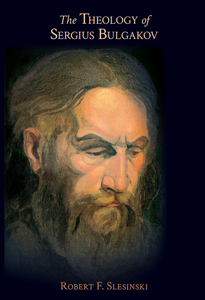
Robert Slesinski is always worth reading, and has established himself as a leading and wide-ranging scholar of several of the noteworthy figures of the Russian Silver Age and of her theological renaissance from the end of the 19th through the middle of the 20th centuries. He has published a number of articles and reviews in Logos: A Journal of Eastern Christian Studies over the years. And now, I'm delighted to tell you, St. Vladimir's Seminary Press has just published his newest study, The Theology of Sergius Bulgakov (2017), 280pp

Following my usual practice, I e-mailed some questions to Fr. Bob about the book, and here are his thoughts.

AD: Tell us about your background

RS: I am a Ruthenian Byzantine Catholic priest (Eparchy of Passaic, NJ) of over 40 years, but my surname gives me away as something else.  On my paternal side, I am Polish, but not insignificantly on my maternal side I am German-French-English.  In sum, I'm a hybrid.  But growing up in Worcester, Massachusetts, there was never a time when I did not have to pronounce and spell my last name!

Going on to college I would have liked to have taken Polish as a "foreign language" requirement course, but few colleges offer Polish as a subject of study.  But Russian was offered--and that was the beginning of my interest in all things "Russian."

Having discerned a possible vocation to the priesthood, I was accepted as a candidate by the RC Diocese of Worcester--my pastor at the time, by the way, was a Melkite turned RC and I was his first vocation to the priesthood. I was sent to the North American College in Rome with the understanding I could frequent the Russian College. Well, after a year at NAC I transferred to the Russicum and subsequently was accepted by the Eparchy of Passaic...the beginning of a life's journey.

AD: Your 1984 book was a real scholarly landmark, devoted to Pavel Florensky. Are there connections you see from him to Bulgakov?

RS: My first book, Pavel Florensky: A Metaphysics of Love, my doctoral dissertation was, indeed, published by SVS Press, and now they are publishing my fourteenth book, The Theology of Sergius Bulgakov.  The two figures are intimately connected, the former serving as a "spiritual father" to his "spiritual son."


There is a famous painting of the two, "The Philosophers," by M. Nestervov in the Saint Petersburg, Russia, Art Museum of the two walking in Florensky's garden at Sergiev Posad.  The whole composition has Florensky as a "Plato," as it were, and Bulgakov as an Aristotle. (AD: the photo is on the cover of the book at left.)

AD: There's been a huge upswing in studies devoted to Bulgakov over the last couple of decades. Why do you think he continues to command such a wide interest?

RS: Bulgakov has surprisingly been neglected in Orthodox circles--after all, he was "convicted" of "heresy."  Westerners--like Hans Urs von Balthasar--who were interested in possible insights from the Christian East rediscovered him.

AD: Your introduction seems to suggest that Orthodoxy did not pay much attention to Bulgakov until and after Western Christians began doing so. What led the West--among whom you single out such luminaries as Rowan Williams, Aidan Nichols, and John Milbank inter alia--to Bulgakov? Was it a perceived gap in the Western tradition that he somehow filled, or was it something else?

RS: This continues your next question: people like myself--Westerners--are, indeed, interested in gaining insights into our common Christian tradition from the East.

AD: Your first chapter notes "some truly eye-opening statements" about Bulgakov's openness to the Catholic Church, not least about the papacy and the filioque, about which he said "I am a 'filioquist'." What do you think he meant by that?

RS: Bulgakov as a person was deeply, indelibly, steeped in Orthodox tradition, but was devastated by the Bolshevik Revolution. Just as at the time of the Council of Florence as the Turks were overwhelming Constantinople, Bulgakov flirted with a possible help from Rome.  Now he remained a confirmed Orthodox, but still affirmed certain "Catholic" beliefs like the filioque, embracing Augustine's paradigm of love to explain the Holy Trinity.

AD: My perception of Bulgakov (admittedly it's been a few years since I read T.A. Smith's translation of The Burning Bush) is that he often finds a way to accept or even agree, broadly speaking, with the substance of Catholic doctrine, but finds ways to disagree methodologically--either the categories of definition, or the papal mechanisms of definition of the modern Marian dogmas. Is that a fair distinction?

RS: To continue the discussion...the esteemed late Alexander Schmemann, an actual student of Bulgakov, made the observation that however "Orthodox" Bulgakov was, he always wanted to put his original stamp of "things"--novelty being his mode of action.  Catholic doctrine/dogma he was wont to characterize in his own terms--not necessarily of those of Catholics themselves.  Curiously, as "opposed" as he was to the dogma of the Immaculate Conception (he was a partisan of Aquinas in this matter), he fervidly argued in favor of the Theotokos being a "Co-Redemptrix."

AD: You note at the beginning of ch.7 that Bulgakov's understanding of the Catholic dogma of the Immaculate Conception "is found to be wanting" but the rest of his Mariology is not. Tell us more about that.

RS: My answer to this question is to repeat what I say in response to the last question--only to add that Bulgakov was utterly convinced in his sophiological understanding of May, she truly was the Pneumatophore--the Bearer of the Holy Spirit!


AD: In ch.8 you note Florovsky's influence on modern Orthodoxy's turn to history and patrology at the expense of more systematic theology such as Bulgakov's. Why is that? What is behind the focus on history and the fathers--and also behind the fear of Bulgakov's more speculative and systematic work?

RS: Florovsky's influence, to my mind, became paramount after the indictment of heresy.  He was an historian--hence patristics.  And we all know of the centrality of the Divine Liturgy for the Christian experience of God, hence liturgical theology.  Speculative theology/philosophy of the likes of Bulgakov did not, alas--to my mind--find a resonant ear in the Orthodox.

AD: Having done some work in both Orthodox and Catholic ecclesiology, I naturally read your 14th chapter, "Ecclesiological Musings in Bulgakov," with great interest. The word 'musings' is especially noteworthy, as you go on to suggest that Bulgakov may have been a bit sloppy with the scriptural texts, claiming they give no "'indications concerning the Church as an organization'" (p.209).  Later on you speak of his rather 'cloudy' approach to the Church's sacramental character. And once again his love-hate relationship to Catholicism returns in his discussion of papal infallibility. What lies behind these rather conflicted views?

RS: There is no doubt in my mind that the weakest theology of Bulgakov is in the area of ecclesiology.  I would surmise he was reading too much of German Protestant theology.  Catholics and Orthodox are truly one in this area.

AD: Tell us what your hopes were for this book, The Theology of Sergius Bulgakov, and who should read it.

RS: Well, my book is intended to inspire any philosopher-theologian to consider Bulgakov as an area for insight in coming to terms with understanding God and the cosmos.  Now that ALL the major works of Bulgakov are in English translation, I would hope that my "modest" monograph may assist in appreciating the theological genius of Bulgakov.

AD: Having finished this, what projects are you at work on now?

RS: Over the ten years I worked on my Bulgakov book I have written seven other books in "mystagogical catechesis;" I am now working on another one The Holy Mysteries: Celebrating Christ's Sacramental Presence.

Monday, May 29, 2017

Incorruptible Jesus

Every Ascensiontide, the question arises: where is Jesus' body? If in heaven, as one is inclined to answer with irritated alacrity, how is that possible given what is claimed about the nature of heaven? Is this, in fact, a question that admits of so ready an answer as we may wish to supply with indecent haste? Or is it a question to which we cannot come to a final answer with total certainty now?

In any event, such questions are not new, and not uncontroversial, as a recent publication reminds us: Yonatan Moss, Incorruptible Bodies: Christology, Society, and Authority in Late Antiquity (U Cal Press, 2016), 264pp.

About this book we are told:
In the early sixth-century eastern Roman empire, anti-Chalcedonian leaders Severus of Antioch and Julian of Halicarnassus debated the nature of Jesus's body: Was it corruptible prior to its resurrection from the dead? Viewing the controversy in light of late antiquity’s multiple images of the ‘body of Christ,’ Yonatan Moss reveals the underlying political, ritual, and cultural stakes and the long-lasting effects of this fateful theological debate. Incorruptible Bodies combines sophisticated historical methods with philological rigor and theological precision, bringing to light an important chapter in the history of Christianity.

Monday, October 17, 2016

From Byzantine to Islamic Egypt

First released in hardcover in 2014, and then this past May in paperback, Maged Mikhail's From Byzantine to Islamic Egypt: Religion, Identity and Politics after the Arab Conquest joins a series of other recent publications (discussed here and here) examining what happened to Christian populations after the conquest of Islam in the early seventh century.

As with Penn and Hoyland, Mikhail's book begins by noting that when Arab Muslims encountered residents of Egypt, what began in that encounter was not the complete replacement of one culture by another, but the great co-mingling of many ideas and practices. Thus he also issues a correction and caution against seeing the year 641 as some kind of radical break.

He begins by noting important issues with texts and their interpretation. In some ways, there are problems of abundance. In others, as is well known, there are problems of scarcity and unreliability among Arabic texts. With these latter, the biggest problem is the length of the period in which they circulated orally, subject to all manner of revision and emendation. You can only imagine what that does to the reliability of the tales retailed thereby.

But Christian texts are not without their own problems. Focusing on the well-known History of the Patriarchs of Alexandria, Mikhail notes the textual variants in the two main recensions of that key document for so much of Alexandrian ecclesiastical history.

All this pales, he suggests, in the light of the massive doctrinal controversies that so marred Egypt, the frontline of the fight between Chalcedonians and non-Chalcedonians. Anything and everything has been touched and tarred by this, and the fact that the Coptic Church emerged as a non-Chalcedonian church has been used to explain all kinds of things, no matter how far-fetched. Here a good deal of the influence is still felt by W.H.C. Frend's study from 1972, The Rise of the Monophysite Movement.

It is now exceedingly difficult, Mikhail says, to see which, if any, of the Coptic Christians in Egypt believed in the comical and amateurish notion of "monophysitism" that has come down to us as a belief in a "single divine nature." It was, in other words, a heresy held by nobody. Rather, Coptic Christians were concerned that Chalcedon was suspectible of a "Nestorian" interpretation, and to guard against this they preferred the well-known Cyrillian formula "of two natures" rather than Chalcedon's "in two natures."

As a result of getting this clear, Mikhail says we must now reject the idea that the "monophysites" suffered from an "intrinsic inability to resist Islamic theology." To be sure, the intrusion of Islam did eventually force greater co-operation among the various Christian groups in Egypt, but it was a much longer and messier process than many imagined. And here, too, he also debunks the slanderous nonsense that the Copts, hating their "Byzantine" "overlords" turned around to "welcome" the Islamic invaders. This lie has been debunked again and again, and it comes in for fresh demolition here in a book marked by careful sifting of the evidence (the notes and bibliography run to well over 100pp) and very much worth your time if you have any interest in Coptic, Egyptian, Islamic, Arabic, and doctrinal history.

Monday, August 22, 2016

Antioch vs. Alexandria, Round #19824307

Anyone with even a passing familiarity with the Christian East, or patristic and exegetical history, has invariably and frequently encountered the famed, if not hackneyed, Antioch-Alexandria "divide" when it comes to hermeneutics and exegesis as well as Christology. Any nostrum that is repeated as often as this one deserves to come in for fresh re-examination, and it appears we have it in a recent study by Richard Perhai, Antiochene Theoria in the Writings of Theodore of Mopsuestia and Theodoret of Cyrus (Fortress, 2015).

About this book the publisher tells us:
Biblical scholars have often contrasted the exegesis of the early church fathers from the eastern region and “school” of Syrian Antioch against that of the school of Alexandria. The Antiochenes have often been described as strictly historical-literal exegetes in contrast to the allegorical exegesis of the Alexandrians. Patristic scholars now challenge those stereotypes, some even arguing that few differences existed between the two groups.
This work agrees that both schools were concerned with a literal and spiritual reading. But, it also tries to show, through analysis of Theodore and Theodoret’s exegesis and use of the term theoria, that how they integrated the literal-theological readings often remained quite distinct from the Alexandrians. For the Antiochenes, the term theoria did not mean allegory, but instead stood for a range of perceptions—prophetic, christological, and contemporary. It is in these insights that we find the deep wisdom to help modern readers interpret Scripture theologically.

Tuesday, June 21, 2016

The Ecumenical Councils: An Interview with Sergey Trostyanskiy

From the first moments of its inception, this blog has sung the praises of Gorgias Press for its devotion to Eastern Christian publications in a collection unrivaled by anyone for its vastness. Here is but the latest of many offerings, a book I previously noted: Seven Icons of Christ: An Introduction to the Oikoumenical Councils (Gorgias Press, 2016). It will be a welcome addition to any classroom covering these most important gatherings in church history. The book follows a helpful standard format and will make not only primary documents, but up-to-date scholarship on the seven councils, accessible to students of our day.

The timing of this book is significant insofar as the topic of councils, and their status, has of course been greatly debated in these last days as most of the Orthodox churches have assembled on Crete for the long-expected council that has been in preparation for most of the last century. I asked the editor, Sergey Trostyanskiy, for an interview about this collection, and here are his thoughts.

AD:  Tell us about your background

ST: I am currently a Research Fellow of the Sophia Institute of Byzantine and Eastern Orthodox studies, New York and Union Theological Seminary, New York. I hold a PhD from Union Theological Seminary in the City of New York. My research interests include Byzantine history and philosophy.

AD: What led you to put together this collection?

ST: The idea of this volume was introduced to me by John A. McGuckin who is my mentor and also, at the time, supervised by doctoral thesis on St. Cyril of Alexandria. Whatever this giant communicated to me was indeed some sort of categorical imperative. The rational behind the volume was to come up with a more up-to-date volume on the Councils that can be used by graduate and undergraduate students of Patristic thought possibly extending its readership to all interested in the subject.


AD: How do you see your book as different from other treatments of the Seven Ecumenical Councils (e.g., Leo Davis’s book from 1988; or more recently Stephen Need)?

We thought that the degree of discernment and theological import of those studies did not fully exhaust the subject. Leo David’s book, despite its merits, used certain conceptual tools that at this point appear quite antiquated, so to say. Stephen Need’s recent account has many merits as well. But again, this book did not exhaust the subject at stake (which is indeed inexhaustible). Our particular emphasis was on explicating the philosophical foundations of the Councils. Moreover, we aimed to provide more up-to-date reference sources for the subject matter.

AD: How has recent scholarship on the councils held up vis-à-vis earlier studies? Has there been a lot of historical revision, or is there greater continuity?

The science of Christ was set in motion a few millennia ago. Since then it keeps rethinking its own foundational sources. We can think of modern scholarship as a midrash on patristic literature. Indeed, it revolves around certain themes. Thus, there is a certain thematic and semantic continuity between any scholarly efforts (more or less modern) to make sense of this very aporetic subject (i.e. the nature of God, of Christ, etc.). In general, the science of Christ remains vibrant and moves alone swiftly, constantly reevaluating and reassessing its own historical and speculative accounts.

At this moment the question should be confined within the boundaries of the late-eighteenth to early twentieth-century scholarship. We can thus speak of “modern scholarship” within this time-frame. My opinion is that, in general, “modern scholarship” aimed to make sense of Patristic literature so as to properly elucidate its contents by rediscovering its historical horizons and philosophical underpinnings. In other words, the right exegesis of Patristic literature was the final end of Patristic studies during that time. This is indeed not to say that in many instances the studies of Patristic literature were ideologically leveraged, thus reading modern concerns into ancient sources and approaching the subject apologetically. This pattern indeed aimed at subverting the original intention of exegetical studies, practicing rather an eisegesis of Patristic literature. Even so, the idea of being faithful to the source marked off that period. The studies of the councils in general followed the same path.

I should say that there has been a major shift in Patristic studies in the second half of the twentieth century (since c. the 1970s). The subject area nowadays no longer appears simple but rather over-complex. Various clichés of the previous centuries and decades had being reevaluated and an increasing number of studies published. This ascent of interest in Patristic literature was also accompanied by an oikoumenical movement which sought to find common grounds between Chalcedonian and Non-Chalcedonian Orthodoxy. As a result, a more sympathetic hearing was given to certain great miaphysite scholars of Patristic time.

The same can be said of various heterodox figures and movements of the same era. The agenda of restoring the reputation of the “heretics” found its implementation in the restoration of certain great figures of the time as Orthodox. Their theology was reset as reflecting diverging “theologumena” rather than subverting the purity of faith as reflected in doctrine. Hence, a certain “relativist” trend became fashionable among the scholars, one that tried to wash away oikoumenically established demarcation lines between Orthodoxy and heresy. Even so, more recent scholarly endeavors were not bound by the necessity of framing research within an oikoumenically correct rhetoric.

As far as the studies of the councils are concerned, all these aspects should be taken into account. Here we have more or less the same patterns of thought operative. Moreover, in the last few decades there was an attempt to translate the proceedings of the councils into modern languages. Richard Price’s translation of Chalcedon and Constantinople II, for instance, gave scholars and the general audience an opportunity to read ancient documents in English for the first time in history.

To conclude: the science of Christ and of its foundational oikoumenical pillars (i.e. Councils) is as vibrant as it has ever been. Its development can be described as discontinuous continuity or as a continuous revision of its own method and sources, one that remains faithful to the sources through the constant critical reassessment of its own feeble methodological and ideological roots.

AD: In the lead-up to the Orthodox great and holy council on Crete this week, there has been some discussion of two issues. First, some called for recognizing an 8th, and perhaps even 9th, council as “ecumenical” by the Orthodox East. Did you have any thoughts on that? Is the number seven somehow “sacred” for some, so that no additions to the list of “ecumenical” councils could be entertained?

Indeed, there is a certain numerological or, rather, arithmological significance attached to the numbers. If we apply Iamblichus’ arithmology to the subject at stake we may perhaps say that, in a sense, the non-Chalcedonian triad in this volume is completed by the Chalcedonian hebdomad. Even so, we may perhaps ascend to a composite number 21 (according to the Roman Catholic count) which is divisible not only by itself and unity but also by 3 and 7 (thus having 3 and 7 as its elements). At any rate, seven seems preferable for various reasons, firstly, because it represents the golden mean between the two extremes (Miaphysite and Roman Catholic), and secondly because it has a structural affinity to the Incarnate Christ. As we learn from Nicomachus of Gerasa: “its structure has been collected and gathered together in a manner resembling unity since it is altogether indissoluble, except into something which has the same denominator as itself; or because all things have brought their natural results to completion by its agency.” Thus, this volume comes to rest at number seven. We can indeed supply a speculative numerological account for the subject matter. However, I bet, not many bishops will endorse it. So, we shall better set it aside and say that, even if the number seven has a certain sacred dimension, nothing prevents Orthodoxy from extending the number of councils to 8 or 9 or 21, etc. for the sake of reinforcing unity and attaining other good things that would benefit the Orthodox Churches and their people.

AD: The second question is over the status of the Crete gathering, which remains much in dispute. Normally, of course, a council is accounted “ecumenical” in retrospect. But are there clear criteria consistently applied from 325-787 that might guide future discussions of whether the 2016 gathering is “ecumenical” or not? 

There was indeed a set of criteria for a council to be accounted oikoumenical (I briefly delineated some criteria in the volume). Even so, in some cases not all criteria were fulfilled and not all conditions satisfied by particular councils. However, the following generations of bishops endorsed such “formally impure” councils as oikoumenical. More important was the fact that for the collective phronema of the time these councils were marked off by the work of the Spirit made manifest through the gathering of the bishops. I think the formal criteria represent sufficient but not necessary conditions for a council to acquire the status of oikoumenical. It is the combination of formalities and the work of the Spirit that are thought of as both necessary and sufficient conditions for oikoumenisity.

In a sense there is a diminished degree of ecumenicity that we could already contemplate in the Seven Councils (based on their diminished representational quality after the Non-Chalcedonian fraction of Christendom was alienated from mainstream Orthodoxy and later on when the Latin Church suspended its participation in the last Council). The degree of ecumenicity of the newly proposed 8th council is indeed even more diminished as it includes only Orthodox (Chalcedonian) Churches. Hence, it is rather Pan-Orthodox (i.e. Chalcedonian Orthodoxy) or quasi-oikoumenical.

AD: Your own five-fold definition of “ecumenical” (p.1) notes in the third point the presence of the emperor to convoke a council. In the absence of an emperor today, is it impossible to have any council attain the status of “ecumenical”?

It the context of the modern world characterized by the fractured political units (mainly national states) and by the policy of separation between Church and State (adapted according to certain precepts of the Enlightenment that disjoined religion and politics), the absence of the emperor combining both political and ecclesiastical functions is indeed an obstacle for convening a council that can overcome “national interests” and rivalry between ecclesiastical groups so as to attain to the level of oikoumenisity.

AD: If, say, an aspiring graduate student were looking for a thesis topic in the area of the ecumenical councils, what areas, if any, remain unexplored or underexplored? What avenues of conciliar scholarship still need attention?

In my opinion, philosophical underpinnings of Patristic thought is the area of studies that was most neglected by “modern scholarship” because in its quest for “purity” of Patristic thought it incidentally purged it of its proper conceptual foundation. Thus, the link between late antique and early Christian thought was de-emphasized purposely. However, at this point, this policy seems to fall out of favor. Hence, the study of the philosophical horizons of Patristic and conciliar thought is a great avenue of scholarship that needs further attention.

AD: Sum up your hopes for this book, and who in particular will benefit from reading it

This book is designed to present to a wide Christian audience interested in Christian doctrinal development, these seven key iconic moments of intellectual history that formulate the classical profession of Jesus Christ as the Word of God Incarnate. The critical essays in this book, specially commissioned for this project by the Sophia Institute of Byzantine Studies and prepared by advanced scholars of the Early Church, set out an exposition of the proceedings of the Seven Ecumenical Councils; a review of the chief works of the major protagonists associated with the councils; the immediate intellectual aftermath; as well as a considered reflection or commentary on the theological ekthesis (theological profession) of each council. The end result is a book whose critical value should make it required reading by specialists, but also will allow it to serve as a solid and scholarly introduction to the subject for both undergraduate and graduate level students.

AD: If you were invited to give a presentation to the bishops assembled this month in Crete, offering them any advice or warnings or suggestions from the seven ecumenical councils, what would you say?

Well, the proposed council is not a typical one since no issues relating to doctrine are at stake at the moment, all concerns being centered on canon law and ecclesiastical discipline and issues associated with them. In a sense this reduced agenda is easier to deal with. Even so, taking into account the presence of significant disagreements on the issues of canonical territories, those of leadership and rank, etc., and the absence of imperial power capable of resolving any issues by arguments or by cutting the Gordian knot and thus appeasing the rival fractions and overriding their squabbles, I see that the only means of persuasion available for the resolution of contentious issues is discussion and argument. But that can go on and on. As the history of the Councils clearly demonstrated, the work of the Spirit and that of the Imperial power used to go hand in hand. If one element is absent, the means of persuasion by force is removed from the scene; the management of affairs by argument led by the Spirit is the only available option. I have no expertise on the subject of the proposed council, but I think that the council should move on under the guidance of the Spirit, who is the sole choir master in this case that can conduct the bishops and orchestrate any conciliar gatherings. Hence, the collective phronema of the Church leaders should reflect on or be the work of the Spirit.

AD: Having finished this collection, Seven Icons of Christ: An Introduction to the Oikoumenical Councils, what are you at work on now in your research?

I am finalizing a monograph entitled St. Cyril of Alexandria’s Metaphysics of the Incarnation (forthcoming, Peter Lang, 2016) and editing (with Theodore Dedon) a collected volume of essays entitled Love, Marriage and Family in the Eastern Orthodox Tradition, also with Theodore Dedon (forthcoming: Gorgias Press, 2016).

Wednesday, April 13, 2016

Conciliar Christology

With the upcoming Great and Holy Council of Orthodoxy scheduled for June in Crete, there has been much discussion of, and reference to, the councils of the first millennium and whether and to what extent they may be models for this year's council. One of the oft-underappreciated aspects of the councils was their use of rather recondite philosophical terminology in their complicated Christological debates. Oxford University Press tells me of the forthcoming publication in May of a monograph devoted to the conciliar process of arriving at a coherent Christology as understood by a philosopher: Timothy Pawl, In Defense of Conciliar Christology: a Philosophical Essay (OUP, 2016), 288pp.

About this book the publisher tells us:
This work presents a historically informed, systematic exposition of the Christology of the first seven Ecumenical Councils of undivided Christendom, from the First Council of Nicaea in 325 AD to the Second Council of Nicaea in 787 AD. Assuming the truth of Conciliar Christology for the sake of argument, Timothy Pawl considers whether there are good philosophical arguments that show a contradiction or incoherence in that doctrine. He presents the definitions of important terms in the debate and a helpful metaphysics for understanding the incarnation.
In Defense of Conciliar Christology discusses three types of philosophical objections to Conciliar Christology. Firstly, it highlights the fundamental philosophical problem facing Christology-how can one thing be both God and man, when anything deserving to be called "God" must have certain attributes, and yet it seems that nothing that can aptly be called "man" can have those same attributes? It then considers the argument that if the Second Person of the Holy Trinity were immutable or atemporal, as Conciliar Christology requires, then that Person could not become anything, and thus could not become man. Finally, Pawl addresses the objection that if there is a single Christ then there is a single nature or will in Christ. However, if that conditional is true, then Conciliar Christology is false, since it affirms the antecedent of the conditional to be true, but denies the truth of the consequent. Pawl defends Conciliar Christology against these charges, arguing that all three philosophical objections fail to show Conciliar Christology inconsistent or incoherent.

Wednesday, November 11, 2015

The Oxford Handbook of Christology

As I've noted on here many times, we are living in a time when "handbooks of" or "companions to" are all the rage: major publishers continue to bring them out on a variety of topics, including sacramental theology. Set for November release is a hefty collection of articles devoted to that most controverted of topics that so riled and divided early Christianity and led to such complex and often maddening debates: Francesca Aran Murphy, ed., The Oxford Handbook of Christology (Oxford UP, 2015), 704pp.

About this book we are told:
The Oxford Handbook of Christology brings together 40 authoritative essays considering the theological study of the nature and role of Jesus Christ. This collection offers dynamic perspectives within the study of Christology and provides rigorous discussion of inter-confessional theology, which would not have been possible even 60 years ago. The first of the seven parts considers Jesus Christ in the Bible. Rather than focusing solely on the New Testament, this section begins with discussion of the modes of God's self-communication to us and suggests that Christ's most original incarnation is in the language of the Hebrew Bible. The second section considers Patristics Christology. These essays explore the formation of the doctrines of the person of Christ and the atonement between the First Council of Nicaea in 325 and the eve of the Second Council of Nicaea. The next section looks at Medieval theology and tackles the development of the understanding of who Christ was and of his atoning work. The section on "Reformation and Christology" traces the path of the Reformation from Luther to Bultmann. The fifth section tackles the new developments in thinking about Christ which have emerged in the modern and the postmodern eras, and the sixth section explains how beliefs about Jesus have affected music, poetry, and the arts. The final part concludes by locating Christology within systematic theology, asking how it relates to Christian belief as a whole. This comprehensive volume provides an invaluable resource and reference for scholars, students, and general readers interested in the study of Christology.
If you peruse the table of contents, you will see such well known and highly respected scholars of the Christian East prominently featured among the contributors as Brian Daley, Khaled Anatolios, Norman Russell, and Andrew Louth.

Wednesday, July 16, 2014

Cyril of Alexandria's Christology

The Catholic University of America Press continues their invaluable tradition of publishing translations of ancient patristic texts. In their fall catalogue, they tell me of one such volume set for release around Christmas: St. Cyril of Alexandria, Three Christological Treatises, trans. Daniel King (CUA Press, 2014), 200pp.


About this book we are told:
Cyril, bishop of Alexandria from 412 to 444, is renowned both as one of the most authoritative of all the fathers of the church, and at the same time as one of the most controversial of all church politicians. He oversaw the final extinguishing of pagan religion from Alexandria, and also spent the height of his career as a statesman and an author fighting the doctrines of Nestorius, whose excommunication he brought about at the Council of Ephesus (431). Having spent the first fifteen years of his episcopate writing extensive commentaries on Scripture, from 429 onwards Cyril turned his enormous learning and talent for penning and distributing polemic tracts to the development of doctrinal orthodoxy after he sensed that the new ideas coming out of Constantinople threatened the very core of the Christian doctrines of Incarnation and salvation. The three treatises here translated into English for the first time all belong to the period around the ecumenical council. On Orthodoxy to Theodosius was written for the emperor, a year before the council met, with the aim of persuading him that Nestorius's sermons were heretical and that his task as leader of both church and state was to ensure right religious observance. The Defense against the Bishops of Oriens and the Defense against Theodoret were written in the months leading up to the council when Cyril found himself required to defend his notorious "Twelve Chapters (or Anathemas)," which many bishops in other parts of the empire felt had gone too far in an anti-Nestorian direction. All three works were key parts of Cyril's battle for orthodoxy and mark key moments in the church's progress towards the definition of Christological orthodoxy that was made at Chalcedon.

Thursday, December 5, 2013

St. Gregory the Theologian on the Life of Christ

For decades now, Western scholarship has been fascinated with one of the most important and influential of the Cappadocians. A new book by a Dominican theologian continues that trend: Andrew Hofer, Christ in the Life and Teaching of Gregory of Nazianzus (Oxford UP, 2013), 304pp. 

About this book we are told:
Christ in the Life and Teaching of Gregory of Nazianzus is the first full-length book devoted to an overview of the Christology of this fourth-century Father of the Church. Andrew Hofer examines the breadth of Gregory's corpus--orations, letters, and poems (often neglected in doctrinal studies)--to argue that Gregory's writing on Christ can be best understood in tandem with his autobiography.
This study begins with an articulation of Gregory's theology of the Word in which words come from the Word who became incarnate. Hofer then offers a close reading of how Gregory writes to or about Christ in the poetry known as "on himself." Within a three-part study of "autobiographical Christology," Hofer explores the philosophical background of Gregory's rhetoric for what he calls the "mixtures" of Christ and himself. He then elucidates this autobiographical concern in Gregory's famous Ep. 101, a landmark text in the Christological controversies. Thirdly, Hofer considers how Gregory celebrates the mysteries of Christ in the festal orations. Before the book's epilogue, a chapter describes how Gregory wrote of Christ for his pastoral ministry. Throughout the work, Hofer demonstrates the importance in Gregory's writings of the language of blending (such as in the Greek word krasis, rejected by the Council of Chalcedon to describe the Incarnation). This book thus offers a unique perspective on the one known as "the Theologian" in Chalcedon's acts and in subsequent Christian tradition.

Saturday, June 29, 2013

Who Do You Say That I Am?

I sometimes think that the only Muslims interested in Jesus are academics and those involved in "professional" dialogues. In my experience with Muslim students in my classroom, they've scarcely heard or thought about Jesus, not least because references to Him are so few in the Quran. Along comes a new book looking at who Christ is in both Christianity and Islam: Mona Siddiqui, Christians, Muslims, and Jesus (Yale UP, 2013), 296pp. 

About this book we are told:
Prophet or messiah, the figure of Jesus serves as both the bridge and the barrier between Christianity and Islam. In this accessible and thoughtful book, Muslim scholar and popular commentator Mona Siddiqui takes her reader on a personal, theological journey exploring the centrality of Jesus in Christian-Muslim relations. Christian and Muslim scholars have used Jesus and Christological themes for polemical and dialogical conversations from the earliest days to modern times. The author concludes with her own reflections on the cross and its possible meaning in her Muslim faith.  Through a careful analysis of selected works by major Christian and Muslim theologians during the formative, medieval, and modern periods of both religions, Siddiqui focuses on themes including revelation, prophecy, salvation, redemption, sin, eschatology, law, and love. How did some doctrines become the defining characteristics of one faith and not the other? What is the nature of the theological chasm between Christianity and Islam? With a nuanced and carefully considered analysis of critical doctrines the author provides a refreshingly honest counterpoint to contemporary polemical arguments and makes a compelling contribution to reasoned interfaith conversation.

Wednesday, November 7, 2012

Christological Unity

Christopher Beeley is evidently a busy fellow, with two major studies of patristic theology released within a month. The second of these is The Unity of Christ: Continuity and Conflict in Patristic Tradition (Yale U Press, 2012), 400pp.

About this book the publisher tell us:
No period of history was more formative for the development of Christianity than the patristic age, when church leaders, monks, and laity established the standard features of Christianity as we know it today. Combining historical and theological analysis, Christopher Beeley presents a detailed and far-reaching account of how key theologians and church councils understood the most central element of their faith, the identity and significance of Jesus Christ.
Focusing particularly on the question of how Christ can be both human and divine and reassessing both officially orthodox and heretical figures, Beeley traces how an authoritative theological tradition was constructed. His book holds major implications for contemporary theology, church history, and ecumenical discussions, and it is bound to revolutionize the way in which patristic tradition is understood.
Related Posts Plugin for WordPress, Blogger...