"Let books be your dining table, / And you shall be full of delights. / Let them be your
mattress,/
And you shall sleep restful nights" (St. Ephraim the Syrian).


Showing posts with label sexual abuse. Show all posts

Monday, September 6, 2021

Rape in the Bible

Growing up in Canada in the 1980s I found myself finishing high-school the same year the celebrated literary critic and biblical scholar Northrop Frye died. As someone who adored all my high-school English teachers while also having an interest in theology, I was, at their recommendation, soon checking out a couple of his books from the library. They were dense and much beyond me in some ways, but I've never forgotten his useful aphorism that the Bible is a "sprawling, tactless book." It is certainly not the kind of book your modern PR person, vaguely horrifying creatures that they are, would recommend to anyone trying to (vile phrases) "capture market share" or engage in "branding" of some new movement called "religion," least of all one that aims at being thought "respectable" to the bourgeoisie and the pious. For the Bible has rather a lot of murder, adultery, prostitution, bribery and theft alongside erotic love poetry and apocalyptic visions some overeager and uncultured psychiatrist today might diagnose as psychosis--and all that's before we get to the ostensible story about all of creation being destroyed in a flood. 

It also has horrific torture and physical abuse of innocent people along with rape and sexual violence. (Most of this is not on offer to you if your exposure to Scripture consists in listening to the delicately excised and tastefully edited bits ["pericopes"] the middle-class minders of lectionaries offer you during Sunday liturgy.) A new book, from the world's preeminent academic publisher, puts all of this horror and trauma squarely before us, where it belongs: Texts after Terror: Rape, Sexual Violence, and the Hebrew Bible by Rhiannon Graybill (Oxford UP, 2021), 248pp. 

About this book the publisher tell us this:

Texts after Terror offers an important new theory of rape and sexual violence in the Hebrew Bible. While the Bible is filled with stories of rape, scholarly approaches to sexual violence in the scriptures remain exhausted, dated, and in some cases even un-feminist, lagging far behind contemporary discourse about sexual violence and rape culture. Graybill responds to this disconnect by engaging contemporary conversations about rape culture, sexual violence, and #MeToo, arguing that rape and sexual violence - both in the Bible and in contemporary culture - are frequently fuzzy, messy, and icky, and that we need to take these features seriously. Texts after Terror offers a new framework informed by contemporary conversations about sexual violence, writings by victims and survivors, and feminist, queer, and affect theory. In addition, Graybill offers significant new readings of biblical rape stories, including Dinah (Gen. 34), Tamar (2 Sam. 13), Bathsheba (2 Sam. 11), Hagar (Gen. 16), Daughter Zion (Lam. 1-2), and the unnamed woman known as the Levite's concubine (Judges 19). Texts after Terror urges feminist biblical scholars and readers of all sorts to take seriously sexual violence and rape, while also holding space for new ways of reading these texts that go beyond terror, considering what might come after.

Wednesday, December 9, 2020

Abuse and Lies in the Catholic Church

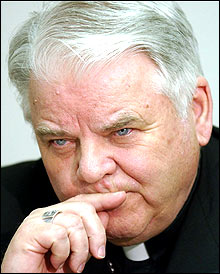
Does anyone have any patience left for yet another article, report, story, book about the sex abuse crisis in the Catholic Church? How many have we had in the last three months alone? The McCarrick Report (which "psychological disaster" I addressed here), the English-Welsh bishops' report, the attorney general's report on the Diocese of Buffalo, and at least two others I have seen. We've had such reports going back forty years and more at this point, and nothing has changed. Has anyone the slightest faith left that this will ever be seriously addressed? Does anyone for a moment remain so fatuous as to think bishops will ever really change? Who amongst us has been able to resist the thought that the entire episcopate is simply protecting their monopoly on power like a bunch of neighborhood gangsters? 

For those who have the stomach and the patience to read another book about the problem, Routledge has just come out with The Abuse of Minors in the Catholic Church: Dismantling the Culture of Cover Ups, eds., Anthony J. Blasi and Lluis Oviedo (Routledge, 2020), 288pp. We are offered the following description and table of contents (from which, I note without surprise, that once more any consideration of structural problems in the Church, which I alone seem to have taken seriously enough to write a book about, are absent): 

This book offers an academically rigorous examination of the biological, psychological, social and ecclesiastical processes that allowed sexual abuse in the Catholic Church to happen and then be covered up. The collected essays provide a means to better assess systemic wrongdoing in religious institutions, so that they can be more effectively held to account.

An international team of contributors apply a necessarily multi-disciplinary approach to this difficult subject. Chapters look closely at the sexual abuse of minors by Roman Catholic clerics, explaining the complexity of this issue, which cannot be reduced to simple misconduct, sexual deviation, or a management failure alone. The book will help the reader to better understand the social, organizational, and cultural processes in the Church over recent decades, as well as the intricate world of beliefs, moral rules, and behaviours. It concludes with some strategies for change at the individual and corporate levels that will better ensure safeguarding within the Catholic Church and its affiliate institutions.  

This multifaceted study gives a nuanced analysis of this huge organizational failure and offers recommendations for effective ways of preventing it in the future. As such, it will be of keen interest to scholars of Religious Studies, Sociology of Religion, Psychology, Psychiatry, Legal Studies, Ethics, Anthropology, Cultural Studies, History, and Theology.

Table of Contents: 

Introduction

1 Sexual Abuse of Young Boys in the RomanCatholic Church: An Insider Clinician’s Academic Perspective

Jay Feierman

2 For a Sociology of Pederasty in Catholic Clergy

Javier Elzo

3 Does Faulty Theology Play a Role in the Abuse Crisis?

Lluis Oviedo

4 The Role of Informal Networks in the Coverup of Clerical Sex Abuse

Anthony J. Pogorelc

5 From Causes toward Stratagems and Theological Considerations

Anthony J. Blasi

6 Has Canon Law Solved Any of the Challenges of the Sexual Abuse Crisis?

Patricia M. Dugan

7 Clergy Sex Abuse Litigation: Attribution of Responsibility to Religious Entities by Civil Courts

Nicolás Zambrana-Tévar

8 Sexual Abuse and Clerical Homosexuality: Notes on an Enigmatic Context

Dominikus Kraschl

9 Conclusion: Trying to Learn Some Lessons and Correct Past Mistakes

Anthony J. Blasi and Lluis Oviedo

Contributors

Monday, December 23, 2019

Religious, Ritual, and Spiritual Responses to Trauma

This is a new international collection of scholarly articles that is rich on promise and offers encouraging evidence of theology moving into new areas: Trauma and Lived Religion: Transcending the Ordinary, eds., R.R. Ganzevoort and s. Sremac (Palgrave Macmillan, 2019), 258pp.

About this book the publisher tells us this:
This book focuses on the power of the ‘ordinary’, ‘everydayness’ and ‘embodiment’ as keys to exploring the intersection of trauma and the everyday reality of religion. It critically investigates traumatic experiences from a perspective of lived religion, and therefore, examines how trauma is articulated and lived in the foreground of people’s concrete, material actualities. 
Trauma and Lived Religion seeks to demonstrate the vital relevance between the concept of lived religion and the study of trauma, and the reciprocal relationship between the two. A central question in this volume therefore focuses on the key dimensions of body, language, memory, testimony, and ritual. It will be of interest to academics in the fields of sociology, psychology, and religious studies with a focus on lived religion and trauma studies, across various religions and cultural contexts. 
The execution of the book, however, rather falls down in several places. Collections have inherent weaknesses, but this one really could have done with editors tightening the focus of the articles somewhat, or in lieu of that providing some sort of epilogue or conclusion that drew out some common themes, which are present but under-developed and undertheorized in the chapters.

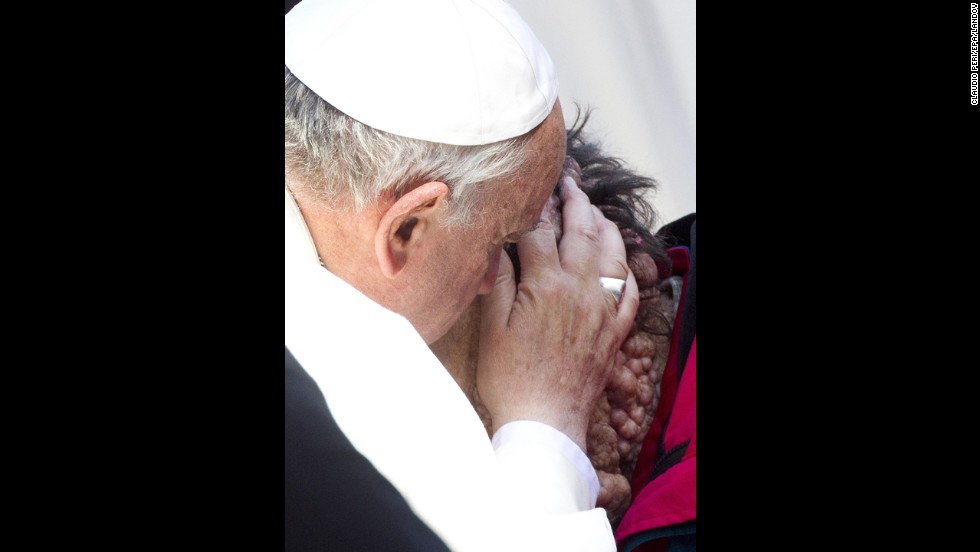
Chapters that stand out include Stephanie Arel's work on the role of pastoral (and especially papal) touch in overcoming shame, stigma, and their traumatic effects. She focuses on the number of people Pope Francis has touched and draws out some powerful lessons. Arel has herself contributed to an earlier collection, Post-Traumatic Public Theology.

The last section is especially useful, focusing on the ways in which Christian rituals can both help and harm those trying to overcome trauma.

The last chapter, by Hillary Jerome Scarsella, raises important but distressing questions from a Mennonite context: what message are victims of violence and abuse hearing when they come to church only to be told by Christians to imitate Christ, who stood silent before his accusers and abusers and protested nothing? Such a counsel can be retraumatizing for people who have suffered in silence and isolation for too long, powerless and voiceless. Such a counsel can leave powerful abusers in place, which is a gross injustice and potential danger to new victims.

Equally, what message are people hearing when told to forgive their abusers without any attempt at acknowledgement, let alone healing and reconciliation? Liturgies that too glibly promote these ideas and apparent virtues can do more damage than good. How can victims and victimizers equally partake from the same table and drink from the one chalice in the absence of any kind of reconciliation?

Finally I would note that the chapter on sexual abuse in the Catholic Church in Peru is very powerful, and Mariéle Wulf's chapter on trauma and healing is worthwhile. She draws on the insights of Margaret Crastnopol's recent book Micro-Trauma: A Psychoanalytic Understanding of Cumulative Psychic Injury (Routledge, 2015). 

Friday, September 20, 2019

Catholic Abuse, Trauma, and Cover-Up

As someone who has recently written a book about the Catholic sex abuse crisis, and the necessary structural reforms to move past it, and as someone with a long-standing interest in psychoanalysis and trauma psychology, I am of course keenly awaiting my review copy of Abuse and Cover-up: Refounding the Catholic Church in Trauma by Gerald A. Arbuckle (Orbis, 2019), 248pp.

About this book the publisher tells us this:

Here is a timely book on the sex abuse crisis by a scholar who is adept at weaving insights from the social sciences into a framework of practical theology.
Written for readers deeply concerned for the future of the church, this book addresses two questions: Why does the culture of the Catholic Church, despite Vatican II’s emphasis on collegiality and transparency, still cover up abuses of power? How can this culture change in order to end abuse and heal the wounds it inflicts on the Body of Christ?


Friday, February 22, 2019

Everything Hidden Shall Be Revealed (I)

In a few short weeks my forthcoming book, Everything Hidden Shall Be Revealed: Ridding the Church of Abuses of Sex and Power (Angelico Press, 2019), which almost everyone who has read it has described as "explosive," will be published.

In the meantime, here is a very brief foretaste.

I will, over the coming weeks, be discussing aspects of the book on here, and also using this space as a place to discuss reactions to the book.

Wednesday, August 8, 2018

Afanasiev on Today's Catholic Crisis

Elsewhere you can read my thoughts on reform to help the Catholic Church through the crisis of episcopal malfeasance, gross negligence, and massive dereliction of duty.

As you'll see in that essay, I draw extensively on the work of the Orthodox canonist and ecclesiologist, Nicholas Afanasiev, especially his masterful book The Church of the Holy Spirit. That book was wonderfully edited by my dear friend Michael Plekon, whom I have often interviewed on here over the years about his own many fascinating and worthwhile books.

Wednesday, February 6, 2013

Sex Abuse and God

The Latin bishop of Ft. Wayne died this week, 56 years to the day of his first Mass as a priest. Bishop John D'Arcy, whom I had the honor of bringing to two of my classes over the years, including shortly before last Christmas, and who was to direct our departmental retreat next month, was a very fine bishop (which, alas, one can not always or confidently say about many hierarchs, Catholic and Orthodox) whom I respected greatly, for two reasons: first, he said to me in 2008, in an offhand comment I nonetheless found staggering, that when he was appointed to this diocese in 1985, he explicitly told the nuncio not to ask him to move again because he believed in, and was going to live, the ancient canons about one bishop to one city--that a bishop should be faithful to his diocese for life, as a husband and wife are. I didn't know many bishops who even knew of the existence of these canons, let alone lived them. I was deeply impressed by his humility.

The second reason that D'Arcy was such a rare gift to the Church in our time was his track record in dealing with sexual abuse both in his native Boston and later in northern Indiana. As D'Arcy said to me last year, when he was a priest, and later auxiliary bishop, in Boston, he was nicknamed "D'Arcy the hatchet man" because he spent a good deal of his time rooting out seminarians and priests whose flawed characters made them unsuitable to exercise pastoral ministry.

Though D'Arcy didn't want to talk about it, the reason he was sent to be bishop in Ft. Wayne-South Bend, after spending his whole priestly and episcopal ministry in his native Boston, is very widely thought to have been a result of his unwillingness to keep silent over sexually abusive priests. (Phil Lawler's depressing and damning book The Faithful Departed: The Collapse of Boston's Catholic Culture is one of several sources that documents D'Arcy's courageous, commendable, and sadly rare stance.) D'Arcy put into print a number of letters that strongly suggested to his superior, the disgraced and disgraceful Bernard Cardinal Law, not to sweep the problem of predatory priests like John Geoghan under the carpet or shuffle him to another parish. Law ignored the warnings and, being a power-broker at the time (1985) in the Vatican under a pope who himself did not want to deal with the problem of abuse, seems to have fallen back on the time-tested ploy of promoveatur ut amoveatur. Thus D'Arcy was "promoted" to his own see hundreds of miles away and a few weeks before his mother died, enabling Law to go back to sticking his fingers in his ears and closing his eyes to a problem that would come back to haunt him spectacularly in 2002 and do such massive damage to the Church that it has still not recovered; the credibility of the bishops will take longer still to recover. Would that more of them had followed D'Arcy's example.

While we know that mentally and physically many abuse victims are simply shattered by the experience, what happens spiritually to those abused by priests and other leaders? Released last summer is a book that nobody wishes ever needed writing. It treats precisely this question: Susan Shooter, How Survivors of Abuse Relate to God: The Authentic Spirituality of the Annihilated Soul (Ashgate, 2012), 210pp. 

About this book the publisher tells us:
Grappling with theological issues raised by abuse, this book argues that the Church should be challenged, and ministered to, by survivors. Paying careful attention to her interviews with Christian women survivors, Shooter finds that through painful experiences of transformation they have surprisingly become potential agents of transformation for others. Shooter brings the survivors' narratives into dialogue with the story of Job and with medieval mystic Marguerite Porete's spirituality of 'annihilation'. Culminating in an engagement with contemporary feminist theology concerning power and powerlessness, there emerges a set of principles for authentic community spirituality which crosses boundaries with God, supports appropriate human boundaries and, crucially, listens attentively. Appealing to Church leaders, students, practitioners and practical theologians, this book offers a creative and ethical theological enquiry as well as some spiritual anchor points for survivors.

Monday, July 16, 2012

Sex and the Canons

Last year at Orientale Lumen in Washington, I was on a panel with (inter alia) the great Robert Taft and Metropolitan Jonah of the Orthodox Church of America. Taft ended his remarks by turning directly to the metropolitan and saying something to the effect that "some of us are 40-year-long fans of the OCA" and expressing the fond hope it continue to flourish. I greatly cheered that remark. I gave greater expression to and analysis of my esteem for OCA structures in my presentation to the Huffington Ecumenical Institute's symposium in March of this year, which you may watch here.

Now the OCA has been undergoing considerable struggles for some time, and today further details were released about the resignation of Jonah, the shocking details of which you may read here. Some scurrilous nonsense has been spread about in the last two weeks by ignorant journalists and bloggers and this is unfair and unhelpful (to put it mildly) for at least two reasons, one personal and another more academic. On the "personal" front, I have known the OCA chancellor John Jillions for the better part of a decade and work alongside him at the Metropolitan Andrey Sheptytsky Institute of Eastern Christian Studies. He is as fine an example of a gentleman-scholar and priest as I have ever known, and the idea that he would be party to some kind of politically inspired putsch is risible and absurd to all who know him.

On the more "academic" front, those alleging that the metropolitan was removed for his statements on homosexuality ignore the unanimous witness of the canons concerning clergy and sexual sins. Several years ago for an article I never finished I slogged through every disciplinary canon in all the councils--provincial, local, ecumenical, of East and West--that I could lay my hands on: one thing was constant, consistent, and completely clear in all of them: any hint of any sexual sin--including even consensual sins--of any kind, by anyone (perpetrator, "supervisor," or even victim) is grounds for permanent removal from ministry and perpetual ineligibility for any office in the Church. (The fact that some canons even say that boys who are sodomized by priests are themselves ineligible for holding ecclesial office struck me initially as rather unfair--blaming the victim--until I realized that the ancients knew what we only discovered about 20 years ago in modern psychological research: most victims of sexual abuse go on to become perpetrators, and even those who do not almost invariably end up deeply damaged and thus not ideal candidates for the enormous psychospiritual demands of pastoral ministry.)

Several studies of the canons, for those who are interested, may be found in the works of the Orthodox canonist Patrick Viscuso, including  An Overview of Orthodox Canon Law (Orthodox, Theological Library) and Orthodox Canon Law: A Casebook for Study: Second Edition. Also not to be missed is Viscuso's fascinating study--which I reviewed for a canon law journal years ago now: A Quest For Reform of the Orthodox Church: The 1923 Pan-Orthodox Congress, An Analysis and Translation of Its Acts and Decisions. That congress was a fascinating affair, and Orthodoxy could have developed very differently if even some of the proposals from 1923 were carried out more widely.

An older, and not comprehensive, but still useful, study remains that of Peter L'Huillier, The Church of the Ancient Councils: The Disciplinary Work of the First Four Ecumenical Councils. Additionally, see the short little book of the Greek scholar Lewis Patsavos, Spiritual Dimensions of the Holy Canons
          Finally, a new study was released earlier this year, and is being expertly reviewed in Logos: A Journal of Eastern Christian Studies next year: Wilfried Hartmann and Kenneth Pennington, eds., The History of Byzantine and Eastern Canon Law to 1500 (Catholic University of America Press, 2012), 356pp.
Related Posts Plugin for WordPress, Blogger...