"Let books be your dining table, / And you shall be full of delights. / Let them be your
mattress,/
And you shall sleep restful nights" (St. Ephraim the Syrian).


Showing posts with label Armenian Church. Show all posts

Friday, March 4, 2022

Armenian Spirituality

Readers of my two books in ecclesiology will be aware of my love for the Armenian tradition. So it is an especial delight for me to see that one of the important figures of that tradition has been steadily gaining attention in and translation for anglophone audiences. Just a few weeks ago we had a new publication, From the Depths of the Heart: Annotated Translation of the Prayers of St. Gregory of Narek, trans. Abraham Terian  (Liturgical Press, 2022), 568pp. 

About this book the publisher tells us this: 

St. Gregory of Narek (ca. 945–1003), Armenian mystic poet and theologian, was named Doctor of the Church by Pope Francis on April 12, 2015. Not so well known in the West, the saint holds a distinctive place in the Armenian Church by virtue of his prayer book and hymnic odes—among other works. His writings are equally prized as literary masterpieces, with the prayer book as the magnum opus.

With this meticulous translation of the prayers, St. Gregory of Narek enters another millennium of wonderment, now in a wider circle. The prayers resound from their author’s heart—albeit in a different language, rendered by a renowned translator of early Armenian texts and a theologian.

Monday, January 31, 2022

The Western Armenian Diaspora

My two books in ecclesiology both gave pride of place to the Armenian Church, so I always keep an eye out for new scholarship on Armenia and Armenian Christianity. In March of this year we shall have published The Rise of the Western Armenian Diaspora in the Early Modern Ottoman Empire: From Refugee Crisis to Renaissance by Henry R. Shapiro (Edinburgh University Press, March 2022), 336pp. 

About this book the publisher tells us this:

This book traces how Armenian migrants changed the demographic and cultural landscape of Istanbul and Western Anatolia in the course of the seventeenth century. During the centuries that followed, Ottoman Armenian merchants, financiers (sarrafs), authors, musicians, translators, printers and bureaucrats would play key roles in Ottoman trade, cultural life and even governance, that is, in most spheres of the empire's economic and cultural life. This book shows how that cosmopolitan world came into being.

Using both Ottoman Turkish and little-known Armenian sources, Henry Shapiro provides the first systematic study of Armenian population movements that resulted in the cosmopolitan remaking of Istanbul. In the first part of the book he documents the Great Armenian Flight, showing how the global crisis of the seventeenth century (war, climate change, famine) impacted the historical Armenian population centres of the Caucasus and Eastern Anatolia and led to mass migrations and resettlement in Western Anatolia, Istanbul and Thrace. In the second part of the book Shapiro links this history of migration and the refugee crisis with the development of intellectual and cultural life in Istanbul and Western Anatolia – the rise of the Western Armenian Diaspora.

Monday, October 11, 2021

From the Depths of Gregory of Narek

Just in time for you to order for all the Armenians on your Christmas list (and everyone else interested in learning from this pivotal figure in Armenian Christianity) From the Depths of the Heart: Annotated Translation of the Prayers of St. Gregory of Narek trans. Abraham Terian (Liturgical Press, 1 December 2021), 568pp. 

About this book the publisher tells us this:

St. Gregory of Narek (ca. 945–1003), Armenian mystic poet and theologian, was named Doctor of the Church by Pope Francis on April 12, 2015. Not so well known in the West, the saint holds a distinctive place in the Armenian Church by virtue of his prayer book and hymnic odes—among other works. His writings are equally prized as literary masterpieces, with the prayer book as the magnum opus.

With this meticulous translation of the prayers, St. Gregory of Narek enters another millennium of wonderment, now in a wider circle. The prayers resound from their author’s heart—albeit in a different language, rendered by a renowned translator of early Armenian texts and a theologian.

Monday, March 29, 2021

Eastern Christianity: a Reader

Justin Coyle, a young and formidably wise scholar whom one should keep an eye on in the years ahead and of whom one continues to expect great things, kindly writes the other day to draw my attention to a book set for release later this year: Eastern Christianity: A Reader by J. Edward Walters (Eerdmans, November 2021), 448pp.

I am especially gratified to see that "Eastern" here actually means (as it too rarely does) "east of Byzantium." Thus we see a wonderful array from some of the richest, oldest, but frequently overlooked traditions often grouped under the heading of "Oriental" or "non-Chalcedonian" Orthodox. This will certainly be the kind of book useful in survey courses, and required in every serious library devoted to the Christian East. 

This volume offers, the publisher tells us,

English translations of Syriac, Armenian, Georgian, Arabic, Coptic, and Ethiopic Christian texts from late antiquity to the early modern period 

In order to make the writings of Eastern Christianity more widely accessible this volume offers a collection of significant texts from various Eastern Christian traditions, many of which are appearing in English for the first time. The internationally renowned scholars behind these translations begin each section with an informative historical introduction, so that anyone interested in learning more about these understudied groups can more easily traverse their diverse linguistic, cultural, and literary traditions. A boon to scholars, students, and general readers, this ample resource expands the scope of Christian history so that communities beyond Western Christendom can no longer be ignored.

We are also given the table of contents:

Introduction

Chapter One: Syriac

Introduction to Syriac Christianity

     General Bibliography for Syriac Christianity

     1. The Doctrina Addai

     2. Ephrem the Syrian, Hymns against Heresies 3 and 53

     3. Martyrdom of Mīles, Abursam, and Sinay

     4. Jacob of Serug, The Fourth Homily on Cain and Abel

     5. Narsai, On the Canaanite Woman

     6. Simeon of Beth Arsham, Letter on the Ḥimyarite Martyrs

     7. The Syriac Life of Mary of Egypt

     8. Timothy I, Letter 47

     9. Theodore bar Koni, Scholion, Mēmrā 10 (selection)

Chapter Two: Armenian

     Introduction to Armenian Christianity

     General Bibliography for Armenian Christianity

     1. Koriwn, The Life of Mashtotsʿ

     2. Eznik of Koghb, Refutation of the Sects (or, On God)

     3. The Teaching of Saint Grigor

     4. Anania of Narek, On This Transitory World

     5. Grigor of Narek, Book of Lamentation, Discourse 1, Discourse 88

     6. Nersēs Shnorhali, Hymn for the Sunrise Hour, Instructional Preface to a Prayer of Nersēs, Prayer of Nersēs

Chapter Three: Georgian

     Introduction to Georgian Christianity

     General Bibliography for Georgian Christianity

     1. Martyrdom of St. Shushanik

     2. John Sabanisże, Martyrdom of Habo, the Perfumer from Baghdad

     3. The Lives of John the Iberian, Euthymios the Athonite, and George the Athonite

     4. The Life of Porphyry of Gaza

Chapter Four: Arabic

     Introduction to Arabic Christianity

     General Bibliography for Arabic Christianity

     1. Homilies on the Gospel Readings for Holy Week

     2. Theodore Abū Qurrah, That God Is Not Weak

     3. The Disputation of Abraham of Tiberias

     4. Ḥunayn Ibn Isḥāq, How to Discern the True Religion

     5. Miracles of Saint George

     6. Commentary on the Pentateuch

Chapter Five: Coptic

     Introduction to Coptic Christianity

     General Bibliography for Coptic Christianity

     1. Life of Pachomius

     2. Shenoute of Atripe, I Have Been Reading the Holy Gospels

     3. Pseudo-Dioscorus of Alexandria, Encomium on Macarius of Tkōou

     4. The Anaphora of Saint Thomas the Apostle

     5. Christophoria, Letter to the Comes Mena

     6. John of Paralos, Homily on the Archangel Michael and the Blasphemous Books of the Heretics

     7. Pseudo-Cyril of Alexandria, Encomium Interpreting Part of the Apocalypse of John the Apostle of Christ Jesus

Chapter Six: Ethiopic

     Introduction to Ethiopic Christianity

     General Bibliography for Ethiopic Christianity

     1. Select Inscriptions of ˁEzana

     2. Homily on Frumentius

     3. Synaxarion on Yared

     4. Glory of the Kings (Kǝbrä Nägäśt) (selection)

     5. Hildephonsus, Bishop of Toledo, Miracles of Mary

     6. Zärˀä Yaˁəqob, Book of the Trinity

     7. Prayer Amulet: MS Duke Ethiopic 15

Wednesday, November 25, 2020

Christianity in Soviet Armenia

Readers of my two books will be aware of how deeply I esteem the Armenian Church for many reasons, and how fascinated I remain by her history. A new book gives us glimpses into one particularly difficult period of that history: Soviet captivity. I look forward to reading Jakub Osiecki, The Armenian Church in Soviet Armenia: The Policies of the Armenian Bolsheviks and the Armenian Church, 1920-1932, trans. Artur Zwolski (Peter Lang, 2020), 272pp.

About this book the publisher tells us this:

This book presents the results of comprehensive study on the history of Soviet Armenia and the Armenian Church in the years 1920-32. Through documents uncovered in the Communist Party Archive in Yerevan and the Georgian Historical Archive, press antireligious propaganda, oral testimonies, and biographical interviews conducted by the author, The Armenian Church in Soviet Armenia expands the discussion on the history of the Armenian Church in the 20th century, especially regarding the relations between the spiritual leaders of the Armenian Church and the Bolsheviks. In accordance with stipulations laid out by the Central Committee in consultation with the GPU, Khoren Muradbekian was elected as the Catholicos of All Armenians. His election was the principal reason behind the schism inside the Church– which, especially in the Armenian diaspora, divided not only clergy, but laymen themselves. These divisions, even after hundred years, are still vivid in Armenian society.

Friday, September 25, 2020

The Art of Minorities

As a longtime defender and fan of the Oriental Orthodox Churches, especially the Armenian and Copts, I look forward to the reading a new book that features both of those traditions and others: The Art of Minorities: Cultural Representation in Museums of the Middle East and North Africa,ed .Virginie Rey (Edinburgh University Press, 2020), 336pp. 

About this collection the publisher tells us this:
How are issues related to identity representation negotiated in Middle Eastern and North African museums? Can museums provide a suitable canvas for minorities to express their voice? Can narratives change and stereotypes be broken and, if so, what kind of identities are being deployed? Against the backdrop of the revolutionary upheavals that have shaken the region in recent years, the contributors to this volume interrogate a range of case studies from across the region – examining how museums engage inclusion, diversity and the politics of minority identities. They bring to the fore the region’s diversity and sketches a ‘museology of disaster’ in which minoritised political subjects regain visibility.

Wednesday, August 19, 2020

Armenians in the Ottoman Empire

When trying to dissuade some of my more gung-ho American students from their romanticized assumptions that political movements for reform always end with what they want, and never in failure or in making things worse, the plight of Ottoman Armenians in the nineteenth century is near to hand offering severe lessons in paradoxical reactions. Those reactions and other developments are on display in a new book: Brokers of Faith, Brokers of Empire: Armenians and the Politics of Reform in the Ottoman Empire by Richard E. Antaramian (Stanford UP, 2020), 224pp.

About this book the publisher tells us this:
The Ottoman Empire enforced imperial rule through its management of diversity. For centuries, non-Muslim religious institutions, such as the Armenian Church, were charged with guaranteeing their flocks' loyalty to the sultan. Rather than being passive subjects, Armenian elites, both the clergy and laity, strategically wove the institutions of the Armenian Church, and thus the Armenian community itself, into the fabric of imperial society. In so doing, Armenian elites became powerful brokers between factions in Ottoman politics―until the politics of nineteenth-century reform changed these relationships.
In Brokers of Faith, Brokers of Empire, Richard E. Antaramian presents a revisionist account of Ottoman reform, relating the contention within the Armenian community to broader imperial politics. Reform afforded Armenians the opportunity to recast themselves as partners of the state, rather than as brokers among factions. And in the course of pursuing such programs, they transformed the community's role in imperial society. As the Ottoman reform program changed how religious difference could be employed in a Muslim empire, Armenian clergymen found themselves enmeshed in high-stakes political and social contests that would have deadly consequences.

Monday, May 18, 2020

Catching up with the Armenians

If you read my first book on the papacy, or my book last year on the sex abuse crisis in the Catholic Church, then you will know (with more detail than you could possibly want!) just how deep my admiration and love for the Armenian Church is. I focus primarily on their utterly unique ecclesial structures, but there is so much to admire in their forbearance in the face of a singular history of suffering and genocide, in their liturgical and theological traditions and, perhaps mundanely, in their hospitality and food which I have been very graced to receive on several occasions.

2020 is promising to be a banner year for further scholarly studies about the Armenian Church. We started off in January with Monastic Life in the Armenian Church: Glorious Past - Ecumenical Reconsideration edited by Jasmine Dum-Tragut and Dietmar W. Winkler (Lit Verlag, 2020), 224pp.

About this book the publisher tells us the following:

Monasticism is a vital feature of Christian spiritual life and has its origins in the Oriens Christianus. The present volume contains studies on Armenian Monasticism from various perspectives. The task is not only to produce historical studies. The aim is also to contribute to and reflect on monasticism today. Authors come from the Armenian Apostolic Catholicosate of Ejmiacin, the Holy See of Cilicia, the Armenian Patriarchate of Jerusalem, and the  Armenian-Catholic Church, as well as from the Benedictine and  Franciscan Orders of the Catholic Church. The experts reflected on the glorious past of Armenian monasticism and agreed to evaluate future challenges ecumenically to give more insight into both past and present Armenian monasticism.

In early June, Stanford University Press is bringing out Brokers of Faith, Brokers of Empire: Armenians and the Politics of Reform in the Ottoman Empire by Richard E. Antaramian (SUP, 2020), 224pp.

About this book the publisher offers us this précis:
The Ottoman Empire enforced imperial rule through its management of diversity. For centuries, non-Muslim religious institutions, such as the Armenian Church, were charged with guaranteeing their flocks' loyalty to the sultan. Rather than being passive subjects, Armenian elites, both the clergy and laity, strategically wove the institutions of the Armenian Church, and thus the Armenian community itself, into the fabric of imperial society. In so doing, Armenian elites became powerful brokers between factions in Ottoman politics—until the politics of nineteenth-century reform changed these relationships. In Brokers of Faith, Brokers of Empire, Richard E. Antaramian presents a revisionist account of Ottoman reform, relating the contention within the Armenian community to broader imperial politics. Reform afforded Armenians the opportunity to recast themselves as partners of the state, rather than as brokers among factions. And in the course of pursuing such programs, they transformed the community's role in imperial society. As the Ottoman reform program changed how religious difference could be employed in a Muslim empire, Armenian clergymen found themselves enmeshed in high-stakes political and social contests that would have deadly consequences.
Finally in mid-July we will have the publication of Russia's Entangled Embrace: The Tsarist Empire and the Armenians, 1801-1914 by Stephen Badalyan Riegg (Cornell University Press, 2020), 328pp.

About this book the publisher provides this blurb:
Russia's Entangled Embrace traces the relationship between the Romanov state and the Armenian diaspora that populated Russia's territorial fringes and navigated the tsarist empire's metropolitan centers.
By engaging the ongoing debates about imperial structures that were simultaneously symbiotic and hierarchically ordered, Stephen Badalyan Riegg helps us to understand how, for Armenians and some other subjects, imperial rule represented not hypothetical, clear-cut alternatives but simultaneous, messy realities. He examines why, and how, Russian architects of empire imagined Armenians as being politically desirable. These circumstances included the familiarity of their faith, perceived degree of social, political, or cultural integration, and their actual or potential contributions to the state's varied priorities.
Based on extensive research in the archives of St. Petersburg, Moscow, and Yerevan, Russia's Entangled Embrace reveals that the Russian government relied on Armenians to build its empire in the Caucasus and beyond. Analyzing the complexities of this imperial relationship―beyond the reductive question of whether Russia was a friend or foe to Armenians―allows us to study the methods of tsarist imperialism in the context of diasporic distribution, interimperial conflict and alliance, nationalism, and religious and economic identity.

Wednesday, February 26, 2020

Armenian Genocide and the Global Order

One of the things research into trauma has uncovered is the multi-generational nature of the suffering, and the fact that at least to the third generation after the original event one can find major post-traumatic disorders afflicting a wide number of people. This has been shown to be the case with the Holocaust and with the first massive genocide of the last century, the slaughter of the Armenians in 1915. A new book situates that genocide in a particular context--that of American foreign policy--with obvious implications even down to our own day: Charlie Laderman, Sharing the Burden: The Armenian Question, Humanitarian Intervention, and Anglo-American Visions of Global Order (Oxford University Press, 2019), 300pp.

About this book the publisher tells us this:
The destruction of the Armenian community in the Ottoman Empire was an unprecedented tragedy. Even amidst the horrors of the First World War, Theodore Roosevelt insisted that it was the greatest crime of the conflict. The wartime mass killing of approximately one million Armenian Christians was the culmination of a series of massacres that Winston Churchill would later recall had roused publics on both sides of the Atlantic and inspired fervent appeals to save the Armenians.
Sharing the Burden explains how the Armenian struggle for survival became so entangled with the debate over the international role of the United States as it rose to world power status in the early twentieth century. In doing so, Charlie Laderman provides a fresh perspective on the role of humanitarian intervention in US foreign policy, Anglo-American relations, and the emergence of a new world order after World War I. The United States' responsibility to protect the Armenians was a central preoccupation of Presidents Theodore Roosevelt and Woodrow Wilson. Both American and British leaders proposed an Anglo-American alliance to take joint responsibilities for the Middle East and envisioned a US intervention to secure an independent Armenia as key to the new League of Nations. The Armenian question illustrates how policymakers, missionaries, and the public grappled for the first time with atrocities on this scale. It also reveals the values that animated American society during this pivotal period in the nation's foreign relations.
Deepening understanding of the Anglo-American special relationship and its role in reforming global order, Sharing the Burden illuminates the possibilities, limitations, and continued dilemmas of humanitarian intervention in international politics.

Wednesday, February 19, 2020

Jansenism and Other Bogeymen

I've sent some questions for an interview to Shaun Blanchard, author of the new and utterly fascinating book The Synod of Pistoia and Vatican II: Jansenism and the Struggle for Catholic Reform (Oxford University Press, 2019), 370pp. I will post that interview once I have it.

In reading the book preparatory to our interview, I could not put it down. It is cogently and crisply written and covers such wide swaths of Catholic history and so many controverted areas and ideas with great care and innumerable insights. At the same time, however, like all excellent history, it is aware of its limits, and sets forth what things cannot be covered in one volume but must await further treatment.

In the meantime, however, let me urge you to get this book at once, not least if you have any interest in any of the four main ideas in his title: Pistoia, Vatican II, Jansenism, and Catholic reform movements. There is a lot in here for those of us interested in ecclesiology, synodality, and the papacy as an agent of both reaction and reform. Ecumenism also shows up regularly, both in a Protestant direction but also with regard to Armenian Christians among others. There is also much here to consider when dealing with questions of Catholic historiography over the last two centuries and more. The book clearly takes the French annalist approach here, arguing that there is indeed a very longue durée from Pistoia to Vatican II in unexpected ways.

In addition the book will be an invaluable corrective for those--including some poor right-wing fantasist on Twitter imagining that his perch at some law school named after a dish of beets my mother used to make when I was a child--who feel entitled to tell the rest of us what Jansenism is and was while having no background in this complex history. Such creatures always put me in mind of this sketch of the boorish Jim Hacker complaining about "left-wing" corruption of education while revealing how little he had:


Monday, April 8, 2019

Everything Hidden Shall Be Revealed: Orthodox Blurbers

It was really in the summer of 2001, which I spent teaching in Ukraine, that I realized, I suppose, the theme of all my subsequent academic work--which I then decided to begin the following year by enrolling in the doctoral program at the Sheptytsky Institute, which was then in Ottawa. That theme--dare I call it a vocation?--was the promise and problem of papal authority in the eyes of the Orthodox East.

Those who read my dissertation, which was finished in 2008 and published in 2011 as Orthodoxy and the Roman Papacy, will know how much time I spent looking at structures of authority in the East and deriving therefrom important lessons for the Western Church, reforms to which I then proposed in light of Orthodox concerns about the modern papacy (which I date largely from Pius IX).

Those who pick up my new book, Everything Hidden Shall Be Revealed: Ridding the Church of Abuses of Sex and Power, will see a similar approach, albeit much more focused at the local and regional levels rather than the universal level which occupied most of my first book. To the extent the pope features here, it is not the structures of his office that I focus on, but the pathological personality cult surrounding him which I challenge sharply. (For some further thoughts on this, see here.)

In both books, there is an especial focus on the Armenian Apostolic Church, a singular body from which Catholics have a very great deal to learn. But other Orthodox Churches--the OCA, the Greek, and the Antiochian among them--also feature in the book. It is, then, very gratifying that senior and internationally respected and prominent Orthodox scholars have said such kind things about the new book. (For somewhat of an overview of the book's approach and rationale, see here; for some thoughts on Anglican 'blurbers' see here.)

Given the focus on the Armenian Church, I was very glad when Vigen Guroian, whom I have been reading and learning from for twenty years now, agreed to read the book and write a blurb for it, saying:
Adam DeVille begins his book with the jolting pronouncement that ‘everything hidden must be revealed’ regarding the present sex-abuse crisis in the Catholic Church. But this is only the first step. Writing with exceptional passion, he turns next, in an unexpected (but welcome) way, to a serious consideration of Orthodox ecclesiology and existing Orthodox ecclesiastical arrangements in order to identify a path that might allow Roman Catholics to move past ‘the current papal-centric structure’ and toward a Church in which authority and decision-making power is more jointly shared by laity, clergy, and bishops. Orthodox may benefit from DeVille’s studied perspective on their own churches, which well illustrates how renewal and reform might be accomplished for them as well.” —VIGEN GUROIAN, Armenian Orthodox theologian, author of The Orthodox Reality: Culture, Theology, and Ethics in the Modern World.
The Orthodox Reality is his newest book. But I used one of his very early works--Incarnate Love --in a course on Eastern Christian ethics I designed more than a decade ago now.

More recently, in a course on biomedical ethics and the pastoral care of the dying, I especially appreciated being able to use his very insightful Life's Living toward Dying: A Theological and Medical-Ethical Study.

Guroian has also written some interesting books on gardening, which I praised in a long essay published elsewhere more than a decade ago. I did not expect to like the books as I have long been an avowed indoorsman, but Guroian forced me to reconsider this.

Apart from the Spanish Jesuit psychoanalyst Carlos Dominguez-Morano (discussed here, though I will be returning to him again in coming days), there is one other interlocutor to whom my book is most heavily indebted, a book edited by Michael Plekon, who says this of Everything Hidden:
In this provocative and serious book, Adam DeVille presents radical ways of transforming the Church through a return to synodal and conciliar structures rooted in the traditions of the ancient Church. If there is to be death and resurrection for the Church, a Paschal renewal, then this must be the return of the Church to what it is: the assembly, not just in principle but in practice, of the whole people of God. His is a strong, courageous challenge to an embattled and damaged Church. —THE V. REV. MICHAEL PLEKON, Professor Emeritus, City University of New York.
I have interviewed Plekon many times on here over the past decade. For the most recent such interview, go here and follow the links back to the others.

He has written many wonderful books, but the one I am most indebted to in Everything Hidden Shall Be Revealed is the translation Plekon edited of Nicholas Afanasiev's Church of the Holy Spirit. That book is singular and rare in its clarity and boldness of vision, and its refusal to reduce the "laics" to a non-category of "lay" people, that is, people who lack something like ordination or professional standing. It was from Afanasiev (and both Armenian and Anglican experience) that I developed the argument of the necessity for the Catholic church to regard, in her counsels of governance, the laics, clerics, and hierarchs as three equal orders.

Finally I come to what Cyril Hovorun had to say about the book. His was perhaps the most overly generous blurb for the book, making me the most neurotic (but not ungrateful!):
Adam DeVille continues the line of great Catholic theologians who have asked uncomfortable questions and provided unconventional solutions to ecclesiological issues. DeVille takes the baton from the hands Congar, Rahner, Murray, and Küng, in serving the Church with both aggiornamento and ressourcement. But the true source of his inspiration is Eastern Christianity, in its Greek Catholic, Byzantine, and Oriental Orthodox forms, which provide serious challenges to the modern ways of exercising primacy and synodality in the Roman Catholic Church. Without this book, any serious ecumenical discussion between Westerners and Easterners on the church-dividing issues would be incomplete.” —ARCHIMANDRITE CYRIL HOVORUN, director of the Huffington Ecumenical Institute, Loyola Marymount University, Los Angeles, CA.
I interviewed Hovorun here about his Scaffolds of the Church, an invaluable book that belongs on the reading list of every course in ecclesiology--Catholic, Orthodox, Protestant. I drew on it very much as I was writing Everything Hidden Shall Be Revealed. Indeed, parts of Hovorun's book gave me a shot in the arm to argue things more clearly and forcefully than I was once inclined to do. His is a very brave and important book. I also commend to you his newest, Political Orthodoxies, as well as his earlier book Meta-Ecclesiology

Thursday, March 14, 2019

Everything Hidden Shall Be Revealed: My New Book on the Sex Abuse Crisis

I was on sabbatical last year with plans to finish a book ("Theology After Freud") I had been researching and writing for the better part of two years (but, really, for the last twenty-five years). But very early into my time away, and quite unexpectedly, I set aside the writing of the Freud book--temporarily I thought--to flesh out some ideas for reform to the Catholic Church in light of the McCarrick story, which broke in June 2018 and quickly became a story of a global epidemic of abuse everywhere in the Church. I toyed with writing a short article (and ended up writing several for Catholic World Report including this one), then a long one, and then I thought I'd see whether it would be better to flesh things out into a book. I decided to give myself two weeks to rough out material to see whether I had enough to write a book I could be satisfied with--or whether I would simply return to my Freud book.

Once I began writing I could not stop, nor did I have any urge to. I did not write in my usual halting style of drafting, reading some more, redrafting, reading, redrafting, and so on. The writing of this book was an unusual experience for me, unlike anything else I have written (for whatever that is worth, and likely not much). It was written in what I would call a psychoanalytic style not just of (relatively) free association unencumbered (initially) by the back-and-forth of editing, but the process also very clearly manifested to me what Christopher Bollas calls the "unthought known." The writing was merely the vehicle for putting the known into thoughtful form on the page.

What resulted was and is Everything Hidden Shall Be Revealed: Ridding the Church of Abuses of Sex and Power (Angelico Press, 2019), 154pp.

Those who read drafts last fall regularly described the book as "explosive."

Here is the blurb I wrote for the book:
The most serious sex abuse crisis in Catholic history demands the most serious and far-reaching response. This book is a contribution to that response. Its proposed changes would revolutionize Catholic structures from the parish to the papacy. Unlike other revolutions, however, this one is anchored with great care in both history and theology, including that of the various Eastern Churches.
This book shows that the current monocausal explanations of abuse and cover-up (either “clericalism” or “homosexuality”) both overlook the structural issues of governance. The current centralized structures, which monopolize power in the hands of bishops and popes, must be reformed and in their place new structures of local accountability implemented, in order for the Church to move past the present crisis.
This is a radical book in the original sense of the word: a return to root practices that structured much of Catholic life for hundreds of years. It is thus a deeply “traditionalist” book rooted strongly in venerable Christian practices, but is also an openly “liberal” book that argues in favor of liberating the laics so they can resume with voice and vote their rightful role in the councils of governance.
Here is the table of contents:

Introduction
1 Toward a Future without Illusions
2 Reforming Parish Councils
3 Returning to Regular Diocesan Synods
4 Reforming Episcopal Conferences
5 Married Priests and Bishops?
A Concluding Unscientific Postscript
Annotated Bibliographical Essay
Acknowledgments

Freud and the analytic traditions following after him are very much in evidence not just in the method of the book, but in its contents, especially the first chapter, which is an obvious reference to Freud's 1927 book. I draw on Freud in the first chapter alongside the philosopher Charles Taylor to argue for dramatic changes in what I call the "Catholic imaginary" in which the papal cult of personality is seen for the semi-idolatrous problem it is, and is therefore dismantled. This chapter also looks at the twin problems of sex and power. It may be something of an old saw, but it is nonetheless true as Freud showed us: everything is about sex, except sex--which is largely about power. Chapter 1 shows how we can disentangle these things and why we must do so as we come to conceive of, and subsequently to structure, the Church in different ways.

For most of the rest of the book, the second major interlocutor is Nicholas Afanasiev. Indeed, my book would largely be inconceivable were it not for Afanasiev's landmark and invaluable book Church of the Holy Spirit. In that book he rightly insists on seeing the laics, as he calls them, as an integral order alongside clerics and hierarchs.

This three-fold ordering of the Church shows up in  Chapter 2, which calls for reforms to parish councils, making them obligatory for parish governance as a process of mutual accountability between people, pastor, and bishop.

Chapter 3 looks at the overdue reform of diocesan synods so that bishops can be held accountable by and to their people--both laics and clerics.

Chapter 4 looks at necessary changes to episcopal conferences so that they can become true synods with, again, accountability to the people, and disciplinary power among bishops so they do not--as the American episcopate did so pathetically last November--stand around meekly waiting for texts from Rome telling them when to sit down and when to stand up.

Chapter 5 Was perhaps the most unexpected chapter, and I surprised myself by the conclusions I arrived at there, which you can read for yourselves. It is the most tentative chapter because the changes proposed there would require the greatest, and costliest, changes across the Church.

In the coming days I will discuss parts of the book, including other interlocutors as well as those who very kindly and lavishly agreed to endorse it.

Friday, November 2, 2018

The Art of Armenia

If you read my Orthodoxy and the Roman Papacy, you will know that I have a special affection for the Armenian Church, whose structures are utterly singular in the Christian world for reasons I go into great detail about.

So Armenia continues to fascinate, and some day I should be delighted to visit that small country that has suffered so much slaughter of the last 1400 years and more.

Oxford University Press has recently published a book by Christine Maranci, The Art of Armenia: An Introduction (OUP, 2018), 272pp.

About this book the publisher tells us this:
Though immediately recognizable in public discourse as a modern state in a political "hot zone," Armenia has a material history and visual culture that reaches back to the Paleolithic era. This book presents a timely and much-needed survey of the arts of Armenia from antiquity to the early eighteenth century C.E. Divided chronologically, it brings into discussion a wide range of media, including architecture, stone sculpture, works in metal, wood, and cloth, manuscript illumination, and ceramic arts. Critically, The Art of Armenia presents this material within historical and archaeological contexts, incorporating the results of specialist literature in various languages. It also positions Armenian art within a range of broader comparative contexts including, but not limited to, the ancient Mediterranean and Near East, Byzantium, the Islamic world, Yuan-dynasty China, and seventeenth-century Europe. The Art of Armenia offers students, scholars, and heritage readers of the Armenian community something long desired but never before available: a complete and authoritative introduction to three thousand years of Armenian art, archaeology, architecture, and design.

Friday, October 19, 2018

Georgian and Armenian Memories of the Caucasian Schism

Stuck as they are by a behemoth to the north, and by the turmoil of the Middle East to the south of them, the Orthodox Christians of Georgia and Armenia are sometimes overlooked, and their history not well known by outsiders. For those who do know something, they might be able to tell you that the Georgian Church is Eastern Orthodox while the Armenian Church is part of the so-called Non-Chalcedonian family.

But what of their earlier history and unity--and later still schism? A new scholarly study sheds light on these events: Nikoloz Aleksidze, The Narrative of the Caucasian Schism: Memory and Forgetting in Medieval Caucasia (Peeters, 2018), 228pp.


About this book the publisher tells us this:
In the early seventh century, the Georgian and the Armenian Churches separated. Since then, the two nations formed their distinct Christian cultures and national Churches. This also resulted in mutual antagonism, the repercussions of which are still observable in modern Caucasia - This is the prevalent narrative that one encounters in modern histories of medieval Caucasia. In the centre of this narrative lies the Schism - a watershed that divides the history of Caucasia into two chronological constituents, the era before and after. Indeed, the Schism is allegedly one of the most well documented events in Caucasian history, infinitely evoked and referred to in medieval Armenian historical accounts. The present study is an attempt to deconstruct this grand narrative by focusing on the formation of the narrative of the Schism, its central element. It argues that the narrative of the Schism was perpetually reconstructed and reinvented by medieval historians for the purpose of sustaining teleological continuity in their perception of the region's history. In the historical imaginaries of different medieval writers in different times and places, the Schism served as an interpretive tool in attempts to create a sound connection between the present and the forgotten past. The Schism was once again reinvented in contemporary Armenian and Georgia national discourses, and thence has made its way into scholarly studies.

Wednesday, June 13, 2018

Armenia Christiana: Between Old Rome and New

I have long been fascinated by the Armenian Church. In my Orthodoxy and the Roman Papacy, I spent no little time on her because her structures are utterly unique amongst all the apostolic churches of East and West. There is much else that is unique and admirable in her liturgical traditions--and food! The best vegetarian meal I ever had was at an Armenian parish in Cleveland last fall when I was giving a lecture there.

Armenia has often been a point of contact between old and new Romes. Its history is a complex one, as a new book will allow us to see more fully: Krzysztof Stopka, Armenia Christiana: Armenian Religious Identity and the Churches of Constantinople and Rome (4th – 15th century) (Jagiellonian University Press, 2018), 400pp.

About this book the publisher tells us the following:
This book presents the dramatic and complex story of Armenia's ecclesiastical relations with Byzantine and subsequently Roman Christendom in the Middle Ages. It is built on a broad foundation of sources – Armenian, Greek, Latin, and Syrian chronicles and documents, especially the abundant correspondence between the Holy See and the Armenian Church. Krzysztof Stopka examines problems straddling the disciplines of history and theology and pertinent to a critical, though not widely known, episode in the story of the struggle for Christian unity.

Thursday, June 30, 2016

Zion, Mother of the Churches of Christ

Just before Christmas I noted here the receipt of two new books in an on-going series, "Semaines d'études liturgiques Saint-Serge." I have just received the latest volume, edited in part by my good friend Daniel Galadza of the University of Vienna: Michael Daniel Findikyan, Daniel Galadza, and André Lossky, eds., Sion, mère des Églises: Mélanges liturgiques offerts au Père Charles Athanase Renoux (Aschendorff Verlag, 2016), 314pp.

Here is the publisher's description of the book, but for those who do not understand French I will give a summary of the contents below:

L’éminent chercheur Charles-Athanase Renoux travaille depuis de longues années à mettre au jour des documents dont la valeur est inestimable pour la connaissance des usages liturgiques anciens de Jérusalem. Sa générosité et son rayonnement ont suscité beaucoup de publications dans des domaines liturgiques dont l’étendue reflète la richesse de leur initiateur.
En reconnaissance au Père Renoux pour le service ainsi rendu, ses collègues et ses disciples ont pris l’initiative d’offrir ce volume rassemblant des études dans des domaines diversifiés, mais dont la source et le point commun reste la région des lieux saints, terrain d’élaboration d’une liturgie riche dont se réclament la plupart des traditions locales postérieures. Puissent ces pages susciter la poursuite de travaux scientifiques en faveur d’une connaissance accrue de traditions inspirées qu’il est indispensable d’arracher à l’oubli.
Notwithstanding the French title and description, much of the book--which is a Festschrift dedicated to the Benedictine and liturgical scholar Charles Athanase Renoux--is in English. Of the 16 articles included here by some of the leading liturgical scholars of our time, nine are in English, six are in French, and one in German.

At least three treat aspects of Armenian liturgical history and theology, including the German article by the well-known scholar Gabrielle Winkler. The majority of articles treat various aspects of the Jerusalem liturgical tradition and its influence on other traditions, or the influence of other traditions on it.

In sum, this is just the sort of diverse, interesting, smartly edited collection that everyone interested in liturgical history and theology will want to have in their library.

Wednesday, June 29, 2016

Recovering Post-War Armenia

Pope Francis was recently in Armenia, and as John Allen's article argues, the "politics of memory," on which I have been commenting rather a lot around here lately, was a significant part of the visit. Memory shapes identity, which in turn shapes present politics, albeit often in an unstable way as memory is itself not stable but subject to all kinds of uses and abuses.

What happened to Armenian memory and identity, and so to its politics, as it struggled to recover from the genocide of 1915? Such is the question at the heart of a new book: Lerna Ekmekcioglu, Recovering Armenia: The Limits of Belonging in Post-Genocide Turkey (Stamford UP, 2016), 240pp.

About this book we are told:
Recovering Armenia offers the first in-depth study of the aftermath of the 1915 Armenian Genocide and the Armenians who remained in Turkey. Following World War I, as the victorious Allied powers occupied Ottoman territories, Armenian survivors returned to their hometowns optimistic that they might establish an independent Armenia. But Turkish resistance prevailed, and by 1923 the Allies withdrew, the Turkish Republic was established, and Armenians were left again to reconstruct their communities within a country that still considered them traitors. Lerna Ekmekcioglu investigates how Armenians recovered their identity within these drastically changing political conditions.
Reading Armenian texts and images produced in Istanbul from the close of WWI through the early 1930s, Ekmekcioglu gives voice to the community's most prominent public figures, notably Hayganush Mark, a renowned activist, feminist, and editor of the influential journal Hay Gin. These public figures articulated an Armenianess sustained through gendered differences, and women came to play a central role preserving traditions, memory, and the mother tongue within the home. But even as women were being celebrated for their traditional roles, a strong feminist movement found opportunity for leadership within the community. Ultimately, the book explores this paradox: how someone could be an Armenian and a feminist in post-genocide Turkey when, through its various laws and regulations, the key path for Armenians to maintain their identity was through traditionally gendered roles.

Saturday, March 12, 2016

Gregory of Narek's Festal Works

Pope Francis, the pope of surprises, last year declared the Armenian saint Gregory of Narek a "doctor of the Church," a unique category in the Western Church, as I was trying to explain to my students only last week, that elevates certain saints and Fathers to an even more exalted rank. Now Gregory's works are getting some attention thanks to an English translation that Liturgical Press has just alerted me to. Forthcoming later this month is Abraham Terian, trans., The Festal Works of St. Gregory of Narek (Liturgical Press, 2016), 464pp.

About this book we are told:
This is the first translation in any language of the surviving corpus of the festal works of St. Gregory of Narek, a tenth-century Armenian mystic theologian and poet par excellence (d. 1003). Composed as liturgical works for the various Dominical and related feasts, these poetic writings are literary masterpieces in both lyrical verse and narrative. Unlike Gregory’s better-known penitential prayers, these show a jubilant author in a celebratory mood. In this volume Abraham Terian, an eminent scholar of medieval Armenian literature, provides the nonspecialist reader with an illuminating translation of St. Gregory of Narek’s festal works. Introducing each composition with an explanatory note, Terian places the works under consideration in their author’s thought-world and in their tenth-century landscape.

Friday, May 25, 2012

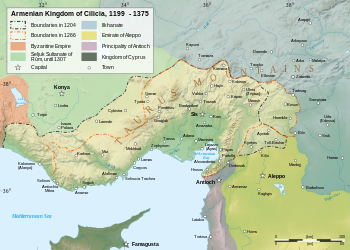
New Books about Armenian Cilicia and Genocide

The Armenian Catholicosate of Cilicia has announced a forthcoming series of books in anticipation of the 100th anniversary of the Armenian Genocide of 1915. We shall pay attention to them as they appear.
 
They have also recently published a number of books of interest, which may be viewed here.

Their Catholicos has announced 2012 as the Year of the Armenian Book in commemoration of the 500th anniversary of the Armenian printing press.

In related matters, we have several new books about the dolorous events of 1915, the first being released last month: Taner Akçam, The Young Turks' Crime Against Humanity: The Armenian Genocide and Ethnic Cleansing in the Ottoman Empire (Princeton U Press, 2012), 528pp.


The author, we are told, is actually Turkish, and one of the first and few Turkish academics to tackle this topic openly. About this book the publisher tells us:
Introducing new evidence from more than 600 secret Ottoman documents, this book demonstrates in unprecedented detail that the Armenian Genocide and the expulsion of Greeks from the late Ottoman Empire resulted from an official effort to rid the empire of its Christian subjects. Presenting these previously inaccessible documents along with expert context and analysis, Taner Akam's most authoritative work to date goes deep inside the bureaucratic machinery of Ottoman Turkey to show how a dying empire embraced genocide and ethnic cleansing. 
Although the deportation and killing of Armenians was internationally condemned in 1915 as a "crime against humanity and civilization," the Ottoman government initiated a policy of denial that is still maintained by the Turkish Republic. The case for Turkey's "official history" rests on documents from the Ottoman imperial archives, to which access has been heavily restricted until recently. It is this very source that Akam now uses to overturn the official narrative.
The documents presented here attest to a late-Ottoman policy of Turkification, the goal of which was no less than the radical demographic transformation of Anatolia. To that end, about one-third of Anatolia's 15 million people were displaced, deported, expelled, or massacred, destroying the ethno-religious diversity of an ancient cultural crossroads of East and West, and paving the way for the Turkish Republic.By uncovering the central roles played by demographic engineering and assimilation in the Armenian Genocide, this book will fundamentally change how this crime is understood and show that physical destruction is not the only aspect of the genocidal process.
A second book, a collection of essays, furthers our exploration of the events of 1915: Ronald Grigor Suny et al, eds., A Question of Genocide: Armenians and Turks at the End of the Ottoman Empire (Oxford U Press, 2011), 464pp.

About this book the publisher tells us:
One hundred years after the deportations and mass murder of Armenians, Greeks, Assyrians, and other peoples in the final years of the Ottoman Empire, the history of the Armenian genocide is a victim of historical distortion, state-sponsored falsification, and deep divisions between Armenians and Turks. Working together for the first time, Turkish, Armenian, and other scholars present here a compelling reconstruction of what happened and why. 
This volume gathers the most up-to-date scholarship on Armenian genocide, looking at how the event has been written about in Western and Turkish historiographies; what was happening on the eve of the catastrophe; portraits of the perpetrators; detailed accounts of the massacres; how the event has been perceived in both local and international contexts, including World War I; and reflections on the broader implications of what happened then. The result is a comprehensive work that moves beyond nationalist master narratives and offers a more complete understanding of this tragic event.
A third recent book also treats the genocide: Raymond Kevorkian, The Armenian Genocide: A Complete History (I.B. Tauris, 2011), 1008pp. 

About this book we are told:
The Armenian Genocide was one of the greatest atrocities of the twentieth century, an episode in which up to 1.5 million Armenians lost their lives. In this major new history, the renowned historian Raymond Kévorkian provides an authoritative account of the origins, events and consequences of the years 1915 and 1916. He considers the role that the Armenian Genocide played in the construction of the Turkish nation state and Turkish identity, as well as exploring the ideologies of power, rule and state violence. Crucially, he examines the consequences of the violence against the Armenians, the implications of deportations and attempts to bring those who committed the atrocities to justice.Kévorkian offers a detailed and meticulous record, providing an authoritative analysis of the events and their impact upon the Armenian community itself, as well as the development of the Turkish state.  This important book will serve as an indispensable resource to historians of the period, as well as those wishing to understand the history of genocidal violence more generally.
And finally, set for release in November, is a second volume in a trilogy by Seta B. Dadoyan, The Armenians in the Medieval Islamic World: Armenian Realpolitik in the Islamic World and Diverging ParadigmsCase of Cilicia Eleventh to Fourteenth Centuries (Transaction Publishers, 2012), 310pp.

About this book the publisher tells us:
In the second of a three-volume work, Seta B. Dadoyan explores the Armenian condition from the 970s to the end of the fourteenth century. This period marked the gradual loss of semi-autonomy on the traditional mainland and the rise of Armenian power of diverging patterns in southeastern Asia Minor, north Syria, Cilicia, and Egypt.
Dadoyan’s premise is that if Armenians and Armenia have always been located in the Middle East and the Islamic world, then their history is also a natural part of that region and its peoples. She observes that the Armenian experience has been too complicated to be defined by simplistic constructs centered on the idea of a heroic, yet victimized nation. She notes that a certain politics of historical writing, supported by a culture of authority, has focused sharply on episodes and, in particular, on the genocide.
For her sources, Dadoyan has used all available and relevant (primary and secondary) Armenian sources, as well as primary Arab texts and sources. This book will stimulate re-evaluation of the period, and re-conceptualizing Armenian and Middle Eastern histories.

Thursday, December 1, 2011

The Armenian Catholicos

Those who read my Orthodoxy and the Roman Papacy: Ut Unum Sint and the Prospects of East-West Unity will know the great esteem in which I hold the Armenian Apostolic Church, whose structures, which I analyze in great detail, are completely singular.

Now one of their two catholicoi, His Holiness Catholicos Aram of Cilicia, has recently published a book entitled Taking the Church to the People. The press release from his publisher tells us the following about this book:

The book consists of three parts. In the first part, Catholicos Aram I describes the nature of the church, its mission and its institutional expressions, including the parish, the dioceses and the wider Armenian community in Armenia and the Diaspora. While describing the organization of each, His Holiness suggests ways in which they should be renewed. In the second part our Pontiff identifies the core issues that the Armenian Church is currently facing. He starts with the Bible as the foundation of Christian faith and its interpretation; he then discusses the family, the school and Christian education. At the end of this section, His Holiness Aram I explains the meaning of the term "people of God" and explains why Armenian women, youth and children, who have been marginalized in the Church and all community organizations, should participate in building their communities.

In the final part of the book, His Holiness includes certain pastoral letters and messages that he has previously addressed to youth in order to prompt a meaningful dialogue with them. The book is a basic reader for all Armenians who want to learn about the Armenian Church and its faith, mission and organization. It is an invitation to the people in Armenia and the Diaspora to equip themselves with the legacy of the past and build Armenian communities responsive to the challenges of globalization. Finally, it is a guide to being the Church as the people of God both in Armenia and Diaspora.
Related Posts Plugin for WordPress, Blogger...