"Let books be your dining table, / And you shall be full of delights. / Let them be your
mattress,/
And you shall sleep restful nights" (St. Ephraim the Syrian).


Showing posts with label Nicholas Afanasiev. Show all posts

Monday, April 8, 2019

Everything Hidden Shall Be Revealed: Orthodox Blurbers

It was really in the summer of 2001, which I spent teaching in Ukraine, that I realized, I suppose, the theme of all my subsequent academic work--which I then decided to begin the following year by enrolling in the doctoral program at the Sheptytsky Institute, which was then in Ottawa. That theme--dare I call it a vocation?--was the promise and problem of papal authority in the eyes of the Orthodox East.

Those who read my dissertation, which was finished in 2008 and published in 2011 as Orthodoxy and the Roman Papacy, will know how much time I spent looking at structures of authority in the East and deriving therefrom important lessons for the Western Church, reforms to which I then proposed in light of Orthodox concerns about the modern papacy (which I date largely from Pius IX).

Those who pick up my new book, Everything Hidden Shall Be Revealed: Ridding the Church of Abuses of Sex and Power, will see a similar approach, albeit much more focused at the local and regional levels rather than the universal level which occupied most of my first book. To the extent the pope features here, it is not the structures of his office that I focus on, but the pathological personality cult surrounding him which I challenge sharply. (For some further thoughts on this, see here.)

In both books, there is an especial focus on the Armenian Apostolic Church, a singular body from which Catholics have a very great deal to learn. But other Orthodox Churches--the OCA, the Greek, and the Antiochian among them--also feature in the book. It is, then, very gratifying that senior and internationally respected and prominent Orthodox scholars have said such kind things about the new book. (For somewhat of an overview of the book's approach and rationale, see here; for some thoughts on Anglican 'blurbers' see here.)

Given the focus on the Armenian Church, I was very glad when Vigen Guroian, whom I have been reading and learning from for twenty years now, agreed to read the book and write a blurb for it, saying:
Adam DeVille begins his book with the jolting pronouncement that ‘everything hidden must be revealed’ regarding the present sex-abuse crisis in the Catholic Church. But this is only the first step. Writing with exceptional passion, he turns next, in an unexpected (but welcome) way, to a serious consideration of Orthodox ecclesiology and existing Orthodox ecclesiastical arrangements in order to identify a path that might allow Roman Catholics to move past ‘the current papal-centric structure’ and toward a Church in which authority and decision-making power is more jointly shared by laity, clergy, and bishops. Orthodox may benefit from DeVille’s studied perspective on their own churches, which well illustrates how renewal and reform might be accomplished for them as well.” —VIGEN GUROIAN, Armenian Orthodox theologian, author of The Orthodox Reality: Culture, Theology, and Ethics in the Modern World.
The Orthodox Reality is his newest book. But I used one of his very early works--Incarnate Love --in a course on Eastern Christian ethics I designed more than a decade ago now.

More recently, in a course on biomedical ethics and the pastoral care of the dying, I especially appreciated being able to use his very insightful Life's Living toward Dying: A Theological and Medical-Ethical Study.

Guroian has also written some interesting books on gardening, which I praised in a long essay published elsewhere more than a decade ago. I did not expect to like the books as I have long been an avowed indoorsman, but Guroian forced me to reconsider this.

Apart from the Spanish Jesuit psychoanalyst Carlos Dominguez-Morano (discussed here, though I will be returning to him again in coming days), there is one other interlocutor to whom my book is most heavily indebted, a book edited by Michael Plekon, who says this of Everything Hidden:
In this provocative and serious book, Adam DeVille presents radical ways of transforming the Church through a return to synodal and conciliar structures rooted in the traditions of the ancient Church. If there is to be death and resurrection for the Church, a Paschal renewal, then this must be the return of the Church to what it is: the assembly, not just in principle but in practice, of the whole people of God. His is a strong, courageous challenge to an embattled and damaged Church. —THE V. REV. MICHAEL PLEKON, Professor Emeritus, City University of New York.
I have interviewed Plekon many times on here over the past decade. For the most recent such interview, go here and follow the links back to the others.

He has written many wonderful books, but the one I am most indebted to in Everything Hidden Shall Be Revealed is the translation Plekon edited of Nicholas Afanasiev's Church of the Holy Spirit. That book is singular and rare in its clarity and boldness of vision, and its refusal to reduce the "laics" to a non-category of "lay" people, that is, people who lack something like ordination or professional standing. It was from Afanasiev (and both Armenian and Anglican experience) that I developed the argument of the necessity for the Catholic church to regard, in her counsels of governance, the laics, clerics, and hierarchs as three equal orders.

Finally I come to what Cyril Hovorun had to say about the book. His was perhaps the most overly generous blurb for the book, making me the most neurotic (but not ungrateful!):
Adam DeVille continues the line of great Catholic theologians who have asked uncomfortable questions and provided unconventional solutions to ecclesiological issues. DeVille takes the baton from the hands Congar, Rahner, Murray, and Küng, in serving the Church with both aggiornamento and ressourcement. But the true source of his inspiration is Eastern Christianity, in its Greek Catholic, Byzantine, and Oriental Orthodox forms, which provide serious challenges to the modern ways of exercising primacy and synodality in the Roman Catholic Church. Without this book, any serious ecumenical discussion between Westerners and Easterners on the church-dividing issues would be incomplete.” —ARCHIMANDRITE CYRIL HOVORUN, director of the Huffington Ecumenical Institute, Loyola Marymount University, Los Angeles, CA.
I interviewed Hovorun here about his Scaffolds of the Church, an invaluable book that belongs on the reading list of every course in ecclesiology--Catholic, Orthodox, Protestant. I drew on it very much as I was writing Everything Hidden Shall Be Revealed. Indeed, parts of Hovorun's book gave me a shot in the arm to argue things more clearly and forcefully than I was once inclined to do. His is a very brave and important book. I also commend to you his newest, Political Orthodoxies, as well as his earlier book Meta-Ecclesiology

Saturday, March 16, 2019

Be Not Afraid! (I)

Very much in my mind as I was writing Everything Hidden Shall Be Revealed: Ridding the Church of Abuses of Sex and Power was the anxiety I have often heard, and still hear, from those who identify themselves as "conservative" or "traditional" Catholics. Such people often regard the idea of structural reforms to the Church with fear and loathing. Some of this, as I suggested here, has to do with an undiagnosed and ancient theological mistake of a crypto-monophysite sort--regarding, that is, the Church as some purely spiritual body untouched by the grubby concerns about politics and organization, and the politics of organization and structure. 

Much of this anxiety has to do with internal ecclesial perceptions of the last thirty years or so: "conservatives" think everything, including structures, must be preserved unchanged; and those they regard as "liberals" are associated in their minds not only with dodgy ideas and heterodox theology, but with structural reforms to accomplish those apparently nefarious goals. Oppose the reforms--so this thinking runs--and you cut off the necessary route for the imposition of "heresy." But the problem is that we have not had real structures of local accountability and real synods (local and otherwise), but only appallingly easily abused and very shabby simulacra of them, as I argued here. So the fear of structural reforms is (as our father among the saints Sigmund of Vienna might say) merely a fearful fantasy

My task, then, was to show the "conservatives" and "traditionalists" that the current structures, which they want to hold on to, are modern inventions, scarcely a century old, and thus in no serious way "traditional." Moreover, and more to the point, they simply do not work--no matter who the pope is. As should be obvious to everyone by now, even having "conservative" popes like John Paul II and Benedict XVI manhandling the structures did not prevent the present crisis from breaking out. 

Quiz: which pope appointed McCarrick to Washington and the college of cardinals? Which pope elevated Pell? Who was bishop of Rome who made Barbarin archbishop of Lyon and a cardinal? Who refused to allow Bernard Law to resign before shuffling him off to a cozy sinecure using the time-tested technique of promoveatur ut amoveatur? Better still, which sainted recent pope appointed not one but two bishops in succession to Palm Beach, Florida, both of whom had to be removed for abuse? 

Assignment: Why not collect a statistic of how many of the current bishops in the United States knew of what McCarrick (and others) were doing, but themselves did nothing, assuming that it was not their job? Do we want to continue to allow them to get off so easily? 

Bonus Assignment: what percentage of American Catholics was edified by watching their bishops last November stand around doing damn all because apparently their brother in Rome told them not to? Who was heartened to hear them claim they could not discipline each other, but only the pope could do that--and since there are 3500 of them in the world, and only 1 pope, the chances of him doing that are vanishingly small? Is any of this a system any sane person wants to hang onto? 

No "conservative" with a functioning brain should thus want to conserve the structures that have given us these disasters--and countless others. No Catholic has any interest in hanging on to the worst structures conceived at the most infelicitous of times (after the 1848 revolutions) and in a context and crisis that have long since past. In holding tightly onto those structures, we are preserving sclerosis in the body of Christ, and preventing it from undergoing necessary reforms and purification. Catholics who resist structural changes today are harming the Church, not helping her. 

My additional task was to show such anxious types that John Paul II's constant call "Be not afraid!" applies to reform in the Church as this dark hour. One need not be afraid of such reforms if one can see that they work elsewhere, especially in parts of the Christian East, almost all of whose churches--Catholic and Orthodox--have so far largely preserved their liturgical traditions intact, and whose theological patrimony has been subject to far less craziness than we have seen in the West for a half-century and more now of "experimentation." 

In other words, if the structures I propose are largely drawn from the very conservative Armenian Church, then anxious conservative Catholics can take some measure of reassurance that structural reforms do not in themselves go hand-in-hand with liturgical destruction and theological heterodoxy. (I also reference structures in the Anglican Communion, which may well cause the aforementioned "conservative" anxiety to spike sharply upwards. I will address that on Monday, for in fact what I propose takes only selective parts of Armenian and Anglican structures and sets them in a Catholic context, allowing for a considerable role of insight reserved to the bishop of Rome and avoiding some of the problems of both systems.)

At the same time, however, the book is unapologetically "liberal" in the sense that the theological case for the liberation of the laics (a term I borrow from the invaluable Nicholas Afanasiev) to take their place in the councils of governance--parish council, diocesan synod, regional, and even international synods--is overwhelming

Equally, the case against the current system--of papal-episcopal monopoly on power at all levels--is overwhelming: such a system is (to coin a phrase) objectively disordered. It must go. Even if there were no crisis at all, I would argue this with the same vigor. There is nothing to be afraid of in having the governance of the Church in the hands equally of laics, clerics, and hierarchs. The current system barring laics from any serious say in the running of parishes and dioceses is perverse

Thursday, March 14, 2019

Everything Hidden Shall Be Revealed: My New Book on the Sex Abuse Crisis

I was on sabbatical last year with plans to finish a book ("Theology After Freud") I had been researching and writing for the better part of two years (but, really, for the last twenty-five years). But very early into my time away, and quite unexpectedly, I set aside the writing of the Freud book--temporarily I thought--to flesh out some ideas for reform to the Catholic Church in light of the McCarrick story, which broke in June 2018 and quickly became a story of a global epidemic of abuse everywhere in the Church. I toyed with writing a short article (and ended up writing several for Catholic World Report including this one), then a long one, and then I thought I'd see whether it would be better to flesh things out into a book. I decided to give myself two weeks to rough out material to see whether I had enough to write a book I could be satisfied with--or whether I would simply return to my Freud book.

Once I began writing I could not stop, nor did I have any urge to. I did not write in my usual halting style of drafting, reading some more, redrafting, reading, redrafting, and so on. The writing of this book was an unusual experience for me, unlike anything else I have written (for whatever that is worth, and likely not much). It was written in what I would call a psychoanalytic style not just of (relatively) free association unencumbered (initially) by the back-and-forth of editing, but the process also very clearly manifested to me what Christopher Bollas calls the "unthought known." The writing was merely the vehicle for putting the known into thoughtful form on the page.

What resulted was and is Everything Hidden Shall Be Revealed: Ridding the Church of Abuses of Sex and Power (Angelico Press, 2019), 154pp.

Those who read drafts last fall regularly described the book as "explosive."

Here is the blurb I wrote for the book:
The most serious sex abuse crisis in Catholic history demands the most serious and far-reaching response. This book is a contribution to that response. Its proposed changes would revolutionize Catholic structures from the parish to the papacy. Unlike other revolutions, however, this one is anchored with great care in both history and theology, including that of the various Eastern Churches.
This book shows that the current monocausal explanations of abuse and cover-up (either “clericalism” or “homosexuality”) both overlook the structural issues of governance. The current centralized structures, which monopolize power in the hands of bishops and popes, must be reformed and in their place new structures of local accountability implemented, in order for the Church to move past the present crisis.
This is a radical book in the original sense of the word: a return to root practices that structured much of Catholic life for hundreds of years. It is thus a deeply “traditionalist” book rooted strongly in venerable Christian practices, but is also an openly “liberal” book that argues in favor of liberating the laics so they can resume with voice and vote their rightful role in the councils of governance.
Here is the table of contents:

Introduction
1 Toward a Future without Illusions
2 Reforming Parish Councils
3 Returning to Regular Diocesan Synods
4 Reforming Episcopal Conferences
5 Married Priests and Bishops?
A Concluding Unscientific Postscript
Annotated Bibliographical Essay
Acknowledgments

Freud and the analytic traditions following after him are very much in evidence not just in the method of the book, but in its contents, especially the first chapter, which is an obvious reference to Freud's 1927 book. I draw on Freud in the first chapter alongside the philosopher Charles Taylor to argue for dramatic changes in what I call the "Catholic imaginary" in which the papal cult of personality is seen for the semi-idolatrous problem it is, and is therefore dismantled. This chapter also looks at the twin problems of sex and power. It may be something of an old saw, but it is nonetheless true as Freud showed us: everything is about sex, except sex--which is largely about power. Chapter 1 shows how we can disentangle these things and why we must do so as we come to conceive of, and subsequently to structure, the Church in different ways.

For most of the rest of the book, the second major interlocutor is Nicholas Afanasiev. Indeed, my book would largely be inconceivable were it not for Afanasiev's landmark and invaluable book Church of the Holy Spirit. In that book he rightly insists on seeing the laics, as he calls them, as an integral order alongside clerics and hierarchs.

This three-fold ordering of the Church shows up in  Chapter 2, which calls for reforms to parish councils, making them obligatory for parish governance as a process of mutual accountability between people, pastor, and bishop.

Chapter 3 looks at the overdue reform of diocesan synods so that bishops can be held accountable by and to their people--both laics and clerics.

Chapter 4 looks at necessary changes to episcopal conferences so that they can become true synods with, again, accountability to the people, and disciplinary power among bishops so they do not--as the American episcopate did so pathetically last November--stand around meekly waiting for texts from Rome telling them when to sit down and when to stand up.

Chapter 5 Was perhaps the most unexpected chapter, and I surprised myself by the conclusions I arrived at there, which you can read for yourselves. It is the most tentative chapter because the changes proposed there would require the greatest, and costliest, changes across the Church.

In the coming days I will discuss parts of the book, including other interlocutors as well as those who very kindly and lavishly agreed to endorse it.

Friday, January 18, 2019

In Praise of Afanasiev

I was in Iasi, Romania last week for the inaugural conference of the International Orthodox Theological Association. I was both an official ecumenical observer and also a panelist giving a paper on papal primacy.

Among many interesting sessions and papers, one impressed me more than the rest: a paper given by a newly minted scholar, Anastacia Wooden, on the legacy of Nicholas Afanasiev.

It was a superlative piece of scholarship, and clearly marks Wooden down now as the Afanasiev expert in the world. What made her paper simultaneously fascinating and depressing was her careful documentation of how shabbily Afanasiev has been treated by Catholic (esp. Aidan Nichols) and Orthodox (esp. John Zizioulas) theologians alike, who, at best, pay him the briefest lip service before going on to criticize him (typically for things he did not say, while ignoring the things he did say) or else ignore him. Apart from such shabby treatment by these two, he is apparently generally ignored. I found this astonishing because, in my naivete, I had assumed that everyone recognized Afanasiev as one of the great men of postwar ecclesiology and therefore blithely imagined he was widely and appreciatively read. Apparently not.

Nonetheless, do not let that stop you, dear discerning reader, from reading Afanasiev. The easiest place to begin is with his Church of the Holy Spirit. I drew on that in several of my writings, including, most recently, this essay.

An introduction to him may be found in the chapter on his life written by Michael Plekon in Living Icons: Persons of Faith in the Eastern Church.

Other works in English include the three essays found in the collection edited again by Plekon, Tradition Alive: On the Church and the Christian Life in Our Time

There is much that remains untranslated and unpublished, and I strongly encouraged Wooden to remedy these lacunae as soon as possible. We have every reason to expect many good things from her, and I shall endeavor to keep you apprised of them.

Wednesday, November 21, 2018

St Cyprian of Carthage and the College of Bishops

Does anyone today like bishops, or see them as anything other than a corrupt bunch of self-serving gangsters and sexual abusers? If your local one is okay, what about his being yoked to his brothers? Can the Church retreat into local structures and communities and ignore the wider corruption? If not, what should we do then?

These are not new questions, as we see in a new book, St. Cyprian of Carthage and the College of Bishops by Benjamin Safranski (Fortress Academic, 2018), 250pp. I am especially gratified to see how much this new book is indebted to Afanasiev, who is no stranger to these parts.

About this book the publisher tells us this:
This book assesses episcopal cooperation as envisioned by the third-century bishop Cyprian of Carthage. It outlines and assesses the interactions between local bishops, provincial groups of bishops, and the worldwide college. Assessing these interactions sheds light on the relationship between Cyprian’s strong sense of local autonomy and the reality that each bishop was responsible to the world-wide college. Episcopal consensus was the sine qua non, for Cyprian, for a major issue of faith or practice to become one that defined membership in the college and, ultimately, the Church.
The book brings this assessment into a modern scholarly debate by concluding with an evaluation of the ecclesiology of the Orthodox scholar Nicolas Afanasiev and his critiques of Cyprian. Afanasiev lamented Cyprian as the father of universal ecclesiology and claimed that Cyprian’s college wielded authority above that of the local bishop. This book argues that Afanasiev fundamentally misconstrued Cyprian’s understanding of collegiality. It is shown that, for Cyprian, collegiality was the framework for the common ministry of the bishops and did not infringe on the sovereignty of the local bishop. Rather, it was the college’s collective duty to define the boundaries of acceptable Christian belief and practice.

Wednesday, August 8, 2018

Afanasiev on Today's Catholic Crisis

Elsewhere you can read my thoughts on reform to help the Catholic Church through the crisis of episcopal malfeasance, gross negligence, and massive dereliction of duty.

As you'll see in that essay, I draw extensively on the work of the Orthodox canonist and ecclesiologist, Nicholas Afanasiev, especially his masterful book The Church of the Holy Spirit. That book was wonderfully edited by my dear friend Michael Plekon, whom I have often interviewed on here over the years about his own many fascinating and worthwhile books.

Wednesday, September 17, 2014

Plekons, Nooks, and Kindles

The University of Notre Dame Press e-mailed me the other day to say that many of their books are now available in Nook and Kindle formats, including at least two of interest to readers of this blog. So for those of you who prefer to do your reading on a tablet rather than in paper form, here's your chance. The first is authored by Michael Plekon, the second edited by him: Saints As They Really Are: Voices of Holiness in Our Time (UND Press, 2012).

For those of you who missed the book the first time round, the publisher sums it up for us thus:
In his new book, Saints As They Really Are, priest and scholar Michael Plekon traces the spiritual journeys of several American Christians, using their memoirs and other writings. These “saints-in-the-making” show all their doubts and imperfections as they reflect on their search for God and their efforts to lead holy lives. They are gifted yet ordinary women and men trying to follow Christ within their flawed and broken humanity—“saints as they really are,” as Dorothy Day put it.
Saints As They Really Are is the third book in Plekon’s critically acclaimed series on saints and holiness in our time. He draws on the autobiographical work of Dorothy Day, Peter Berger, Thomas Merton, Kathleen Norris, and Barbara Brown Taylor, among others, as well as from his own experiences as a Carmelite seminarian and brother. Plekon shares the power of these individuals’ stories as they unfold. The book offers a strong argument that our failings and weaknesses are not disqualifications to holiness. Plekon further confronts the institutional church and its relationship to individuals seeking God, focusing on some of the challenges to this search—the destructive potential of religion and religious institutions, as well as our personal tendencies to extremism, overwork, pious obsessions, and legalism. But he also underscores the healing qualities of faith and the spiritual life. Plekon's insights will help readers better understand their own spiritual pilgrimages as they learn how others have dealt with the trials and joys of their path to everyday holiness.
I interviewed Plekon two years ago about this splendid and delightful book, and you may read that here.

The second book now available in electronic form is from the famed Orthodox canonist and ecclesiologist Nicholas Afanasiev, who was enormously influential at Vatican II. This book appeared in English translation in 2007, and I read it as I was finishing my own dissertation (which you still must read in paper form as UND has no nooks for me!), which became Orthodoxy and the Roman Papacy: Ut Unum Sint and the Prospects of East-West Unity. You will see Afanasiev's influence on my book especially in the conclusion. It remains an indispensable work in modern ecclesiology: The Church of the Holy Spirit. 

About this book the publisher reminds us:
The Church of the Holy Spirit, written by Russian priest and scholar Nicholas Afanasiev (1893–1966), is one of the most important works of twentieth-century Orthodox theology. Afanasiev was a member of the “Paris School” of émigré intellectuals who gathered in Paris after the Russian revolution, where he became a member of the faculty of St. Sergius Orthodox Seminary. The Church of the Holy Spirit, which offers a rediscovery of the eucharistic and communal nature of the church in the first several centuries, was written over a number of years beginning in the 1940s and continuously revised until its posthumous publication in French in 1971. Vitaly Permiakov's lucid translation and Michael Plekon's careful editing and substantive introduction make this important work available for the first time to an English-speaking audience.

Friday, December 20, 2013

Antoine Arjakovsky Leads the Way

A couple of weeks ago, the University of Notre Dame Press sent me the translation of Antoine Arjakovsky's book, The Way: Religious Thinkers of the Russian Emigration in Paris and Their Journal, 1925-1940, which I've previously noted on here. The publisher tells us the following about the book:

The journal Put', or The Way, was one of the major vehicles for philosophical and religious discussion among Russian émigrés in Paris from 1925 until the beginning of World War II. The Russian language journal, edited by Nicholas Berdyaev among others, has been called one of the most erudite in all Russian intellectual history; however, it remained little known in France and the USSR until the early 1990s.
This is the first sustained study of the Russian émigré theologians and other intellectuals in Paris who were associated with The Way and of their writings in the journal. Although there have been studies of individual members of that group, this book places the entire generation in a broad historical and intellectual context. Antoine Arjakovsky provides assessments of leading religious figures such as Berdyaev, Bulgakov, Florovsky, Nicholas and Vladimir Lossky, Mother Maria Skobtsova, and Afanasiev, and compares and contrasts their philosophical agreements and conflicts in the pages of The Way. He examines their intense commitment to freedom, their often contentious struggles to bring the Christian tradition as experienced in the Eastern Church into conversation with Christians of the West, and their distinctive contributions to Western theology and ecumenism from the perspective of their Russian Orthodox experience. He also traces the influence of these extraordinary intellectuals in present-day Russia, Western Europe, and the United States.
I've been reading Arjakovsky and corresponding with him off-and-on for several years now. I have long been an admirer of his scholarship for its gracefulness, its openness, and its refusal to reduce Orthodoxy to an ideology with which to club those who differ--something I see too much of. Arjakovsky is an admirable figure not only as a scholar, but also for his work as founding director of the Institute of Ecumenical Studies at the Ukrainian Catholic University in Lviv. Those who are aware of post-1991 relations between Russian Orthodox (which is Arjakovsky's tradition) Christians and Ukrainian Catholic Christians will know how remarkable a thing that is. Having left there recently, he currently teaches and works at the Collège des Bernardins in Paris.
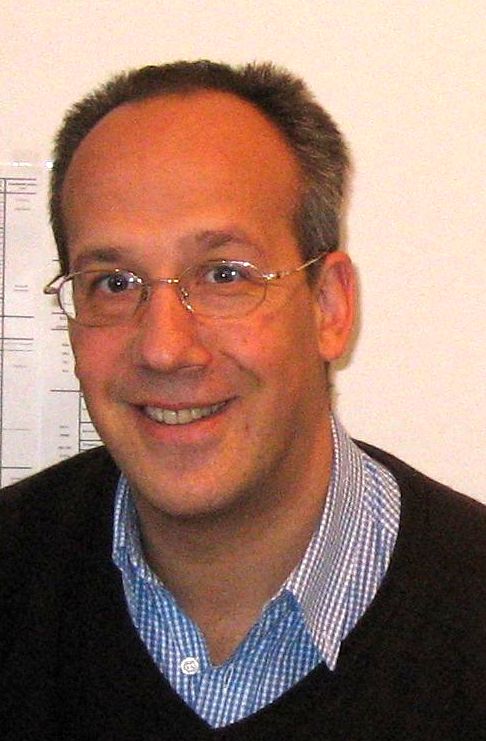

My debts to Antoine are considerable. In fact, one of the very first things I posted on this blog when I started in 2010 was a discussion of his book Church, Culture, and Identity. Then, just over two years ago, I had a long discussion about his book on the much-promised "great and holy council" of Orthodoxy. Now at last we have in English his book The Way: Religious Thinkers of the Russian Emigration in Paris and Their Journal, 1925-1940, which tells a crucial chapter in Russian religious history, and so I was glad to have the chance to interview him about this latest book--which began many years ago as his doctoral dissertation. We conducted the interview in French. Perhaps if time allows over the holidays I might work on a translation.

AD: Parlez-nous de votre parcours.

AA: Le fait que mes grands-parents aient fréquenté de près les grandes figures de l’Ecole de Paris a déterminé non seulement mon identité franco-russe et chrétienne orthodoxe mais aussi mon questionnement historique. Ma grand-mère était l’assistante de Nicolas Berdiaev le directeur des éditions YMCA Press à Paris, et mon grand-père était un élève du père Serge Boulgakov à l’Institut saint Serge. J’ai su très jeune que le renouveau philosophique et théologique de l’Ecole de Paris ne concernait pas uniquement l’Eglise Orthodoxe, il s’adresse encore aujourd’hui à tous les intellectuels de bonne volonté. En effet la philosophie personnaliste de Berdiaev n’a pas été entendue en son temps et le renouveau sophiologique de la théologie dogmatique a subi des attaques violentes des courants pro-communistes et pro-monarchistes. Ma découverte que les intellectuels chrétiens orthodoxes mais aussi occidentaux étaient passé à côté de cet héritage, ainsi que ma propre expérience de la Russie et de l’Ukraine où j’ai travaillé entre 1989 et 1998 (comme directeur du Collège universitaire Français de Moscou notamment) et de l’Ukraine entre 1998 et 2011 (comme directeur de l’Institut d’études œcuméniques de Lviv à partir de 2004), m’ont convaincu qu’il fallait présenter de façon compréhensible aujourd’hui les principales caractéristiques de la génération des penseurs religieux de l’émigration russe. J’ai donc soutenu à l’Ecole des Hautes Etudes en Sciences Sociales une thèse de doctorat sur le thème de la revue La Voie (Pout’), principal organe entre 1925 et 1940 de cette Ecole de Paris. Après avoir publié mon livre en russe et en français je suis heureux que ma recherche paraisse enfin en anglais grâce à Notre Dame University Press, au travail éditorial extraordinaire de Michael Plekon et de John Jillions, et de l’excellente traduction de Jerry Ryan. La préface de Mgr Rowan Williams représente pour moi un très grand honneur.

AD: Pourquoi avez-vous écrit ce livre?

Il fallait répondre à plusieurs séries de questions. Pourquoi la mémoire collective a retenu la notion d’Ecole de Paris, alors qu’on trouve tellement de courants différents en son sein? Qu’est-ce qui les unissait au-delà de leurs divergences ? Y-a-t-il une solution de continuité entre la tradition chrétienne orthodoxe et les innovations philosophiques, dogmatiques ou encore historiques apparues dans l’entre-deux guerres ? Peut-on comprendre la crise actuelle de la conciliarité orthodoxe à partir des ruptures théologico-politiques apparues dans l’Eglise russe en 1921 et en 1930 ? Et encore, pourquoi leur pensée a-t-elle si peu été entendue aujourd’hui par les intellectuels européens ? Cela fut-il toujours le cas ? En quoi consiste la rencontre conflictuelle entre la pensée chrétienne orthodoxe et la modernité ?

AD: Parlez-nous de la méthodologie unique dans votre livre

Pour tenter de répondre à toutes ces questions il fallait adopter une méthode historique sérieuse. Ayant suivi le séminaire de Pierre Nora à l’Ecole des Hautes Etudes en Sciences Sociales j’ai choisi de m’appuyer sur l’approche des « lieux de mémoire ». Celle-ci consiste à marier le rapport symbolique qu’entretient la mémoire d’une génération sur elle-même avec son inscription historique dans le temps déterminée par un cadre très précis, à savoir en l’occurrence les 61 numéros de la revue La Voie. Cette méthode, associée également à la micro-histoire, m’a permis de mettre à jour les spécificités de la pensée et de la vie de chaque auteur de la revue tout en saisissant l’unité dynamique d’une génération intellectuelle à travers trois grandes périodes : le moment moderniste entre 1925 et 1930, le moment non-conformiste entre 1930 et 1935, enfin le moment spirituel entre 1935 et 1940.

AD: Expliquer l'importance de la mémoire dans votre méthode historique. 


On a tendance à confondre la mémoire et l’histoire. C’est ce sur quoi insiste Pierre Nora qui fut l’éditeur et l’ami de Michel Foucault. La mémoire se prend en général pour l’histoire car rares sont ceux qui disposent d’une vision du passé qui soit à la fois critique et pleinement conciliaire. Mais l’histoire a tendance de son côté à ignorer les mémoires particulières en faisant prévaloir systématiquement la causalité conceptuelle sur le chaos des jours et les récits particuliers. L’avantage de l’historiographie symboliste et générationnelle c’est qu’elle permet un équilibre entre l’histoire et la mémoire. Je consacre une bonne partie de mon introduction à enraciner ma recherche dans la continuité d’une tradition historiographique critique. Mais je ne suis pas naïf par rapport à elle. C’est la raison pour laquelle je consacre une bonne partie de ma conclusion et de ma postface à l’édition anglaise en situant ma recherche à la croisée de plusieurs traditions mémorielles non objectivées. L’histoire qui s’écrit peut rejoindre l’histoire qui se fait à cette seule condition de distinguer sans séparer la mémoire sapientielle de l’histoire logique. J’aime beaucoup la fresque de la chapelle Sixtine qui montre Dieu le Père créant l’histoire en se tournant vers la figure de la Sagesse.

AD: Parlez-nous des membres de « l'Ecole de Paris » et de leur importance.

Pour moi ils sont tous importants et insuffisamment connus. Car ce que j’ai découvert révèle l’émergence d’un « moment trinitaire » dans la pensée russe, d’où cette conviction qui nous reste en la mémoire que cette génération doit être saisie dans son ensemble comme Ecole de Paris. Chaque jugement, nous disent les penseurs russes depuis Florensky, est composé d’un sujet, d’un verbe, et d’un complément. Pour moi les penseurs personnalistes (comme Berdiaev, mais aussi mère Marie Skobtsoff ou plus tard Olivier Clément) insistent sur le sujet dans une filiation kantienne. Mais ils insistent tout autant sur la dimension inobjectivable du sujet, que sur sa définition possible comme personne créatrice. En effet en étant créé à l’image et à la ressemblance de Dieu l’homme dispose d’une liberté à la fois incréée (l’elevtheria, qui lui provient de son image céleste) et créée (antexousion, qui lui permet de tendre ou non vers son créateur). Les sophiologues sont ceux qui insistent sur la dimension ontologique de tout jugement, et donc sur le verbe. Le génie de Boulgakov (mais aussi de Paul Evdokimov ou plus tard John Milbank) est d’avoir repris la tradition patristique de la double nature de la Sagesse de Dieu créée et incréée. Mais il a posé les rapports entre l’une et l’autre ni sur le mode néo-platonicien de l’anima mundi, ni sur le seul mode apophatique de la tradition palamite, mais sur le mode scripturaire de la relation anthropo-cosmique entre la création et son Créateur. Enfin ceux que j’appelle les théocentristes privilégient dans leur pensée religieuse le troisième moment du jugement, la conscience de soi. C’est pourquoi ils insistent sur l’une des trois hypostases trinitaires, qu’il s’agisse de la figure du Père (Mgr Cassien Bezobrasoff, aujourd’hui le père Boris Bobrinskoy), du Fils (Georges Florovsky, aujourd’hui Mgr Jean Zizioulas) ou de l’Esprit Saint (Georges Fedotov, aujourd’hui Mgr Georges Khodr). Bien entendu la théologie après guerre s’est faite plus trinitaire qu’elle ne l’avait été dans les années 1930 mais elle garde toujours sa caractéristique commune qui est l’apophatisme, l’interdiction absolue d’objectivation de la vie trinitaire. Ces trois courants ont chacun leur importance et ils se complètent pour moi de façon remarquable. Le drame fut dans les années trente que les acteurs de ce renouveau intellectuel n’aient pas eu conscience de cette complémentarité. Comme je ne suis pas sûr que les penseurs orthodoxes l’ait bien intégrée aujourd’hui je fais le récit dans ce livre de sa lente émergence au XXe et au XXIe siècles.

AD: Expliquez brièvement l'importance de la revue Pout’

La revue Pout’, - ce n’est pas moi qui le dit mais les principaux historiens et slavistes du XXe siècle, de Marc Raeff à Alexandre Soljénytsine, et de Olivier Clément à Georges Nivat -, est la principale revue de la pensée russe au XXe siècle mais aussi de la pensée chrétienne orthodoxe. Elle a bénéficié d’une atmosphère de liberté unique dans l’histoire de la pensée russe jusqu’en 1989 puisque pour la première fois depuis la création de l’imprimerie celle-ci a pu s’exprimer sans la censure tsariste, ecclésiale ou soviétique. Elle a bénéficié aussi de ce fait extraordinaire de l’émigration russe qui a concentré dans le Quartier Latin à Paris la plus grande concentration de personnalités aussi exceptionnelles telles que Léon Chestov, Vladimir Lossky ou le père Nicolas Afanassiev. Mais la revue a su constituer un réseau mondial avec des intellectuels vivant aux Etats-Unis (S. Cavert), en Chine (T. Ku), en Allemagne (F. Lieb), et même en URSS (I. Setnitsky). Certains de ses auteurs sont devenus des saints tels que Ivan Lagovsky ou mère Marie Skobtsoff.  Ses lecteurs sont devenus également très célèbres comme Jean Meyendorff, Elisabeth Behr Sigel ou Alexandre Schmemann. Enfin pour la première fois depuis le concile de Florence cette revue a permis un dialogue en profondeur entre intellectuels d’Orient, tels que Nicolas Lossky, Vladmir Iljine, Serge Troubetskoi, Léon Zander, et d’Occident, tels que Jacques Maritain, Léon Gillet, Paul Tillich ou encore Paul Anderson.

AD: Vous écrivez à propos de l'engagement œcuménique de l'école de Paris. Certaines églises orthodoxes ont-elles perdu cet engagement aujourd'hui? Quels sont les spiritualités contradictoires vous discutez?

L’engagement œcuménique de l’Eglise Orthodoxe, qui a été affirmé en 1986 à Chambésy à l’occasion de l’une des conférences pré-conciliaires, trouve son origine dans les débats de la revue La Voie. En effet Serge Boulgakov fut l’un des membres fondateurs de Foi et Constitution. Georges Florovsky fut l’un des membres fondateurs du Conseil Œcuménique des Eglises. Léon Zander et Nicolas Zernov furent membres fondateurs du Fellowship of Saint Alban and Saint Sergius. Nicolas Berdiaev fut l’un des premiers conférenciers du World Student Christian Federation et un ami proche de John Mott, président du YMCA. Le père Nicolas Afanassiev fut le seul auteur non catholique a être cité dans les documents préparatoires au concile Vatican II. Paul Evdokimov, qui était le secrétaire de l’Académie de philosophie religieuse fut le premier président en 1953 de Syndesmos, la fédération mondiale de la jeunesse orthodoxe, qui adopta dès son origine une orientation pro-oecuménique. On pourrait encore allonger la liste. Je discute dans l’ouvrage que j’ai publié en 2011, En attendant le concile de l’Eglise Orthodoxe (Paris, Cerf) de l’histoire de cet engagement œcuménique. Je montre en particulier que ce courant œcuménique au sein de l’Eglise Orthodoxe n’a pas suffisamment pris en compte depuis 60 ans les quatre courants principaux de la spiritualité orthodoxe : les zélotes, les prosélytes, les spirituels et les contestataires. L’avenir du mouvement œcuménique tient pour une bonne part dans la prise de conscience intra-confessionnelle que le travail d’unité consiste avant tout à réconcilier les quatre représentations de l’Eglise portées par chacun de ces types spirituels.

AD: Y a-t-il des successeurs de l'école de Paris aujourd'hui?

Oui bien sûr, surtout si on s’accorde avec ce que j’ai pu expliciter par la suite dans mon livre Le père Serge Boulgakov, philosophe et théologien chrétien (Parole et Silence, 2007). Si se confirme ma thèse que la pensée chrétienne dans son ensemble vit aujourd’hui un moment de réconciliation entre la foi et la raison, entre son Orient et son Occident, entre ses trois courants personnaliste, sophiologique et théocentriste, alors on peut citer certaines personnalités de premier plan qui émergent aux quatre coins du monde chrétien orthodoxe. Je pense à John Jillions et à Michael Plekon aux Etats-Unis, à Olga Sédakova en Russie, à Constantin Sigov en Ukraine, à Petros Vassiliadis et à Eleni Kasselouri en Grèce, au métropolite Joseph Pop pour la Roumanie, à Bertrand Vergely en France, mais il y aurait tant d’autres noms à citer…Et surtout tant d’autres noms à ajouter au-delà des frontières confessionnelles de l’orthodoxie. Je pense à Rowan Williams ou au pape François, à Peter Galadza ou à Bernard Sesboüé.

AD: Travaillez-vous sur un autre livre maintenant?

Je viens de terminer un livre sur lequel j’ai travaillé pendant plus de dix ans. Il s’appelle Qu’est-ce que l’orthodoxie ? Il a été publié chez Gallimard cette année. Ce livre a été traduit en langue anglaise par J. Ryan mais n’a toujours pas trouvé d’éditeur aux Etats-Unis…...Si mon travail sur la revue La Voie représentait comme le remboursement d’une dette par rapport à tout ce que j’ai reçu, ce nouveau livre est plus personnel. Il s’agit d’une redécouverte de la richesse sémantique de la foi-pensée orthodoxe. A partir des principaux historiens de l’Eglise, des évangélistes à Eusèbe de Césarée, de Cyrille de Jérusalem à Vassili Bolotov, je montre que « l’ortho-doxie » de la foi chrétienne est un lieu particulier de la pensée rationnelle, distinct de l’épistémologie, qui articule quatre pôles majeurs : la louange et la mémoire, la loi et la justice. Mais ici encore les acteurs historiques n’ont pas toujours eu conscience de la complémentarité de ces quatre pôles en tension. C’est la raison pour laquelle l’orthodoxie a été pensée successivement de façon paradigmatique comme « juste glorification » (entre le Ier et le IVe siècle), « vérité droite » (entre le IVe et le XVe siècle), et « mémoire fidèle » (du XVIe siècle à nos jours). Depuis 1945 émerge sous nos yeux le sens de « la connaissance juste », du « fair knowledge » qui unit à nouveau de façon indissociable pratiques et savoirs, et qui a toutes les chances de devenir paradigmatique à l’heure de la globalisation et de la montée en puissance des dialogues inter-religieux. Il s’agit donc d’une histoire post-confessionnelle de la foi orthodoxe qui bouleverse bien des idées reçues et ouvre de nouveaux horizons. A bien des égards cette vision rejoint je crois le travail que vous réalisez dans la revue Logos et sur votre blog, ce pour quoi je vous félicite !

Friday, November 16, 2012

Bill Mills on Alexander Schmemann

Recently I drew attention to the publication of a wholly welcome new book on the thought of the most influential liturgical theologian of our time: William C. Mills, Church, World, and Kingdom: The Eucharistic Foundation of Alexander Schmemann's Pastoral Theology (Hillenbrand, 2012), 144pp.

I asked the author, my friend Bill Mills, a priest of the Orthodox Church of America, for an interview. (Previous interviews with him may be read here and here.) Here are his thoughts.

AD: Tell us what led you to write this book.

WCM: I was encouraged by my adviser to choose a topic that was narrow in scope and that I would complete in time. After all, there’s a reason why there are so may ABD’s around!  A lot of people can do the coursework and complete their exams, but then get stuck in the muddy and murky waters during the dissertation phase. After browsing my bookshelves I started re-reading The Journals of Father Alexander Schmemann, 1973-1983 and then some parts of his magnum opus The Eucharist: Sacrament of the Kingdom and some of his essays in Liturgy and Tradition: Theological Reflections of Alexander Schmemann and Church, World, Mission: Reflections on Orthodoxy and the West

After reading Schmemann again I noticed that he actually had a lot to say about the priesthood, ministry, vocation, clericalism, and pastoral care. I then started doing some preliminary research and found that until now most scholarship on Schmemann focused on his work on the Eucharist in particular. Nothing had been done on his thoughts or teachings on pastoral theology. The culmination of this research eventually became my doctoral dissertation which was titled: "Church, World, and Kingdom: A Study of Alexander Schmemann’s Pastoral Theology" (2004).  My book,  Church, World, and Kingdom: The Eucharistic Foundation of Alexander Schmemann's Pastoral Theology, is a complete revision of that dissertation. My dissertation focused more on the priesthood and clericalism but the book deals more with Schmemann’s overarching views of pastoral ministry and theology.
  
AD: A few years ago at a conference, Robert Taft noted that virtually no other modern Orthodox theologian's writings have had the same long "shelf life" as those of Alexander Schmemann, who died nearly thirty years ago. Why do you think that Schmemann remains so popular and influential today, nearly thirty years after his death?

WCM: I fully agree with Father Taft. Schmemann’s books are read, not just by those of us in the East but also those in the West, especially in some Catholic circles and in mainline Christian Churches too. A few years ago I attended a conference at Princeton Seminary. During a break I visited the seminary bookstore and what did I find but a two foot stack of,  For the Life of the World and The Eucharist: Sacrament of the Kingdom which were both required reading for a course on worship and prayer.
I was stunned. It was then and there that I realized how important Schmemann was in academic circles, even thirty years after his passing. While doing some online research I also found that his books are required reading at such places as Gordon Conwell Seminary, Princeton Seminary, Westmont School of Theology, Church Divinity School of the Pacific, as well as others. It goes to show how universal and important his writings are today as they were in the 1960’s and 70’s.

Furthermore Schmemann’s writings have a clearness and simplicity about them and Schmemann had the ability of explaining very complicated and complex issues, such as the Ordo for example and then in a local parish he can preach on Zachaeus and our need for repentance. His writings speak to both the academy as well as to what the late liturgical theologian and Benedictine monk Aidan Kavanagh called “Mrs. Murphy” a.k.a your average parishioner. Furthermore, it is noteworthy that Schmemann’s books have been translated into eleven languages including German, French, Russian, Japanese, Finnish, and Spanish among others. His work has been and continues to be read long after his death.

If you have not read any of Schmemann’s writings please visit www.schmemann.org where you will find many of his essays, sermons, and book reviews. You can read all of this for free thanks to the work and vision of the now deceased Father Victor Sokolov, the former dean of Holy Trinity (OCA) Cathedral in San Fransisco. This is a wonderful online resource for those of us who still read and enjoy Father Alexander’s writings.

AD: Your preface notes that you provide a "new grammar" for pastoral theology. Tell us a bit about that "grammar" and how you understand "pastoral theology."

WCM: I borrowed this term from David Fagerberg’s work, especially his Theologia Prima: What Is Liturgical Theology? Fagerberg talks about creating a new grammar or a new way of speaking about liturgical theology vis a vis the work he did on Schmemann. I liked Fagerberg’s use of the grammar metaphor since I was trying to create a new way of speaking about pastoral ministry. So much of pastoral ministry today is discussed in terms of fundraising, administration, events, programs, and so forth, which leaves very little of its theological underpinnings left. Of course this is not the case everywhere and in every seminary, but when surveying seminary curricula across the board you’ll be surprised what you see in terms of pastoral formation.

In Church, World, and Kingdom, I attempted to redirect the discussion from merely secular and business terms like programs, administration, and so forth, to a theological discussion about pastoral care based on the saving work of Jesus Christ which we express and experience in the Eucharist--the Divine Liturgy. My book is certainly not a panacea to the many problems regarding pastoral theology, but it does offers direction and guidance as we move the discussion forward.

AD: Your preface notes Schmemann's presence as an observer at Vatican II, and his influence on that council. Tell us a bit about what he thought about Vatican II and how he influenced the council.

WCM: Well, I’m not sure how much he really influenced the Vatican Council but he certainly attended as a peritus, an observer, and was there in October 1963. In his recently published diaries of Vatican II, Yves Congar  mentions that he had lunch on a few occasions with Schmemann and enjoyed his company very much. Congar notes Schmemann’s apprehension about the then growing power and authority of the papacy versus the more open nature of conciliarism, a theme which was repeated again and again in the various sessions of the council. Of course these themes also appear a lot in Schmemann’s own work, not so much as a critique of the papacy as such, but against the increasing power and authority of bishops. It is sad to say that even fifty years after Vatican II we are still dealing with these same issues, and even those of in the East as well.


AD: You note that your book draws on previously unpublished material in the archives at St. Vladimir's. What was it like working in those archives? Are there other important materials there still in need of publication?

WCM: One of my friends is an archeologist who does research in the Galilee in Israel. He told me once that when digging you often find things that you were not originally looking for. And he is right. Digging leads you in all sorts of directions. I cannot remember exactly how I came across Schmemann’s archives but there were two or three large Xerox boxes full of his notebooks, journals, letters, and essays stacked away in the library. Some of these papers were typed on very thin onion skin paper that was used a lot last century and it was strange touching these papers since they are quite old and faded. Many of Schmemann’s essays were originally talks that he delivered at the annual St. Vladimir’s Orthodox Seminary Education Day lecture, or from clergy retreats and gatherings, or sermons delivered in parishes, or talks at colleges and conferences. Very often Father Alexander dictated these talks to his longtime secretary Ann Zinzel, who passed away in September of this year, and she typed them up. He then edited and made corrections, then she retyped them, and voila, they were published. All of this was before computers so you can imagine the hard work, persistence, and patience involved in the process.

I also came across a treasure trove of student notebooks from his time at the Saint-Serge Theological Institute in Paris. These notebooks were very simple, plain covers with lined paper and were filled with his tiny handwriting. Schmemann had very good penmanship and those notebooks were filled with copious notes, mostly in Russian but some in French. He also kept not only letters and notes that he received but also their envelopes as well. Of course I was thrilled to have access to those archives and to actually be able to touch and see Schmemann’s work. For a researcher this is akin to finding the motherlode of gold in a mine or cave!

In addition to his personal papers and notebooks there are over five hundred “reel-to-reel” tapes  of talks that he gave in Russian for Radio Liberty. Once a week for nearly twenty years Schmemann left the seminary campus and drove down to Manhattan where he taped his weekly radio broadcast for Radio Liberty. During the cold war period Radio Liberty broadcasted programs, lectures, and music to the former USSR and other Eastern Block countries. These talks were originally delivered in Russian but thankfully, due to the work of Father Alexis Vinogradov and Father John Jillions, some of those talks have been translated into English, namely the little books Our Father and Death Where is Thy Sting. However there are still hundreds of additional talks and lectures that exist and from what I gather have been published in Russian but have not yet appeared in English. I hope one day some of these talks would be translated and published here in our country. 
 
I have met many people who still read and re-read Father Alexander's Journals and other writings. I would hope that more of his writings become available to this next generation who needs to hear his words of wisdom! 

AD: You speak in your first chapter of the "disconnect" between what is often taught academically in seminaries and theology faculties, and the realities faced by pastors in parishes today. How does Schmemann help bridge that gap?

WCM: There are a few major “disconnects” as I mention in the book, which are noted by both scholars in the East and West alike. First and foremost is the tragedy that so many seminaries and schools of formation have professors who have very little or no experience in parish life. In his magnificent introduction to The Power to Comprehend with All the Saints: The Formation and Practice of a Pastor-Theologian, Wallace Alston, Jr. the former director of the Center of Theological Inquiry at Princeton, states that the gap between the academy and the local parish is widening. Seminarians are being steeped in academic theology, which is very important, but they are leaving with very little pastoral and practical training. Unfortunately the academy has looked down on pastoral or practical theology a “lesser sister” so to speak and not a bona fide area of study or investigation on its own. It is one thing to read and study Sts. Augustine or John Chrysostom in class or listen to lectures about Serbian Church history,  but then something other to not have compassion or care at the bedside of a sick or dying parishioner. This is not the case of an “either/or” choice but of a "both-and." Seminaries can and should provide both types of training for future clergy and lay leaders.

The beauty with Schmemann’s writings is that he seems to transcend theological topics or subjects as they are often seen as “separate” or “disconnected” or “disjointed.” He envisioned liturgical theology, as what David Fagerberg has called prime theology or theologia prima. Schmemann envisioned the study of theology as one seamless whole rather than a collection of separate parts. Most of Schmmeann’s writings can be categorized or labeled or identified as pastoral liturgy, since he envisioned the liturgical celebration not as a mere theological subject to study in the academy but as a source and wellspring for theology in general. Again, as the great Robert Taft said in his keynote speech at the Schmemann lecture a few years ago, the academic study of liturgy was like Humpty Dumpty. There were all these parts and various pieces that people were talking about and studying but Schmemann’s contribution, perhaps his greatest contribution, was that the managed to put Humpty Dumpty back together again. And for this purpose we are all grateful and that is why Schmemann has enjoyed a long shelf life.

AD: Your second chapter notes numerous Orthodox influences on Schmemann. Which ones do you think were most influential in shaping his eucharistic and pastoral theology?

WCM: As a researcher and historian one must always keep in mind that everything has a context. One cannot talk about World War II for example without talking about the aftermath, namely, the  ramifications, and personalities  of World War I. So too with how Schmemann became the person that he was. Schmemann certainly did not come up with all of his great ideas on his own, but stood on the shoulders of some very formidable theologians such as Fathers Nicholas Afanasiev, Sergius Bulkakov and Kyprian Kern as well as his mentor the Church historian Anton Kartashev. Each of these people, in their own ways, helped form and shape Schmemann into the priest, professor, and writer that he was. If your readers are interested in learning about some of these people I encourage them to read Living Icons: Persons of Faithin the Eastern Church and Tradition Alive: On the Church and the Christian Life in Our Time, both written and edited by my friend and colleague Father Michael Plekon. Living Icons provides some very good biographical sketches and outlines of these formidable theologians and provides the reader with a sociological and historical context and their place in theology. 
 
It was Anton Kartashev, a major figure in the great All Moscow Council in 1917-18 who eventually found his way to the Saint Sergius Institute in Paris, who inspired Schmemann to work on Byzantine Church history. Kartashev was grooming Schmemann to take over his teaching post, but eventually Schmemann changed direction and took up liturgical theology instead, taking the lead of both Nicholas Afanasiev and Kyprian Kern. By the time Schmemann was studying at Saint Serge, Afanasiev already had published several very important volumes in ecclesiology and theology and was actually cited in some of the proceedings of Vatican II. Schmemann served as Kern’s assistant and intern at the Saint Constantine and Helen Russian émigré parish in Clamart, just a few miles southwest of Paris. Clamart was also the home to Nicholas Berdiev  the famous Russian philosopher who hosted a weekly Sunday evening salon in his house where Jacques and  Raissa Maritain together with Mother Maria Skobtsova would often show up and attend lectures, talks, and gatherings. 
 
Finally, in his journals Schmemann often pays homage to Professor George Weidle, his teacher at the Lycee Carnot who taught Schmemann about literature, music, poetry, and art, all of which Schmemann loved dearly. His mentor Kyprian Kern also enjoyed art very much and would often invite students to his office for tea and talks about current topics of interest including art and culture. It is amazing that when you read Schmemann’s  Journals you get a sense of the depth and breadth of his many cultural experiences and love of literature. He read widely, Russian and French poetry as well as mystery novels and the short stories of Chekov. But he was also well versed in both national and international news and life and read The Tablet, The New York Times, Time Magazine, as well as the French weekly newspapers.

AD: Your third chapter, similarly, notes Catholic influences on, and interlocutors with, Schmemann. Tell us about a few of those.

WCM: There are so many to name. Living and studying in France meant that Schmemann was friendly with a wide variety of Christians from both East and West. He attended for example the World Council of Churches during its early years as well as the annual Summer Liturgical Institutes hosted at Saint Serge, which was started by his mentor Kyrpian Kern as a way to bring Catholic, Orthodox, Episcopal, Lutherans, and Methodists together to learn from one another. During the fourth annual liturgical week he mentions the following persons who were there, a real “who's who” of liturgical studies: Dom Bernard Botte, OSB; Dome J. Capelle, OSB; Rev. Balthasar Ficher; Prof. Andre Grabar, and R. E.C Varah. He was also acquainted with the work of Yves Congar, Oscar Cullman, Henri de Lubac, Louis Bouyer, and others. So what we have basically is a very strong interest and devotion to ecumenism and openness--which, unfortunately, we do not have today.

AD: Tell us a bit about "clericalism" and how Schmemann can help overcome it.

WCM: I encourage every deacon, priest, and bishop and anyone who is seeking to be ordained a deacon or priest to re-read The Journals of Father Alexander Schmemann, 1973-1983 at least once per year. When you skim his entries you will find many scathing remarks he makes about the real temptation for some people who seek the priesthood just to “dress up” and be different so to speak. Take for example the following: 
 
General assembly of all students. I told them all the things that I believe in my heart to be right and necessary. Did I reach them? I do not know. They are so armored in their cassocks, so convinced that they know and can do anything in their youthful self-assurance.” (Feb. 10, 1977, p. 146).

And to the seminary come so many tortured people, torturing themselves, obsessed with heavy maximalism.” (April 6, 1978, p. 218).

Some priests only accuse, only frighten, only threaten, and nothing else.” (April 2, 1982, p. 318)

“…but I am always worried because of the inexplicable transformation that often occurs when a man becomes a bishop. Ambiguity and temptation of sacerdotal power!” (May 25, 1982, p. 333)


These are just a few of the many very pointed remarks he makes throughout the Journals. And from what I gather--I have not read them--the original largely un-edited Journals published in Russian and now more recently in French contain even stronger comments about clericalsim! I think Schmemann saw the reality of ecclesial life. His mentor Sergius Bulgakov wrote a very powerful and inspiring essay simply titled “The Episcopate” where he writes about the downfall of the Constantinian imprisonment of the Church with all the eagle rugs, mitres, cassocks, and so forth, all the external trappings of ecclesial life that really get in the way of the preaching of the gospel. So too you’ll find similar lines of thought in the work of Elizabeth Behr-Sigel and also Mother Maria Skobtsova and Paul Evdokimov as well.

We also must remember that as dean of St. Vladimir’s Seminary and as basically the chancellor or adviser to the Holy Synod of Bishops he saw first hand what power and authority can do, how it can change people, and how it can destroy people at the same time.

Schmemann’s writings about the Eucharist remind us that while the priest is ordained or set apart to serve the services and preach the gospel and visit the sick, that in the Divine Liturgy we are all equal before God, breaking bread with one another and sharing the common love and joy of Christ. If we always remember that in our baptism we all become members of the royal priesthood then we’ll be okay. It is when we as clergy begin to think and act as if we were a separate “caste” or “class” of Christians that trouble arises. Unfortunately, many of the troubles that we are having in the Orthodox Church in America have arisen due to rampant clericalism and lack of transparency and accountability.

AD: More than a decade ago, when I read the version of Schmemann's diaries published by SVS Press, I noted that there were many things Schmemann complained about, but he always seemed happiest--exuberantly joyful even--when celebrating the liturgy. Is that how you see him?

WCM: Yes, he certainly talks a lot about either looking forward to a feast or a liturgical celebration. He really enjoyed the eucharistic services very much. In his Journals for example he talks a lot about attending Church with his mother and brother in Paris as well as the services at Saint Serge with his wife Julianna.

 AD: Sum up your book Church, World, and Kingdom: The Eucharistic Foundation of Alexander Schmemann's Pastoral Theology for us and what you hope it will do.

 WCM: Up until now most scholars and theologians have focused soley on Schmemann’s writings on the Eucharist and overlooking his other theological interests. Yet when we dive in and read his entire corpus we see that he also has a lot to say about priestly ministry and pastoral theology, a theme which I take up in Church, World, and Kingdom. My hope is that both students and theologians will use Church, World, and Kingdom as a way to once bring renewal and revitilization to our seminaries, graduate schools of theology, and to our parishes. Schmemann died in December 1983 and there is an entire generation of people who never had the chance to learn from Schmemann himself. One of my goals in Church, World, and Kingdom is to re-introduce Schmemann’s writings, specifically those on pastoral theology and ministry, to a new generation of readers. 
Related Posts Plugin for WordPress, Blogger...