"Let books be your dining table, / And you shall be full of delights. / Let them be your
mattress,/
And you shall sleep restful nights" (St. Ephraim the Syrian).


Wednesday, June 30, 2021

Icons and Iconoclasm in the Western Traditions

Once more our iconography camp is being held this summer on the campus of the University of Saint Francis. You can read about it here.  Once more we are using an excellent book which I have previously recommended on here, so I take the liberty of reposting my comment about it from November 2017:

Over at Catholic World Report, you can read my review of Sr. Jeana Visel's splendid new book, which I have noted on here in the past: Icons in the Western Church: Toward a More Sacramental Encounter (Liturgical Press, 2016).

As I note, it's a short, accessible book, steeped in the best contemporary scholarship, and dealing, in a discerning and pastorally sensitive way, with the challenges facing the Western Church as she tries to overcome decades upon decades of iconoclasm.

It is the book you should buy for every Roman Catholic and even many Protestant Christians you know to have an interest in icons. And then buy copies for your pastor, bishop, and chancery.

Monday, June 28, 2021

On the Relationship Between Theology and Psychology

I thought I would cross-post this from my other blog as the person in question, Rollo May, spent his life at the intersection of theology and psychology. At least one significant period of his time was spent in Greece where he encountered Eastern Orthodoxy, though his writings on it are sparse. Nonetheless, he was a major figure who interacted with major figures in existentialist theology and philosophy as well as psychology. 

It is always melancholy for me when I reach the end of an exceptionally good book, but my consolation is that if I leave it on my shelf long enough, I can come back to it again in a few years time and enjoy its riches anew. This I will do with a fascinating biography that was melancholy for me in a second way: it took me back to a time when there seemed to be a closer, richer relationship between psychology and theology (as well as existentialist philosophy) than obtains in most places today. 

That relationship was lived by Rollo May, whom I first encountered almost thirty years ago as an undergraduate in psychology with a strong interest in theology, especially in its mid-century existentialist manifestations which I had explored in the last year of high-school when a generous French teacher (who very much saw himself as a soixante-huitard and thus indulged his contempt for rules and routine) gave me the entire semester off from class provided I show up on the last day in June after having written him a final paper on existentialism. This I gladly did, and so availed myself of the opportunity to read a lot of Paul Tillich--in English--and then Sartre and Camus in French. 

The following year, as an undergraduate, I read at least one of May's books as I recall: Love and Will. (I also read Will and Spirit: A Contemplative Psychology by his half-brother, the psychiatrist Gerald May.)

May is now the subject of Robert Abzug's brand new book, Psyche and Soul in America: The Spiritual Odyssey of Rollo May (Oxford University Press, 2021), 432pp. 

I finished this biography about a month ago on a lovely early summer evening on my patio. It is superbly written and a real treat to read. Abzug has an extremely deft touch in knowing how much detail to give about May's fascinating life and how much contextualization the reader needs without in either case overwhelming one with an excess of details. One would expect no less of so seasoned a scholar who is now professor emeritus of history at the University of Texas at Austin. 

Following standard practice, I e-mailed Dr Abzug some questions and was delighted when he agreed to my request for an interview about his new book, His thoughts are below. 

AD: Tell us about your background

RA: I grew up in a suburb of NY City, went to Harvard as an undergraduate and then to Berkeley for graduate school, both degrees in history. I was raised and remain a reform Jew by belief and tradition, though of course writing about May (and before that about 19th-century Protestant reformers) deepened my sense of the power of Christian faith and influence.

AD: What led you to writing Psyche and Soul in America: the Spiritual Odyssey of Rollo May?

RA: I tell the story of meeting Rollo in the Preface of the book, but the short answer is 1) After having taken Erik Erikson’s course on the life-cycle in college, I began to have an increasing curiosity about psychology and psychotherapy, one that had already been reflected in my first two books but only as a non-jargony use of what I would call a psychological aesthetic. 

Also, while in graduate school, had taken an external seminar in the latest psychoanalytic developments at the San Francisco Psychoanalytic Institute. And, of course, being in the Bay Area between 1967-1977, I was in a culture awash with therapeutic visions of the world. That said, it was only the accident of meeting Rollo that I became interested in writing about May and, for that matter, seeing some of the history of psychotherapy and religion through the lens of his life. Of course, the experience of knowing him and his world of friends and concerns for the last eight years of his life proved richer than I could  have imagined.

AD: I first read May in the 90s as an undergrad in psychology who also had an interest in theology, especially the existentialists like Paul Tillich. Tell us a bit about the long-term and hugely important relationship Tillich and May had. 

RA: The early 1930s were key in setting May’s future. First, while still in Europe as a missionary teacher, he encountered, and I would say “converted,” to psychoanalysis by taking a seminar in Vienna with Alfred Adler. That put a certain shape on his spiritual quest but didn’t end it, and when he returned to the U.S. he enrolled at Union Theological Seminary in New York. 

Tillich meanwhile had just escaped arrest by the Nazis by being invited to teach at Union, which he started to do in 1934. He and Rollo met early on in that year, and it began a relationship that was intellectual, spiritual, deeply personal, and lasted for the rest of Tillich’s life (he died in 1965). That relationship is certainly a central theme of Psyche and Soul in America. The mentorship of Tillich for May is clear, but it was something of a two way street. That is best indicated by the fact that Hannah Tillich asked May to deliver the eulogy at his first burial in East Hampton, NY, where the Tillichs had a summer home, and his reburial at the park named in his honor in New Harmony, Indiana.  

AD: May was also influenced by Freud, Adler, and Rank. But Adler seems to have been especially important. Tell us a bit about his relationship to and influence upon May. 

RA: Paul Tillich and Alfred Adler came into May’s life at a crucial period in his life, where his spiritual searching needed greater guidance and inspiration. Adler certainly had a life-changing influence on May, giving him a new way of envisioning the world and the possibility of a new profession. 

But Adler died in 1937, only four years after May met him and aside from a few friendly and important encounters in New York, the two didn’t really have the same sort of relationship as May did with Tillich. Nonetheless Adler’s ideas formed a compelling basis for his exploration of Freud, Jung, and Rank. 

But May told me that in the end he found other first generation analysts and later American neo-Freudians like Harry Stack Sullivan and Erich Fromm more powerful than Adler in their sense of complexity of the human condition and intellectual reach.

AD: You note (p.54) that May for "remained all his life wedded to obsessive self-scrutiny." That certainly comes through in your biography down to the last years of his life. What lay behind such an obsession?

I was about to say, “that’s a question for his analyst,” but let me give you two answers. First of all, I think his sense of spiritual devotion, which as it developed was truly a relationship with Tillich’s “God beyond God,” one which a therapist might call, insufficiently, OCD, made him investigate and judge his every action. This compulsion was historically not unusual among what Max Weber called “religious virtuosi,” and May was certainly of that breed. 

But I think more important was that he had the genius to build a theory of therapy based in many ways on his somewhat perhaps narcissistic but very productive contemplation of self. In short, these ongoing themes that provoked incessant self-questioning were in fact the well from which he drew much of his best work.

 AD: Part of May's project, you write (p.114), was "marrying the insights of psychoanalysis with the eternal quests of religion in a manner meaningful to the modern reader." Given how popular his books were, it seems he was successful in this endeavor in one way, but I'm wondering in another way about the kind of reception his books received in the professional psychoanalytic community. Did you come across reviews of and reactions to his works by psychoanalysts, and if so can you give us an idea of what they were?

RA: From almost the beginning, he saw as his mission in life the spiritual counseling of individuals, whether in the first instance through religion and later through psychotherapy, but perhaps most of all by educating an interested public through his writings. This was true when he first started publishing books that implicitly or explicitly saw a crucial interaction between the spiritual and the therapeutic (The Art of Counseling of 1939 and The Springs of Creative Living from 1940), the latter being a main selection of the Religious Book Club. It remained true even after he shed the theological trappings of Protestantism for a spiritualized existentialism.

Much of the answer to your question about his impact on therapists and reviews of his books is as much the ever-changing nature of psychology, psychiatry, and psychoanalysis as it does with the specific contents of one May book or another.  

AD: In early 1940 or 1941, you write (p.135), May began an analysis with Erich Fromm. I've been re-reading Fromm for the last two years and amazed at how well some of his insights stand up three quarters of a century after his English-speaking debut. Tell us a bit about the influence of Fromm on May that you see.

Another very interesting question.

I think there was some influence, though some of the most important ideas about the world and culture were transformed in May’s work from neo-Marxist thought to existential thinking, for instance living in a culture where not so much through the transformation of society but rather the resistance of self an authentic sense of the world might emerge. 

Nonetheless, there can be no question that Fromm influenced May, especially in those early years of analysis before the post-tuberculosis restart of the analysis. And certainly, by reading Fromm’s Escape from Freedom, he got a new and materialist view of an idea that he was already familiar with from reading the late Victorians and conversing with Tillich: the notion that both faith and community had been in decay for some time and that these trends had deleterious effects on the ability of individuals to “be” themselves. In that general sense, May joined with Fromm and others of the postwar era—David Riesman, William H. Whyte, John Kenneth Galbraith, and others—each in their own way critiquing the conformity, consumerist values, and general weakening of individual autonomy.

AD: I sometimes wonder if the existentialist movement in theology and psychology alike has been largely left behind, but then you trace out the burgeoning relationship between an older Rollo May and a then-young and upcoming Irvin Yalom, who is still with us after an astonishingly prolific career. Tell us a bit about that influence of May on Yalom.

RA: As Irvin Yalom has said many times, it was his reading of May’s Existence (a collection of essays from European therapists) introducing an existential framework to psychoanalysis and psychotherapy that inspired him to follow a psychiatric and analytic path. Later, when they got to know each other, I believe each helped the other in imagining the possibilities of existential psychology. However, there were differences. Yalom was a doctor, taught at a prestigious university medical school, pioneered group psychotherapy, was a self-declared atheist, and was a successful novelist. Rollo May was many things but none of those. In short, while they came together on existentialism, their careers and commitments were strikingly different.

AD: May's relationship to Christianity waxed and waned over the decades--from being a pastor and preacher early on to falling away it seems and then to returning to attending church later in life as an Episcopalian (p.331). Where, in the end, do you see May's life in relationship to Christianity?

RA: I think it is fair to say that past the early 1950s, at which point the formal church was no longer part of his life, he nonetheless lived a life imbued with the values he gained within the Protestant church culture and retained an abstract but real sense of what he called “infinitude.” His attendance at the Episcopal church in Tiburon in the 1980s had more  

AD: For those new to May and wondering where to begin, do you have, say, your top three favorites of his writings? What would you recommend beginning with for those who want to discover May today?

RA: My top three for getting to know May’s work would be Man’s Search for Himself (1953), Love and Will (1969), and The Courage to Create (1975), which is short, fits creativity into a vision of society, and as usual is clearly and compellingly written. And I would also suggest reading May’s introductory chapters in Existence (1958), an edited introduction to the possibilities of merging psychotherapy with existential thought. These are marvelous explanations of the power of existentialism. I might add that since the book’s publication, I have received any number of emails, some quite lengthy attesting to the influence May’s ideas had on their lives, and the three I recommended were ones that most often came up in our exchanges.

AD: Having finished this biography, what are you at work on now--new works in the pipeline?

I am still catching my breath but have thought about a short book based upon some lectures I have given recently about the practice of spiritual life in America, both in and out of formal denominations and traditional ritual practice. One element I wish to explore is the impact of religious and cultural pluralism on individual and group spiritual practice.

AD: Sum up your hopes for the book, and who especially should read it.

RA: Most of all, I hope to restore Rollo May’s place in the history of public intellectual life and, indeed, allowing readers to grasp the significance of his work to contemporary society and thought and inspire to engage with his ideas. As a biographer, I have also tried to write as “intimate” a biography as the sources allowed in order to provide readers with an account of May’s life that conjoins the public and private, as well as the unconscious and conscious—that is, brings an understanding that the origins of significant public lives lie in unique and often less than ideal sojourns. 

As for a readership, my hope is that psychologists open to a broader view of their profession as well as all who in one way or another were affected by May’s writings would profit from it. Yet, I also hope that those too young to know of Rollo May first-hand but who are in need of a broader and deeper sense of life somehow find the book and seek out May’s own attempts to offer roads to a richer life.

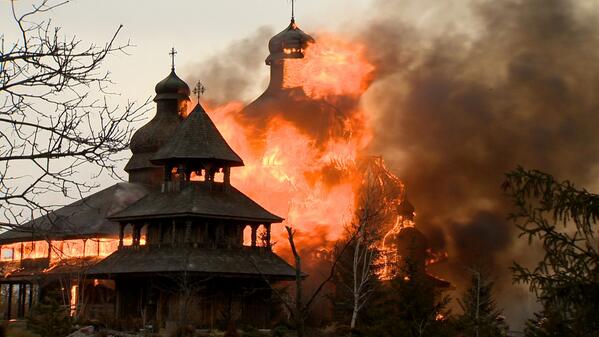
Friday, June 25, 2021

Married Priests in the Catholic Church: the Families Speak

I have periodically drawn not nearly enough attention to my new book, released in April, on Married Priests in the Catholic Church. So let us continue to look at its many riches due to the many individual contributors from around the world. 

In previous commentaries on the book, I have noted, inter alia, Anglican contributions from the Catholic ordinariates, and discussed some of the pernicious myths which surround married priests. 

Today, let us pause to look at the voices of clergy families, who are represented in the book by such as Irene Galadza, Nicholas Denysenko, Julian Hayda, Andrew Jarmus, and William Mills. Of these five, truth be told, three are themselves clerics: Denysenko is a deacon while Jarmus and Mills join him as priests in the Orthodox Church of America. But Nick is a grandson of a long-time Ukrainian Orthodox priest, as is Jarmus; and Mills is married into a clerical family. So they have experienced both roles not just in the book but in their lives. 

I had sought many more voices from wives and children, but again and again was turned down by people who felt a sometimes understandable and sometimes puzzling reticence to talk about their experiences. Still, the few who contributed wrote worthy and important chapters. 

Irene has been married to her husband, the mitred archpriest Roman Galadza, for nearly half a century. So her experience is very long-standing indeed, and includes the rather rare experience of building a new parish from the ground up not once but twice! (The original St. Elias, where I was married, burned to the ground in a heart-breaking fire in 2014). She has also taught school for many years and has a fine theological mind. So her chapter in the book is very much a theological meditation on the role of the presbytera in light of the Theotokos. To borrow a phrase from antique Christological debates, Irene's view is a very "high" one, though she does note some of the "lower" or more "mundane" concerns and challenges that come to the wife of a priest and mother of (in her case) large family. But I think Irene would be the first to say that the wife of a priest should have the same freedom as others in the parish to discover her vocation for herself in all of its uniqueness. 

Nick Denysenko (a dear friend, I should note, and author of many fine books you should read, all of them noted here where you will also find interviews with him over the years about those books) is the grandson of an immigrant Orthodox priest from Ukraine about whom he writes with great and moving care, showing what sometimes hard lessons he learned from his grandfather, who had seen some of the horrors of wartime Europe and Soviet communism. His grandfather's wisdom about how, and how not, to fast have remained with me for some time. I wish I had met him. He sounds like a real mensch. Nick grew up serving in his parish in Minnesota and watching the dynamics between him and the parish. 

Similarly, Andrew Jarmus, also of Ukrainian background, grew up watching his father, also a priest in the Ukrainian Orthodox Church (but this time in Canada). Jarmus moved to the US more than a decade ago now and has been the pastor here in Ft. Wayne at one of the OCA's larger parishes which I have attended on occasion for many years now. Jarmus's chapter is especially worthwhile for its pointing out some of the subtle psychodynamics that govern (and often distort) any relationship where one man is constantly addressed as "father" and treated as such. 

Julian Hayda's father was a Ukrainian Catholic priest in Chicago until he was killed in a bike accident in 2007, leaving his wife and young children. (Julian's grandparents befriended me about a decade ago through the Orientale Lumen conferences in Washington and afterwards we had a very lovely dinner over Christmas one year when I was visiting my in-laws just down the road in Connecticut. They were splendid people.) Julian writes with a different perspective on growing up in a rectory. He does not romanticize his experiences or gloss over the difficult dynamics of living in what he aptly calls the parish "fish bowl." He rightly raises such questions as why PKs (preacher's/priest's/pastor's) are often subjected to highly unfair and discriminatory attitudes and expectations when all they want is to be regular kids like everyone else in the parish. 

William Mills also writes with compelling honesty and charming humour about the challenges of parish ministry while married. His chapter is good, but his recent memoir even better, not least for it allows him to go into more depth and detail than he could in the chapter in my book, Married Priests in the Catholic Church.

Monday, June 21, 2021

Muslims and Greek Nationalism

I shall greatly look forward to reading this forthcoming book in September upon its release for it sounds like just the sort of work I take perhaps inordinate delight in. It confounds the fabulists who retail fantastical fiction about a past that never was in service of some dreary agenda in the present. This book reminds us once again that history is almost always written with nothing but crooked lines: it is, as I ceaselessly tell my students, messy, and a failure to appreciate that almost always dooms one to buffoonery instead of intelligent commentary and judicious analysis. 

In any event, forthcoming is Islam and Nationalism in Modern Greece, 1821-1940 by Stefanos Katsikas (Oxford UP, Sept. 2021), 321pp. About this book the publisher tells us this: 

Drawing from a wide range of archival and secondary Greek, Bulgarian, Ottoman, and Turkish sources, Islam and Nationalism in Modern Greece, 1821-1940 explores the way in which the Muslim populations of Greece were ruled by state authorities from the time of Greece's political emancipation from the Ottoman Empire in the 1820s until the country's entrance into the Second World War, in October 1940. The book examines how state rule influenced the development of the Muslim population's collective identity as a minority and affected Muslim relations with the Greek authorities and Orthodox Christians.

Greece was the first country in the Balkans to become an independent state and a pioneer in experimenting with minority issues. Greece's ruling framework and many state administrative measures and patterns would serve as templates in other Christian Orthodox Balkan states with Muslim minorities (Bulgaria, Romania, Serbia, Cyprus). Muslim religious officials were empowered with authority which they did not have in Ottoman times, and aspects of the Islamic law (Sharia) were incorporated into the state legal system to be used for Muslim family and property affairs. Religion remained a defining element in the political, social, and cultural life of the post-Ottoman Balkans; Stefanos Katsikas explores the role religious nationalism and public institutions have played in the development and preservation of religious and ethnic identity. Religion remains a key element of individual and collective identity but only as long as there are strong institutions and the political framework to support and maintain religious diversity.

Friday, June 18, 2021

Tatian's Diatessaron and Our Unspeakable Editorial Urges

Growing up in Canada more than 30 years ago now with an interest in literature and theology, I found reading Northrop Frye was de rigueur. I remember nothing of him now except his marvelous throw-away line about the Bible being a "sprawling, tactless book." Indeed it is.

Can you imagine, then, what temptations it poses if you are some aspiring scribe and editor in the late second century who thinks that at least the gospels could withstand a good going-over? Perhaps you are unusually bothered, or the people of your community confused, by what you and they see as myriad repetitions, lacunae, and inconsistencies? What harm might there be in picking up your Red Redacting Stylus and tidying up Matthew, Mark, Luke, and John (inter alia)? 

Many Christians today are recoiling in horror at these very questions, but are only able to do so with the benefit of living after the "canon question" was settled, and more recently after centuries of fights about scriptural inerrancy, infallibility, and other talismanic phrases pounded into their heads. Put all that aside for a time and spare a thought for Tatian the Assyrian and his efforts with the singularly synthesized gospel we know as the Diatessaron, newly studied in Tatian's Diatessaron: Composition, Redaction, Recension, and Reception by James W. Barker (Oxford UP, November 2021), 168pp.

About this book the publisher tells us this:

In the late-second century, Tatian the Assyrian constructed a new Gospel by intricately harmonizing Matthew, Mark, Luke, and John. Tatian's work became known as the Diatessaron, since it was derived 'out of the four' eventually canonical Gospels. Though it circulated widely for centuries, the Diatessaron disappeared in antiquity. Nevertheless, numerous ancient and medieval harmonies survive in various languages. Some texts are altogether independent of the Diatessaron, while others are definitely related. Yet even Tatian's known descendants differ in large and small ways, so attempts at reconstruction have proven confounding. In this book James W. Barker forges a new path in Diatessaron studies.

Covering the widest array of manuscript evidence to date, Tatian's Diatessaron reconstructs the compositional and editorial practices by which Tatian wrote his Gospel. By sorting every extant witnesses according to its narrative sequence, the macrostructure of Tatian's Gospel becomes clear. Despite many shared agreements, there remain significant divergences between eastern and western witnesses. This book argues that the eastern ones preserve Tatian's order, whereas the western texts descend from a fourth-century recension of the Diatessaron. Victor of Capua and his scribe used the recension to produce the Latin Codex Fuldensis in the sixth century. More controversially, Barker offers new evidence that late medieval texts such as the Middle Dutch Stuttgart harmony independently preserve traces of the western recension. This study uncovers the composition and reception history behind one of early Christianity's most elusive texts.

Wednesday, June 16, 2021

Christians Hijacking History

Although this new book is aimed primarily at right-wing evangelicals in the United States, Catholics and Orthodox have no grounds for feeling smug here. In an American context, many of them--otherwise accustomed to lazy condemnations of "ecumenism"--have been only too happy to join up with their evangelical brethren in the reactionary culture wars which are currently focused on "critical race theory" which they are happy to demonize and condemn without manifestly bothering to understand it. 

More broadly, Catholic-Orthodox historiographical wars have not only kept them divided, but have also manifested many of the same dynamics described in this new book noted below. To pick just two examples at random: Orthodox regularly retail a version of the Fourth Crusade that conveniently leaves out their own attacks on Catholics in the preceding years--to say nothing of Byzantine Orthodox violence against non-Chalcedonians; or they invent out of whole cloth risible ideas about, say, Ireland being Orthodox before "the Franks" got at them. Or consider the competing histories of the Union of Brest and the Pseudo-Sobor of Lviv of 1946: about both, please God, Daniel Galadza and I will ourselves have in print a new book late this year. 

Or consider Catholics and their absurd fights over "tradition" before and after, and in relation to, Vatican II, which I addressed in part here. I looked at some of these historiographical issues in more detail in this essay. In sum, and to amend a phrase of the great historian Robert Taft, of blessed memory and the Society of Jesus, when it comes to hijacking history, nobody has clean hands!

Such historiographical issues are in for some incisive treatment in Kathleen Wellman's forthcoming book, set for fall release: Hijacking History: How the Christian Right Teaches the Past and Why It Matters (Oxford UP, Sept. 2021), 384pp. About this book the publisher tells us this: 

The teaching of history has long been the subject of partisan warfare. Religion often plays a prominent role in these debates, as secular progressives and conservative Christians disagree over which historical figures are worthy of study, how (or whether) certain events should be portrayed, and ultimately how tax dollars should be spent. But what about students who are educated outside the public schools, either in religious schools or at home? How are they learning history, and what effect does that have on our democracy?

Hijacking History analyzes the high school world history textbooks produced by the three most influential publishers of Christian educational materials. In these books, the historian, informed by his faith, tells the allegedly unbiased story of God's actions as interpreted through the Bible. History becomes a weapon to judge and condemn civilizations that do not accept the true God or adopt “biblical” positions. In their treatment of the modern world, these texts identify ungodly ideas to be vanquished-evolution, humanism, biblical modernism, socialism, and climate science among them.

The judgments found in these textbooks, Kathleen Wellman shows, are rooted in the history of American evangelicals and fundamentalists and the battles they fought against the tide of secularism. In assuming that God sanctions fundamentalist positions on social, political, and economic issues, students are led to believe that that the ultimate mission of America is to succeed as a nation that advances evangelical Christianity and capitalism throughout the world. The Christianity presented in these textbooks is proselytizing, intolerant of other religions and non-evangelical Christians, and unquestionably anchored to the political right.

As Hijacking History argues, the ideas these textbooks promote have significant implications for contemporary debates about religion, politics, and education, and pose a direct challenge to the values of a pluralistic democracy.

Monday, June 14, 2021

Church Architecture in Mesopotamia

Is there such a thing as Syrian Orthodox church architecture? Is there such a thing for any Christian tradition? If so, are such traditions stable across time, or if they change what does that tell us? These are other questions are up for review in a forthcoming book that looks at ecclesial buildings in antique Mesopotamia: Church Architecture of Late Antique Northern Mesopotamia by Elif Keser Kayaalp (Oxford UP, November 2021), 304pp. + 96 b/w + 16 colour illustrations. About this book the publisher tells us this:

Church Architecture of Late Antique Northern Mesopotamia examines the church architecture of Northern Mesopotamia between the fourth and eighth centuries. Keser Kayaalp draws attention to several aspects ranging from the small scale to the large, focusing on settlements, the variety of plan types, the remarkable continuity of the classical tradition in the architectural decoration, the heterogeneity of the building techniques, patrons, imperial motivations, and stories that claim and make spaces. Employing archaeological and epigraphical material and hagiographical and historical sources, a holistic picture of the church architecture of this frontier region emerges, encompassing the cities of Nisibis (Nusaybin), Edessa (Şanlıurfa), Amida (Diyarbakır), Anastasiopolis (Dara/ Oğuz), Martyropolis (Silvan), Constantia (Viranşehir), and the rural Ṭur'Abdin region. The period covered spans the last centuries of Byzantine and the first century and a half of Arab rule, when the region was, on the one hand, a stage of war and riven by religious controversies, and on the other, a dynamic space of cultural interaction. Keser Kayaalp provides a regional contribution to the study of the transformation that the Byzantine civilisation underwent in the late antique period, and assesses the continuities and changes after the Arab conquest in pursuit of discovering whether one can talk about a church architecture in this period that is specific to the Syrian Orthodox.

Friday, June 11, 2021

Dreams as the Royal Road to Religious Enlightenment?

When he released his landmark book The Interpretation of Dreams at the dawn of the last century, Sigmund Freud was both being and not being original and revolutionary. Truth be told he was merely calling to mind again the fascination with dreams that people have had since the beginning of time. 

Muslims and Christians are no different in this regard. I have noted books on dreams in religious traditions on here over the years. Now we have another. Released in March of this year is a book by Bronwen Neil, Dreams and Divination from Byzantium to Baghdad, 400-1000 CE (Oxford UP, 2021), 256pp. About this book the publisher tells us the following:

Why did dreams matter to Jews, Byzantine Christians, and Muslims in the first millennium? Dreams and Divination from Byzantium to Baghdad, 400 - 1000 CE shows how the ability to interpret dreams universally attracted power and influence in the first millennium. In a time when prophetic dreams were viewed as God's intervention in human history, male and female prophets wielded was unparalleled power in imperial courts, military camps, and religious gatherings. The three faiths drew on the ancient Near Eastern tradition of dream key manuals, which offer an insight into the hopes and fears of ordinary people. They melded pagan dream divination with their own scriptural traditions to produce a novel and rich culture of dream interpretation.

Prophetic dreams enabled communities to understand their past and present circumstances as divinely ordained and helped to bolster the spiritual authority of dreamers and those who had the gift of interpreting their dreams. Bronwen Neil takes a gendered approach to the analysis of the common culture of dream interpretation across late antique Jewish, Byzantine, and Islamic sources to 1000 CE, in order to expose the ways in which dreams offered women a unique opportunity to exercise influence. The epilogue to the volume reveals why dreams still matter today to many men and women of the monotheist traditions.

Wednesday, June 9, 2021

Copts in Modernity

Remember those happy days when we could travel to international conferences? Remember how long the flight to Australia was? I do, but the older I get the less I like being shoe-horned onto an airplane with other hacking and sneezing people for any length of time, least of all for a long overseas flight. 

Nevertheless, a good conference at the other end is worth it, and this Melbourne conference from 2018 sounds like it had some of the leading Coptologists at it, whose papers are now gathered together in Copts in Modernity:Proceedings of the 5th International Symposium of Coptic Studies, Melbourne, 13-16 July 2018, eds., Elizabeth Agaiby, Mark N. Swanson, and Nelly van Doorn-Harder (Brill, 2021), 456pp. 

Part of their long-running series, Texts and Studies in Eastern Christianity, this volume from Brill, they tell us, is 

a collection of essays – many of which contain unpublished archival material – showcasing historical and contemporary aspects pertaining to the Coptic Orthodox Church. The volume covers three main themes: The first theme, History, gathers studies that look back to the nineteenth and late eighteenth centuries to understand the realities of the twentieth and twenty-first; the second theme, Education, Leadership and Service, explores the role of religious education in the revival of the Church and how Coptic religious principles influenced the ideas of leadership and service that resulted in the Church’s spiritual revival; and the third theme, Identity and Material Culture, draws upon a broad range of material and visual culture to exemplify the role they play in creating and recreating identities. This volume brings together the work of senior and early career scholars from Australia, Europe, Egypt, and the United States.

Monday, June 7, 2021

The Oxford Handbook of Naughty Studies

A decade ago now I was delighted to be asked to contribute to a book that has just been published. I worked dutifully and submitted my chapter by the early 2012 deadline as agreed. And then the wait began.

As a long-time editor myself, I am aware how much we editors are at the mercy of contributors. I have, through long and sometimes unpleasant experience editing many international volumes over the last 19 years developed a rough rule:

c. 75% of contributors will both agree and deliver their materials on time;

c. 10% of contributors will agree and then, with maximal rudeness damning them to a long purgatory, never be heard from again;

c. 15% of contributors will agree, beg for an extension, promise to have it in by the new deadline; beg again; promise again; go silent for a while; and then finally at the very last possible minute after increasingly stern remonstrations from a sorely vexed editor, submit their contribution with excuses of varying, and generally very low, plausibility. It is these latter who can hold up your entire book for years, as I know only too well.

This, I know, from the one remaining editor, is precisely what happened to this just-released Handbook which I received in the mail last week. In fact, so much longer than expected did this book take to finish that the senior of the two original editors has now been dead for over a year. 

This Handbook focuses on a topic at which it has been far too easy to take cheap and ignorant pot-shots for decades now. Indeed one of the words in the title, The Oxford Handbook of Ecumenical Studies, remains a very naughty word that arouses the worst sorts of disordered desires and logismoi in all sorts of unpleasant people. I learned this in 1991 when I went to Australia for the seventh general assembly of the World Council of Churches. There I saw up close that crazy American evangelicals and crazy post-Soviet Orthodox had unwittingly formed their own bilateral partnership as unhappy allies in this new and nasty movement that denounced ecumenism as a "pan-heresy," as the work of the "anti-Christ" that would lead us all to a "one world church" under the domination of the UN or something. It was then, and remains today, utterly tiresome nonsense. 

There is nothing optional about being, as I unapologetically am, a uniate for that is the mandate of the Lord to seek and sustain unity among His followers. Anyone who refuses this mandate, who promotes and exults in division, is demonic. 

About this new collection the publisher tells us this:

The Oxford Handbook of Ecumenical Studies is an unparalleled compendium of ecumenical history, information and reflection. With essay contributions by nearly fifty experts in their various fields, and edited by two leading international scholars, the Handbook is a major resource for all who are involved or interested in ecumenical work for reconciliation between Christians and for the unity of the Church. 

Its six main sections consider, respectively, the different phases of the history of the ecumenical movement from the mid-nineteenth century to the present; the ways in which leading Christian churches and traditions, Orthodox, Anglican, Methodist, Catholic, Lutheran, Reformed, Baptist, and Pentecostal, have engaged with and contributed to the movement; the achievements of ecumenical dialogue in key areas of Christian doctrine, such as Christology and ecclesiology, baptism, Eucharist and ministry, morals and mission, and the issues that remain outstanding; various ecumenical agencies and instruments, such as covenants and dialogues, the World Council of Churches, the Pontifical Council for Promoting Christian Unity and the Global Christian Forum; the progress and difficulties of ecumenism in different countries, areas and continents of the world, the UK and the USA, Africa, Asia, South America, Europe, and the Middle East, ; and finally two all-important questions are considered by scholars from various traditions: what would Christian unity look like and what is the best method for seeking it? This is a remarkably comprehensive account and assessment of one of the most outstanding features of Christian history, namely the modern ecumenical movement.

In this volume, I am alongside distinguished Orthodox scholars whom I am delighted also to be able to call friends: John Jillions has a chapter (and you really should read his recent book about which I interviewed him here) and so does Radu Bordeianu (whom I interviewed here about his superlative book on ecclesiology, which I have used in ecclesiology courses for nearly a decade now); and the new (to me) Orthodox scholar Tamara Grdzelidze, who has been very prolific in the field of ecumenical studies.

Friday, June 4, 2021

Handbook of Christian Ethics

Starting a good decade or more now all the major academic publishers--led by Oxford, but followed by Cambridge, Routledge, T&T Clark, and others--got into "handbooks of" and "companions to" in a huge way. I have myself contributed to a few of them from Oxford.

Another one was released this year: The T&T Clark Handbook of Christian Ethics, ed. Tobias Winright (2021), 512pp. 

All the chapters range widely and look fascinating to Christians of every tradition. There are also at least two explicitly Eastern Christian chapters featured. About this collection the publisher tells us this:

The T&T Clark Handbook of Christian Ethics provides an ecumenical introduction to Christian ethics, its sources, methods, and applications. With contributions by theological ethicists known for their excellence in scholarship and teaching, the essays in this volume offer fresh purchase on, and an agenda for, the discipline of Christian ethics in the 21st century.

The essays are organized in three sections, following an introduction that presents the four-font approach and elucidates why it is critically employed through these subsequent sections. The first section explores the sources of Christian ethics, including each of the four fonts: scripture, tradition, experience, and reason.

The second section examines fundamental or basic elements of Christian ethics and covers different methods, approaches, and voices in doing Christian ethics, such as natural law, virtue ethics, conscience, responsibility, narrative, worship, and engagement with other religions.

The third section addresses current moral issues in politics, medicine, economics, ecology, criminal justice and other related spheres from the perspective of Christian ethics, including war, genetics, neuroethics, end-of-life decisions, marriage, family, work, sexuality, nonhuman animals, migration, aging, policing, incarceration, capital punishment, and more.

Wednesday, June 2, 2021

Scripture and Emotion in Maximus the Confessor

It has been very interesting to me over even the short course of this blog to watch the steady increase of attention paid to Maximus the Confessor, whom I studied for a semester in a doctoral course. You can find on this blog many other books devoted to him I have noted, reviewed, or whose authors I have interviewed. 

In January of this year we had another: Andrew J. Summerson's Divine Scripture and Human Emotion in Maximus the Confessor: Exegesis of the Human Heart (Brill, 2021), 160pp. 

About this book the publisher tells us this:

In Exegesis of the Human Heart Andrew J. Summerson explores how Maximus the Confessor uses biblical interpretation to develop an account of human passibility, from fallen human passions to perfected human emotions among the divinized. 

This book features Maximus’s role as a creative interpreter of tradition. Maximus inherits Christian thinking on emotion, which revises Stoic and Platonic thought according to biblical categories. Through a close reading of Quaestiones ad Thalassium and a wide selection of Maximus’s works, Andrew J. Summerson shows that Maximus understands human emotion in an exegetical milieu and that Maximus places human emotion at the heart of his soteriology. Christ redeems passibility so the divinized can enjoy perfected emotional activity in the ever-moving repose of eternal life.

Thursday, May 27, 2021

An Omnium Gatherum of Articles and Books on Synods and Synodality

Disarmingly published last week as a mere "note," this text from Rome portends major shifts in the ecclesiology of the Latin Church and by extension the entire Catholic communion. 

It does not arise out of nowhere and nothing, however. In his 2015 address, the bishop of Rome laid out a vision of synodality for the Latin Church that is striking and surprising.....only to those who haven't been paying attention. For those who have attended not only to Francis but also to (admittedly slow-moving) trajectories in Catholic ecclesiology for a half-century now, this vision is not really a surprise. Perhaps the only surprise is that it is this pope, rather than his immediate predecessor who wrote so much about ecclesial reforms, who is enacting a vision of synodality now.

I have been writing about synods, synodal structures, and "synodality" for well over a decade now in the Church of the West as of the East. My first contribution was in my first book Orthodoxy and the Roman Papacy: Ut Unum Sint and the Prospects of East-West Unity.

In the book and elsewhere I have tried to stress, especially to Catholics worried about the dangers of synodality, that there is no one model all must follow. If we look to the East, we find a diversity of structures arranged according to need, context, and history. Moreover, it is very important to note that a properly functioning synodal structure can only come about where both synod and primate are functioning together. (The great Orthodox theologian John Zizioulas is crystal clear on this point.) A strong primate (whether diocesan bishop, patriarch, pope, or catholicos) is needed for synods at every level. 

In other words, a synod does not exist at the expense of a primate, but only in concert with him, each acting as a check on the other. In this light, there is no reason to believe that a more robust synodality in the West would in itself weaken either the papacy or more generally the Catholic Church. Her problems are already significant and longstanding, and they have come not in the presence of robust synodality but in its absence; they have come in a time of papal centralization and maximalization.

That book has been followed up by more articles than I can count for on the topic of synods published in such places the Catholic Herald in London; Our Sunday Visitor, based here in Indiana; Catholic World Report on many occasions, most notably here; for The Catholic Thing; and for other periodicals as well. 

My most recent contribution, published in the Herald this week, is here. I told the Herald's splendid editor Christopher Altieri I had an indecent amount of fun writing that piece. Is it satirical? Is it serious? Is it both? I cannot decide; perhaps you won't be able to either. In any event, what I was trying to suggest was that if we are to have synods, then let us have them to an ultramontane degree: let us go beyond the mountains north of Rome to find healthy models of synods where they still exist--in places like Armenia, for example. 

My unrequited love affair with the Armenian Apostolic Church continued in my 2019 book Everything Hidden Shall Be Revealed: Ridding the Church of Abuses of Sex and Power. There I went into even greater detail about local synods--at the parish, diocesan, and regional levels. If Catholics are to have synods, they must not be the chaotic talking shops in Rome since 1965 misleadingly called "synods." They must be organs of governance, with real powers, at every level of the Church. 

Others have begun to cite my work, most notably the cardinal-archbishop of Newark, in a piece just published here in Commonweal. In addition, Fr Bob Wild of Madonna House (whom I have known for some time and count a friend) has recently discussed some of my work on synodality here.

I mention all this not to brag or to feel smugly satisfied that at long last Very Important People are starting to discover my great work. (Truth be told, I have an absolute horror of the idea of being anything close to "famous" or a "celebrity" or even moderately well-known. I am a middle-ranking scribe whose "schizoid" tendencies--so well captured by Nancy McWilliams' invaluable essay--thrive best in one of the obscurer provinces of the American imperium. Leave me alone in my classroom and consulting room with students and patients respectively, and I might be useful.) Instead, I mention all this only as a service to those who still feel wildly unsure about what synods and synodality are and do. I have tried to allay those anxieties by showing the concrete tasks that real synods, proper synods, properly do. 

Will we get such synods? It is up to us to work for them and not be fobbed off with pseudo-synods. 

Monday, May 24, 2021

Anarchy and the Kingdom of God

I'm greatly looking forward to reading this new book upon its release next month. When I started reading French existentialists in high-school, and then later figures like Jacques Ellul, who has written intelligently about Christian "anarchy," I started to find that the reactionary, order-obsessed nature of some parts of Christianity seemed to deliberately obscure and deny the radical, if not "anarchic," nature of the freedom promised by and in Christ. I shall see how these and other arguments unfold next month upon the release of Anarchy and the Kingdom of God: From Eschatology to Orthodox Political Theology and Back by  Davor Džalto (Fordham University Press, June 2021), 320pp. 

One of the "blurbers" for this book notes:

Perhaps the best book on Christian anarchism since Jacques Ellul, Anarchy and the Kingdom of God is a timely and valuable addition to resurgent interest in political theology across various disciplines. Learned and well-written, it brings neglected sources from the Orthodox Christian tradition into this current renaissance and makes clear their relevance for contemporary economic and political debates in contexts ranging from the United States to post-communist Europe and Russia. -- Eric Gregory, Princeton University

And the publisher, in turn, tells us this about the book: 

Anarchy and the Kingdom of God reclaims the concept of “anarchism” both as a political philosophy and a way of thinking of the sociopolitical sphere from a theological perspective. Through a genuinely theological approach to the issues of power, coercion, and oppression, Davor Džalto advances human freedom—one of the most prominent forces in human history—as a foundational theological principle in Christianity. That principle enables a fresh reexamination of the problems of democracy and justice in the age of global (neoliberal) capitalism.

Friday, May 21, 2021

Jewish and Palestinian Conflict in the Sunset of the Ottoman Empire

Knowing almost nothing about the latest Palestinian-Israeli conflict, I will say nothing beyond noting, as I have in the past on here, that such conflicts did not just arise in 2021 because of local circumstances, but have long and often complicated roots. A new book reminds us of this: Jews and Palestinians in the Late Ottoman Era, 1908-1914: Claiming the Homeland by Louis Fishman (Edinburgh University Press, 2021, 234pp.). 

About this book the publisher tells us this: 

Uncovering a history buried by different nationalist narratives (Jewish, Israeli, Arab and Palestinian) this book looks at how the late Ottoman era set the stage for the on-going Palestinian-Israeli conflict. It presents an innovative analysis of the struggle in its first years, when Palestine was still an integral part of the Ottoman Empire. And it argues that in the late Ottoman era, Jews and Palestinians were already locked in conflict: the new freedoms introduced by the Young Turk Constitutional Revolution exacerbated divisions (rather than serving as a unifying factor). Offering an integrative approach, it considers both communities, together and separately, in order to provide a more sophisticated narrative of how the conflict unfolded in its first years.

Wednesday, May 19, 2021

Muslims Fascinated with Christian Monks

As the late, great historian of Byzantine Christianity, Robert Taft of the Society of Jesus used to say, when it comes to the development of liturgical traditions at least, we're all "mongrels." By that he meant that anybody tempted (and such people are not hard to find on the Web) to propagate founding narratives of purity, in which the Latin or Syriac or Armenian or Greek or Russian traditions (inter alia) were somehow untouched by other traditions, is talking nonsense. That lesson surely applies, mutatis mutandis, to the development of monastic traditions, and indeed to the emerging tradition called Islam. In other words, people first encountered, then were fascinated with, and finally in some fashion often borrowed from each other even if in some eyes doing so was verboten (though the condemnations of such borrowings are almost always very post hoc). 

Anyway, here is a new book that shows early Christian monastic life was not just hugely fascinating to other Christians, but to Muslims as well: Christian Monastic Life in Early Islam (Edinburgh UP, April 2021, 288pp.) by Bradley Bowman.

About this new book the publisher tells us this:

During the rise of Islam, Muslim fascination with Christian monastic life was articulated through a fluid, piety-centred movement. Bradley Bowman explores this confessional synthesis between like-minded religious groups in the medieval Near East. He argues that this potential ecumenism would have been based upon the sharing of core tenets concerning piety and righteous behaviour. Such fundamental attributes, long associated with monasticism in the East, likely served as a mutually inclusive common ground for Muslim and Christian communities of the period. This manifested itself in Muslim appreciation, interest and – at times – participation in Christian monastic life.

Monday, May 17, 2021

Climate Change and Christianity

Phillip Jenkins is a scholar to whom one should always pay attention. His range is wide. To cite just one example, his book on the Great War as a "holy war" is revealing and disturbing, especially (one hopes) for all the Fatima fetishists.

He has a new book out: Climate, Catastrophe, and Faith: How Changes in Climate Drive Religious Upheaval (Oxford UP, 2021), 272pp. 

About this new book the publisher tells us this:

One of the world's leading scholars of religious trends shows how climate change has driven dramatic religious upheavals.

Long before the current era of man-made climate change, the world has suffered repeated, severe climate-driven shocks. These shocks have resulted in famine, disease, violence, social upheaval, and mass migration. But these shocks were also religious events. Dramatic shifts in climate have often been understood in religious terms by the people who experienced them. They were described in the language of apocalypse, millennium, and Judgment. Often, too, the eras in which these shocks occurred have been marked by far-reaching changes in the nature of religion and spirituality. Those changes have varied widely--from growing religious fervor and commitment; to the stirring of mystical and apocalyptic expectations; to waves of religious scapegoating and persecution; or the spawning of new religious movements and revivals. In many cases, such responses have had lasting impacts, fundamentally reshaping particular religious traditions.

In Climate, Catastrophe, and Faith historian Philip Jenkins draws out the complex relationship between religion and climate change. He asserts that the religious movements and ideas that emerge from climate shocks often last for many decades, and even become a familiar part of the religious landscape, even though their origins in particular moments of crisis may be increasingly consigned to remote memory. By stirring conflicts and provoking persecutions that defined themselves in religious terms, changes in climate have redrawn the world's religious maps, and created the global concentrations of believers as we know them today.

This bold new argument will change the way we think about the history of religion, regardless of tradition. And it will demonstrate how our growing climate crisis will likely have a comparable religious impact across the Global South.

Friday, May 14, 2021

Stupid Ideas about Married Clergy Part MMCCXVII

If asked to rank the most vexatious nonsense one hears regularly talked about married clergy, I would have no hesitation in putting in top place the old self-serving canard that a married man is somehow "divided" in his loyalties and affections, in his duties of service, whereas a celibate man knows no such divisions. This we must call--with all due delicacy and ecumenical sensitivity towards those in the West-Roman patriarchate--the ecclesiology and sacramental theology of biblical illiterates. 

Whenever I hear this "divided" claim, I always ask the following question which always remains unanswered by those whom I interrogate: "How is a married man 'divided' in serving the domestic Church, which is both his family and a fundamental unit of the entire Church? In serving his domestic Church, he is ipso facto serving the body of Christ, is he not?"

It is the shortest essay in my new book, Married Priests in the Catholic Church, "Reflections on Two Vocations in Two Lungs of the One Church," but David Meinzen's essay is one of the most singular and important ever written on this topic, for he demolishes the idea that a married priest, to avoid being "divided," must always put the parish first. Meinzen shows--drawing on his long experience as son of a married Lutheran pastor (Missouri Synod), and then a married Orthodox, and finally and currently a married Eastern Catholic priest--that any man in holy orders who neglects his family to serve his parish is unworthy of both vocations, and does damage to the one he is serving precisely insofar as he is neglecting the other. Put differently, to neglect his family is to serve the broader church badly for there is no real division between the domestic and wider Church: they are all the one body of Christ, and following impeccable Pauline logic, when one part of the body suffers, every part and everybody suffers. The logic Meinzen uses is very similar to what I used more recently in talking about the Christian case for self-care. 

Meinzen goes beyond this to make a positive case: a strong clerical family by that very fact builds up the entire body of Christ, making it stronger as well. In other words, a man living up to his sacramental vocation to marriage, and working to strengthen and protect that marriage and family, is going to be in a stronger position to work to strengthen and protect his equally sacramental vocation to priesthood. Any idea of competition between the two is the grossest of theological mistakes which must be abandoned. 

Wednesday, May 12, 2021

The State of (Catholic) Higher Education

Every few years we are subjected to a slate of books about the state of higher education, including Christian higher education, in this country. 

This year we have two about to be released, both from (appropriately enough) the leading and most prestigious academic publisher in the world, Oxford University Press: The Soul of the American University Revisited: From Protestant to Postsecular, 2nd. ed. by George M. Marsden (OUP, 2021), 488pp. About this well-known book, the publisher tells us this:

The Soul of the American University is a classic and much discussed account of the changing roles of Christianity in shaping American higher education, presented here in a newly revised edition to offer insights for a modern era. As late as the World War II era, it was not unusual even for state schools to offer chapel services or for leading universities to refer to themselves as “Christian” institutions. From the 1630s through the 1950s, when Protestantism provided an informal religious establishment, colleges were expected to offer religious and moral guidance. Following reactions in the 1960s against the WASP establishment and concerns for diversity, this specifically religious heritage quickly disappeared and various secular viewpoints predominated. In this updated edition of a landmark volume, George Marsden explores the history of the changing roles of Protestantism in relation to other cultural and intellectual factors shaping American higher education.

Far from a lament for a lost golden age, Marsden offers a penetrating analysis of the changing ways in which Protestantism intersected with collegiate life, intellectual inquiry, and broader cultural developments. He tells the stories of many of the nation's pace-setting universities at defining moments in their histories. By the late nineteenth-century when modern universities emerged, debates over Darwinism and higher criticism of the Bible were reshaping conceptions of Protestantism; in the twentieth century important concerns regarding diversity and inclusion were leading toward ever-broader conceptions of Christianity; then followed attacks on the traditional WASP establishment which brought dramatic disestablishment of earlier religious privilege. By the late twentieth century, exclusive secular viewpoints had become the gold standard in higher education, while our current era is arguably “post-secular”. The Soul of the American University Revisited deftly examines American higher education as it exists in the twenty-first century.

The second book, set for release next month, is James L. Heft, The Future of Catholic Higher Education (OUP, June 2021), 296pp.

About this book the publisher tells us this:

The Catholic Church has gone through more change in the last sixty years than in the previous six hundred. These changes have caused a significant shift in the future outlook of Catholic higher education as the United States has developed a culture that has grown less receptive to religious traditions and practices. Drawing upon his extensive experience, James Heft lays out the current state of Catholic higher education and what needs to be done to ensure that Catholicism isn't fazed out of the educational system. Heft analyzes the foundational intellectual principles of Catholic Higher Education, and both the strengths and weaknesses of the present day system in order to look at possibilities for its future.

Drawing upon both history and current cultural trends, The Future of Catholic Higher Education critiques the secularization thesis, explores the role of bishops, theologians, dissent, the sensus fidelium, the role of women and freedom of conscience, the relationship between theology and religious studies, hiring practices and curricular designs. Using the image of the "open circle," Heft advances a vision of the catholic university that is neither a "closed circle" of only Catholics nor a "market place of ideas with no distinctive mission." His "open circle" is one that fosters the Catholic intellectual tradition by including scholars of many religions, rooting Catholic social thought in Catholic doctrine, defending academic freedom and the mandatum.

Monday, May 10, 2021

People of the Book

Much romanticized nonsense is talked by both Christians and Muslims about our individual and shared pasts. Too much history traffics in narratives of either "chosen trauma" or "chosen glory," to use the invaluable categories of Vamik Volkan. Too much of the history of Muslim-Christian relations becomes anachronistic and often tendentious as well. The writing of such histories is a case-study in itself of historiographical hazards to be avoided.

We shall have to wait to see if a book, set for September release, avoids these pitfalls or not: People of the Book: Prophet Muhammad's Encounters with Christians by Craig Considine (Hurst, August 2021), 232pp. About this book the publisher tells us this:

The Christians that lived around the Arabian Peninsula during Muhammad's lifetime are shrouded in mystery. Some of the stories of the Prophet's interactions with them are based on legends and myths, while others are more authentic and plausible. But who exactly were these Christians? Why did Muhammad interact with them as he reportedly did? And what lessons can today's Christians and Muslims learn from these encounters?

Scholar Craig Considine, one of the most powerful global voices speaking in admiration of the prophet of Islam, provides answers to these questions. Through a careful study of works by historians and theologians, he highlights an idea central to Muhammad's vision: an inclusive Ummah, or Muslim nation, rooted in citizenship rights, interfaith dialogue, and freedom of conscience, religion and speech. In this unprecedented sociological analysis of one of history's most influential human beings, Considine offers groundbreaking insight that could redefine Christian and Muslim relations.

Friday, May 7, 2021

Married Priests in the Catholic Church: the Need for and Gifts of Parish Culture

Continuing my series of reflections on, and drawn from, my newest book Married Priests in the Catholic Church, let me note with special gratitude my Anglican and Orthodox contributors (a few of whom are discussed here), whose long experience of a married priesthood informs many substantial and wholly welcome notes of realism into discussions among Catholics that too often traffic in abstraction and fantasy. 

The idea among some Latins is that a papal snap of the fingers would allow a married priest to be dropped from on high into a parish on some random Sunday: Fr Celibate is here this week; next week Fr Fecund with his lovely and bejeweled wife and 12 kids have all happily taken up residence in the rectory. Nothing else need change and life can go on as before. 

A check on this facile view is delivered very graciously from England in the elegant chapter in my book from the inimitable Fr John Hunwicke (whose ecclesial politics, as it were, differ very sharply from my own, not least when it comes to assessment of the current pontificate). After a very long life serving in the Church of England, he entered the Catholic Church via the ordinariate in England set up by Pope Benedict XVI in 2009. Hunwicke reflects on the fact that a married presbyterate in the Church of England has an entire parish culture that differs considerably from Catholic culture, and that the absence of this may make it much more difficult for married priests in the Catholic church to thrive. (This, he shows, was already a difference well understood by Cardinal Newman.) He withholds judgment, saying it is still early days, and this is true. But his essay offers sober cautions to and checks of our fevered fantasies and is for that reason very welcome. 

The idea that there is a unique culture to married clergy is also found among Eastern Catholics. Fr Thomas Loya (with whom, again, I differ sharply in many areas concerning both "secular" and ecclesial politics) writes a moving chapter on his experience growing up in a long-standing clerical family among Ruthenian Byzantine Catholics, and watching how having a wife and children shapes not just a man's priestly ministry, but the entire parish, and how the absence of such a family means, e.g., that paid staff must often be brought in to do what in some cases wives and children did for free.

Other authors from Ukrainian Orthodox and Ukrainian Catholic backgrounds reflect on parish culture and its sometimes difficult and painful challenges. We will hear a bit from them next week. 

Wednesday, May 5, 2021

Chrysostom and the Charismatics

My inner ecumenist's super-ego occasionally does battle with my triumphalist id when it comes to evangelical and charismatic Christians, especially in their on-going "discovery" of, e.g., patristic sources, iconography, medieval thought, and other matters. It is hard not to consider such attempts in a condescending manner sometimes, and such people as Johnny-Come-Lately types; harder still not to be horrified by such repugnant concepts as the "prosperity gospel." But resist such ungenerous thoughts and impulses, if they afflict you, to give this interesting book a hearing: John Chrysostom and African Charismatic Theology in Conversation: Salvation, Deliverance, and the Prosperity Gospel by Samantha L. Miller (Fortress Academic Press, 2021), 170pp. 

About this book the publisher tells us this:

This book puts John Chrysostom in conversation with deliverance ministries and the prosperity gospel in modern African charismatic Christianity. Samantha Miller argues that Chrysostom had a cosmology not unlike that present in the charismatic Christianity of the global south, where the world is populated by spirits able to affect the material world. Additionally, Chrysostom had plenty to say about suffering, demons, and prosperity. Through this conversation, issues of personal moral responsibility and salvation rise to the surface, and it is through these issues that modern Western and African Christians—theologians, pastors, missionaries, and laity—can perhaps have a conversation that gets past the question of a spirit-inhabited world and talk together about the saving work of Christ for the benefit of all the church.

By this same author, and on a similar topic, is another book published last year:  Chrysostom's Devil: Demons, the Will, and Virtue in Patristic Soteriology (IVP Academic, 2020), 216pp. About this book the publisher tells us:

For many Christians today, the notion that demons should play a role in our faith―or that they even exist―may seem dubious. But that was certainly not the case for John Chrysostom, the "golden-tongued" early church preacher and theologian who became the bishop of Constantinople near the end of the fourth century. Indeed, references to demons and the devil permeate his rhetoric. But to what end? In this volume in IVP Academic's New Explorations in Theology series, Samantha Miller examines Chrysostom's theology and world, both of which were imbued with discussions about demons. For Chrysostom, she contends, such references were employed in order to encourage Christians to be virtuous, to prepare them for the struggle of the Christian life, and ultimately to enable them to exercise their will as they worked out their salvation. Understanding the role of demons in Chrysostom's soteriology gives us insight into what it means to be human and what it means to follow Christ in a world fraught with temptation and danger. In that regard, Chrysostom's golden words continue to demonstrate relevance to Christians in today's world.

Related Posts Plugin for WordPress, Blogger...