"Let books be your dining table, / And you shall be full of delights. / Let them be your
mattress,/
And you shall sleep restful nights" (St. Ephraim the Syrian).


Showing posts with label traumatic memory. Show all posts

Thursday, April 16, 2020

Memoirs and History of the Armenian Genocide

For a lecture I was to give in Europe in June (now postponed until next year for obvious reasons), I was asked to focus on the role of traumatic memory in the life of Eastern Christians, individually and ecclesially. As I had a chance to explore some of the clinical research, it fast became apparent, based on dozens of studies with diverse populations around the world, that trans-generational transmission of trauma is real, often affecting at least the third generation (ie., grandchildren of the original victims).

In this light, it is striking to read that the scholar Roderic Ai Camp, the grandson of an Armenian genocide survivor named John Minassian, has written a foreword to his grandfather's Surviving the Forgotten Genocide: An Armenian Memoir (Rowman and Littlefield, 2020), 288pp.

This book, published at the end of March is, the publisher tells us,
A rare and poignant testimony of a survivor of the Armenian genocide.
The twentieth century was an era of genocide, which started with the Turkish destruction of more than one million Armenian men, women, and children—a modern process of total, violent erasure that began in 1895 and exploded under the cover of the First World War. John Minassian lived through this as a young man, witnessing the murder of his kin, concealing his identity as an orphan and laborer in Syria, and eventually immigrating to the United States to start his life anew. A rare testimony of a survivor of the Armenian genocide, one of just a handful of accounts in English, Minassian’s memoir is breathtaking in its vivid portraits of Armenian life and culture and poignant in its sensitive recollections of the many people who harmed and helped him. As well as a searing testimony, his memoir documents the wartime policies and behavior of Ottoman officials and their collaborators; the roles played by foreign armies and American missionaries; and the ultimate collapse of the empire. The author’s journey, and his powerful story of perseverance, despair, and survival, will resonate with readers today.

Last month also saw the publication of another book on this topic: Marc Baer, Sultanic Saviors and Tolerant Turks: Writing Ottoman Jewish History, Denying the Armenian Genocide (Indiana University Press, 2020), 360pp.

About this new study the publisher tells us this:
What compels Jews in the Ottoman Empire, Turkey, and abroad to promote a positive image of Ottomans and Turks while they deny the Armenian genocide and the existence of antisemitism in Turkey? Based on historical narrative, the Jews expelled from Spain in 1492 were embraced by the Ottoman Empire and then, later, protected from the Nazis during WWII. If we believe that Turks and Jews have lived in harmony for so long, then how can we believe that the Turks could have committed genocide against the Armenians? Marc David Baer confronts these convictions and circumstances to reflect on what moral responsibility the descendants of the victims of one genocide have to the descendants of victims of another. Baer delves into the history of Muslim-Jewish relations in the Ottoman Empire and Turkey to find the origin of these many tangled truths. He aims to bring about reconciliation between Jews, Muslims, and Christians, not only to face inconvenient historical facts but to confront it and come to terms. By looking at the complexities of interreligious relations, Holocaust denial, genocide and ethnic cleansing, and confronting some long-standing historical stereotypes, Baer sets out to tell a new history that goes against Turkish antisemitism and admits to the Armenian genocide.

Friday, January 17, 2020

Trauma and Grace

Westminster/John Knox Press recently sent me the second edition of Serene Jones' book Trauma and Grace: Theology in a Ruptured World (2019), 227pp. About this book the publisher tells us this:
This substantive collection from noted scholar Serene Jones explores recent work in the field of trauma studies. Central to its overall theme is an investigation of how individual and collective violence affect one’s capacity to remember, to act, and to love; how violence can challenge theological understandings of grace; and even how the traumatic experience of Jesus’ death is remembered. Jones focuses on the long-term effects of collective violence on abuse survivors, war veterans, and marginalized populations and the discrete ways in which grace and redemption may be exhibited in each context. At the heart of each essay are two deeply interrelated faith claims that are central to Jones’s understanding of Christian theology: (1) We live in a world profoundly broken by violence, and (2) God loves this world and desires that suffering be met by words of hope, love, and grace. This timely and relevant cutting-edge book is the first trauma study to directly take into account theological issues.
I have read it with great interest as part of a research project on trauma and Eastern Christians, especially in Russia and Ukraine. While a good deal of it is personal, and much of the rest of it rather particular to American politics of the last decade or so (not least racism and police brutality against African-Americans), there is enough material in here that all Christians of whatever tradition could profitably read it.

She rightly begins by noting that "the Bible is one long series of traumatic events and accounts of how people struggle to speak about God in the face of them" (xi). She also has an interesting analysis of so-called doubting Thomas, arguing that what if he was not engaged in some impertinence but was in fact manifesting "dissociation," a key hallmark of trauma, which led to his disbelief?

Additionally her take on the story of the encounter on the road to Emmaus, which I first proposed last spring before coming across Jones' work, matches my own: the inability to "see" Jesus here is very much the result of arguably not just post-traumatic stress but an acute stress disorder by people in the immediate throes of post-crucifixion trauma and overwhelming grief.

Jones ends on what I might call a Balthasarian note, focusing on the importance of recovering the capacity for what he called a "metaphysics of wonder." This, as Jones rightly notes, does not obliterate trauma but is both important in itself and a sign of surviving and even coming again to thrive on the far side of trauma.

Friday, January 10, 2020

Trauma, Abuse, and the Church

At Catholic World Report you can read my latest thoughts about several new books I had a chance to read over the Christmas break, some of which I will discuss in more detail on here in the coming days.

I would especially recommend to you Judith Herman's landmark 1992 book Trauma and Recovery. Unlike a lot of other books in the social and medical sciences, this one is wonderfully cogent, clearly written, and blessedly free of a lot of horrid jargon. It brings together a wide body of literature in a compelling way that never loses its focus on understanding and helping people.

For some engagement of trauma theologically, I have already drawn attention to Marcus Pound, but will do so again, especially for his focus on the liturgy as itself a therapeutic not just individually or as an adjunct to clinical therapy, but collectively for us all. Others who have recently written theologically on trauma tend to be Protestant, but Pound writes explicitly as a Catholic grounded in Thomist thought.

Gabriele Schwab, whom I didn't mention, deserves to be read as well. Her book Haunting Legacies: Violent Histories and Transgenerational Trauma is especially valuable for Eastern Christians still marked by and grappling with the legacy of Soviet brutality, violence, and trauma--as well as earlier traumas like the Armenian Genocide, or more recent ones like the Russian war against Ukraine.

About this book we are told this by the publisher (Columbia University Press, 2010):
From mass murder to genocide, slavery to colonial suppression, acts of atrocity have lives that extend far beyond the horrific moment. They engender trauma that echoes for generations, in the experiences of those on both sides of the act. Gabriele Schwab reads these legacies in a number of narratives, primarily through the writing of postwar Germans and the descendents of Holocaust survivors. She connects their work to earlier histories of slavery and colonialism and to more recent events, such as South African Apartheid, the practice of torture after 9/11, and the "disappearances" that occurred during South American dictatorships.
Schwab's texts include memoirs, such as Ruth Kluger's Still Alive and Marguerite Duras's La Douleur; second-generation accounts by the children of Holocaust survivors, such as Georges Perec's W, Art Spiegelman's Maus, and Philippe Grimbert's Secret; and second-generation recollections by Germans, such as W. G. Sebald's Austerlitz, Sabine Reichel's What Did You Do in the War, Daddy?, and Ursula Duba's Tales from a Child of the Enemy. She also incorporates her own reminiscences of growing up in postwar Germany, mapping interlaced memories and histories as they interact in psychic life and cultural memory. Schwab concludes with a bracing look at issues of responsibility, reparation, and forgiveness across the victim/perpetrator divide.

Friday, January 3, 2020

Trauma in the Soviet Union and Beyond

I recently mentioned how much I have learned and continue to learn from Robert Jay Lifton. This short note is a supplement to that, drawing your attention to a book which I have just finished: Beyond Invisible Walls: the Psychological Legacy of Soviet Trauma, eds. Jacob D. Lindy and R.J. Lifton and  (Routledge, 2001).

This is a unique collection both in its origins and its contents--as well as structure. The book brought together clinicians from the former Soviet Union (though Ukraine is a major absence here), including Russia and Armenia, as well as other Eastern Bloc countries, including Romania (easily the most harrowing chapter in the book) and Eastern Germany. Clinicians discussed not only particular cases and their history, but also the history of psychology and psychiatry in the Soviet context, and how often those disciplines were used and abused for political purposes--e.g., "enemies of the revolution" were bogusly diagnosed as "psychotic" (etc.) and drugged and hospitalized against their will.

The chapters on Romania, Armenia especially, and Russia slightly, all touch briefly on the role that Orthodox Christianity plays and played in

In addition, perhaps the most outstanding feature of the book is that all the cases of individual patients are told by clinicians, and then discussed by others, with the counter-transference being front and centre and often given as much space as the case history. Normally this would be bad clinical practice, but what becomes clear is that even "professionals" like therapists were so badly caught up in and themselves traumatized by the Soviet experience that any attempt at working with patients immediately raised floods of issues in themselves.

Lacking in most cases remotely adequate access to supervision or even to other therapists whom they could trust, these therapists also engaged in the dissociation and splitting so characteristic of traumatized people. Since so much was forbidden in former USSR, inhibiting patients from openly sharing all details, the counter-transference becomes even more important as it raises things the pt. cannot or will not talk about not just individually but collectively. Thus the counter-transference is not just personal to therapist, but expresses something of what Jung famously called the collective unconscious. As a result, as Jacob Lindy’s chapter, “Invisible Walls,” notes, clinicians and survivors both are thrust into the role of understanding the “historical implications” of the trauma under question, and clinicians “find themselves in the role of psychohistorian, for the stories of trauma often contain information about our times that is not otherwise available” (197).

What is clearly available, however, thanks to this book and more recent research, is an awareness--Lindy again--that "in Russia and throughout Eastern Europe, the impact of political trauma has been so pervasive for three generations as to have affected nearly every family” (198). That trauma, though, is vast and still poorly understood, as Lifton notes in his conclusion: Soviet “trauma operates on many levels and its complexities defy our ordinary categories. It lacks the structure and limits of a discrete disaster such as an earthquake….The effects reverberate over years or even decades….What we are discussing here is on the order of a sustained catastrophe that never goes away.”

Part of the challenge Lifton sees in conclusion is that in the West both the clinical categories of PTSD and some semi-literate and popular acceptance of the same, has gained a foothold in last 30 years, but not so in East: “the concept of PTSD as a legitimate medical condition does not match easily with the stoic, suppressive, minimizing adaptations to trauma and loss” Part of my lecture for next June will be to tackle this issue and to suggest that Eastern Christian spiritual, theological, and liturgical resources have much to offer.

To do so, I will be drawing on another book just finished--about which more another time: Judith Herman, Trauma and Recovery. The Aftermath of Violence--From Domestic Abuse to Political Terror. This book, rightly, is a landmark and has been translated into multiple languages. It is pellucid in its clarity and cogency, which is not a small thing if you know how many books in the social sciences are so atrociously written. 

Friday, December 27, 2019

Losing Reality and Gaining Zealotry

Robert Jay Lifton is one of those outstanding figures who has managed across the many decades of his richly productive and insightful career to bring together clinical insights with political processes and problems--to say nothing of metaphysical, religious, and theological issues. I previously noted how powerful his memoirs are, and I plan on re-reading them again soon. I'm also making my way through his Nazi Doctors after first picking it up more than twenty years ago.

Next week I will start a book he edited with Jacob Lindy, Beyond Invisible Walls: The Psychological Legacy of Soviet Trauma. This is part of the research I am doing for a lecture on trauma and Russian Christianity after communism, which I'm giving next June in Velehrad.

Though well into his 90s now, Lifton is not resting on his laurels. Indeed, he just released another book, Losing Reality: On Cults, Cultism, and the Mindset of Political and Religious Zealotry (The New Press, 2019), 240pp.

This book, the publisher says, offers

A definitive account of the psychology of zealotry, from a National Book Award winner and a leading authority on the nature of cults, political absolutism, and mind control.
In this unique and timely volume Robert Jay Lifton, the National Book Award–winning psychiatrist, historian, and public intellectual proposes a radical idea: that the psychological relationship between extremist political movements and fanatical religious cults may be much closer than anyone thought. Exploring the most extreme manifestations of human zealotry, Lifton highlights an array of leaders—from Mao to Hitler to the Japanese apocalyptic cult leader Shōkō Asahara to Donald Trump—who have sought the control of human minds and the ownership of reality.
Lifton has spent decades exploring psychological extremism. His pioneering concept of the “Eight Deadly Sins” of ideological totalism—originally devised to identify “brainwashing” (or “thought reform”) in political movements—has been widely quoted in writings about cults, and embraced by members and former members of religious cults seeking to understand their experiences.
In Losing Reality Lifton makes clear that the apocalyptic impulse—that of destroying the world in order to remake it in purified form—is not limited to religious groups but is prominent in extremist political movements such as Nazism and Chinese Communism, and also in groups surrounding Donald Trump. Lifton applies his concept of “malignant normality” to Trump’s efforts to render his destructive falsehoods a routine part of American life. But Lifton sees the human species as capable of “regaining reality” by means of our “protean” psychological capacities and our ethical and political commitments as “witnessing professionals.”
Lifton weaves together some of his finest work with extensive new commentary to provide vital understanding of our struggle with mental predators. Losing Reality is a book not only of stunning scholarship, but also of huge relevance for these troubled times.

Monday, December 23, 2019

Religious, Ritual, and Spiritual Responses to Trauma

This is a new international collection of scholarly articles that is rich on promise and offers encouraging evidence of theology moving into new areas: Trauma and Lived Religion: Transcending the Ordinary, eds., R.R. Ganzevoort and s. Sremac (Palgrave Macmillan, 2019), 258pp.

About this book the publisher tells us this:
This book focuses on the power of the ‘ordinary’, ‘everydayness’ and ‘embodiment’ as keys to exploring the intersection of trauma and the everyday reality of religion. It critically investigates traumatic experiences from a perspective of lived religion, and therefore, examines how trauma is articulated and lived in the foreground of people’s concrete, material actualities. 
Trauma and Lived Religion seeks to demonstrate the vital relevance between the concept of lived religion and the study of trauma, and the reciprocal relationship between the two. A central question in this volume therefore focuses on the key dimensions of body, language, memory, testimony, and ritual. It will be of interest to academics in the fields of sociology, psychology, and religious studies with a focus on lived religion and trauma studies, across various religions and cultural contexts. 
The execution of the book, however, rather falls down in several places. Collections have inherent weaknesses, but this one really could have done with editors tightening the focus of the articles somewhat, or in lieu of that providing some sort of epilogue or conclusion that drew out some common themes, which are present but under-developed and undertheorized in the chapters.

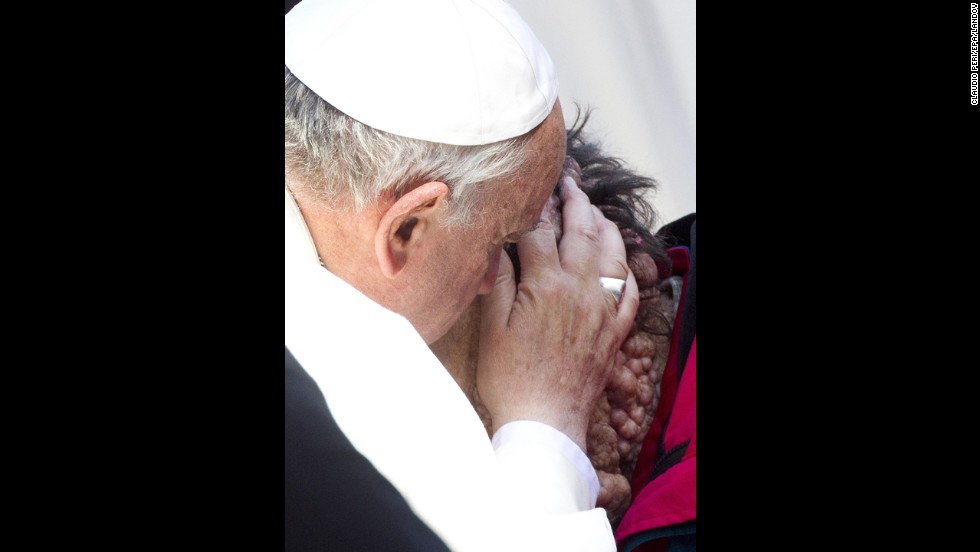
Chapters that stand out include Stephanie Arel's work on the role of pastoral (and especially papal) touch in overcoming shame, stigma, and their traumatic effects. She focuses on the number of people Pope Francis has touched and draws out some powerful lessons. Arel has herself contributed to an earlier collection, Post-Traumatic Public Theology.

The last section is especially useful, focusing on the ways in which Christian rituals can both help and harm those trying to overcome trauma.

The last chapter, by Hillary Jerome Scarsella, raises important but distressing questions from a Mennonite context: what message are victims of violence and abuse hearing when they come to church only to be told by Christians to imitate Christ, who stood silent before his accusers and abusers and protested nothing? Such a counsel can be retraumatizing for people who have suffered in silence and isolation for too long, powerless and voiceless. Such a counsel can leave powerful abusers in place, which is a gross injustice and potential danger to new victims.

Equally, what message are people hearing when told to forgive their abusers without any attempt at acknowledgement, let alone healing and reconciliation? Liturgies that too glibly promote these ideas and apparent virtues can do more damage than good. How can victims and victimizers equally partake from the same table and drink from the one chalice in the absence of any kind of reconciliation?

Finally I would note that the chapter on sexual abuse in the Catholic Church in Peru is very powerful, and Mariéle Wulf's chapter on trauma and healing is worthwhile. She draws on the insights of Margaret Crastnopol's recent book Micro-Trauma: A Psychoanalytic Understanding of Cumulative Psychic Injury (Routledge, 2015). 

Friday, November 29, 2019

Why Do We Keep Making the Same Mistakes?

Who among us has not instantly and constantly recognized oneself in the famous Pauline "I-not-I" passage at the end of Romans 7? Here Paul reflects on his own constant and relentless tendency to see the good but not do it, and to see the evil but not avoid it. This plagues all of us as a result of the introduction of what we might call deathful sin into the world. As the apostle says:
It was sin, working death in me through what is good, in order that sin might be shown to be sin, and through the commandment might become sinful beyond measure. We know that the law is spiritual; but I am carnal, sold under sin. I do not understand my own actions. For I do not do what I want, but I do the very thing I hate. Now if I do what I do not want, I agree that the law is good. So then it is no longer I that do it, but sin which dwells within me. For I know that nothing good dwells within me, that is, in my flesh. I can will what is right, but I cannot do it. For I do not do the good I want, but the evil I do not want is what I do. Now if I do what I do not want, it is no longer I that do it, but sin which dwells within me. So I find it to be a law that when I want to do right, evil lies close at hand.
For I delight in the law of God, in my inmost self, but I see in my members another law at war with the law of my mind and making me captive to the law of sin which dwells in my members. Wretched man that I am! Who will deliver me from this body of death? Thanks be to God through Jesus Christ our Lord! So then, I of myself serve the law of God with my mind, but with my flesh I serve the law of sin.
Here we see plainly evidence of what Freud would infamously call the "repetition compulsion" which is a central feature of the "death drive." Here we see, too, clear evidence of what Melanie Klein called "splitting" as parts of the mind war against the self and God. In all this, as in so many other instances (cf. Evagrius on the logismoi), Christianity anticipated what it would take modern psychology 1900 years to develop.

One person to grasp and admit this very readily is the late English analyst Nina Coltart, author of a book I read 25 years ago now, and return to more times than I can count: Slouching Toward Bethlehem. In her book, Coltart recognized that “We [analysts] deal with sin and its ramifying effects as surely as did a monk taking confession in his cell in the twelfth century; and we are the current representatives of a long tradition of those who worked for the cure of souls and who, in doing so, tried to bring not only insight but also transformation to the suffering sinner.” A little later in the book she also notes that “It may be a viable argument to say that Freud restored a sense of sin…and in so doing he rendered a service." (He did much more than that, as I have argued all over the place these last few years, not least in my new book Everything Hidden Shall Be Revealed: Ridding the Church of Abuses of Sex and Power.)

In event, all that is prologue to a new, very short, but very powerful and useful little book that I recently received: Juan-David Nasio, Psychoanalysis and Repetition: Why Do We Keep Making the Same Mistakes? trans. David Pettigrew (SUNY Press, 2019), 98pp. For those who may be thrown off by the title, pay attention to the subtitle, which really says it all. Nasio's use of Freud and Lacan is very sparing, and as noted below his insights are very useful to Christians who feel caught in habitual sin (cf. Romans 7:13ff) and other repetitive habits destructive of ourselves, our human relationships, and our relationship with God.

About this book the publisher tells us this:

In Psychoanalysis and Repetition, Juan-David Nasio, one of the leading contemporary Lacanian psychoanalysts in France, argues that unconscious repetition represents the core of psychoanalysis as well as no less than the fundamental constitution of the human being. Through repetition, the unconscious memory of the past erupts, without our knowledge, in our choices and actions, to such an extent that, for Nasio, we are our past in action.
While Nasio explains that repetition is both healthy and pathological, the book is primarily concerned with the repetition of unconscious trauma, as trauma engenders trauma, through unconscious fantasms that are expressed, in turn, as symptoms. Through vivid clinical examples, as well as trenchant theoretical explications involving repetition, Nasio illuminates a range of fundamental concepts in Freud and Lacan and offers a rethinking of the psychoanalytic tradition in the context of this theme. Nasio’s approach is richly interdisciplinary, incorporating passages from philosophers Descartes and Spinoza, for example, and from such literary figures as Pindar, Proust, and Verlaine. The interdisciplinary fabric of Nasio’s discourse conveys the crucial importance of the concept of repetition in psychoanalysis and in the human condition.
This book, of course, draws on what is arguably the most controversial work in a life and career marked by much of the same: Freud's Beyond the Pleasure Principle, where he postulated the existence of a repetition compulsion as part of the death drive. Until very recently, almost every analyst was at pains to pretend this theory did not exist. Even a noted sycophant like Ernest Jones severely downplayed the work in his three-volume hagiography of Freud's life.

More recently, however, and strikingly, the death drive has come in for a lot of renewed attention, much of it discussed on here in the past two years. For all the bogus controversy dredged up between Freud and Christians, this point seems to me to be the most obvious and easily accessible place for theology and Freud to begin a dialogue. Thus I think Christians should be the people most receptive to this theory, finding it most congenial to and so manifestly compatible with what we understand of original sin and its effects on us (cf. Romans 7:14ff.). More recently others have been coming to this conclusion, including Paul Axton.

I'm finding Nasio's text very valuable in revealing the nature of trauma and how it works on the memory. I'm also moved by the brief interview with which the book begins, in which Nasio explains how he practices as an analyst, a method and manner that strikes me as very kenotic.

He also has interesting insights into the problems of memory and forgetting, which I have often discussed on here in relation to Adam Phillips, inter alia. Thus Nasio can write that "There is more of the unconscious in a symptom than in the memory of an important family event" (5). That is a useful reminder that memories do not capture everything, and are often changed in their recalling, especially if more than one person recalls the memory. Thus he will write a little later on that "repetition is repetition of the Same...but--take note!--never identical to itself, always slightly modified each time is surges" (11). Because of this lack of total identity between recall, he can say--as many others have demonstrated--that "Memory is always capricious and unfaithful" (20).

Nasio's book is also a reminder that the same trauma can and does affect different people in different ways, and it profits nobody anything to downplay or outright deny some kind of traumatic suffering merely because one, apparently, managed to live through the same event and emerge relatively unscathed. He further notes that not everything we might later think traumatic existed clearly and unambiguously in those terms at the time. Instead, the messiness of memory can play a significant role here, especially repeated memories: "The 'return' of pathological repetition, the Same...that haunts the subject, is a blind and violent emotion experienced in childhood or puberty, during a half-real, half-imagined traumatic episode of a sexual, aggressive, or sad character" (24).

Even if traumatic memories may be half-real and half-imagined, sometimes people get involved, as Nasio says, in pathological repetition, which can be "not only painful in its manifestation but also compulsive in its eruption. Repetition is compulsive because it results form an irresistible double force of the unconscious fantasm: a push upward in order to externalize itself, and a push forward in order to begin again. Every compulsion bears this double movement upward and forward" (36). This is very much in keeping with how Freud and others more recently have seen this, perhaps especially Todd McGowan, whose hugely insightful book Enjoying What We Don't Have: The Political Project of Psychoanalysis I discussed in several installments.

We can never tire of reminding ourselves: the death drive is not nihilistic! It is teleological. Pathological repetition, that key hallmark of the drive, is teleological. The drive and its cycles of repetition, even--especially--retraumatizing repetition, all act purposefully. They seek something. They need something. They are striving after something that, however mistakenly, the mind thinks will be salutary and perhaps even healing. As Nasio puts it, trauma, strangely, exercises an "attraction" to "an exclusive and unhealthy model of satisfaction" (28). This teleological orientation is so strong in some that, as Nasio says, "trauma is paradoxically a drug, and the one who is traumatized is addicted to this drug. Trauma engenders trauma" (23).

The single greatest insight I found in this book was its clarification about the very nature and typology of trauma. We are mistaken if we think that trauma is a singular and enormous, overpowering event. It may be that for some people, but for others it may consist of a "series of regular micro traumas. Indeed a psychical trauma does not necessarily present itself as a sudden and violent breach [effraction]. Rather, it can occur progressively and subtly over the course of a sufficiently long duration. But whether the trauma is a brutal breach or a slow and insidious succession of micro traumas, it is always defined according to an essential formulation: too much excitement in a subject who is too weak to bear it" (32).

This of course immediately put me in mind of a series of reflections of Adam Phillips to which I have often returned in my mind over the past few years: on how we are often too much to bear for ourselves. Perhaps in a sense we are all "manic" and perhaps only God can contain us.

In sum, then, there is much in Juan-David Nasio, Psychoanalysis and Repetition: Why Do We Keep Making the Same Mistakes? to reflect on in these closing days of the civil year when many of us may do a kind of year-long examen of our life before turning to wonder whether the new year will bring us some welcome change and healing. The fact that we so often find ourselves repeating the very things that hurt and harm us rather than heal us cries out for deeper explanation, and Nasio has helped us in that regard.

Friday, November 1, 2019

Creative Forgetting and its Gifts to (and from) Memory and History

I have spent no little time on here over the past four years exploring questions of memory and forgetting and their possible uses and abuses among Christians divided in part by different recollections of past events such as the Fourth Crusade. There is still a great deal of work to be done here and I continue to plug away at parts of it.

Along comes a new book much more interested in philosophy--especially Nietzsche, Benjamin, Heidegger, Adorno, Arendt (and through her, reluctantly, Augustine of Hippo)--than theology, but containing, amidst at times laborious discussions of their thought, some moderately useful insights: Stéphane Symons, The Work of Forgetting Or: How Can We Make the Future Possible? (Rowman and Littelfield, 2019), viii+207pp.

The insights come chiefly in the introduction, which is an extended essay on the problems of memory studies, a boom "industry" of the last quarter-century which has sometimes created unhelpful binaries between memory-history, memory-forgetting, and forgetting-remembering. Symons' introduction is useful in showing us a number of paradoxes, including the fact "transience as a process is not merely destructive." The act of moving forward in time, of having no choice but to move forward, does not necessarily condemn us to forget everything. We can remember new things or old things differently. In this he calls to mind a fascinating and dense book of history and forgetting in Irish historiography that I discussed here in August.

Symons, drawing on Freud, further notes that "forgetting can enable a specific type of memory" (25) and thus in some ways can prove to be salutary but in others destructive. For Freud, of course, the unconscious never forgets, especially memories of trauma, and thus forgetting is in some ways impossible. As Symons notes, "while living in our unconscious, memories gain an extraordinary capacity of endurance" (94).

Repression of memories in the unconscious is not a one-time act, either, killing the memories as it were. No, as Freud showed in Beyond the Pleasure Principle, those memories not only live on, but are actively engaged in destructive cycles of repetition, revealing a resistance to change and an inability to be transformed. Why might that be so? Symons says that such memories are powerful because they fulfill the vital function of "protecting the ego's identity" (100). One could, I dare say, expand that out and come to understand why certain exaggerated, embroidered, or otherwise suspect if not bogus "memories" have such staying power in politics, culture, and even the Church today. They allow the "ego" of institutions to remain intact also.

Wednesday, October 2, 2019

Trauma in the Church (I)

I've previously mentioned the impending release of Gerald Arbuckle's book Abuse and Cover-up: Refounding the Catholic Church in Trauma (Orbis, 2019). My copy has now arrived. I will be discussing it extensively on here over the coming days, not least in dialogue with my own new book on the structural issues in the Church which have contributed to the crisis, and without changes to which nothing will improve: Everything Hidden Shall Be Revealed: Ridding the Church of Abuses of Sex and Power (Angelico, 2019).

The theme of the book is picked up immediately in the introduction: the trauma of the current crisis is actually long-standing, going back at least thirty, and closer to fifty years, during which time the conciliar promises of a more locally accountable and synodally governed Church were never materialized--were, indeed, rolled back. So the crisis of abuse has been but the latest in a long line of hierarchical betrayals leading, the author repeatedly says, to sadness, rage, and grief: all three are manifestations of trauma, as I discussed here.

Those betrayals were led by men who, Arbuckle rightly points out, feared "scandal" more than the truth--a point I also made in my discussion, here, of the uses and abuses of the whole notion of "scandal," a word which, in episcopal usage, means "what makes me as bishop look bad."

The author moves quickly into a discussion of cultural theory and the incredible resistance built into cultures, including ecclesial culture, to any serious efforts at change. He notes, rightly as many of us have been saying for some time, that this must be an all-hands-on-deck affair: not just "prayer and fasting" types of change, not just "new evangelization," and not just new structures: the reform required is a radical change in the way we think, pray, structure our life, and act together. One discipline that will help us see the far-reaching and comprehensive nature of the changes needed is cultural anthropology. Here Arbuckle references such key players as Clifford Geertz and, later on, Mary Douglas, whom I am reading with my students this semester.

I had forgotten what an exhilarating ride Douglas is in Natural Symbols as well as Purity and Danger and other works. But I also hadn't realized how merciless she is in the former book, too, which is so tightly written it's almost an act of warfare. She lobs one dense, high-powered sentence after another without warning, introduction, transition. She packs an incredible amount of high theory into a very short book and clearly takes no prisoners.

The author concludes his introduction by laying out the plan of the book. Chapter 1 will look at cultural dynamics in the Church leading to cover-up; 2 will ask what makes the Church uniquely prone to such cover-ups; 3 will focus on grief in the Church today; four will look at new leadership; 5 at new structures; and 6 at other assorted action plans going forward.

In the coming days we will proceed systematically through the book, first discovering what the author argues and then critically analyzing it.

Continues. 

Friday, September 20, 2019

Catholic Abuse, Trauma, and Cover-Up

As someone who has recently written a book about the Catholic sex abuse crisis, and the necessary structural reforms to move past it, and as someone with a long-standing interest in psychoanalysis and trauma psychology, I am of course keenly awaiting my review copy of Abuse and Cover-up: Refounding the Catholic Church in Trauma by Gerald A. Arbuckle (Orbis, 2019), 248pp.

About this book the publisher tells us this:

Here is a timely book on the sex abuse crisis by a scholar who is adept at weaving insights from the social sciences into a framework of practical theology.
Written for readers deeply concerned for the future of the church, this book addresses two questions: Why does the culture of the Catholic Church, despite Vatican II’s emphasis on collegiality and transparency, still cover up abuses of power? How can this culture change in order to end abuse and heal the wounds it inflicts on the Body of Christ?


Friday, May 17, 2019

The Burdens of Ukraine's Past and Her Memories

I am of course deeply interested in the problems of historical memory, especially among the Christians of Eastern Europe, and have often discussed on here over the years these themes of memory, identity, and historiography, often with a psychoanalytic turn.

It is, then, with great interest that I look forward to the publication of two new books, the first set to appear in July, and the other one in early 2020.

The first is from an author whom I have read profitably in the past, and to whose new book I'm greatly looking forward: Myroslav Shkandrij, Revolutionary Ukraine, 1917-2017: History’s Flashpoints and Today’s Memory Wars (Routledge, 2019), 224pp.

About this book the publisher tells us this:
This book examines four dramatic periods that have shaped not only Ukrainian, but also Soviet and Russian history over the last hundred years: the revolutionary struggles of 1917-20, Stalin’s "second" revolution of 1928-33, the mobilization of revolutionary nationalists during the Second World War, and the Euromaidan protests of 2013-14.
The story is told from the perspective of "insiders." It recovers the voice of Bolshevik historians who first described the 1917-21 revolution in Ukraine; citizens who were accused of nationalist conspiracies by Stalin; Galician newspapers that covered the 1933-34 famine; nationalists who fomented revolution in the 1940s; and participants in the Euromaidan protests and Revolution of 2013-14. In each case the narrative reflects current "memory wars" over these key moments in history.
The discussion of these flashpoints in history in a balanced, insightful and illuminating. It introduces recent research findings and new archival materials, and provides a guide to the heated controversies that have today focused attention scholarly and public attention on the issues of nationalism and Russian-Ukrainian relations. The Euromaidan protesters declared that "Ukraine is not Russia," but the slogan was already current in 1917. This volume describes the process that led to its reappearance in the present day.
The second is a scholarly collection I learned about from the new Indiana University Press catalogue. This collection will not be out until early 2020, but treats many of the same questions: The Burden of the Past: History, Memory, and Identity in Contemporary Ukraine, eds., Malgorzata Glowacka-Grajper and Anna Wylegala 2020

About this forthcoming work, we are told this:
In a century marked by totalitarian regimes, genocide, mass migrations, and shifting borders, the concept of memory in Eastern Europe is often synonymous with notions of trauma. In Ukraine, memory mechanisms were disrupted by political systems seeking to repress and control the past in order to form new national identities supportive of their own agendas. With the collapse of the Soviet Union, memory in Ukraine was released, creating alternate visions of the past, new national heroes, and new victims. This release of memories led to new conflicts and "memory wars."
How does the past exist in contemporary Ukraine? The works collected in The Burden of the Past focus on commemorative practices, the politics of history, and the way memory influences Ukrainian politics, identity, and culture. The works explore contemporary memory culture in Ukraine and the ways in which it is being researched and understood. Drawing on work from historians, sociologists, anthropologists, psychologists, and political scientists, the collection represents a truly interdisciplinary approach. Taken together, the groundbreaking scholarship collected in The Burden of the Past provides insight into how memories can be warped and abused, and how this abuse can have lasting effects on a country seeking to create a hopeful future.

Wednesday, December 19, 2018

Collective Remembering, Forgetting, and Forgiving

I have for many years been fascinated with, and written numerous articles about, the questions of remembering and forgetting among Christians, especially between and among Orthodox and Catholic Christians. Too much of what still divides us is bad history badly "remembered." The remembering has very little to do with the past, and much to do with present politics, as Adam Phillips (also explored extensively on here) has so helpfully and rightly reminded us: "memories always have a future in mind."

The on-going problem is how we can overcome these dodgy so-called memories and find true healing. Some have suggested we need to engage in deliberate forgetting, an idea I explored in detail here, by discussing David Rieff's useful little book.

Since it remains an on-going problem, I remain on-goingly interested in books exploring these questions. Oxford University Press recently sent me some such books in exchange for reviewing manuscripts for them. Among the books I asked for were J.K. Olick et al, eds., The Collective Memory Reader (OUP, 2011), 528pp.

As you might imagine, it features very short (most are c. 3-4pp.) excerpts from a huge range of people, some well known--Freud, Burke, Marx, Durkheim, Benjamin, Blondel, Foucault, Ricoeur--alongside many others who were knew to me. The editors argue in their introduction that the study of collective memory really goes back to Maurice Halbwachs, whom I had not read previously, and who was first translated by the anthropologist Mary Douglas, whom I have read to great profit (see, inter alia, her Natural Symbols as well as Purity and Danger).

One of the other authors excerpted in this collection is Roger Bastide, whose The African Religions of Brazil argues that we need to be careful about assuming that we either remember or forget (for whatever motives) in anything like a straightforward manner. Instead, both the remembering and forgetting can be subject to individualized and idiosyncratic mutations that may or may not bleed into the supposedly collective memory.

The other book OUP sent me is Jeffrey Blustein's Forgiveness and Remembrance: Remembering Wrongdoing in Personal and Public Life (OUP, 2014). Blustein is a philosopher who teaches bioethics at the City University of New York.

About this book the publisher tells us the following:
Forgiveness and Remembrance examines the complex moral psychology of forgiving, remembering, and forgetting in personal and political contexts. It challenges a number of entrenched ideas that pervade standard philosophical approaches to interpersonal forgiveness and offers an original account of its moral psychology and the emotions involved in it. The volume also uses this account to illuminate the relationship of forgiveness to political reconciliation and restorative political practices in post-conflict societies.
Memory is another central concern that flows from this, since forgiveness is tied to memory and to emotions associated with the memory of injury and injustice. In its political function, memory of wrongdoing -- and of its victims -- is embodied in processes of memorialization, such as the creation of monuments, commemorative ceremonies, and museums. The book casts light on the underexplored relationship of memorialization to transitional justice and politically consequential interpersonal forgiveness. It examines the symbolism and the symbolic moral significance of memorialization as a political practice, reflects on its relationship to forgiveness, and, finally, argues that there are moral responsibilities associated with memorialization that belong to international actors as well as to states.

I'm only a little ways into the book, and hope to report more later. But for the time being, I wanted to draw it to your attention as one of the most philosophically rigorous and carefully argued books I have yet found in this whole complex of topics. Other works, including Rieff's, have only glanced at some of the serious challenges we face if we talk about learning to forget and forgive. Blustein faces these challenges head-on, and his book is much the richer for it, as I hope to show in a future note about it.

Wednesday, September 5, 2018

Theology and Trauma

I've been doing a lot of reading over the past three years in the study of trauma widely understood. Part of this has been motivated by trying to understand how Eastern Christians have reacted to and suffered the effects of such things as, inter alia, the Armenian genocide and other massacres by Ottoman Muslims, Ukrainian Greek-Catholic repression at the hands of Stalin from 1946 onwards--to say nothing of earlier divisions and events in the Church often thought to require some "healing of memories."

The study of trauma has really exploded in the last several years, and I have previously noted on here some of the scholars I have found especially useful--Jeffrey Prager, Charles Strozier, Vamik Volkan, and others.  But books linking reflections on trauma to Christianity are rather rare. Notably there is Marcus Pound's book from 2008, Theology, Psychoanalysis, and Trauma, which is useful though rather narrowly focused on Lacan.

Now, however, released just a couple of weeks ago, we have a new collection, wide-ranging in scope, but with several essays devoted to theology and trauma: Trauma and Transcendence: Suffering and the Limits of Theory, eds. Eric Boynton and Peter Capretto (Fordham UP, 2018), 344pp.

About this book the publisher tells us the following:
Trauma theory has become a burgeoning site of research in recent decades, often demanding interdisciplinary reflections on trauma as a phenomenon that defies disciplinary ownership. While this research has always been challenged by the temporal, affective, and corporeal dimensions of trauma itself, trauma theory now faces theoretical and methodological obstacles given its growing interdisciplinarity. Trauma and Transcendence gathers scholars in philosophy, theology, psychoanalysis, and social theory to engage the limits and prospects of trauma’s transcendence. This volume draws attention to the increasing challenge of deciding whether trauma’s unassimilable quality can be wielded as a defense of traumatic experience against reductionism, or whether it succumbs to a form of obscurantism.
Contributors: Eric Boynton, Peter Capretto, Tina Chanter, Vincenzo Di Nicola, Ronald Eyerman, Donna Orange, Shelly Rambo, Mary-Jane Rubenstein, Hilary Jerome Scarsella, Eric Severson, Marcia Mount Shoop, Robert D. Stolorow, George Yancy.

Friday, July 6, 2018

Transgenerational Trauma: The Armenian Genocide Considered

To my mind one of the most important and far-reaching insights Freud first helped us to understand, and many analysts--as well as other psychologists, sociologists, historians, and churchmen--have deepened in the years after Freud (and in particular after the Holocaust) is the long-lasting nature of major trauma, and the very real ways in which something of those traumatic memories will shape later generations who did not experience the trauma directly.

In this instance, Eastern Christians have first-hand experience, starting in 1915 (though, of course, actually much earlier, given a centuries-long trail of blood and tears among Armenian Christians, subject to periodic mass slaughters under the Ottomans) with the Armenian, Assyrian, and Greek genocides. The first of these was the largest, and has attracted a good deal of attention in the last two decades. Now that a century and more has passed, and all survivors are dead, the memories and effects of the genocide are not, as a new book reminds us: Anthonie Holslag, The Transgenerational Consequences of the Armenian Genocide: Near the Foot of Mount Ararat (Palgrave Macmillan, 2018), 291pp.

About this book the publisher tells us:
This book brings together the Armenian Genocide process and its transgenerational outcome, which are often juxtaposed in existing scholarship, to ask how the Armenian Genocide is conceptualized and placed within diasporic communities. Taking a dual approach to answer this question, Anthonie Holslag studies the cultural expression of violence during the genocidal process itself, and in the aftermath for the victims. By using this approach, this book allows us to see comparatively how genocide in diasporic communities in the Netherlands, London and the US is encapsulated in an historic narrative. It paints a picture of the complexity of genocidal violence itself, but also in its transgenerational and non-spatial consequences, raising new questions of how violence can be perpetuated or interlocked with the discourse and narratives of the victims, and how the violence can be relived.

Related Posts Plugin for WordPress, Blogger...