"Let books be your dining table, / And you shall be full of delights. / Let them be your
mattress,/
And you shall sleep restful nights" (St. Ephraim the Syrian).


Showing posts with label William Mills. Show all posts

Monday, March 7, 2022

Bright Sadness

Slowly, reluctantly, in a world where there is already so much suffering and sacrifice, especially in Ukraine at the moment, the fast of Great Lent this year has approached not without some dread perhaps. But in dread of what we shall give up we must not overlook what we gain: Lent is a time of such splendid and diverse liturgical riches--the Canon of St. Andrew, the Akathist hymn, the life of St. Mary of Egypt, the prayer of St. Ephraim the Syrian, and crowning it all the Pre-Sanctified Liturgy.

As we begin to think on our forty days in the desert, I draw your attention to something I wrote three years ago about making fasting perhaps a bit more practicable in our own day. 

I also reprint something I wrote on here more than five years ago now, offering some very rich readings as we prepare for, and then enter into, the mystery of the Lord's passover. 

Perhaps my favourite of his Alexander Schmemann's books, which every year I re-read at this time, is Great Lent: Journey to Pascha (SVS Press, 1974), 140pp.

This book, I think, is Schmemann at his best: serious but light, indeed lyrical; never letting the season of penitence and the tears of sorrow overwhelm the joy of knowing that Christ's Pascha has already happened, that death has been defeated, and that life will be given to those in the tombs.

One year I read the above work with his then just-released Journals of Father Alexander Schmemann, 1973-1983, and you can see in these latter reflections how much he loved the Lenten season and how he could, in spite of it all, never fail to see that Pascha really does stand at the heart of everything.

There are other books that come to mind here as well: Frederica Mathewes-Greene, First Fruits of Prayer: A Forty Day Journey Through the Canon of St. Andrew (Paraclete Press, 2006, 195pp.).

If you are not celebrating the Penitential Canon of St. Andrew of Crete in your parish, or cannot attend, then her little book is a good way of reading a short passage from the canon for each of the forty days. 

Lev Gillet's book The Year of Grace of the Lord: A Scriptural and Liturgical Commentary on the Calendar of the Orthodox Church also has much good food for thought in meditating on the liturgical cycle of Lent, and in offering practical recommendations for askesis in addition to the customary fasting.

Equally edifying is the little book by the prolific pastoral theologian and Orthodox priest William Mills: The Prayer of St. Ephrem: A Biblical Commentary, on which I commented previously, and whose author I have interviewed several times about his other books.

Similarly, this splendid CD is a wonderful resource if you are on the road a lot or sitting at your desk: Have Mercy on Me, O God: The Great Canon of St. Andrew of Crete (Schola Cantorum of St. Peter the Apostle). Under the expert direction of J. Michael Thompson, this schola's rendering of the canon is sublime. I received from Thompson a version of the Liturgy of the Pre-Sanctified gifts performed by the Schola under his direction. I have to confess that its lovely prostopinije setting has forced me to reconsider a chant system I had previously considered a poor cousin to the Galician and Kyivan. (This latter CD is available from the Sisters of St. Basil in Uniontown, PA.)

For those who want a serious scholarly understanding of the liturgical heart of Lent as it were, the Pre-Sanctified Liturgy, see Stefanos Alexoupolos, The Pre-Sanctified Liturgy in the Byzantine Rite: a Comparative Analysis of its Origins, Evolution, and Structural Components (Peeters, 2009), xvi+355pp. 

In his expert review of Alexoupolos in Logos: A Journal of Eastern Christian Studies, the Byzantine liturgical scholar Peter Galadza lauded his book and said that his work is sure to become the scholarly standard for years to come.

Friday, June 25, 2021

Married Priests in the Catholic Church: the Families Speak

I have periodically drawn not nearly enough attention to my new book, released in April, on Married Priests in the Catholic Church. So let us continue to look at its many riches due to the many individual contributors from around the world. 

In previous commentaries on the book, I have noted, inter alia, Anglican contributions from the Catholic ordinariates, and discussed some of the pernicious myths which surround married priests. 

Today, let us pause to look at the voices of clergy families, who are represented in the book by such as Irene Galadza, Nicholas Denysenko, Julian Hayda, Andrew Jarmus, and William Mills. Of these five, truth be told, three are themselves clerics: Denysenko is a deacon while Jarmus and Mills join him as priests in the Orthodox Church of America. But Nick is a grandson of a long-time Ukrainian Orthodox priest, as is Jarmus; and Mills is married into a clerical family. So they have experienced both roles not just in the book but in their lives. 

I had sought many more voices from wives and children, but again and again was turned down by people who felt a sometimes understandable and sometimes puzzling reticence to talk about their experiences. Still, the few who contributed wrote worthy and important chapters. 

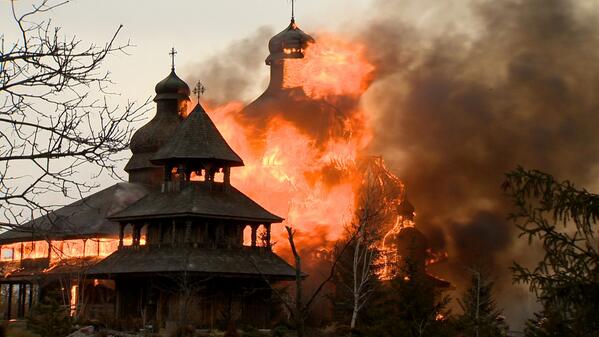
Irene has been married to her husband, the mitred archpriest Roman Galadza, for nearly half a century. So her experience is very long-standing indeed, and includes the rather rare experience of building a new parish from the ground up not once but twice! (The original St. Elias, where I was married, burned to the ground in a heart-breaking fire in 2014). She has also taught school for many years and has a fine theological mind. So her chapter in the book is very much a theological meditation on the role of the presbytera in light of the Theotokos. To borrow a phrase from antique Christological debates, Irene's view is a very "high" one, though she does note some of the "lower" or more "mundane" concerns and challenges that come to the wife of a priest and mother of (in her case) large family. But I think Irene would be the first to say that the wife of a priest should have the same freedom as others in the parish to discover her vocation for herself in all of its uniqueness. 

Nick Denysenko (a dear friend, I should note, and author of many fine books you should read, all of them noted here where you will also find interviews with him over the years about those books) is the grandson of an immigrant Orthodox priest from Ukraine about whom he writes with great and moving care, showing what sometimes hard lessons he learned from his grandfather, who had seen some of the horrors of wartime Europe and Soviet communism. His grandfather's wisdom about how, and how not, to fast have remained with me for some time. I wish I had met him. He sounds like a real mensch. Nick grew up serving in his parish in Minnesota and watching the dynamics between him and the parish. 

Similarly, Andrew Jarmus, also of Ukrainian background, grew up watching his father, also a priest in the Ukrainian Orthodox Church (but this time in Canada). Jarmus moved to the US more than a decade ago now and has been the pastor here in Ft. Wayne at one of the OCA's larger parishes which I have attended on occasion for many years now. Jarmus's chapter is especially worthwhile for its pointing out some of the subtle psychodynamics that govern (and often distort) any relationship where one man is constantly addressed as "father" and treated as such. 

Julian Hayda's father was a Ukrainian Catholic priest in Chicago until he was killed in a bike accident in 2007, leaving his wife and young children. (Julian's grandparents befriended me about a decade ago through the Orientale Lumen conferences in Washington and afterwards we had a very lovely dinner over Christmas one year when I was visiting my in-laws just down the road in Connecticut. They were splendid people.) Julian writes with a different perspective on growing up in a rectory. He does not romanticize his experiences or gloss over the difficult dynamics of living in what he aptly calls the parish "fish bowl." He rightly raises such questions as why PKs (preacher's/priest's/pastor's) are often subjected to highly unfair and discriminatory attitudes and expectations when all they want is to be regular kids like everyone else in the parish. 

William Mills also writes with compelling honesty and charming humour about the challenges of parish ministry while married. His chapter is good, but his recent memoir even better, not least for it allows him to go into more depth and detail than he could in the chapter in my book, Married Priests in the Catholic Church.

Friday, December 20, 2019

Best Books Read in 2019

Over at Catholic World Report is the annual, and very popular, series of posts from contributors on the books they most enjoyed in 2019. The terms do not require that the book be published in 2019, but merely that you have read and enjoyed a given book in that year. As readers of this lowly blog will of course know, there are plenty of other books I have read this year, but we were limited to 600 words. My list is here.

Since we were limited to 600 words, I thought I'd expand on that list a bit here, linking you to some of the interviews I did with authors on my list, and to longer discussion on here of some of those books.

Cynthia Haven’s very interesting biography, Evolution of Desire: A Life of René Girard. I started a discussion of the book (here) back in January when I get back from Romania.

Serhiy Plokhy, as I said at CWR, is one of those historians one must always read if one has any interest in East-Slavic history. I've read a couple of his other books (some noted here), and this year got around to reading his Yalta: The Price of Peace, which is a superb.

Given the complexity of the issues, and the fact the war was still raging, the temptation in writing such a book must surely have been to make it six times as long, dragging in all sorts of related and obviously important issues. But it's a masterfully restrained work, looking at the week-long conference with just enough detail to give context and shrewd analysis and then letting the reader go, confident in the knowledge that a billion other books have been written on everything leading up to February 1945, and a billion more on the aftermath. It remains true that it takes much more discipline to write a relatively short book like this than a big sprawling one.

Adam Phillips is always worth reading, including, this year, his aphoristic On Flirtation: Psychoanalytic Essays on the Uncommitted Life. I posted some of the choicest of those aphorisms here.

If you go here, you will see some of the thoughts I wrote up after reading Guy Beiner’s Forgetful Remembrance: Social Forgetting and Vernacular Historiography of a Rebellion in Ulster. As noted, this is a dense but deeply fascinating book for all sorts of reasons, not least its singular insights into the complex processes of repressing and remembering our conflicts.

This year I read the second installment in David Kynaston's superlative series: Family Britain 1951-1957. On last year’s list, I recommended the predecessor volume, Austerity Britain 1945-1951, which I wrote about in some detail here. So this year I read the 1950s volume, which is equally marvelous for the same reasons as I discussed last year.

In 2020, I will get around to reading the next installment, Modernity Britain: 1957-1962. What is especially noteworthy and masterful in both volumes so far is the author's deft handling of huge quantities of data from Mass Observation, Gallup, and other then-new social surveying agencies almost punch-drunk polling people on myriad issues in diverse forms.

My friend Bill Mills was interviewed here discussing his very honest, moving, and funny book about the realities of parish life: Losing My Religion: A Memoir of Faith and Finding. For those of you with married clergy in your life, you need to send them this book.

Will 2020 finally see the election of a party and candidate that will allow the United States to join the mid-20th century? Will Bernie Sanders be our Aneurin Bevan, the fiery Labour cabinet minister in Atlee's 1945 government and the politician who brought about Britain's National Health Service in 1948? This year I read (and here discussed) John Campbell’s Aneurin Bevan and the Mirage of British Socialism, whose off-putting title did not spoil what was a surprisingly enjoyable study of the great Welsh leader.

A Pilgrim in a Pilgrim Church: Memoirs of a Catholic Archbishop by Rembert Weakland. This was, as I discussed here in some detail, an unexpectedly fascinating and important book, whatever the sins and scandals of the author, now well into his 90s.

The priest Christiaan Kappes is a dynamo of a scholar whose newest book, The Epiclesis Debate at the Council of Florence, is an exhilarating ride. He was interviewed here.

Apart from his decision about nuclear weapons, there are some impressive virtues in Harry Truman, perhaps foremost among them the fact it never occurred to him to swan about the world after 1953 collecting huge fees for vomiting up canned speeches and intolerable banalities to big banks and other mercenaries. I have read previous works about him, including David McCullough's biography. So this past June after a dear friend, a retired history teacher, died, and we inherited her library, I found therein Margaret Truman’s 1973 book Harry S. Truman, which is part memoir and part family biography.

I also inherited Doris Kearns Goodwin’s Team of Rivals: The Political Genius of Abraham Lincoln, which apparently played a part in the 2012 Spielberg film, Lincoln, starring Daniel Day Lewis. I watched the film with my kids on Netflix in October, and found it a captivating performance by Lewis.

This led me to pick up the Goodwin book and to find it quite enjoyable in its own way. Indeed, parts of it are just riveting, which I have never before been able to say about 19th-century American history. Perhaps--though this remains to be seen--this book will be the beginning of the end of my total lack of interest in 19th-century American politics and especially the Civil War. Other wars--the Crimean, certainly, along with the First and Second World Wars, on which I have often commented on here--continue to fascinate me even after two decades of reading about them regularly. But for some reason the Civil War has seemed too provincial, too uncomplicated, to attract much interest. Perhaps that will change.

I have previously drawn attention to Pia Sophia Chaudhari's new book, Dynamis of Healing: Patristic Theology and the Psyche. I am reviewing it for an academic journal so cannot say much about it here other than it is a very impressive book which I warmly commend to all with interest in patristic theology (especially Maximus the Confessor, to whom I have drawn a good bit of attention on here over the last decade) and depth psychology. Among this book's several virtues is one in particular: it reminds me that I have sometimes too facilely and snobbishly dismissed Jung in the past in favour of our father among the saints, Sigmund of Vienna. (I made some atoning gestures for past sins against Jung here, where I went on to praise him as more enlightened than Freud on at least one key issue.)

The book is also very rightly and closely in dialogue with two of the most interesting and important object-relations analysts to come out of Britain: W.R.D. Fairbairn, and Harry Guntrip, whom I briefly discussed here. Both of them wrote with great insights into the schizoid personality type, Fairbairn in his groundbreaking 1940 essay republished in Psychoanalytic Studies of the Personality; and Guntrip in Schizoid Phenomena, Object Relations, and the Self.

Juan-David Nasio, Psychoanalysis and Repetition: Why Do We Keep Making the Same Mistakes? This is a very short book that packs a tremendous number of insights into its relatively few pages. I discussed it at some length here.


Thursday, April 25, 2019

Giving Thanks for the Life and Work of Alexander Schmemann

My friend Bill Mills, who is no stranger when it comes to writing about Alexander Schmemann, and whose moving, funny, unsparing, and invaluable memoir you should by now have sent to all the clergy and seminarians you know, alerts me to the imminent publication of another book devoted to the great Orthodox liturgical theologian's vision: We Give Our Thanks Unto Thee: Essays in Memory of Fr. Alexander Schmemann, ed. Porter C. Taylor with a foreword by Serge Schmemann (Wipf and Stock, 2019), 274pp.

I'm hoping to arrange an interview with the author. In the meantime, here is the publisher's blurb about the book, which contains essays from, inter alia, Paul Meyendorff, Bill Mills, and others across the spectrum:
Fr. Alexander Schmemann continues to influence liturgical and sacramental theologies some thirty-five years after his death. Despite the wide acceptance within Protestant circles of his timeless classic, For the Life of the World, there has been relatively little written about him from an ecumenical context. This volume of collected essays seeks to explore his theological legacy and further his work. With essays from leading scholars such as David Fagerberg, Bruce Morrill, Joyce Zimmerman, and more, this volume is meant for both teachers and students of liturgical and sacramental theology. In an effort to introduce Schmemann to a wider audience and to celebrate his work through meaningful engagement and dialogue, contributors come from a wide variety of ecclesiastical backgrounds: Anglican, Roman Catholic, Orthodox, Lutheran, Presbyterian, Methodist, Free Church, and more.

Friday, March 22, 2019

Bill Mills on the Lights and Shadows of Parish Ministry

I have previously interviewed my friend, the Orthodox priest William Mills about his various books; you can read those interviews here, here, here, and here.

Now he has a new book out, Losing My Religion: A Memoir of Faith and Finding (Wipf and Stock, 2019), 170pp., and it is a corker. Forgive the hackneyed expressions, but they are true: You will laugh; you will cry; you will wonder that, except for grace, nobody would put up with the stuff parish clergy do and persist, but persist he has. This is a book that belongs on the reading lists of every seminary in the country for it shows plainly in an unvarnished light the sorts of things one will encounter. It is also a book that clergy, especially married Eastern clergy, should read and will enjoy if and when they do for doubtless they can relate to its many struggles.

As is my practice, I sent Bill some questions about the book, and here are his answers.

AD: Tell us about your background.

WCM: I attended Millersville University in Millersville, PA. After college I attended Saint Vladimir’s Orthodox Theological Seminary where I received two degrees, a Master of Divinity and a Master of Theology and then eventually received my Ph.D. in pastoral theology from the Union Institute and University in Ohio where I focused my studies on the intersection of both liturgical studies and pastoral ministry, eventually writing my dissertation on Alexander Schmemann’s thoughts on pastoral theology.

AD: You've written a number of other books--more traditionally theological and academic type books--that we have discussed on here over the years. But this one is quite different--much more personal and autobiographical in nature. Your subtitle calls it a "memoir of faith and finding." Tell us, first, how you use the concept of "memoir" in this book. Isn't a memoir something old people write before they die?!

I never set out to write a memoir. One day my therapist asked if I was planning on writing a book about my experiences. I responded, “No way.” First, I was in too much pain to write my story, too many emotions and feelings were bubbling up to the surface. Secondly, in reality, I’m a nobody:  I’m not Billy Graham or Martin Luther King Jr., I’m just boring guy who has a small parish in North Carolina: who in the heck wants to read about me?

After my therapist suggested the book idea I began keeping a journal. The floodgates opened and from the journal came a few chapters, and the few chapters turned into more chapters which eventually became a book. It was a long and painful nine-year process.

A memoir is a slice of life, it’s not an autobiography. A memoirist creates his or her narrative within a specific context. It’s certainly not, “everything but the kitchen sink” type of project, which some poorly written memoirs turn into, usually due to a lack of editing.

AD: Your book has already attracted a good bit of attention from very prominent Christians across the spectrum. Why do you think you seem to have struck such a nerve among Christians of all traditions?

I’m thrilled that my story has garnered such attention from such a rich and wide spectrum: Episcopal, Reformed, Methodist, and Orthodox. I think because my story is universal it rings true to a wide range of people. I also think that many clergy memoirs focus only on the good parts, on how wonderful parish ministry was: the baptisms, weddings, building campaigns, and the numerical growth.

While writing my book I read numerous clergy memoirs. I was hard pressed to find a radically truthful and human story about being a minister, so I decided that I need to write one! In many ways I wrote my story as a way to show new clergy the various pitfalls and people to keep an eye out for. I wrote it to a younger me, a book that I wish that I had when I was a new pastor.

AD: Your preface mentions a number of stereotypes or assumptions people have about what you do as a priest, but you note that much of your time is spent quite simply and regularly drinking coffee and listening to people. Was this a big surprise to you when you began parish ministry? 

At first, I thought my job--besides leading the services of course--was to convert everyone whom I met, to make sure there was money coming into the collection plate each week, and that I had to always talk about God and the Church. In othe words, my job description consisted of what I call the four B’s: butts, bucks, buildings, and budgets. The more butts in the pew the more bucks in the collection plate so that you can build your new building and have a great big fat budget. But when reading the gospels we see that Jesus’ wasn’t interested in the 4 B’s which should tell us something. Along the way the Church got it wrong and we are suffering today because of it.

Over time I realized that when I met with parishioners they did all the talking and I did all of the listening. I also realized that most folks just wanted to share their pains, problems, sufferings, joys, hopes, fears, and stories with me. They just wanted someone to listen and affirm their stories. Occasionally I would say a few words and then leave. After time, I realized that I had to be myself. Too often clergy, like doctors, lawyers, teachers, and other professionals overly identify with their role, and in the end they loose their true identity--hence the title, Losing My Religion.

AD: While in seminary, and thinking about and preparing for ordained ministry, what were your expectations about parish life? Do you think in general people in seminaries have realistic visions and ideas about what parish life really entails?

I discuss my seminary formation in a chapter called “Nirvana.” And for me seminary was Nirvana. You need to keep in mind that I had visited Saint Vladimir’s numerous times when I was young: Education Days in October, the annual High School Christmas retreats that were held during Winter Break, and other events that they hosted. My mother bought books published by Saint Vladimir’s Seminary Press and she always donated money to the annual Saint Vladimir’s Foundation. Entering Saint Vladimir’s was akin to entering Harvard or Oxford University. In my opinion it was the crème de la crème.

I had a stellar academic education. I had very good professors and read a lot of important books and wrote research papers. However, many of the professors were not ordained and others had left parish ministry a long time ago and were out of touch with the realities, choices, and challenges, of parish life. We also lacked the practical preparation that I would eventually encounter in community life: managing and working with people, leadership skills, and financial and practical skills akin to leading and organizing a community.

I also realized that this problem wasn’t just for those of us in the Orthodox Church, but in every denomination. Over the years I met many pastors who have complained of the same problem. Seminaries often do a great job with the academics, but do poorly when it comes to pastoral and spiritual formation. Do seminaries have spiritual directors or pastoral counselors on staff as resources for seminary students? Do they expect seminarians to attend chapel services regularly? Do the faculty talk about the importance of self-knowledge, reflection, personal prayer, and sabbath? I fully realize that seminaries cannot do everything, but they can make some inroads in areas that are currently lacking. My hope is that my memoir would bring about a constructive conversation about these important topics.

I also hope that pastors in congregations seriously take my advice for maintaining self-care. Self-care is not selfish. It is essential if one wants to be a pastor for ten, twenty, or thirty years.

AD: You note a crisis point in your parish when, in a "public power play" a large number of people left. How did you survive that?

I owe everything to George and Gordon Jacobs and Tom O’Neal at the Davidson Clergy Center. They found me broken and beaten, lost, and discouraged, and put me back on the road to health and healing. The Clergy Center was a miracle just down the road from my house.

I also have to commend lay leaders in the parish for rising to the occasion. After the “exodus” as I call it, several key people rose to the occasion and took care of the community tasks that were left vacant from directing the choir, to organizing coffee hour, to cleaning the Church. We were very fortunate to have caring and compassionate people in our parish family.

AD: I've been reading the Catholic theologian James Allison lately, and he says (with reference to sex abuse in the Catholic Church, but I think the point admits of much wider application) that one of the last places you can find honest talk about our struggles is in the Church. You, commendably, seem to break that pattern with this book, opening up honestly about various struggles. Was that hard to do? Why don't we have more of that?

There are a few reasons for this I think. Firstly, people come to Church in their Sunday best:  suits, ties, dresses, hats, makeup and jewelry. Yet underneath all of that, behind the makeup and hair and dresses and ties are people, just people like you and me who have doubts, fears, stresses, strains, trials, and tribulations. They have broken families and failed dreams. But our ego, our pride, keeps us from really opening up. We want to put on the best face for our neighbors, while inside we are hurting. Now, not everyone is suffering all the time and not everyone suffers the same, but we all have problems. One of my hopes is that my story will give people the signal that is okay to open up and be vunerable in Church, it’s okay to share one's pains and problems, it’s okay to say that I’m hurting or that life isn’t always going well.

I recently was talking with a friend of mine who is a Jungian analyst who was reflecting on how someone can attend Mass or Liturgy on Sunday morning and be in the same room with a lot of people and barely talk to them, let alone make eye contact, or really share their struggles. And yet, this same person, on Wednesday night can go to an AA meeting in a dingy church basement and bear his or her soul as total strangers embrace them, cheer them on, console them, and confide in them! The Church community on Sunday needs to become like this community meeting in its basement on Wednesday nights! That is, the Church needs to become what it is supposed to be: a place for everyone to work out his or her salvation--and not just smile and say everything is fine when it really isn’t. The Church needs to be much more honest with itself and with the world around us.

AD: Your chapter "My First Date" is just marvelous--all the struggles of finding a first parish appointment, and many of the horrifying things you see along the say (a slop bucket!), but by the end you've been completely turned around, and turn the reader around, to show that your critical eye overlooked the one truly crucial thing: a loving community of normal people. You say it took you "a long while" to recognize this. When did you finally come to see that community in those terms? Was there a specific incident that led you to a transformed vision of them? 

A lot of people told me that that particular chapter is funny and also hard to believe, but as they say truth is funnier than fiction. Looking back it is hard to believe that they wanted me to live in a glorified shed!

I cannot say exactly when I realized this, but it came over time. There really wasn’t a specific incident, just small little epiphanies over the months and years serving the community.

AD: Your chapter "Into the Depths" was just agonizing to read, but I think very necessary to show people who the Church has no shortage of nasty characters often trying to manipulate people over money and issues of control. These are "clergy killers" and "alligators" as you call them in a later chapter: why do you think every parish seems to have a few? Is there something unique to the dynamics of parish life that brings out such people and such behavior? 

Power, power, power. It’s always about power. Over the years I have heard many similar stories. Stories of parishioners stalking their pastor at the grocery store, intentionally saying nasty things about the pastor in front of the pastor’s children, or trying, like Walter did, to remove me from the parish. Since the publication of my memoir I have heard from pastors who have shared with me some of their tragic stories as well.

Some of this has to do with the social dynamics of a community. A healthy community, one which has mutual respect and openness towards one another, which invites people to be vulnerable and open with one another, and who respect their pastor, wouldn’t tolerate a Walter or Linda. The community would treat them like a virus or bacteria and either ask them to leave or not give them free reign.

Alligators or clergy killers survive when there is dis-organization or dysfunction in the community, and where there is weak leadership. Strong leaders, smart leaders, healthy leaders, will quickly pick up on the various signs and signals that the alligators and clergy killers give off and respond accordingly. By the way, alligators and clergy killers also exist in the business world too, but often a large company has levels of authority and a system of checks and balances which often--when working well--will prevent someone like Walter or Linda from causing too much harm.

My problem was that I was too young, too inexperienced, too conflict avoidant, and was overwhelmed by the situation. I was drowning before I could even ask for help.

AD: The effects of these alligators--whom you dub Walter and Linda--were really deep, and you needed the help of others to work through some of the pain and suffering. In doing so, you seem to be in a minority among clergy, who generally try to tough it out. What led you to realize you couldn't just tough it out on your own, and that there was no shame and no problem in seeking the help of others? 

Well, when you don’t want to get out of bed in the morning, when you don’t want to visit with friends or neighbors, when you can’t sleep at night, when you’re not eating, you know you have a problem. After a few months of this I knew that I needed help. A few days before finding the Davidson Clergy Center I was contemplating seeing a psychiatrist or checking myself into a hospital. I hit bottom. I mention this in one of the chapters, but I had typed up a resignation letter to my bishop which I never mailed. I’m sure, however, he wouldn’t have accepted the letter, but it felt good writing it.

AD: I laughed and laughed when you told the swimming instructor you hated her for making you get in the deep end. But then I cried at the end with the story of the cake. That seems to be the dynamic of the book--hilariously unexpected things, and deeply moving ones, too. It's a real triumph of grace, and I think clergy everywhere, and seminarians now, should all read it. Having finished it, are you at work on other writing projects just now? 

I’m always working on something. At the moment I have three writing projects going. When I get bored with one I turn to another. 

I’m finishing up a book called "Paul The Pastor: Metaphors for Ministry for the 21st Century Church," which takes a look at several metaphors that Paul uses in his letters: pastor as soldier, pastor as gardener, pastor as architect, among others.

Then I’m editing a collection of my sermons called "Bread for the Journey," which I delivered over the course of several years.

Finally, I just started work on a book focusing on Scriptural images for ministry, "Called to Lead, Called to Serve," which weaves Scriptural reflection with personal anecdotes, using some stories which never made it into the memoir but will make it into this book. A good writer is one who uses all their material in different places.

A few people asked me whether or not I was planning to write another memoir. I said no. But since then I had a few ideas, we’ll see. The memoir took a lot of emotional energy and I will need some more time and space to think more about it.

AD: Sum up your hopes for the book. 

I really hope, as John Breck says in his endorsement that, “every seminarian should read it.” However deep down I know that they won’t. Some may not feel comfortable with my radical honesty about parish ministry or the pastoral life, others may think that they know it all. That’s okay. Let them think that. Eventually some of the naysayers may come around, especially when they, like me, hit bottom.

My main hope for this book is that it creates a space where both pastors and people in general can speak about what it means to have a genuine faith in God, stripped bare of all of the idols that we carry around with us; idols of Church, idols of ministry, and even idols of spirituality. It’s so easy to cling to the externals: icons, prayer ropes or rosaries, church buildings, cassocks, crosses, and clerical attire, titles, and so forth. Jesus called Peter and the disciples into the deep waters of the Sea of Galilee, away from the safety and security of the land, to walk in faith. It’s much easier to stick with religion rather than with faith. In the end I opt for faith.

My other hope is that my story will show people in the pews that clergy are just like everyone else, fallen and fallible, hurting and hopeful all at the same time. We rise, fall, sin, ask forgiveness--just like everyone else. We’re human.

Wednesday, March 13, 2019

Being Honest about the Pathologies in Parish Life

I've sent off some interview questions to my friend Bill Mills about his wonderful and welcome new book, Losing My Religion: A Memoir of Faith and Finding (2019). When I hear from him, I'll be sure to post his thoughts.

I've been recommending his book to my friends in parish ministry, and to those I know in seminaries as well. It is a very important book especially for these latter to read--those preparing for parish life need to know what they are in for, and this book offers just those sorts of invaluable insights in deeply personal ways. It is at its most admirable in its refusal to romanticize parish life, or to gloss over its sometimes deep pathologies which often do lasting damage to clergy and their families.

Bill is very forthright in acknowledging at least one particularly painful attack, and in describing the struggles he had afterwards, putting me in mind of D.W. Winnicott's famous article, "Hate in the Countertransference." Equally commendably he acknowledges his own need for help in dealing with it, and this brave acknowledgement is encountered perhaps too infrequently among clergy schooled on the "just offer it up" mode of coping. Why clergy feel this is how they must cope is a mystery to me. In saying that, I am aware that I have long been influenced by Henri Nouwen's notion of the "wounded healer." And perhaps even more I'm aware of, and find value in, the practice still insisted on by those training--as I once thought I would--to be psychoanalysts: you yourself must be in analysis, and have a supervisor with whom to work out the hostility and pathology you receive in the transference from your patients and parishioners.

But this is not a scandal rag retailing only naughty bits. Like all good books, it is aware of both lights and shadows; and like all Christian stories the "light shineth in darkness; and the darkness comprehended it not." The book ends with both deep Christian hope, and deeply hilarious human experiences. It is, in many respects, a very Winnicottian approach to parish life in showing the importance of the "good enough" approach that avoids the temptations to become liturgical fanatics or perfectionists in other areas.

If you are yourself thinking of, or already enrolled in, seminary, or know someone who is, you need to read this. If you have clergy among your friends, send them a copy of this book. It's a cliché, but you and they will both laugh and cry as you read this book.

Wednesday, February 20, 2019

Loss and Gain (I)

In 1848 Newman published a novel, Loss and Gain, which was about a young man at Oxford converting to Catholicism. The Orthodox priest and pastoral theologian Bill Mills is not converting to Catholicism, but Newman's theme came to mind in re-reading Mills' wonderful memoir, Losing My Religion. The life of the Christian in general, and of pastoral ministry in particular, is very much one of losing and gaining: losing time, losing struggles for perceived goods, losing beloved friends and parishioners through death, moving away, or irreconcilable conflicts.

But it is also about gaining far more than one realized. Those to whom, ostensibly, one ministers are often the bearer of amazing gifts that come wholly unexpected. I got tastes and glimpses of this in the 1990s in Ottawa when I was involved with providing pastoral care in a large downtown nursing home for several years and when also, during the same period, I worked regularly at a suicide distress centre.

Both of these dynamics come out in  Losing My Religion. In the rest of this series, I'll highlight some of the especially valuable lessons, but also humourous anecdotes, in this book, about which the publisher provides the following blurb:

After four years of college and six years in seminary, William Mills was ready for a parish--or so he thought. He didn't realize much of his time would be endless discussions about bagels and coffee, digging ditches, and parking lot condom patrols.
For six years, community life was just humming along. Then disaster struck. Mills' life came crashing down when nearly a third of his congregation left in a public power play, causing him to question his faith in himself, in the church, and in God. Marva Dawn, a noted writer of spirituality and ministry, said that being a pastor is like being peppered with popcorn: after a while, you just get tired of it, pack your bags, and move on. However, as Mills himself says, "I was either too stubborn or stupid, so I stayed."
Losing My Religion is about the ups and downs, ins and outs, choices and challenges of being a pastor in the twenty-first-century church. It's also about the redemptive power of community life and finding healing and wholeness in a broken world.

Thursday, February 14, 2019

Bless Me Father for I Have Lost My Faith....in My Parish?

Though I was privileged to read it in draft form, I was still excited last night to find in my mailbox a copy of Bill Mills' new book, Losing My Religion: A Memoir of Faith and Finding (Resource Publications-Wipf and Stock, 2019), 170pp.

It comes, rightly and justly, bearing a slew of impressive blurbs:

"William Mills has given us a true story told truthfully, a story of a faith lost and found, a story of the church at its best and worst, a story of a priest who persisted in his vocation in spite of everything. Service to the Body of Christ, the church, is not for the faint of heart and yet, in the end, there are blessings" (Will Willimon, United Methodist Bishop, retired, and Professor of the Practice of Christian Ministry, Duke Divinity School).

 "William Mills has gone honest and intimate with us in telling his story of the travail of ministry. His drama of mean-spirited betrayal in the congregation and the late unexpected reassurance of support replicates our best story of crucifixion and resurrection" (Walter Brueggemann, Columbia Theological Seminary).

 "William Mills' memoir is a beautifully crafted, honest, wise, and insightful book. It stands in the very best tradition of spirituality--a writer and text that can speak to the real condition of the soul, and the day-to-day struggle that many have with belief. . . Honest and wise books on religious resilience are often hard to find. But this is one of those rare gems, and I commend it for anyone who knows how long our spiritual journey can be" (Martyn Percy, Dean of Christ Church, Oxford).

"The Church speaks a lot about truth but isn't so good at honesty. Here is a priest who has learned the cost of this and who, with courage and imagination, encourages us to join him and to say it as it is. We clergy often know the words of religion but miss the music. William Mills calls us back to the vocation of trying to tune our lives to the harmonies of the eternal but only by recognizing emotional and factual truth and in pursuit of justice. Enjoy it and feel yourself defrost" (Mark Oakley, Dean, St. John's College, Cambridge).

 "Losing My Religion is the brave, tender, furious account of how William Mills is lifted, brought low, broken, healed, and made whole. As books about religious life go, it is among the wisest and most honest I've ever read. This book should keep company on your shelf with the better works of J.F. Powers, Larry Woiwode, and Thomas Merton" (Kyle Minor, author of Praying Drunk: Stories).

"The memoir is entitled Losing My Religion, but it is a testament to all that can be gained by remaining true to one's moral compass, staying honest and authentic, seeking to learn lessons in each of life's challenges. This is a passionate, compelling book, full of meaning"  (Judy Goldman, author, Together: A Memoir of a Marriage and a Medical Mishap).

So you don't just have to take my word that this is a delightful book, and I'm glad to have the handsome finished edition in my hands to read it again and savor its humility, humor, and candor about the difficult life of parish ministry today. I will write more about it in the coming days, and arrange to interview him (as I have done in the past on here), but for now just wanted to note that if you count clergy among your family and friends, if you are yourself a pastor, or if you know someone contemplating seminary and parish ministry, then you must get this book into their hands.


Friday, November 27, 2015

Bill Mills on Following Christ

I have had the pleasure of interviewing the Orthodox priest and pastoral theologian Fr. Wm. C. Mills over the years on here. He is a prolific writer, author of such scholarly works as Church, World, and Kingdom: The Eucharistic Foundation of Alexander Schmemann's Pastoral Theology; editor of a Festschrift for Michael Plekon, Church and World: Essays in Honor of Michael Plekon; and author of numerous biblical commentaries, including From Pascha to Pentecost: Reflections on the Gospel of John, and (my favourite), The Prayer of St. Ephrem: A Biblical Commentary.

Again this past week I had the pleasure of interviewing him about his latest book, Come Follow Me (OCABS Press, 2015), 134pp. It is--as with so many of his books--a lovely, accessible, short book that cuts through a lot of the fog of "spirituality" or even "biblical theology" to allow the divine word to speak to us clearly and freshly.

AD: Tell us about your background.

WCM: Long story short, for the past fifteen years I have served as the pastor of an Eastern Orthodox Christian parish in Charlotte, NC. Like many parishes we’ve had our ups and downs and thankfully we’ve experienced more ups recently.

My Church School curriculum focused on the Divine Liturgy, lives of the saints, and some Church History, but very little about the Bible. Our family had a leather King James Bible on our living room coffee table but I never read it. 

At St. Vladimir’s Seminary I was blessed to have Fr. John Breck and Fr. Paul Tarazi who instilled in me the love of the Scriptures. While both have different backgrounds and personalities, they taught me the centrality of the Bible for preaching, teaching, and pastoral care. I am extremely grateful to have had them as my teachers and I think of them often, especially as I’m preparing sermons. 

I am also grateful to Dr. Nicolae Roddy, professor of Old Testament at Creighton University in Omaha, Nebraska whom I met after my seminary studies. Nicolae opened my horizons to the religious, cultural, and social world of the Bible. In addition to his teaching, Nicolae is also an archaeologist who leads an annual dig at Bethsaida in Galilee.

AD: What led to the writing of this book, Come Follow Me, in particular?

WCM: Early on in pastoral ministry I realized that I needed to dig deep into the Bible. My sermons, adult education classes, catechism classes, and teaching involved Scripture and therefore I needed to really study the Bible so I knew what I was talking about! It also dawned on me that all of our prayers, hymns, liturgical seasons and cycles, and Divine Liturgy are rooted in the Scriptures too.

My earlier books, From Pascha to Pentecost: Reflections on the Gospel of John, followed by Prepare O Bethlehem and my other lectionary commentaries flowed from this deep desire to understand the biblical text. These books were followed by a A 30 Day Retreat: A Personal Guide to Spiritual Renewal, Encountering Jesus in the Gospels, as well as Walking with God, among others. Come Follow Me is a result of many years of preaching, teaching, and praying the biblical text, and quite frankly, even after all these years I still have so much more to learn.

AD: How did you decide on these particular biblical texts as ones to comment on? Is there a theme that links them or a rationale for bringing them all together?

The collection of reflections in this book are sermons that were delivered during the Divine Liturgy and based on the scriptural texts found in the Orthodox liturgical calendar. There is a slight difference in texts depending on whether you are using the Greek (Byzantine) or Russian (Slavic) lectionary. Because our parish is a part of the Orthodox Church in America we follow the Russian or Slavic lectionary.  So in that sense these chapters were not organized thematically as one would if they were doing a lectionary word study or a chapter-by-chapter commentary.

AD: A lot of spiritual literature today from the East seems to be concerned with elders on Athos, or collected sayings from the Fathers. But you, refreshingly, went straight back to the Scriptures and let them breathe directly and freely. Was that deliberate?

The Scriptures are the basis of our faith in God. The Bible is the Word of God which is given to us for life. Everything in our Christian spiritual tradition--our liturgical cycles, rites, and rituals; our prayers, our sacraments; our belief itself--is based on the Word of God. So I thought early on why go back to the Fathers of the fourth or fifth century or even the writings of someone more contemporary like an elder of Mt. Athos. Instead, let's go back to the source that these very elders and Fathers were reading--the Bible!

I encourage everyone, not just our clergy, but also the laity, to read the Bible regularly. I usually advise folks to start with the gospels or the Psalms. The Psalms are poetry and they are highly accessible and they contain a wide range of human emotions and feelings: anger, love, fear, doubt, despair, joy, and pain. Likewise, the gospels are stories which are very memorable. Almost everyone has heard of the story of the Good Samaritan or the Publican and the Pharisee.

AD: You've no doubt heard the slogans: "Jesus--yes! Church--no!" or "I'm spiritual but not religious." But can we really heed Christ's call to "Come, Follow Me" on our own, without a community?

Unfortunately so many people have been turned off to the Church because of other Christians. I’ve talked with many disaffected and disinterested Roman Catholic and Orthodox Christians who have been scandalized by various types of sexual and financial abuse among Church hierarchy, the lack of real concern for outreach and service of the poor, as well as the lack of open communication and freedom in the Church, and the abuse of authority and power. So in some ways I don’t blame them for wanting to be in community.

However when we read the Scriptures we see that God called people to be in community. He called Abraham who later became the father of many nations. He called the Israelites. Jesus called the disciples. God calls us too. The famous writer and Trappist monk Thomas Merton said that no man is an island: we are all connected to one another in our baptism or as St. Paul said we are all members of one another in the one body of Christ. God calls us to be community, whether big or small. We are meant to be in communion with one another as we carry our cross together and follow Christ.

AD: Tell us a bit about your own rather unique parish community there in NC, and the good things that are going on.

My parish is very different than the one in which I was raised. My home parish was in middle class suburbia. A few folks were blue collar workers but most were not. Almost all were from Slavic or Eastern European roots. While everyone was kind and nice we didn’t have much outreach to the local community and I had little sense about how my faith would and could intersect with the world around me, both locally and globally. 

My current parish is in an urban centre and is very much a microcosm of the United Nations. We have families from Syria, Lebanon, Russia, the Republic of Georgia, Eritrea, India, and Romania. Our parish family has a mixture of those who consider themselves “cradle Orthodox” and “convert.”  We also have parishioners who have arrived in North Carolina from across the United States: Ohio, New Jersey, New York, Virginia, Florida, Texas, and other places. We have just a few people who were born and raised in the South.

I think our social, ethnic, and racial diversity provides a strong foundation for our parish family. We don’t have divisions like many parishes have such as “newcomers” versus “old-timers” or “cradle” versus “convert.” Our wide mixes of ethnicities and backgrounds is a symbol that everyone is welcome and everyone, while having come from some place else, is welcome in this place on Sunday morning.

Our parish also is involved in a lot of outreach ministries. Each month we purchase food and cook a hot lunch for approximately one hundred men at the local men’s shelter. We also donate canned goods each month to the local Loaves and Fishes ministry as well as baby diapers and baby products to the local Florence Crittendon Center, a home for unwed teen mothers.

Two years ago we started a construction ministry where a few of our parishioners travel to another parish and help them with small renovation projects. Our first project was to design and build a one-hundred-foot handicap ramp. Last year we helped renovated a large warehouse-type building and installed a drop ceiling and a covered portico which connected the church building with their new fellowship hall.

Every August we purchase back-packs, fill them with school supplies and after blessing them we then donate them to the local school system for children in need. We also team up with the local Salvation Army and participate in their Angel Tree Program where parish families “adopt” an angel, buy gifts for them, and then bless them on St. Nicholas Day. The gifts are then distributed to needy children at Christmas. At last count we host nine different types of regular outreach ministries. Our parish ministries not only help those in need but provide parishioners with many opportunities to participate in helping those around us in both big and small ways.

AD: What do you think is the most difficult part of following Christ today for most people in North America? What do we need to give up, or do differently, to hear and heed His call more clearly?

This is a question that I’ve thought about and wrestled with for a long time. My hunch is that, by and large, we have a very comfortable life here in North America. People work, have some type of housing, go on vacation every year, put money away for college and for their future. With a few clicks on the computer I can buy almost anything I want and that often includes free shipping! If we’re so comfortable we don’t feel like we need God. Sure, we need him when we have the urge, but for the most part if we’re doing okay why do I need a savior? Yet if you look at poor places in South America or countries in Africa, for example you see that the Church is growing by leaps and bounds. Why? Because people are poor, people are hurting, they are sick, there is war, famine, poverty. People want hope, and the Church offers hope in a world full of despair, light in times of darkness. When I have almost everything I need I certainly don’t need God.

The trick is that we do need God! We have to almost trick ourselves into un-learning or divesting ourselves of our reliance on all these material things that I have: my home, my pension, my savings, my healthcare won’t save me. Only God saves through his Son. But this is a very hard lesson to learn and many people never learn it.

AD: Having finished Come Follow Me, what are you at work on next?

I have a few projects that I’m currently working on, including another sermon collection which is similar to Come Follow Me and is tentatively called Bread for the Journey. I’m also working on a book on St. Paul’s vision of pastoral care, especially his use of metaphors for ministry such as planting, sowing, harvesting, and building, among others.  Paul’s writings are a treasure trove for pastors, especially his writings on pastoral care, preaching, and teaching. Very often we go straight to the four gospels, but I encourage pastors to go to Paul. Paul’s writings pack a punch, and you won’t be disappointed!
Related Posts Plugin for WordPress, Blogger...