"Let books be your dining table, / And you shall be full of delights. / Let them be your
mattress,/
And you shall sleep restful nights" (St. Ephraim the Syrian).


Showing posts with label cross-cultural exchange. Show all posts

Monday, December 6, 2021

Armenian Artefacts on the Silk Road

This exciting book brings together my two favourite Oriental Orthodox churches, the Ethiopian and Armenian in a fascinating survey of cross-cultural economic exchanges down a celebrated route: the Silk Road, especially in its western stretches: Christiane Esche-Ramshorn, East-West Artistic Transfer through Rome, Armenia and the Silk Road: Sharing St. Peter's (Routledge, 2021), 224pp. The publisher provides the following blurb, giving us additional details: 

This book examines the arts and artistic exchanges at the ‘Christian Oriental’ fringes of Europe, especially Armenia.

It starts with the architecture, history and inhabitants of the lesser known pilgrim compounds at the Vatican in the Middle Ages and Renaissance, of Hungary, Germany, but namely those of the most ancient of Churches, the Churches of the Christian Orient Ethiopia and Armenia. Without taking an Eurocentric view, this book explores the role of missionaries, merchants, artists (for example Momik, Giotto, Minas, Domenico Veneziano, Duerer), and artefacts (such as fabrics, inscriptions and symbols) travelling into both directions along the western stretch of the Silk Road between Ayas (Cilicia), ancient Armenia and North-western Iran. This area was truly global before globalization, was a site of intense cultural exchanges and East-West cultural transmissions. This book opens a new research window into the culturally mixed landscapes in the Christian Orient, the Middle East and North-eastern Africa by taking into consideration their many indigenous and foreign artistic components and embeds Armenian arts into today’s wider art historical discourse.

This book will be of interest to scholars in art history, architectural history, missions, trade, Middle Eastern arts and the arts of the Southern Caucasus.

Saturday, January 6, 2018

Veneration of the Cross in the Medieval Islamic World

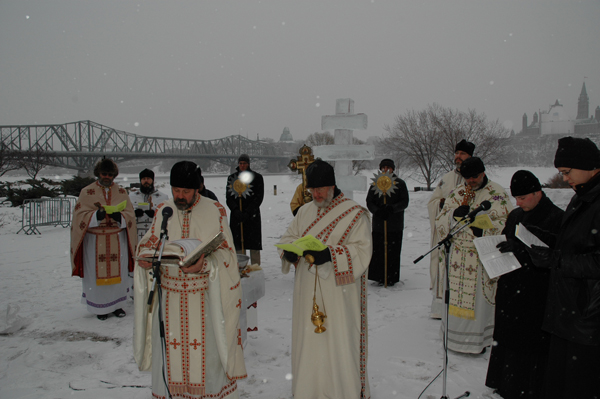
Today, the ancient and wonderful feast of the Theophany (about which see Nick Denysenko's book here), will often see many Eastern Christians carving crosses out of ice near newly blessed bodies of water, and then hurling wooden hand crosses into those waters to make of them an offering back to their Creator. This seems a quintessentially Christian ritual, but how was it handled in the Muslim world, where so many Eastern Christians lived and live?

I count it a success in my courses on Eastern Christian encounters with Islam when my students come to appreciate how often the boundaries were more blurred than they realize, or are often thought to be today. I tell them that they should leave the course recognizing that questions of identity, historically situated, are far messier than many thought, and that borrowings of, or at least attendance at, ritual practices of the "other's" community, happened more than we might realize.

Examples of this include some Muslims venerating Christian relics and praying in Christian shrines, and Christians attending Muslim village festivals, some evidence of which is to be found in such fascinating works as I noted here.

Now a new book further complicates and expounds the picture for us: Cross Veneration in the Medieval Islamic World: Christian Identity and Practice Under Muslim Rule by Charles Tieszen (I.B. Tauris, 2017), 244pp.

About this book the publisher tells us:
One of the most common religious practices among medieval Eastern Christian communities was their devotion to venerating crosses and crucifixes. Yet many of these communities existed in predominantly Islamic contexts, where the practice was subject to much criticism and often resulted in accusations of idolatry. How did Christians respond to these allegations? Why did they advocate the preservation of a practice that was often met with confusion or even contempt? To shed light onto these questions, Charles Tieszen looks at every known apologetic or polemical text written between the eighth and fourteenth centuries to include a relevant discussion. With sources taken from across the Mediterranean basin, Egypt, Syria and Palestine, the result is the first in-depth look at a key theological debate which lay at the heart of these communities' religious identities. By considering the perspectives of both Muslim and Christian authors, Cross Veneration in the Medieval Islamic World also raises important questions concerning cross-cultural debate and exchange, and the development of Christianity and Islam in the medieval period. This is an important book that will shine much needed light onto Christian-Muslim relations, the nature of inter-faith debates and the wider issues facing the communities living across the Middle East during the medieval period
Related Posts Plugin for WordPress, Blogger...