"Let books be your dining table, / And you shall be full of delights. / Let them be your
mattress,/
And you shall sleep restful nights" (St. Ephraim the Syrian).


Showing posts with label Ethiopian Christianity. Show all posts

Wednesday, May 25, 2022

Christianity and Islam in Ethiopia and Africa

It always cheers the heart to see that increasingly scholars studying disciplines they label "politics" realize that things labelled "religion" (etc.) are by no means separable from the study of the former. In that light, the Routledge Handbook of the Horn of Africa, ed. Jean-Nicolas Bach (February 2022, 784pp.) has an entire section exploring Islam and Christianity in Africa, with a particular focus on Ethiopian Orthodox Christianity, about which I wrote only this week. 

About this collection the publisher further tells us this: 

The Routledge Handbook of the Horn of Africa provides a comprehensive, interdisciplinary survey of contemporary research related to the Horn of Africa.

Situated at the junction of the Sahel-Saharan strip and the Arabian Peninsula, the Horn of Africa is growing in global importance, due to demographic growth and the strategic importance of the Suez Canal. Divided into sections on authoritarianism and resistance, religion and politics, migration, economic integration, the military and regimes and liberation, the contributors provide up-to-date, authoritative knowledge on the region in light of contemporary strategic concerns. The handbook investigates how political, economic and security innovations have been implemented, sometimes with violence, by use of force, or by negotiation; including ‘ethnic federalism’ in Ethiopia, independence in Eritrea and South Sudan, integration of the traditional authorities in the (neo)patrimonial administrations, Somalian Islamic Courts, the Sudanese Islamist regime, people’s movements, multilateral operations and the construction of an architecture for regional peace and security.

Accessibly written, this handbook is an essential read for scholars, students and policy professionals interested in the contemporary politics in the Horn of Africa.

Monday, May 23, 2022

Italian Barbarism in Abyssinia

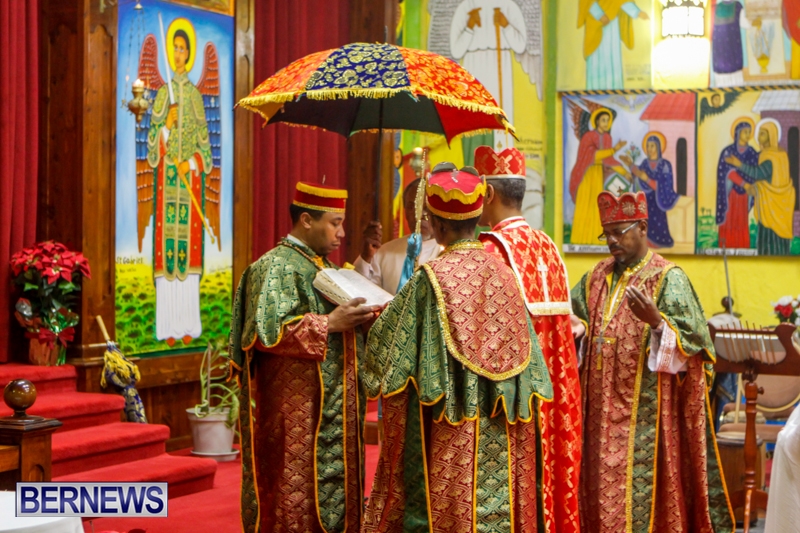
Ethiopian Orthodox Christians are noteworthy and unique for many things, not least their vibrant iconography on which I commented here. Theirs remains the largest Christian church in all of Africa. 

There are other reasons--sorrowful and disgusting--that they stand out, not least for being subject to a quasi-genocide by other Christians less than a century ago. A recent edition of the London Review of Books contains a review that discusses some of the horrifying and infuriating details of atrocities committed against Ethiopian Orthodox Christians by Italian Roman Catholics. Much of the former's sacred vessels and art were stolen by the latter, their monastic sites destroyed, and many thousands of Ethiopian Christians were outright murdered by the latter during Mussolini's colonial adventures in Africa nearly a century ago now. 

The details recounted in this new book would lend themselves to being compiled in a much larger volume of shame someone should write, Roman Sins Against Eastern Christians. Earlier shameful stories about Jesuit intrigues against Ethiopian Orthodox Christians would fill part of this proposed volume, but they would pale in comparison to the stories told in Holy War: The Untold Story of Catholic Italy's Crusade Against the Ethiopian Orthodox Church by Ian Campbell (Hurst, 2021), 336pp.

About this new book the publisher tells us this:

In 1935, Fascist Italy invaded the sovereign state of Ethiopia--a war of conquest that triggered a chain of events culminating in the Second World War. In this stunning and highly original tale of two Churches, historian Ian Campbell brings a whole new perspective to the story, revealing that bishops of the Italian Catholic Church facilitated the invasion by sanctifying it as a crusade against the world's second-oldest national Church. Cardinals and archbishops rallied the support of Catholic Italy for Il Duce's invading armies by denouncing Ethiopian Christians as heretics and schismatics and announcing that the onslaught was an assignment from God.

Campbell marshals evidence from three decades of research to expose the martyrdom of thousands of clergy of the venerable Ethiopian Church, the burning and looting of hundreds of Ethiopia's ancient monasteries and churches, and the instigation and arming of a jihad against Ethiopian Christendom, the likes of which had not been seen since the Middle Ages.

Finally, Holy War traces how, after Italy's surrender to the Allies, the horrors of this pogrom were swept under the carpet of history, and the leading culprits put on the road to sainthood.

Friday, March 25, 2022

Ethiopian Christianity and its Entanglements and Disconnections

It has been a delight to watch the slow but steady increase of interest in Ethiopian Christianity over the last decade. A new collection published in February will deepen our understanding: Ethiopian Orthodox Christianity in a Global Context: Entanglements and Disconnections, eds. Stanislau Paulau and Martin Tamcke (Brill, 2022), 260pp. 

About this book the publisher tells us this:

Ethiopian Orthodox Christianity constitutes an exceptional religious tradition flourishing in sub-Saharan Africa already since late antiquity. The volume places Ethiopian Orthodoxy into a global context and explores the various ways in which it has been interconnected with the wider Christian world from the Aksumite period until today. By highlighting the formative role of both wide-ranging translocal religious interactions as well as disruptions thereof, the contributors challenge the perception of this African Christian tradition as being largely isolated in the course of its history. Ethiopian Orthodox Christianity in a Global Context: Entanglements and Disconnections offers a new perspective on the Horn of Africa’s Christian past and reclaims its place on the map of global Christianity.


Monday, December 6, 2021

Armenian Artefacts on the Silk Road

This exciting book brings together my two favourite Oriental Orthodox churches, the Ethiopian and Armenian in a fascinating survey of cross-cultural economic exchanges down a celebrated route: the Silk Road, especially in its western stretches: Christiane Esche-Ramshorn, East-West Artistic Transfer through Rome, Armenia and the Silk Road: Sharing St. Peter's (Routledge, 2021), 224pp. The publisher provides the following blurb, giving us additional details: 

This book examines the arts and artistic exchanges at the ‘Christian Oriental’ fringes of Europe, especially Armenia.

It starts with the architecture, history and inhabitants of the lesser known pilgrim compounds at the Vatican in the Middle Ages and Renaissance, of Hungary, Germany, but namely those of the most ancient of Churches, the Churches of the Christian Orient Ethiopia and Armenia. Without taking an Eurocentric view, this book explores the role of missionaries, merchants, artists (for example Momik, Giotto, Minas, Domenico Veneziano, Duerer), and artefacts (such as fabrics, inscriptions and symbols) travelling into both directions along the western stretch of the Silk Road between Ayas (Cilicia), ancient Armenia and North-western Iran. This area was truly global before globalization, was a site of intense cultural exchanges and East-West cultural transmissions. This book opens a new research window into the culturally mixed landscapes in the Christian Orient, the Middle East and North-eastern Africa by taking into consideration their many indigenous and foreign artistic components and embeds Armenian arts into today’s wider art historical discourse.

This book will be of interest to scholars in art history, architectural history, missions, trade, Middle Eastern arts and the arts of the Southern Caucasus.

Wednesday, November 10, 2021

The Glories of Ethiopian Christianity

When I teach Eastern Christian iconography, I always reserve my favourite tradition, the Ethiopian, to the end, after we have been utterly exhausted by the seemingly endless surfeit of Byzantine images, and only moderately sobered up by the Coptic tradition. I tell my students to keep an eye on the Ethiopian tradition for its academic study is only now coming into its own.

That study will be greatly edited by three recent books, highly praised by the venerable and eminent historian Peter Brown in a recent NYRB essay I read with great delight. Here is the choicest bit:

In 1441 Ethiopian monks visited Rome. They told Pope Eugenius IV...that the Ethiopians were somewhat surprised that they had received no word from any pope in eight hundred years. It was time for that negligence to be remedied. However, they reassured Eugenius that they would report back to their master that the pope seemed to be a good Christian!

The arc of the essay is to point out what a formidable cultural stronghold Ethiopia was, far surpassing all the patronizing nonsense later talked about it by Roman and European Christians and historians, including that execrable old fool Gibbon. Ethiopian Christianity, in Brown's mind, must be counted at least as strong and important a tradition as the Latin, Greek, or Syriac. He advances an interesting thesis, worthy of debate by theologians, that perhaps Ethiopia's being miaphysite or monophysite (he uses the terms interchangeably, which is not without problems) is what abled them to form such a stronghold of Christianity that was never swallowed up by Islam. 

In any event, Brown draws our attention to three recent publications, all of which he praises. The first of these is A Contextual Reading of Ethiopian Crosses Through Form and Ritual: Kaleidoscopes of Meaning by Maria Evangelatou (Gorgias Press), 382pp. Brown praises this as a "book of stunning beauty." About it the publisher further tells us this:

Ethiopia is unique among Christian lands for the incomparable prominence of the cross in the life of its people and for the inexhaustible variety and intricacy of decorative patterns on cross-shaped objects of all kinds. Crosses of wondrous diversity and sophistication are extensively used in religious and magic rituals, as well as in the daily social interactions and personal experiences of people in a variety of contexts. This book explores the ways in which Ethiopian crosses reflect and shape a broad range of ideas, from religious beliefs to interrelated socio-political values, and from individual notions of identity and protection to cultural constructs of local and universal dimensions. Thus the cross of the Ethiopian tradition emerges as the sacred matrix that encompasses the life of the world in both its microcosmic and macrocosmic dimensions; and as the social and cultural nexus through which and with which people interact in order to shape and express personal and communal identities and hopes.The investigation includes textual and visual evidence, as well as aspects of Ethiopian history and cultural tradition, and highlights elements of both continuity and change. Special attention is given to religious rituals in which crosses guide the participants to internalize abstract ideas central to their culture, through sensorial experience and interaction. A main objective of this analysis is to contribute to an understanding of visual creations as interactive depositories and therefore also generators of ideas, with an influential role in identity formation, socio-cultural interactions and the construction of power relations.

The second book he notes, and praises equally highly, is Samantha Kelly, A Companion to Medieval Ethiopia and Eritrea (Brill, 2020), 606pp. About this book the publisher tells us this:

A Companion to Medieval Ethiopia and Eritrea introduces readers to current research on major topics in the history and cultures of the Ethiopian-Eritrean region from the seventh century to the mid-sixteenth, with insights into foundational late-antique developments where appropriate. Multiconfessional in scope, it includes in its purview both the Christian kingdom and the Islamic and local-religious societies that have attracted increasing attention in recent decades, tracing their internal features, interrelations, and imbrication in broader networks stretching from Egypt and Yemen to Europe and India. Utilizing diverse source types and methodologies, its fifteen essays offer an up-to-date overview of the subject for students and nonspecialists, and are rich in material for researchers. 

Contributors are Alessandro Bausi, Claire Bosc-Tiessé, Antonella Brita, Amélie Chekroun, Marie-Laure Derat, Deresse Ayenachew, François-Xavier Fauvelle, Emmanuel Fritsch, Alessandro Gori, Habtemichael Kidane, Margaux Herman, Bertrand Hirsch, Samantha Kelly, Gianfrancesco Lusini, Denis Nosnitsin, and Anaïs Wion. 

The third and final book is Medieval Ethiopian Kingship, Craft, and Diplomacy with Latin Europe by Verena Krebs  (Palgrave, 2021), 325pp. About this book the publisher has this to say: 

This book explores why Ethiopian kings pursued long-distance diplomatic contacts with Latin Europe in the late Middle Ages. It traces the history of more than a dozen embassies dispatched to the Latin West by the kings of Solomonic Ethiopia, a powerful Christian kingdom in the medieval Horn of Africa. Drawing on sources from Europe, Ethiopia, and Egypt, it examines the Ethiopian kings' motivations for sending out their missions in the fifteenth and early sixteenth centuries - and argues that a desire to acquire religious treasures and foreign artisans drove this early intercontinental diplomacy. Moreover, the Ethiopian initiation of contacts with the distant Christian sphere of Latin Europe appears to have been intimately connected to a local political agenda of building monumental ecclesiastical architecture in the North-East African highlands, and asserted the Ethiopian rulers' claim of universal kingship and rightful descent from the biblical king Solomon. Shedding new light on the self-identity of a late medieval African dynasty at the height of its power, this book challenges conventional narratives of African-European encounters on the eve of the so-called 'Age of Exploration'.

Monday, March 29, 2021

Eastern Christianity: a Reader

Justin Coyle, a young and formidably wise scholar whom one should keep an eye on in the years ahead and of whom one continues to expect great things, kindly writes the other day to draw my attention to a book set for release later this year: Eastern Christianity: A Reader by J. Edward Walters (Eerdmans, November 2021), 448pp.

I am especially gratified to see that "Eastern" here actually means (as it too rarely does) "east of Byzantium." Thus we see a wonderful array from some of the richest, oldest, but frequently overlooked traditions often grouped under the heading of "Oriental" or "non-Chalcedonian" Orthodox. This will certainly be the kind of book useful in survey courses, and required in every serious library devoted to the Christian East. 

This volume offers, the publisher tells us,

English translations of Syriac, Armenian, Georgian, Arabic, Coptic, and Ethiopic Christian texts from late antiquity to the early modern period 

In order to make the writings of Eastern Christianity more widely accessible this volume offers a collection of significant texts from various Eastern Christian traditions, many of which are appearing in English for the first time. The internationally renowned scholars behind these translations begin each section with an informative historical introduction, so that anyone interested in learning more about these understudied groups can more easily traverse their diverse linguistic, cultural, and literary traditions. A boon to scholars, students, and general readers, this ample resource expands the scope of Christian history so that communities beyond Western Christendom can no longer be ignored.

We are also given the table of contents:

Introduction

Chapter One: Syriac

Introduction to Syriac Christianity

     General Bibliography for Syriac Christianity

     1. The Doctrina Addai

     2. Ephrem the Syrian, Hymns against Heresies 3 and 53

     3. Martyrdom of Mīles, Abursam, and Sinay

     4. Jacob of Serug, The Fourth Homily on Cain and Abel

     5. Narsai, On the Canaanite Woman

     6. Simeon of Beth Arsham, Letter on the Ḥimyarite Martyrs

     7. The Syriac Life of Mary of Egypt

     8. Timothy I, Letter 47

     9. Theodore bar Koni, Scholion, Mēmrā 10 (selection)

Chapter Two: Armenian

     Introduction to Armenian Christianity

     General Bibliography for Armenian Christianity

     1. Koriwn, The Life of Mashtotsʿ

     2. Eznik of Koghb, Refutation of the Sects (or, On God)

     3. The Teaching of Saint Grigor

     4. Anania of Narek, On This Transitory World

     5. Grigor of Narek, Book of Lamentation, Discourse 1, Discourse 88

     6. Nersēs Shnorhali, Hymn for the Sunrise Hour, Instructional Preface to a Prayer of Nersēs, Prayer of Nersēs

Chapter Three: Georgian

     Introduction to Georgian Christianity

     General Bibliography for Georgian Christianity

     1. Martyrdom of St. Shushanik

     2. John Sabanisże, Martyrdom of Habo, the Perfumer from Baghdad

     3. The Lives of John the Iberian, Euthymios the Athonite, and George the Athonite

     4. The Life of Porphyry of Gaza

Chapter Four: Arabic

     Introduction to Arabic Christianity

     General Bibliography for Arabic Christianity

     1. Homilies on the Gospel Readings for Holy Week

     2. Theodore Abū Qurrah, That God Is Not Weak

     3. The Disputation of Abraham of Tiberias

     4. Ḥunayn Ibn Isḥāq, How to Discern the True Religion

     5. Miracles of Saint George

     6. Commentary on the Pentateuch

Chapter Five: Coptic

     Introduction to Coptic Christianity

     General Bibliography for Coptic Christianity

     1. Life of Pachomius

     2. Shenoute of Atripe, I Have Been Reading the Holy Gospels

     3. Pseudo-Dioscorus of Alexandria, Encomium on Macarius of Tkōou

     4. The Anaphora of Saint Thomas the Apostle

     5. Christophoria, Letter to the Comes Mena

     6. John of Paralos, Homily on the Archangel Michael and the Blasphemous Books of the Heretics

     7. Pseudo-Cyril of Alexandria, Encomium Interpreting Part of the Apocalypse of John the Apostle of Christ Jesus

Chapter Six: Ethiopic

     Introduction to Ethiopic Christianity

     General Bibliography for Ethiopic Christianity

     1. Select Inscriptions of ˁEzana

     2. Homily on Frumentius

     3. Synaxarion on Yared

     4. Glory of the Kings (Kǝbrä Nägäśt) (selection)

     5. Hildephonsus, Bishop of Toledo, Miracles of Mary

     6. Zärˀä Yaˁəqob, Book of the Trinity

     7. Prayer Amulet: MS Duke Ethiopic 15

Monday, August 3, 2020

African Theology

With some attention to Coptic realities, and a chapter on the Ethiopian Orthodox Church, this new Routledge Handbook of African Theology, ed. Elias Kifon Bongmba (Routledge, 2020, 554pp.) ranges over a very wide terrain.

About this collection, released just six weeks ago, the publisher tells us this:

Theology has a rich tradition across the African continent, and has taken myriad directions since Christianity first arrived on its shores. This handbook charts both historical developments and contemporary issues in the formation and application of theologies across the member countries of the African Union. Written by a panel of expert international contributors, chapters firstly cover the various methodologies needed to carry out such a survey. Various theological movements and themes are then discussed, as well as biblical and doctrinal issues pertinent to African theology. Subjects addressed include:

• Orality and theology

• Indigenous religions and theology

• Patristics

• Pentecostalism

• Liberation theology

• Black theology

• Social justice

• Sexuality and theology

• Environmental theology

• Christology

• Eschatology

• The Hebrew Bible and the New Testament

The Routledge Handbook of African Theology is an authoritative and comprehensive survey of the theological landscape of Africa. As such, it will be a hugely useful volume to any scholar interested in African religious dynamics, as well as academics of Theology or Biblical Studies in an African context.

Tuesday, June 30, 2020

On Black Icons of the Jewish Jesus and His Mother

This moving and powerful image, of the Mother of God cradling her dead Son, is making the rounds today for obvious reasons, and it has set off some foolish white people who claim to be Catholic while understanding little about theology and even less about iconography. So herewith a brief note about some relevant books on iconography, which I teach regularly, with special reference to a tradition I deeply love, the Ethiopian.

General Studies:

Of the three primary traditions of iconography one finds in the Christian East, the Ethiopian is perhaps the least known. The Byzantine tradition is of course far and away the most widely and popularly practiced, not least because of its associations with the empire of that name. When people typically think of Eastern or Orthodox iconography, it is the Byzantine style that they almost invariably imagine and turn to. There are hundreds of books about this tradition, including many that have been published just in the last two decades, and most of these by Western Christians suddenly "inventing" (in both senses of the word) the tradition and eager to explore its riches. Searching on here using the relevant labels (at bottom of this post) will bring up dozens and dozens of posts about recent publications, scholarly and popular. If you asked me to name just 3 for those with no background, I would recommend the following:

First, for your average Roman Catholic today, start with Sr Jeana Visel's book (which I reviewed here). Second, for those desiring more historical and theological depth, then Lossky's book has long been a standard text. Third, for still more depth and detail, Ouspensky's two-volume set has long had an obligatory place on every bibliography.

Finally, for those who clearly do not understand the doctrinal approval (albeit ambivalent) given to the use of images, and who do not realize that such approval said absolutely nothing at all about what we today would call "racial" or "ethnic" differences, then this new book--one of several in an invaluable series from Liverpool University Press--will bear careful reading about the acts of Nicaea II in 787. Precisely as the defined and received doctrinal teaching of the Catholic and Orthodox Church, and precisely because it was, after all, given at an ecumenical (="whole inhabited world") gathering, we should not expect to find the diverse divines there assembled forbidding or requiring that Christ, the Theotokos, and the angels and saints be portrayed as Africans or Greeks or Copts, Romans or Armenians "for all are one in Christ Jesus."

The Coptic Tradition:

But there are other traditions within the Christian East, including the Coptic, which differs sharply from the Byzantine for all sorts of complex historical (and other) reasons we will not get into here. But this tradition lacks the vast number of books in English that the Byzantine tradition has. For those who read French, this is not a bad, if now dated, overview. For those who want a scholarly overview of iconography in all the so-called Oriental Churches, including the Coptic and Ethiopian, then Christine Chaillot's book reads like a dissertation.

For those who want to begin to understand the historical complexities around what could even be said to constitute "a tradition," as though such a thing exists in isolation from other traditions, then Magdi Guirguis's recent book will take you into some fascinating cultural alleyways.

To see Coptic iconography situated in a wider cultural context, there are numerous books, including this one, this one, and this one. I would also recommend the respected work of the scholar Nelly Van Doorn-Harder in several places, including this book which has a chapter on Coptic art.

Ethiopian Christianity and Iconography:

And now to the Ethiopian tradition. For some general studies that will give you historical context, there are several recent volumes. See, e.g., this one. For those who read German, this book (which I have only skimmed) appears to offer a wide-ranging overview. Like the Guirguis book above, this scholarly study looks at the complex cultural connections between Ethiopian iconography in a period of turbulence and transition.

Narrowing in slightly on Ethiopian churches and monasteries, which of course feature icons, we are starting to see several books devoted to these appear in English in the last decade, including this one. Just this year we had an historical overview of the Ethiopian Orthodox Church. I have not read it yet, but the author, John Binns, is a respected scholar at Cambridge whose other works I have read and recommended.

This book treats just one form of images/symbols, viz., Ethiopian crosses. This book, from the invaluable Gorgias Press (which all those interested in Eastern Christianity should keep regular eye on), does something similar in a more scholarly way.

This book looks at royal connections between Ethiopian art and court.

This book looks at illustrated Ethiopian manuscripts at Oxford. Similarly, this book looks at Ethiopian illustrated gospel books.

Finally, turning to iconography proper, let me end by recommending two "coffee table" type books I sometimes look at again and again just for the sheer exuberance and joy of the colours and details: African Zion: The Sacred Art of Ethiopia by M. Heldman and S. Munro-Hay. Published by Yale University Press in 1993, there are still copies floating around for those who are interested.

And then this hefty collection, now twenty years old, but still worth tracking down: Ethiopian Icons : Catalogue of the Collection of the Institute of Ethiopian Studies Addis Ababa University by Stanislaw Chojnacki.

There is, let me note in conclusion, still ample work to be done here studying this tradition if there are aspiring graduate students out there. There are, as I noted at the outset, often dozens of new books in English alone in one year alone devoted to the Byzantine tradition alone. The Coptic and Ethiopian (to say nothing at all of other lesser known Eastern Christian traditions--e.g., the Georgian, Armenian, Syro-Malabar, etc.) traditions are still comparatively poorly understood by anglophone historians and theologians; but the Ethiopian is a profound, venerable, beautiful tradition deserving of all the once and future love we call scholarship that we can devote to it.

Wednesday, March 25, 2020

Theology in Africa

With chapters on Ethiopian Orthodoxy and many other topics and traditions, the Routledge Handbook of African Theology, ed., Elias Kifon Bongmba (Routledge, 2020), 584pp., set for release in June of this year, looks to be rich indeed.

About this collection the publisher tells us this:
Theology has a rich tradition across the African continent, and has taken myriad directions since Christianity first arrived on its shores. This handbook charts both historical developments and contemporary issues in the formation and application of theologies across the member countries of the African Union.
Written by a panel of expert international contributors, chapters firstly cover the various methodologies needed to carry out such a survey. Various theological movements and themes are then discussed, as well as Biblical and doctrinal issues pertinent to African theology. Subjects addressed include:
Orality and theology
Indigenous religions and theology
Patristics
Pentecostalism
Liberation theology
Black theology
Social justice
Sexuality and theology
Environmental theology
Christology
Eschatology
The Hebrew Bible and the New Testament  
The Routledge Handbook of African Theology is an authoritative and comprehensive survey of the theological landscape of Africa. As such, it will be a hugely useful volume to any scholar interested in African religious dynamics, as well as academics of Theology or Biblical Studies in an African context.

Monday, August 19, 2019

Ethiopian Christianity

As I have had happy occasion several times to note on here in the past few years, serious studies of Ethiopian Christianity are on the upswing, and to this burgeoning body of literature we can add a new book released just last week: Ethiopian Christianity: History, Theology, Practice by Philip F. Esler (Baylor University Press, 2019), 317pp., 38 color photos, 1 color illus., 1 map.

About this new study the publisher tells us this:
In  Ethiopian Christianity Philip Esler presents a rich and comprehensive history of Christianity’s flourishing. But Esler is ever careful to situate this growth in the context of Ethiopia’s politics and culture. In so doing, he highlights the remarkable uniqueness of Christianity in Ethiopia.
Ethiopian Christianity begins with ancient accounts of Christianity’s introduction to Ethiopia by St. Frumentius and King Ezana in the early 300s CE. Esler traces how the church and the monarchy closely coexisted, a reality that persisted until the death of Haile Selassie in 1974. This relationship allowed the emperor to consider himself the protector of Orthodox Christianity. This position, combined with Ethiopia’s geographical isolation, fostered a distinct form of Christianity—one that features the inextricable intertwining of the ordinary with the sacred and rejects the two-nature Christology established at the Council of Chalcedon.
In addition to his historical narrative, Esler also explores the cultural traditions of Ethiopian Orthodoxy by detailing its intellectual and literary practices, theology, and creativity in art, architecture, and music. He provides profiles of the flourishing Protestant denominations and Roman Catholicism. He also considers current challenges that Ethiopian Christianity faces—especially, Orthodoxy’s relations with other religions within the country, especially Islam and the Protestant and Roman Catholic churches. Esler concludes with thoughtful reflections on the long-standing presence of Christianity in Ethiopia and hopeful considerations for its future in the country’s rapidly changing politics, ultimately revealing a singular form of faith found nowhere else.

Friday, November 30, 2018

The Orthodox Church of Ethiopia: Now in Paperback

I have long been fascinated by all aspects of the Orthodox Church of Ethiopia--her vibrant and uniquely colourful iconography, her singular liturgical traditions, her close proximity to Judaism in certain disciplinary aspects, and her relations, not always amicable, between her mother-church of Egypt and her daughter (sister?) church of Eritrea.

But good, reliable studies in English of Ethiopian Christianity have been relatively few and far between--until quite recently. Last May, John Binns, a respected scholar and author of the study (which was favourably reviewed in Logos: A Journal of Eastern Christianity), An Introduction to the Christian Orthodox Churches (Cambridge UP, 2002)  published a hardback edition of The Orthodox Church of Ethiopia: A History (IB Tauris, 2017), 320pp. At the end of this month, November 2018, it's due to appear in a paperback edition.

About this book the publisher tells us
Surrounded by steep escarpments to the north, south, and east, Ethiopia has always been geographically and culturally set apart. It has the longest archaeological record of any country in the world. Indeed, this precipitous mountain land was where the human race began. It is also home to an ancient church with a remarkable legacy. The Ethiopian Church forms the southern branch of historic Christianity. It is the only pre-colonial church in sub-Saharan Africa, originating in one of the earliest Christian kingdoms-with its king Ezana (supposedly descended from the biblical Solomon) converting around 340 CE. Since then it has maintained its long Christian witness in a region dominated by Islam; today it has a membership of around forty million and is rapidly growing. Yet, despite its importance, there has been no comprehensive study available in English of its theology and history. This is a large gap which this authoritative and engagingly written book seeks to fill.
The Church of Ethiopia (or formally, the Ethiopian Orthodox Tewahedo Church) has a recognized place in worldwide Christianity as one of five non-Chalcedonian Orthodox Churches. As Dr. Binns shows, it has developed a distinctive approach which makes it different from all other churches. His book explains why this happened and how these special features have shaped the life of the Christian people of Ethiopia. He discusses the famous rock-hewn churches; the Ark of the Covenant (claimed by the Church and housed in Aksum); the medieval monastic tradition; relations with the Coptic Church; co-existence with Islam; missionary activity; and the Church's venerable oral traditions, especially the discipline of qene-a kind of theological reflection couched in a unique style of improvised allegorical poetry. There is also a sustained exploration of how the Church has been forced to re-think its identity and mission as a result of political changes and upheaval following the overthrow of Haile Selassie (who ruled as Regent, 1916-1930, and then as Emperor, 1930-74) and beyond.

Wednesday, February 14, 2018

Ethiopian Orthodox Feasting and Hospitality

Though a period of fasting is now upon the Church, it is never a bad time to think of feasting. Indeed, fasting often enough, of course, heightens our thoughts about feasting ("Lent" being, of course, an old and untranslatable Indo-Norse word for "agonizing period of endless fantasizing about bacon and beer"), and a new book will reward and edify those thoughts further still, adding to a growing scholarly understanding in English at least of the Ethiopian Orthodox tradition: The Stranger at the Feast: Prohibition and Mediation in an Ethiopian Orthodox Christian Community by Tom Boylston (University of California Press, 2018), 194pp.

About this book the publisher tells us:
The Stranger at the Feast is a path-breaking ethnographic study of one of the world’s oldest and least-understood religious traditions. Based on long-term ethnographic research on the Zege peninsula in northern Ethiopia, the author tells the story of how people have understood large-scale religious change by following local transformations in hospitality, ritual prohibition, and feeding practices. Ethiopia has undergone radical upheaval in the transition from the imperial era of Haile Selassie to the modern secular state, but the secularization of the state has been met with the widespread revival of popular religious practice. For Orthodox Christians in Zege, everything that matters about religion comes back to how one eats and fasts with others. Boylston shows how practices of feeding and avoidance have remained central even as their meaning and purpose has dramatically changed: from a means of marking class distinctions within Orthodox society, to a marker of the difference between Orthodox Christians and other religions within the contemporary Ethiopian state.

Thursday, January 18, 2018

Syriac and Ethiopian Christianity

One of the happy benefits of living in the last two decades is that the venerable traditions of first Syriac, and more recently Ethiopian, Christianity have started to become better known. One publisher responsible for much of this is Peeters of Belgium, which has recently brought out Ralph Lee's Symbolic Interpretations in Ethiopic and Early Syriac Literature (2017), 312pp.

About this new book (whose table of contents is here) the publisher tells us the following:
The palimpsest of Ethiopian Christianity reveals the possible impact and influence of several hands: Judaic, Egyptian, and Syrian. This book investigates the influence of Syrian Christianity upon the trajectory of Ethiopian Christianity, proposing that many of the so-called 'Judaic' practices may have arisen through interaction with Judaeo-Christian Syriac Christianity, rather than from an Old Testament context, exploring Ethiopic and Syrian literary links using Ge'ez, Amharic and Syriac sources to show how Syrian and Ethiopic traditions relate. The symbolic motifs of the Ark and the Cross, as well as the perception of Paradise are explored in Ethiopic hymnody or Deggwa of St Yared, the andemta Bible commentaries, and the national epic, the Kebrä Nägäst, compared with Syriac works of the fourth century Syriac theologian-poet Ephrem, his later devotee Jacob of Serugh, and the earlier Syriac Odes to Solomon. The material common to Ethiopic and Syriac literature demonstrates the complexity of the Judaeo-Christian thought-worlds from which they derived, implying more nuanced influences than have previously been postulated.

Friday, July 1, 2016

Ethiopian Bible Reading

Timing is everything in the book business--some say. This book, with an official release date of 30 June 2016, emerges in the same week as headlines were being made about the Garima Gospels (which are dated to sometime between 360 and 650) being discovered in Ethiopia: Keong-Sang An, An Ethiopian Reading of the Bible: Biblical Interpretation of the Ethiopian Orthodox Tewahido Church

About this book the publisher tells us:

In An Ethiopian Reading of the Bible, Keon-Sang An explores the distinctive biblical interpretation of the Ethiopian Orthodox Tewahido Church (EOTC). He illuminates the interpretation of the Bible in a particular historical and cultural context and presents a compelling example of the contextual nature of biblical interpretation. Since the earliest years of the Christian church the EOTC has significantly informed the unique spirituality of Ethiopia. Drawing on his own experience of teaching theology in Ethiopia, Keon-Sang An provides a comprehensive consideration of the EOTC's past and present, and examines the interplay between tradition and context in biblical interpretation. An Ethiopian Reading of the Bible contributes much to current biblical scholarship and equips readers with the tools for a future of mutual learning.

Friday, April 15, 2016

Christianity in Africa

With chapters on the Coptic Church, the Ethiopian Church, and the development of early Eastern Christian communities in Africa, inter alia, The Routledge Companion to Christianity in Africa is a collection not to be missed. Edited by Elias Kifon Bongmba, and coming in at nearly 600 pages, this tome, while expensive, was published at the very end of last year and looks like it deserves a place in every library devoted to the study of Christianity on the continent where it is experiencing some of the most dramatic--if not explosive--growth of our time.

As the publisher futher tell us us:
The Routledge Companion to Christianity in Africa offers a multi-disciplinary analysis of the Christian tradition across the African continent and throughout a long historical span. The volume offers historical and thematic essays tracing the introduction of Christianity in Africa, as well as its growth, developments, and effects, including the lived experience of African Christians. Individual chapters address the themes of Christianity and gender, the development of African-initiated churches, the growth of Pentecostalism, and the influence of Christianity on issues of sexuality, music, and public health. This comprehensive volume will serve as a valuable overview and reference work for students and researchers worldwide.

Monday, October 19, 2015

The Ethiopian Ezekiel

As the largest Eastern Church on the African continent, as well as the one with arguably the most colourful liturgy and a fascinating if still somewhat nascent iconographical tradition, the Ethiopian Tewahado Church has long fascinated me, and I have often wished I lived close to an actual community so I could attend their liturgy and get to know their people in greater depth.

A recent critical edition helps us see once more the deep roots of Ethiopian Christianity, and its close ties to the Arabic and Syriac traditions: Michael A. Knibb, The Ethiopic Text of the Book of Ezekiel: A Critical Edition (Oxford UP, 2015), 248pp.

About this book we are told:
Ezekiel is one of the few books of the Ethiopic Old Testament of which no critical edition has hitherto existed, and the aim of this work is to fill that gap. It provides a critical edition of the oldest accessible text of the Geez version and is based on a collation of fifteen manuscripts. The Ethiopic version is a daughter version of the Septuagint, and the work sheds light on the character of the original translation and on its subsequent history. The latter included the revision of the translation in the early mediaeval period, which was in part influenced by a Syriac-based Arabic version, and a further revision of the translation based on the Masoretic text.

Thursday, October 1, 2015

The Disastrous Jesuit Encounters in Ethiopia

The Jesuit Byzantine historian Robert Taft has noted that his order's attempts to "covert" various countries with substantial Eastern Christian populations, including Ethiopia, were little short of disastrous and left a record of destruction in many ways. See his examination of the collective Jesuit conscience, as it were, in ""The Problem of 'Uniatism' and the 'Healing of Memories': Anamnesis, not Amnesia," Logos: A Journal of Eastern Christian Studies 41-42 (2000-2001): 155-196, esp. 161-64 for Ethiopia and India.

A forthcoming study of one woman at the centre of the struggle with the Jesuits in Ethiopia will shed further light on this ecumenically dolorous time: The Life and Struggles of Our Mother Walatta Petros: A Seventeenth-Century African Biography of an Ethiopian Woman, trans. and ed. Wendy Laura Belcher and Michael Kleiner (Princeton UP, 2015), 544pp.

About this book we are told:
This is the first English translation of the earliest-known book-length biography of an African woman, and one of the few lives of an African woman written by Africans before the nineteenth century. As such, it provides an exceedingly rare and valuable picture of the experiences and thoughts of Africans, especially women, before the modern era. It is also an extraordinary account of a remarkable life--full of vivid dialogue, heartbreak, and triumph.
The Life and Struggles of Our Mother Walatta Petros (1672) tells the story of an Ethiopian saint who led a successful nonviolent movement to preserve African Christian beliefs in the face of European protocolonialism. When the Jesuits tried to convert the Ethiopians from their ancient form of Christianity, Walatta Petros (1592-1642), a noblewoman and the wife of one of the emperor's counselors, risked her life by leaving her husband, who supported the conversion effort, and leading the struggle against the Jesuits. After her death, her disciples wrote this book, praising her as a friend of women, a devoted reader, a skilled preacher, and a radical leader. One of the earliest stories of African resistance to European influence, this biography also provides a picture of domestic life, including Walatta Petros's celibate life-long relationship with a female companion.
Richly illustrated with dozens of color illustrations from early manuscripts, this groundbreaking volume provides an authoritative and highly readable translation along with an extensive introduction. Other features include a chronology of Walatta Petros's life, maps, a comprehensive glossary, and detailed notes on textual variants.

Thursday, May 28, 2015

Hidden Churches and Treasures of Ethiopia

Ethiopian Christianity has long fascinated me, and remains an area I want to explore more deeply. When I teach my introductory course on iconography, I try to work in Ethiopian icons because I love their vibrant colours and patterns, and how they are so markedly different from the Byzantine and Coptic traditions: more exuberant than the former, more colourful than the latter but in any event quite captivating.

A book set for release this week looks at the churches where one finds some of those icons, and much else besides: Bob Friedlander  Marie-Jose Friedlander, Hidden Treasures of Ethiopia: A Guide to the Remote Churches of an Ancient Land (I.B. Tauris, 2015), 352pp.

About this book we are told:
Ethiopia is a land of hidden treasures, and among the greatest are its remote churches, whose richly decorated interiors amaze and astound with their vibrant colours and extraordinary illustration. Yet steeped in ancient legend, and often situated in remote locations, a true appreciation and understanding of these unique churches and their spectacular murals has been restricted to a select few. Now, in Hidden Treasures of Ethiopia, Maria-Jose Friedlander provides a unique guide to the churches, their architecture and decoration. Ranging from the rock-hewn churches of the Tigray region to the spectacular timber-built cave church of Yemrehane Krestos, Maria-Jose Friedlander provides detailed descriptions of the wonderful murals and of the stories behind them. Many of the wall paintings contain inscriptions in Ge'ez - the ancient language of Ethiopia - and full translations of these scripts are given. Detailed plans show the exact location of the paintings within the churches and the superb colour photographs by Bob Friedlander show the many aspects of the churches and their decoration
Related Posts Plugin for WordPress, Blogger...